
Imagine you press a small switch to start a large industrial motor. The switch itself cannot handle high current, yet the motor starts smoothly. How does this happen? The answer lies in a device called a relay.
Relays are widely used in electrical and electronic systems to control high-power circuits using low-power signals. They act as a bridge between control circuits and power circuits, ensuring safety, automation, and efficient operation.
Understanding what is relay is essential for electrical students, engineers, technicians, and beginners. Whether you are working with home automation, industrial machines, or control panels, relays play a crucial role.
In this article, you will learn the relay working principle, types, components, relay advantages and disadvantages, and relay applications. By the end, you will have a clear understanding of how relays function and how to use them effectively in real-world systems.
2. What is Relay?
Definition
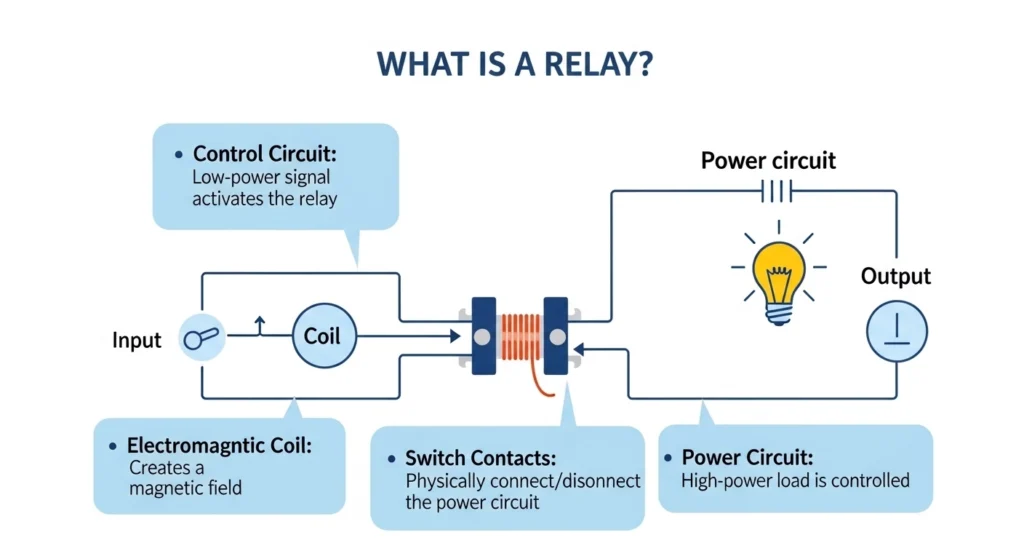
A relay is an electrically operated switch that uses a small electrical signal to control a larger electrical circuit.
Simple Explanation
A relay works like a remote-controlled switch. Instead of manually turning it on or off, electricity controls it automatically.
Practical Example
- In a car, relays control headlights and starter motors
- In industries, relays operate heavy machines
- In homes, relays are used in automatic control systems
3. Relay Working Principle
The relay working principle is based on electromagnetism.
Step-by-Step Explanation
- When current flows through the relay coil
- A magnetic field is created
- This magnetic field pulls a metal arm (armature)
- The armature opens or closes contacts
- This completes or breaks the circuit
Easy Analogy
Think of a relay like a door controlled by a magnet:
- Magnet ON → Door closes
- Magnet OFF → Door opens
Key Points
- Low power controls high power
- Provides electrical isolation
- Enables automation
4. Types / Classification
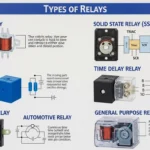
Electromechanical Relay
- Uses moving parts
- Works with magnetic force
- Common and widely used
Solid State Relay (SSR)
- No moving parts
- Uses electronic components
- Faster and more reliable
Thermal Relay
- Operates based on temperature
- Protects motors from overheating
Reed Relay
- Uses magnetic reeds
- Compact and fast switching
Time Delay Relay
- Operates after a set time delay
- Used in automation systems
5. Main Components
Coil
Produces magnetic field when energized.
Armature
Movable part that opens or closes contacts.
Contacts
- Normally Open (NO)
- Normally Closed (NC)
Function: Control the circuit.
Core
Enhances magnetic field strength.
Spring
Returns armature to original position.
Function Summary
Each component works together to switch circuits safely and efficiently.
6. Relay Advantages
Benefits
- Controls high voltage circuits with low power
- Provides electrical isolation
- Reliable and simple operation
- Cost-effective solution
- Suitable for automation systems
- Enhances safety
7. Relay Disadvantages / Limitations
Limitations
- Mechanical relays wear out over time
- Slower compared to electronic switches
- Generates noise during operation
- Requires maintenance
- Limited switching speed
8. Relay Applications
Home Applications
- Automatic lighting systems
- Appliance control
- Smart home devices
Industrial Applications
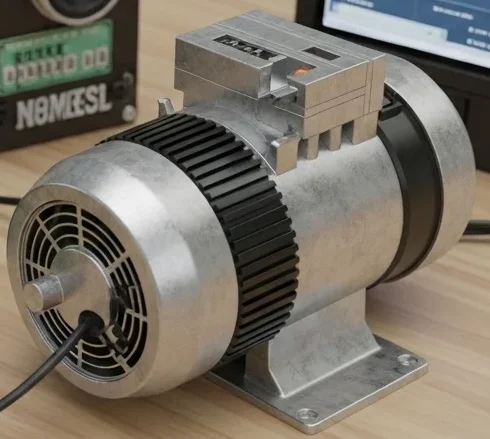
- Motor control
- Protection systems
- Control panels
Automotive Applications
- Starter systems
- Headlight control
- Fuel pump circuits
Modern Technology Applications
- PLC systems
- Robotics
- Automation systems
9. Comparison Section
Difference Between Relay and Contactor
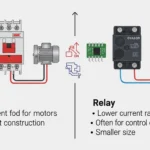
| Feature | Relay | Contactor |
| Current Capacity | Low to medium | High |
| Application | Control circuits | Power circuits |
| Size | Smaller | Larger |
| Switching Speed | Moderate | Faster |
| Usage | Electronics, automation | Industrial motors |
10. Selection Guide
Choosing the right relay depends on your application.
Key Factors
- Voltage rating
- Current rating
- Type of load
- Switching speed
- Environment conditions
Tips for Beginners
- Start with electromechanical relays
- Use SSR for fast switching
- Check compatibility with circuit
- Always consider safety margins
11. Common Problems & Solutions
Relay not switching?
Problem: No current in coil
Solution: Check power supply and wiring
Contacts not working?
Problem: Worn-out contacts
Solution: Replace relay
Relay overheating?
Problem: Excess current
Solution: Use proper rating
Noise during operation?
Problem: Mechanical movement
Solution: Use solid state relay
Delayed operation?
Problem: Faulty coil or timing issue
Solution: Inspect and replace if needed
12. Future Trends
Relays are evolving with modern technology.
New Developments
- Smart relays with IoT integration
- Solid state relays with higher efficiency
- Miniaturized designs
- Energy-efficient relays
Industry Direction
- Automation and digital control
- Increased reliability
- Integration with smart systems
What to Expect
- Faster switching devices
- Improved durability
- Better energy efficiency
13. Conclusion
Understanding what is relay is fundamental for anyone working in electrical and electronic fields. Relays provide a safe and efficient way to control high-power circuits using low-power signals.
By learning the relay working principle, types, components, and relay applications, you can confidently use relays in various systems. While there are some limitations, the benefits make relays an essential part of modern electrical systems.
As you continue learning, focus on practical applications and real-world usage. This will help you become more skilled and confident in handling electrical control systems.