
On a hot summer day, you switch on your air conditioner and expect instant cooling. But behind that simple action is a carefully designed electrical system that ensures the unit runs safely and efficiently. If the wiring is done incorrectly, the air conditioner may not work properly—or worse, it could cause electrical hazards.
Understanding air conditioner wiring basics is essential for electrical students, technicians, and engineers. Proper wiring ensures safe operation, energy efficiency, and long equipment life. It also helps in troubleshooting faults and preventing costly damage.
In real-world practice, many AC failures are not due to mechanical issues but incorrect wiring or poor connections. That is why learning the correct wiring principles is critical.
In this article, you will learn:
- The air conditioner wiring basics working principle
- Types of AC wiring systems
- Important components and their functions
- Real-world air conditioner wiring basics applications
- Air conditioner wiring basics advantages and disadvantages
- Practical troubleshooting and selection tips
Let’s begin with a clear understanding of what this topic means.
2. What is Air Conditioner Wiring Basics?
Definition
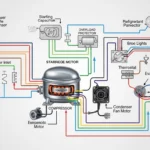
Air conditioner wiring basics refers to the electrical connections required to safely supply power and control signals to an air conditioning system.
Simple Explanation
It is the method of connecting wires between the power source, control system, and AC unit so that it can operate properly.
Practical Example
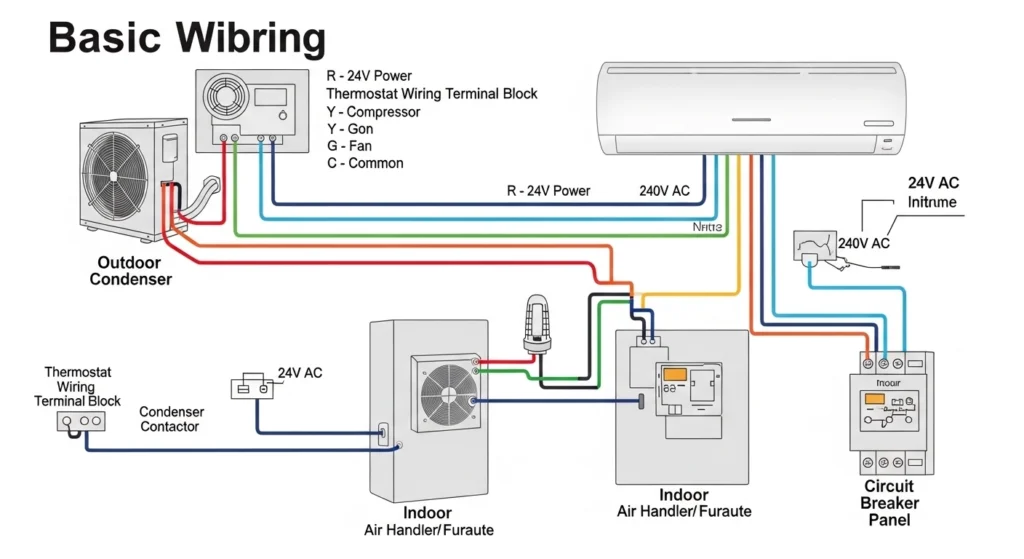
In a home split AC:
- Power comes from the main supply
- Wires connect the indoor unit to the outdoor unit
- A control wire carries signals between units
- A circuit breaker protects the system
All these connections together form the AC wiring system.
3. Working Principle
The air conditioner wiring basics working principle involves supplying power and enabling communication between components.
Step-by-Step Explanation
- Power supply comes from the distribution board
- It passes through a circuit breaker for protection
- Phase and neutral wires supply electricity to the AC
- The thermostat or controller sends signals
- Indoor and outdoor units communicate via control wires
- The compressor and fan motors start operating
- Cooling process begins
Easy Analogy
Think of it like a team:
- Power wires = energy supply
- Control wires = communication
- AC components = workers
Without proper wiring, the system cannot function as a team.
Key Points
- Power and control circuits work together
- Proper earthing ensures safety
- Correct wire sizing prevents overheating
4. Types / Classification
Air conditioner wiring systems vary based on AC type and installation.
Split AC Wiring
- Most common in homes
- Indoor and outdoor units connected by wires
- Includes power and communication cables
Window AC Wiring
- All components in one unit
- Simple wiring system
- Direct connection to power supply
Central AC Wiring
- Used in large buildings
- Complex wiring system
- Includes multiple control circuits
Inverter AC Wiring
- Uses advanced electronics
- Variable speed compressor
- Requires stable and proper wiring
Single-Phase AC Wiring
- Used in homes
- Simple installation
- Suitable for small loads
Three-Phase AC Wiring
- Used in commercial and industrial systems
- Handles heavy loads
- Provides balanced power
5. Main Components
Understanding components is key to mastering wiring.
Power Supply Cable
- Carries electricity from source to AC
- Must be properly rated
Circuit Breaker (MCB)
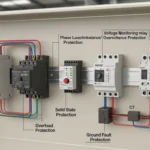
- Protects against overload and short circuit
- Installed in distribution board
Isolator Switch
- Disconnects AC from power
- Used during maintenance
Indoor Unit Wiring
- Connects fan motor and control board
- Receives signals from thermostat
Outdoor Unit Wiring
- Supplies compressor and fan motor
- Handles high power load
Communication Cable
- Connects indoor and outdoor units
- Transfers control signals
Earthing Wire
- Provides safety path
- Prevents electric shock
6. Advantages
Here are the key air conditioner wiring basics advantages and disadvantages, starting with benefits.
Advantages
- Ensures safe AC operation
- Improves energy efficiency
- Reduces risk of electrical faults
- Supports smooth communication between units
- Increases equipment lifespan
- Easy maintenance with proper design
- Prevents overheating and fire hazards
7. Disadvantages / Limitations
Disadvantages
- Requires proper technical knowledge
- Incorrect wiring can damage AC
- Installation cost may be high
- Regular inspection is needed
- Poor-quality wires can cause failures
8. Applications
The air conditioner wiring basics applications are widely seen.
Residential Use
- Split AC systems
- Window AC units
- Home cooling systems
Commercial Use
- Offices and shopping malls
- Hotels and restaurants
- Server rooms
Industrial Use
- Factories
- Large HVAC systems
- Cooling for machinery
Modern Technology
- Smart AC systems
- IoT-based climate control
- Energy-efficient inverter systems
9. Comparison Section
Difference Between Single-Phase and Three-Phase AC Wiring
| Feature | Single-Phase Wiring | Three-Phase Wiring |
| Power Capacity | Low | High |
| Usage | Homes | Industries |
| Wiring Complexity | Simple | Complex |
| Efficiency | Moderate | High |
| Cost | Lower | Higher |
This shows the difference between single-phase and three-phase AC wiring, which is important for system design.
10. Selection Guide
Choosing the right wiring setup is critical.
Key Factors
- AC capacity (BTU or tonnage)
- Type of AC (split, window, central)
- Power supply type
- Distance between units
- Safety requirements
Tips for Beginners
- Always follow manufacturer wiring diagram
- Use correct wire size
- Ensure proper earthing
- Avoid loose connections
- Use high-quality cables and breakers
11. Common Problems & Solutions
AC not turning ON
Cause: No power supply
Solution: Check circuit breaker and wiring
Frequent tripping
Cause: Overload or short circuit
Solution: Inspect wiring and reduce load
Indoor and outdoor units not communicating
Cause: Faulty communication wire
Solution: Check and replace cable
Burning smell from wiring
Cause: Loose or damaged wires
Solution: Turn off power and fix immediately
Electric shock from AC body
Cause: Poor earthing
Solution: Improve grounding system
12. Future Trends
Air conditioning systems are becoming smarter and more efficient.
Smart Wiring Systems
- Remote monitoring
- App-based control
- Energy tracking
Energy-Efficient Designs
- Optimized wiring layouts
- Reduced power loss
- Eco-friendly systems
Integration with Renewable Energy
- Solar-powered AC systems
- Hybrid power systems
- Battery backup integration
Advanced Protection Systems
- Surge protection
- Smart circuit breakers
- Fault detection systems
Automation and IoT
- Smart homes integration
- Voice-controlled AC systems
- Automated temperature control
13. Conclusion
Understanding air conditioner wiring basics is essential for safe and efficient AC operation. Proper wiring ensures that all components work together smoothly and reliably.
We explored the air conditioner wiring basics working principle, types, components, and real-world air conditioner wiring basics applications. We also discussed its advantages, limitations, and troubleshooting techniques.
For beginners and professionals, correct wiring is not just about functionality—it is about safety and long-term performance. A well-installed system reduces energy consumption and prevents costly repairs.
As technology advances, wiring systems are becoming smarter and more efficient. Staying updated with these trends will help you build better and safer electrical systems.
Always prioritize safety, follow standards, and double-check connections before powering any system.