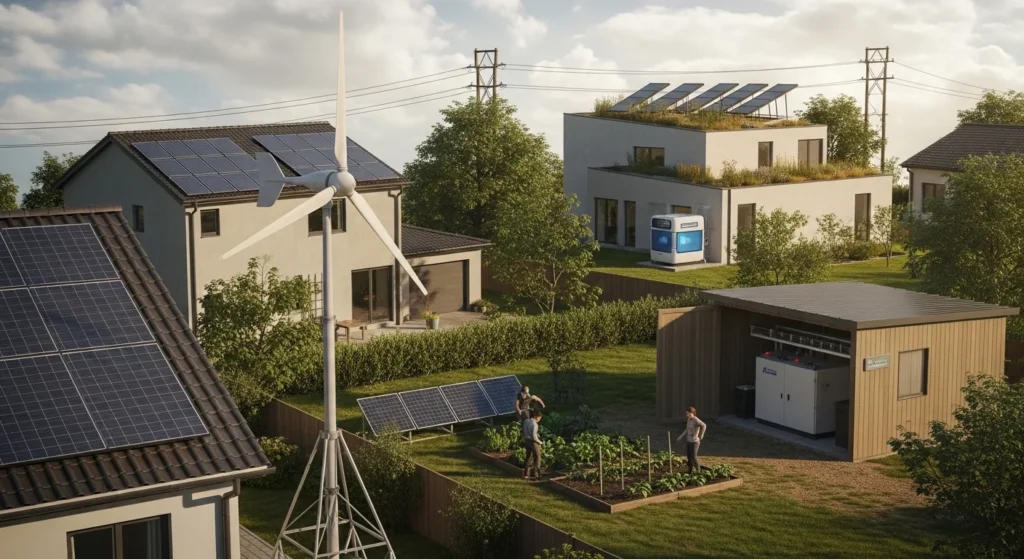

Imagine a small town where electricity is produced not only by a distant power plant but also by solar panels on homes, wind turbines nearby, and small gas generators in local facilities. Instead of relying completely on a large central power station many kilometers away, electricity is generated close to where it is used. This modern approach is called Distributed Generation.
Traditional power systems usually depend on large centralized power plants that send electricity through long transmission lines to cities and villages. However, these long distances can lead to energy losses, higher infrastructure costs, and sometimes reliability issues. Because of these challenges, engineers and energy planners are increasingly using distributed energy systems.
Understanding Distributed Generation is very important for electrical students, engineers, and technicians working in modern power systems. It plays a major role in renewable energy integration, smart grids, and sustainable electricity supply.
In this article, you will learn about the Distributed Generation working principle, its types, main components, Distributed Generation applications, and its advantages and disadvantages. The guide will also explain the difference between distributed generation and centralized generation, helping beginners clearly understand modern power generation systems.
2. What is Distributed Generation?
Distributed Generation (DG) refers to the production of electricity from small power sources located close to the place where the electricity is consumed.
Clear Definition
Distributed Generation is a power generation system where electricity is produced using small or medium-sized energy sources connected directly to the distribution network or near the load.
Simple Explanation
Instead of generating electricity in one large power plant and sending it over long distances, distributed generation produces electricity locally using smaller energy systems.
Practical Example
A house with rooftop solar panels generating electricity for its own use is an example of distributed generation. If excess electricity is sent back to the local grid, it becomes part of the distributed power network.
Other examples include:
- Small wind turbines
- Biomass generators
- Micro gas turbines
- Fuel cell systems
These systems generate power close to homes, businesses, or industrial facilities.
3. Distributed Generation Working Principle
The Distributed Generation working principle is based on producing electricity near the load and supplying it directly to the local distribution system.
Step-by-Step Working Process
- Energy Source Availability
Energy sources such as sunlight, wind, natural gas, or biomass are used to generate electricity.
- Electricity Generation
A generator or energy converter converts the energy source into electrical power.
Examples include:
- Solar panels converting sunlight into electricity
- Wind turbines converting wind energy into electrical power
- Power Conditioning
Electronic devices such as inverters convert electricity into the required voltage and frequency suitable for the grid.
- Local Distribution
The generated electricity is supplied to nearby loads like homes, offices, or factories.
- Grid Interaction
If more electricity is produced than needed, the extra power may be sent to the main grid.
Simple Analogy
Think of distributed generation like a small water well in every neighborhood instead of one large reservoir supplying water to the entire city.
4. Types / Classification
Distributed generation systems can be classified based on the energy source used.
Solar Distributed Generation
Solar distributed generation uses photovoltaic (PV) panels installed on rooftops or small solar farms.
Features:
- Renewable energy source
- Clean and environmentally friendly
- Common in homes and commercial buildings
Wind Distributed Generation
Small wind turbines can generate electricity in areas with sufficient wind speed.
Features:
- Suitable for rural or coastal areas
- Can be installed near communities
Biomass Distributed Generation
Biomass systems generate electricity using organic materials such as agricultural waste or wood.
Features:
- Converts waste into energy
- Useful for rural industries
Micro Gas Turbine Generation
Small gas turbines generate electricity using natural gas or biogas.
Features:
- Reliable and efficient
- Often used in commercial buildings
Fuel Cell Distributed Generation
Fuel cells produce electricity through a chemical reaction, usually using hydrogen or natural gas.
Features:
- Very efficient
- Low environmental impact
5. Main Components
A distributed generation system includes several important components that ensure reliable electricity production.
Energy Source
The primary energy source such as sunlight, wind, natural gas, or biomass.
Generator or Energy Converter
This component converts energy into electricity.
Examples:
- Solar panels
- Wind turbine generators
- Gas turbines
Power Electronics
Devices like inverters and converters adjust voltage and frequency for safe grid connection.
Control System
Controls system operation, monitoring performance and managing power flow.
Protection Equipment
Circuit breakers and protective relays ensure system safety.
6. Distributed Generation Advantages
Understanding Distributed Generation advantages and disadvantages helps engineers evaluate its benefits.
Advantages
- Reduced transmission losses because electricity is generated close to consumers.
- Improved reliability since multiple small sources supply electricity.
- Better energy efficiency in local power systems.
- Integration of renewable energy sources like solar and wind.
- Reduced environmental impact compared to fossil fuel power plants.
- Lower infrastructure costs for long-distance transmission lines.
- Energy independence for homes and communities.
These advantages make distributed generation a key element in modern smart grids.
7. Disadvantages / Limitations
Despite its benefits, distributed generation also has some challenges.
Disadvantages
- Initial installation cost can be high.
- Power output may vary for renewable sources like solar or wind.
- Grid management becomes more complex.
- Requires advanced protection and control systems.
- Energy storage may be needed for continuous power supply.
Engineers must carefully design distributed generation systems to manage these limitations.
8. Distributed Generation Applications
The Distributed Generation applications are increasing worldwide in residential, commercial, and industrial sectors.
Residential Applications
- Rooftop solar panel systems
- Small wind turbines for homes
Commercial Applications
- Backup power systems for offices
- Solar power installations for shopping centers
Industrial Applications
- On-site power generation for factories
- Combined heat and power systems
Rural Electrification
Distributed generation is extremely useful in remote areas where building large transmission lines is difficult.
Smart Grid Systems
Modern smart grids rely heavily on distributed generation to balance supply and demand efficiently.
9. Comparison Section
Difference Between Distributed Generation and Centralized Generation
| Feature | Distributed Generation | Centralized Generation |
| Location | Near the consumer | Large power plants far from loads |
| Transmission Loss | Low | Higher due to long distances |
| System Size | Small or medium | Very large |
| Reliability | Higher due to multiple sources | Depends on single large source |
| Installation Cost | Moderate per unit | High infrastructure cost |
Understanding the difference between distributed generation and centralized generation helps engineers design efficient power systems.
10. Selection Guide
Choosing the right distributed generation system depends on several factors.
Important Factors
- Available energy resources
- Power demand requirements
- Installation budget
- Environmental conditions
- Grid connectivity
Tips for Beginners
- Solar energy is usually the easiest distributed generation option for homes.
- Wind turbines work best in areas with consistent wind speed.
- Gas turbines are suitable for industrial power supply.
- Always include proper protection and control systems.
Proper system design ensures safety and efficiency.
11. Common Problems & Solutions
Why does distributed generation sometimes produce unstable power?
Renewable sources such as solar and wind depend on weather conditions.
Solution: Use energy storage systems or hybrid systems.
Why does grid connection sometimes fail?
Incorrect synchronization with the grid can cause problems.
Solution: Install proper grid synchronization equipment.
Why does system efficiency drop?
Poor maintenance or component aging can reduce efficiency.
Solution: Perform regular inspections and maintenance.
Can distributed generation supply power during grid failure?
Yes, but only if the system includes energy storage or backup generation.
12. Future Trends
Distributed generation is becoming a key part of modern electrical systems.
Smart Grid Integration
Future power systems will use advanced digital control systems to manage distributed energy resources.
Energy Storage Systems
Battery storage will improve reliability and allow better use of renewable energy.
Microgrids
Microgrids combine distributed generation sources to supply electricity independently.
Renewable Energy Growth
Solar and wind distributed generation systems will continue to expand globally.
These trends will reshape the way electricity is generated and delivered.
13. Conclusion
Distributed Generation is transforming modern power systems by producing electricity closer to where it is needed. Instead of relying only on large centralized power plants, distributed energy systems allow homes, businesses, and industries to generate their own electricity using smaller and often renewable energy sources.
Understanding the Distributed Generation working principle, its applications, and its advantages and disadvantages helps electrical engineers design more efficient and reliable energy systems. Although distributed generation has challenges such as initial costs and system complexity, its benefits in energy efficiency, sustainability, and grid reliability make it an important part of the future energy landscape.
For electrical students and engineers, learning about distributed generation is essential for working in modern smart grids and renewable energy systems. As technology continues to advance, distributed energy solutions will play an even greater role in building cleaner and more resilient power networks.