
Imagine walking into a building where lights flicker, wires are exposed, and circuit breakers trip frequently. This is not just inconvenient—it is dangerous. Many electrical accidents, fires, and equipment failures happen due to poor or missing inspections.
This is where an Electrical Inspection Guide becomes essential. Whether you are working in a home, office, or industrial environment, proper inspection ensures safety, reliability, and compliance with standards.
For electrical students, engineers, technicians, and beginners, understanding how to inspect electrical systems is a critical skill. It helps identify faults early, prevents costly damage, and protects lives.
In this article, you will learn the Electrical Inspection Guide working principle, types of inspections, key components, advantages and disadvantages, applications, and practical troubleshooting methods. By the end, you will have a clear and structured approach to performing safe and effective electrical inspections.
2. What is Electrical Inspection Guide?
Definition
An Electrical Inspection Guide is a systematic process used to check, test, and evaluate electrical systems, components, and installations to ensure they are safe, efficient, and functioning properly.
Simple Explanation
It is like a health check-up for electrical systems. Just as doctors examine the human body, electricians inspect wiring, devices, and equipment.
Practical Example
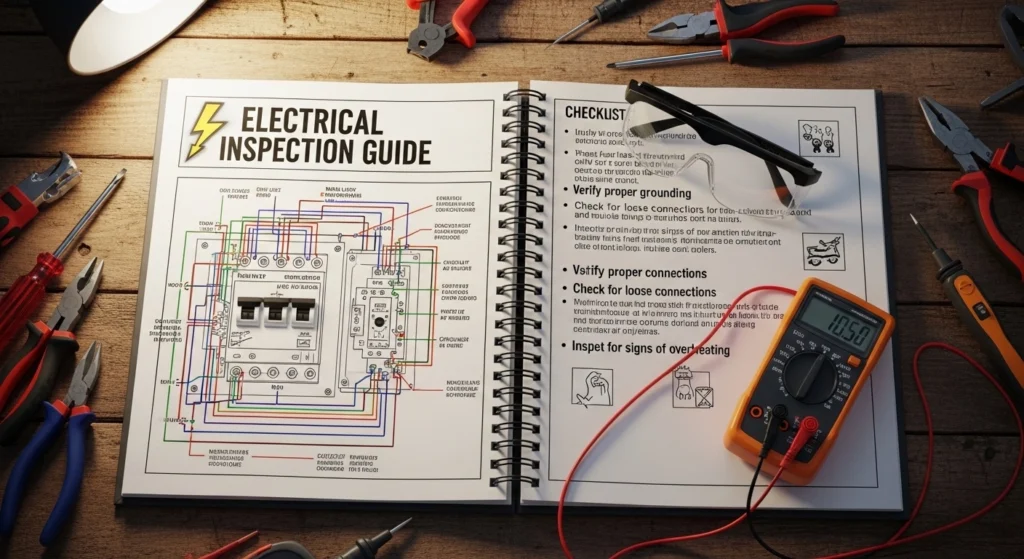
- Checking wires for damage or overheating
- Testing circuit breakers for proper operation
- Measuring voltage and current levels
- Ensuring proper grounding
3. Electrical Inspection Guide Working Principle
The Electrical Inspection Guide working principle is based on identifying faults, verifying safety, and ensuring proper operation.
Step-by-Step Explanation
- Visual Inspection
- Look for damaged wires, loose connections, burns
- Testing
- Use instruments to measure voltage, current, resistance
- Verification
- Compare readings with standard values
- Evaluation
- Identify faults or unsafe conditions
- Reporting
- Document findings and suggest corrections
Easy Analogy
Think of electrical inspection like checking a car before a long trip:
- Visual check = Looking at tires
- Testing = Checking engine performance
- Evaluation = Deciding if repairs are needed
4. Types / Classification
Visual Inspection
- Basic and quick method
- No tools required
- Detects visible issues
Routine Inspection
- Performed regularly
- Ensures system reliability
- Common in industries
Detailed Inspection
- In-depth analysis
- Uses instruments and testing tools
- Checks system performance
Safety Inspection
- Focuses on hazards
- Ensures compliance with safety standards
Preventive Inspection
- Done before faults occur
- Helps avoid failures and downtime
5. Main Components
Wiring System
Carries electrical current.
Function:
Ensures proper power distribution.
Switchgear
Includes switches, circuit breakers, and fuses.
Function:
Controls and protects circuits.
Earthing System
Provides a safe path for fault current.
Function:
Prevents electric shock.
Electrical Loads
Devices that consume power.
Function:
Convert electrical energy into useful work.
Measuring Instruments
- Multimeter
- Clamp meter
- Insulation tester
Function:
Measure electrical parameters accurately.
6. Electrical Inspection Guide Advantages
Benefits
- Improves electrical safety
- Prevents accidents and fire hazards
- Detects faults early
- Increases system reliability
- Reduces maintenance costs
- Ensures compliance with standards
7. Electrical Inspection Guide Disadvantages / Limitations
Limitations
- Requires skilled personnel
- Time-consuming process
- Needs proper tools and equipment
- May interrupt operations
- Initial cost for inspection setup
8. Electrical Inspection Guide Applications
Home Applications
- Checking wiring systems
- Inspecting appliances
- Ensuring proper grounding
Industrial Applications
- Machine inspection
- Power system monitoring
- Preventive maintenance
Commercial Applications
- Office electrical systems
- HVAC inspections
- Lighting system checks
Modern Technology Applications
- Smart building systems
- Automated inspection tools
- Remote monitoring systems
9. Comparison Section
Difference Between Electrical Inspection and Electrical Testing
| Feature | Electrical Inspection | Electrical Testing |
| Method | Visual and basic checks | Instrument-based measurement |
| Purpose | Identify visible issues | Verify performance |
| Tools | Minimal | Advanced instruments |
| Time | Quick | Detailed and time-consuming |
| Accuracy | Moderate | High |
10. Selection Guide
Choosing the right inspection method depends on the situation.
For Beginners
- Start with visual inspection
- Learn basic safety rules
- Use simple tools like multimeters
For Professionals
- Perform detailed inspections
- Use advanced instruments
- Follow safety standards
Tips
- Always switch off power before inspection
- Use proper safety equipment
- Record all findings
- Follow a checklist
11. Common Problems & Solutions
Loose connections?
Problem: Causes overheating and sparks
Solution: Tighten connections properly
Frequent circuit breaker tripping?
Problem: Overload or short circuit
Solution: Check load and wiring
Low insulation resistance?
Problem: Damaged insulation
Solution: Replace or repair cables
Electric shock risk?
Problem: Poor grounding
Solution: Improve earthing system
Flickering lights?
Problem: Voltage fluctuation
Solution: Check supply and connections
12. Future Trends
The field of electrical inspection is evolving with technology.
New Developments
- Smart inspection devices
- Thermal imaging cameras
- IoT-based monitoring systems
- AI-based fault detection
Industry Direction
- Automation in inspections
- Remote diagnostics
- Predictive maintenance
What to Expect
- Faster and more accurate inspections
- Reduced human error
- Improved safety standards
13. Conclusion
An Electrical Inspection Guide is a vital tool for ensuring the safety and efficiency of electrical systems. From simple visual checks to advanced testing, inspections help detect faults early and prevent serious hazards.
Understanding the Electrical Inspection Guide working principle, types, and applications allows you to perform inspections confidently and professionally. While there are some limitations, the benefits far outweigh the challenges.
As a student or professional, mastering electrical inspection techniques will make you more skilled and reliable in your field. Always prioritize safety, follow proper procedures, and keep improving your knowledge.