
Imagine a conveyor belt in a factory that moves products from one machine to another. Sometimes the belt must start slowly, sometimes it must run at high speed, and sometimes it must stop immediately for safety. All of these actions are controlled by an electric motor. But a motor cannot perform these tasks without a proper control system.
This is where a Motor Control Project becomes important.
Motor control systems allow engineers to start, stop, reverse, and adjust the speed of electric motors. These systems are widely used in industries, home appliances, robotics, and automated machines.
For electrical students and beginners, building a motor control project is one of the most important practical exercises. It helps students understand how motors interact with electrical circuits, controllers, sensors, and control logic.
In this article, you will learn:
What a Motor Control Project is
Motor control project working principle
Different types of motor control systems
Main components used in motor control circuits
Motor control project advantages and disadvantages
Real-world motor control project applications
This guide explains the topic in simple English so students, technicians, and engineers can easily understand how motor control systems work in real electrical systems.
What is Motor Control Project?
A Motor Control Project is an electrical project designed to control the operation of an electric motor using switches, relays, controllers, or electronic circuits.
The main goal of a motor control project is to manage how a motor operates.
Simple Definition
A motor control project is a system that controls the starting, stopping, speed, and direction of an electric motor.
Simple Explanation
Electric motors convert electrical energy into mechanical motion. However, motors cannot be connected directly to the power supply in many applications because they require controlled operation.
Motor control circuits provide functions such as:
Starting the motor safely
Stopping the motor when needed
Changing the direction of rotation
Controlling motor speed
Practical Example
Consider an electric water pump used in a building. The pump motor should start when the water level becomes low and stop when the tank becomes full.
A motor control system can automate this process using sensors and control circuits.
This is a simple example of how motor control projects are used in real-life systems.
Motor Control Project Working Principle
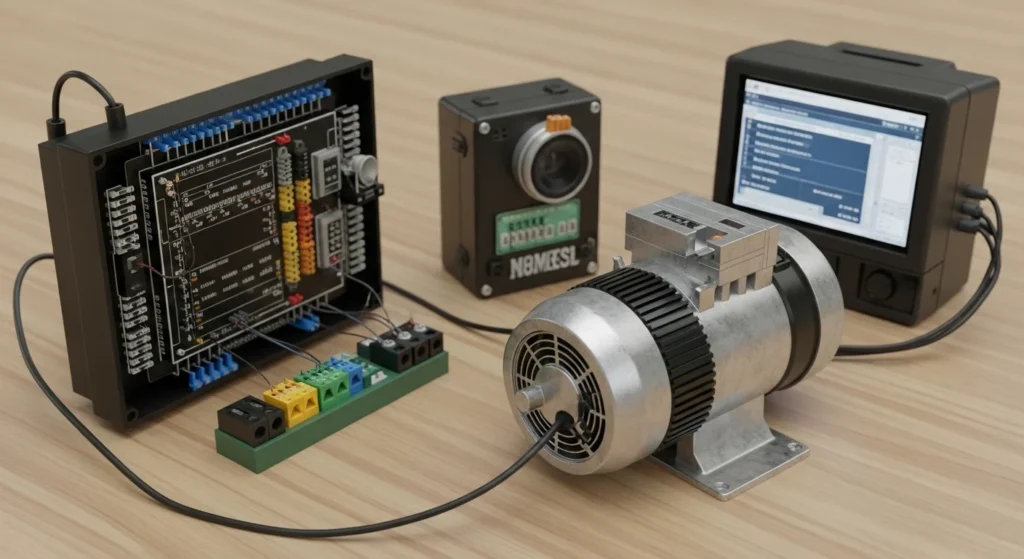
The motor control project working principle involves controlling electrical power supplied to the motor using switches, relays, or electronic controllers.
The control system determines when the motor should start, stop, or change its operating conditions.
Think of a motor control system as a traffic controller for electricity that directs when and how power flows to the motor.
Step-by-Step Working Process
The operation of a motor control system typically follows these steps.
- Input Signal
The system receives an input command such as:
Start button pressed
Stop button pressed
Sensor signal received
- Control Circuit Processing
The control circuit processes the input signal and determines the required action.
This circuit may include:
Relays
Contactors
Microcontrollers
- Switching Power to Motor
The controller activates switching devices that connect the motor to the power supply.
These devices control the flow of electrical energy. - Motor Operation
Once power is supplied, the motor begins rotating and performing mechanical work. - Monitoring and Protection
Many motor control systems include safety features such as:
Overload protection
Short-circuit protection
Emergency stop systems
These features protect both the motor and the electrical system.
Types / Classification of Motor Control Systems
Motor control systems can be classified based on their complexity and control methods.
Manual Motor Control
Manual motor control systems require human operation.
Examples include:
Start and stop switches
Manual circuit breakers
These systems are simple but require constant supervision.
Automatic Motor Control
Automatic motor control systems operate without human intervention.
Sensors and controllers automatically manage motor operation.
Examples include:
Water pump automation
Conveyor belt control systems
Direct Online (DOL) Motor Control
In this method, the motor is connected directly to the power supply through a starter.
DOL starters are commonly used for small motors.
They provide simple and reliable control.
Variable Speed Motor Control
Variable speed motor control systems allow adjustment of motor speed.
Devices such as Variable Frequency Drives (VFDs) are used for this purpose.
These systems are widely used in modern industrial applications.
Main Components of Motor Control Project
Several electrical components are used to build motor control circuits.
Electric Motor
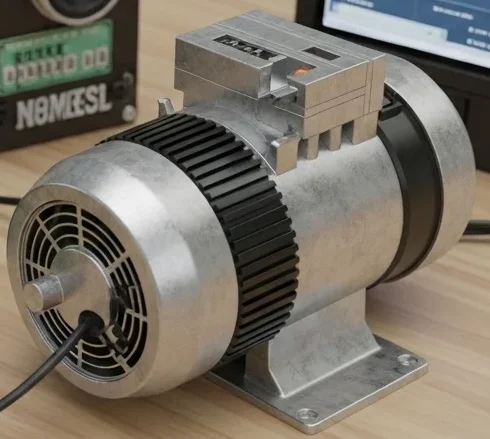
The electric motor is the main device that converts electrical energy into mechanical motion.
Different types of motors can be used depending on the application.
Control Switches
Control switches provide user input to operate the motor.
Examples include:
Start button
Stop button
Emergency stop switch
Contactors
Contactors are electrical switches that control high-power circuits.
They connect or disconnect power to the motor safely.
Relays
Relays are used to control circuits automatically.
They allow low-power signals to control high-power devices.
Overload Protection Devices
Overload relays protect the motor from excessive current that can cause overheating or damage.
Power Supply
The motor control system requires a stable power source to operate properly.
Motor Control Project Advantages and Disadvantages
Understanding motor control project advantages and disadvantages helps evaluate the benefits of motor control systems.
Advantages
Provides safe motor operation
Allows automatic motor control
Improves energy efficiency
Protects motors from overload damage
Enables speed and direction control
Reduces manual effort in industrial systems
Improves reliability of machines
These advantages make motor control systems essential in modern electrical engineering.
Disadvantages / Limitations
Although motor control systems are useful, they have some limitations.
Initial installation cost may be high
Complex systems require skilled technicians
Electronic components may require maintenance
Faulty control circuits can stop motor operation
However, proper design and maintenance reduce these issues.
Motor Control Project Applications
Motor control project applications are found in many areas of modern technology.
Industrial Applications
Industries use motor control systems for operating machines such as:
Conveyor belts
Pumps
Compressors
Fans
These systems ensure efficient production processes.
Residential Applications
Motor control systems are also used in homes.
Examples include:
Water pump controllers
Washing machines
Air conditioners
Automation Systems
Modern automation systems rely heavily on motor control technology.
Examples include:
Robotic systems
Automated manufacturing
CNC machines
Transportation Systems
Motor control systems are used in:
Electric vehicles
Elevators
Escalators
These systems require precise motor control for safe operation.
Comparison: Manual vs Automatic Motor Control
Understanding the difference between manual motor control and automatic motor control helps engineers choose the right system.
Feature
Manual Motor Control
Automatic Motor Control
Operation
Human-operated
Automatic
Control complexity
Simple
More advanced
Efficiency
Moderate
High
Safety
Depends on operator
Better safety features
Applications
Small systems
Industrial automation
Automatic systems are preferred for modern industrial applications.
Selection Guide
Choosing the right motor control system requires careful planning.
Determine Motor Type
Different motors require different control systems.
Common motor types include:
AC motors
DC motors
Stepper motors
Consider Power Requirements
Motor control components should match the motor power rating.
Select Proper Protection Devices
Protection devices such as overload relays and circuit breakers are essential for safe operation.
Choose Automation Level
Some systems require simple manual control while others require fully automated control systems.
Common Problems & Solutions
Students working on motor control projects may face some common issues.
Why does the motor not start?
Possible causes:
Power supply failure
Faulty contactor
Loose wiring
Solution:
Check power supply
Inspect contactor operation
Verify wiring connections
Why does the motor stop unexpectedly?
Possible causes:
Overload protection activation
Control circuit failure
Faulty switch
Solution:
Reduce load
Inspect control circuit
Replace defective switch
Why is the motor overheating?
Possible causes:
Overloading
Poor ventilation
Electrical faults
Solution:
Reduce mechanical load
Improve cooling
Inspect motor windings
Future Trends in Motor Control Technology
Motor control technology continues to evolve with modern innovations.
Smart Motor Controllers
Modern controllers use digital technology for improved monitoring and control.
IoT-Based Motor Monitoring
Internet of Things systems allow remote monitoring of motor performance.
Energy-Efficient Motor Drives
Advanced motor drives reduce energy consumption and improve efficiency.
Integration with Automation Systems
Motor control systems are increasingly integrated with industrial automation and robotics.
Conclusion
The Motor Control Project is an important learning topic in electrical engineering. It teaches students how motors are controlled safely and efficiently in real-world systems.
Understanding the motor control project working principle helps students learn how control circuits manage power flow to motors. Components such as contactors, relays, switches, and protection devices work together to ensure reliable motor operation.
The motor control project advantages and disadvantages show that although control systems require proper design and installation, they significantly improve safety, efficiency, and automation.
Motor control project applications are widely used in industries, homes, transportation systems, and modern automation technologies. As electrical systems continue to evolve, motor control technology will play an even greater role in improving efficiency and automation.
For electrical students and beginners, learning motor control systems is a fundamental step toward understanding modern electrical engineering and industrial automation.