
Think about a hot summer day when you open your refrigerator to grab a cold drink. Within seconds, you enjoy chilled water without thinking about how it became cold. Behind this simple convenience is a well-designed refrigerator electrical system working continuously.
Understanding this system is important for electrical students, engineers, technicians, and beginners. It helps in troubleshooting faults, improving efficiency, and safely handling appliances. Whether you are repairing a fridge or studying electrical systems, knowing how it works is essential.
In this article, you will learn the complete refrigerator electrical system working principle, its main components, types, advantages and disadvantages, applications, and common problems. The explanation is simple, practical, and based on real-world experience so you can easily understand and apply it.
2. What is Refrigerator Electrical System?
The refrigerator electrical system is the combination of electrical components that control cooling, power supply, and temperature regulation in a refrigerator.
Simple Explanation
It is the electrical “brain and power system” of a fridge. It controls when the compressor runs, how cooling happens, and how temperature is maintained.
Practical Example
When you set your fridge to a certain temperature:
- The system senses the temperature
- Turns the compressor ON or OFF
- Maintains cooling automatically
Without this system, a refrigerator cannot function properly.
3. Working Principle
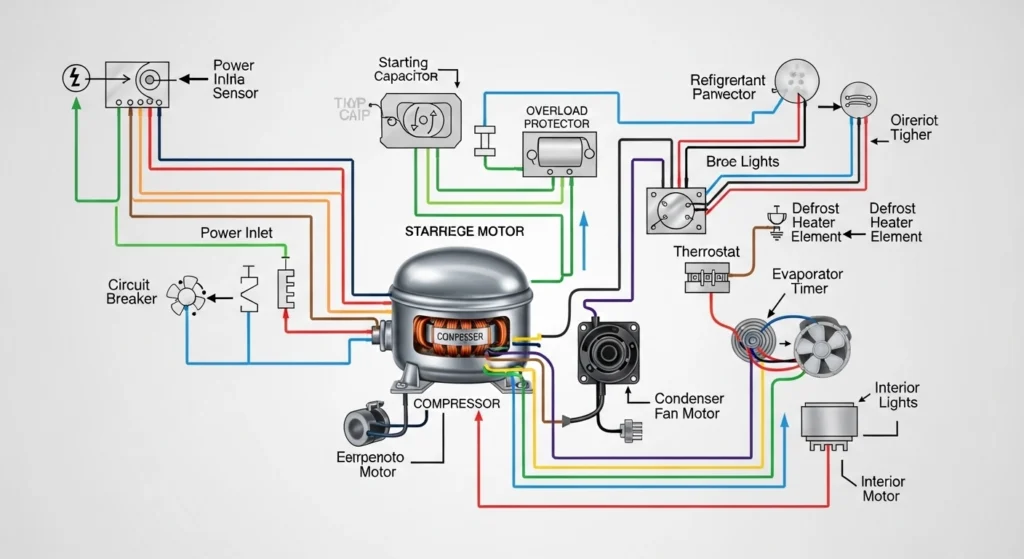
The refrigerator electrical system working principle is based on controlling the compressor and cooling cycle using electrical signals.
Step-by-Step Working
- Power supply (AC) enters the refrigerator
- It passes through protection devices like fuse or overload protector
- Thermostat senses internal temperature
- If temperature is high:
- Thermostat sends signal to start compressor
- Compressor starts using a start relay and capacitor
- Cooling cycle begins (refrigerant circulation)
- Once temperature is reached:
- Thermostat turns OFF the compressor
Easy Analogy
Think of the system like an automatic water pump:
- When water level is low → pump starts
- When level is full → pump stops
Similarly:
- High temperature → compressor ON
- Low temperature → compressor OFF
4. Types / Classification
Based on Control System
Mechanical Refrigerator System
- Uses manual thermostat
- Simple and low-cost
- Found in older refrigerators
Electronic Refrigerator System
- Uses sensors and control boards
- More accurate temperature control
- Found in modern refrigerators
Based on Defrost System
Manual Defrost
- Ice builds up over time
- Requires manual cleaning
Automatic Defrost (Frost-Free)
- Uses heater and timer
- Removes ice automatically
Based on Compressor Type
Single-Speed Compressor
- Runs at fixed speed
- Turns ON and OFF frequently
Inverter Compressor
- Adjusts speed automatically
- Saves energy and reduces noise
5. Main Components
Understanding components is key to mastering the refrigerator electrical system.
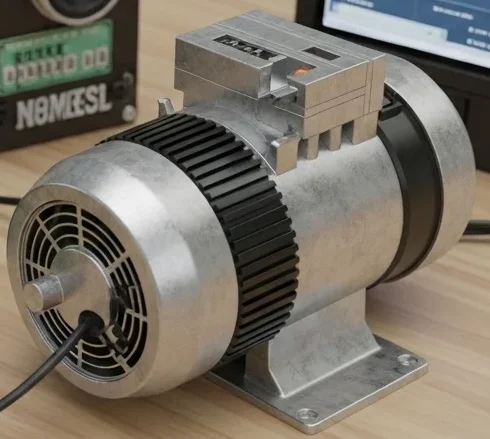
Compressor
- Main component that circulates refrigerant
- Works like a pump
Thermostat
- Senses temperature
- Controls compressor operation
Start Relay
- Helps compressor start
- Disconnects after startup
Capacitor
- Provides extra starting torque
- Improves efficiency
Overload Protector
- Protects compressor from overheating
- Cuts power during faults
Defrost Timer / Control Board
- Controls defrost cycle
- Prevents ice buildup
Evaporator Fan Motor
- Circulates cold air inside fridge
Condenser Fan Motor
- Removes heat from condenser
Each component plays a vital role in proper operation and safety.
6. Advantages
Here are the key refrigerator electrical system advantages and disadvantages starting with benefits:
Advantages
- Automatic temperature control
- Energy-efficient operation (especially inverter systems)
- Safe operation with protection devices
- Easy integration with modern electronics
- Improved cooling performance
- Reduced manual effort
7. Disadvantages / Limitations
Disadvantages
- Electrical faults can stop cooling completely
- Repair requires technical knowledge
- Sensitive components like control boards can fail
- Voltage fluctuations can damage system
- Higher cost for advanced systems
8. Applications
The refrigerator electrical system applications are wide and essential.
Home Applications
- Domestic refrigerators
- Deep freezers
- Water coolers
Industrial Applications
- Cold storage systems
- Food processing units
- Ice plants
Modern Technology Uses
- Smart refrigerators
- Medical refrigeration (vaccines, medicines)
- Commercial refrigeration systems
9. Comparison Section
Difference Between Mechanical and Electronic Refrigerator Systems
| Feature | Mechanical System | Electronic System |
| Control | Manual thermostat | Digital control board |
| Accuracy | Less accurate | Highly accurate |
| Cost | Low | Higher |
| Maintenance | Easy | Complex |
| Energy Efficiency | Moderate | High |
| Features | Basic | Advanced (smart control) |
This table clearly shows the difference between mechanical and electronic refrigerator systems.
10. Selection Guide
Choosing the right refrigerator system depends on your needs.
Consider These Factors
- Power consumption
- Usage (home or industrial)
- Budget
- Maintenance requirements
When to Choose Mechanical System
- Low budget
- Simple use
- Easy repair needed
When to Choose Electronic System
- Energy efficiency required
- Smart features needed
- Better temperature control
Tips for Beginners
- Always check voltage compatibility
- Prefer inverter models for energy saving
- Ensure proper grounding for safety
11. Common Problems & Solutions
Refrigerator not cooling
Problem:
Compressor not working or thermostat faulty
Solution:
- Check power supply
- Inspect thermostat and relay
Compressor not starting
Problem:
Faulty start relay or capacitor
Solution:
- Replace relay or capacitor
- Check overload protector
Excessive ice buildup
Problem:
Defrost system failure
Solution:
- Check defrost heater and timer
- Clean evaporator
Refrigerator making noise
Problem:
Fan motor or compressor issue
Solution:
- Tighten loose parts
- Replace faulty motor
High electricity consumption
Problem:
Inefficient compressor or poor insulation
Solution:
- Use inverter refrigerator
- Check door sealing
12. Future Trends
The refrigerator industry is evolving rapidly with advanced electrical systems.
Key Trends
- Smart refrigerators with IoT connectivity
- Energy-efficient inverter compressors
- Solar-powered refrigeration systems
- Eco-friendly refrigerants
- AI-based temperature control
These trends are making refrigerators more efficient, intelligent, and environmentally friendly.
13. Conclusion
The refrigerator electrical system is the backbone of modern cooling technology. It controls temperature, manages power, and ensures safe and efficient operation. From simple mechanical systems to advanced electronic controls, each type serves different needs.
By understanding its working principle, components, and applications, you can easily troubleshoot problems and make better decisions when selecting or maintaining a refrigerator. As technology advances, electrical systems in refrigeration will continue to improve in efficiency and intelligence.
Keep learning and practicing—strong fundamentals in such systems will make you a skilled and confident electrical professional.