
Imagine switching off a ceiling fan in your room. Even after the power supply is turned off, the fan continues to rotate for a short time before stopping. This happens because energy stored in the system keeps it moving temporarily. A similar concept exists in electrical circuits, where energy can be stored in a magnetic field. This property is known as inductance.
Inductance is one of the most important concepts in electrical and electronic engineering. It plays a major role in devices such as transformers, motors, generators, filters, and power supplies. Without understanding inductance, it is difficult to design efficient electrical systems or analyze how circuits behave when current changes.
For electrical students, engineers, and technicians, learning what is inductance helps explain many real-world electrical phenomena such as voltage spikes, energy storage in coils, and electromagnetic effects in circuits.
In this article, you will learn the inductance working principle, different types of inductance, main components, inductance applications, and the inductance advantages and disadvantages. This guide will explain the concept in simple terms so beginners can easily understand how inductance works in modern electrical systems.
2. What is Inductance?
Clear Definition
Inductance is the property of an electrical conductor or coil that opposes any change in electric current flowing through it.
Simple Explanation
In simple words, inductance is the ability of a conductor to store energy in a magnetic field when electric current flows through it.
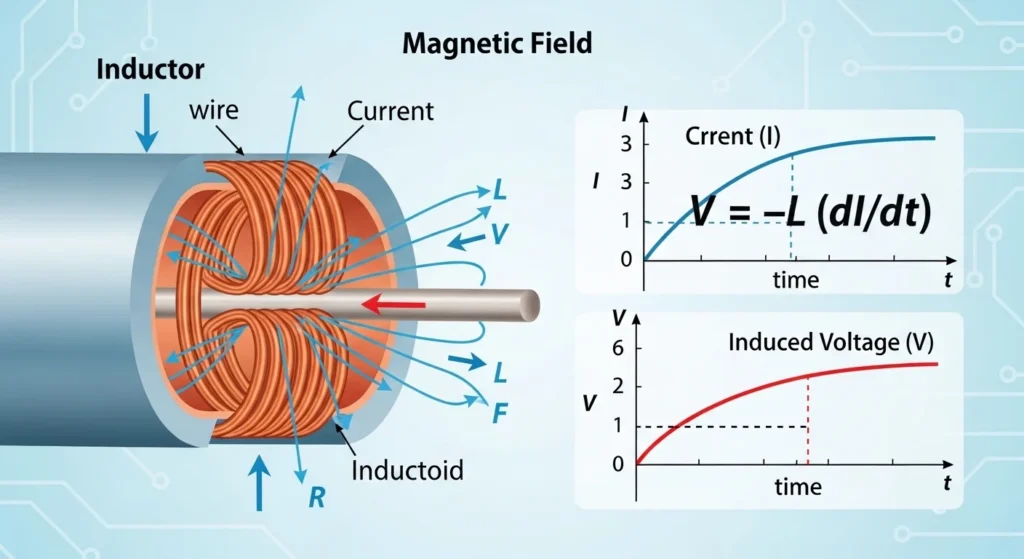
When the current changes, the magnetic field also changes. This changing magnetic field produces a voltage that resists the change in current.
Practical Example
A common example of inductance is a coil of wire called an inductor used in electronic circuits.
When current flows through the coil:
- A magnetic field forms around it.
- Energy is stored in that magnetic field.
- If current suddenly changes, the coil resists the change.
This property helps stabilize electrical circuits and control current flow.
3. Inductance Working Principle
The inductance working principle is based on electromagnetic induction.
When electric current flows through a conductor, it produces a magnetic field around the conductor. If the current changes, the magnetic field also changes, which induces a voltage that opposes the change in current.
Step-by-Step Working Process
- Current Flow in Conductor
Electric current flows through a wire or coil.
- Magnetic Field Creation
A magnetic field forms around the conductor.
- Energy Storage
The magnetic field stores electrical energy.
- Change in Current
If the current increases or decreases, the magnetic field changes.
- Induced Voltage
The changing magnetic field generates a voltage that opposes the change in current.
Simple Analogy
Inductance is similar to inertia in mechanical systems.
Just like a heavy object resists sudden changes in motion, an inductor resists sudden changes in electric current.
4. Types / Classification
Inductance can be classified into different types depending on how the magnetic field interacts with circuits.
Self Inductance
Self inductance occurs when a changing current in a coil induces a voltage in the same coil.
Key Points
- Occurs within a single circuit
- Common in inductors and coils
- Measured in Henries (H)
Example: A coil in a power supply circuit.
Mutual Inductance
Mutual inductance occurs when a changing current in one coil induces voltage in another nearby coil.
Key Points
- Involves two or more coils
- Used in transformers
- Enables energy transfer between circuits
Example: Primary and secondary windings in a transformer.
Leakage Inductance
Leakage inductance occurs when part of the magnetic field does not link with the secondary coil in a transformer.
Key Points
- Causes energy losses
- Important factor in transformer design
Variable Inductance
Variable inductance allows adjustment of inductance value.
Key Points
- Used in tuning circuits
- Common in radio and communication systems
5. Main Components
Inductance usually appears in electrical circuits through components called inductors.
Coil or Conductor
The coil is the main element that creates the magnetic field when current flows.
More turns in the coil increase inductance.
Core Material
The core inside the coil increases the strength of the magnetic field.
Common core materials include:
- Air core
- Iron core
- Ferrite core
Insulation
Insulation prevents short circuits between coil turns and ensures safe operation.
Magnetic Field Path
The design of the coil and core helps control the magnetic field.
Proper design improves inductance efficiency.
6. Inductance Advantages
Understanding inductance advantages and disadvantages helps engineers design better electrical circuits.
Advantages
- Stores energy in magnetic fields
- Helps control sudden current changes
- Improves circuit stability
- Filters unwanted signals
- Used in energy transfer devices like transformers
- Protects circuits from voltage spikes
These benefits make inductance essential in many electrical systems.
7. Disadvantages / Limitations
Despite its usefulness, inductance has some limitations.
Disadvantages
- Can cause voltage spikes during switching
- Large inductors may be bulky
- Magnetic losses may reduce efficiency
- High inductance may slow circuit response
- Electromagnetic interference may occur
Engineers must carefully design circuits to minimize these issues.
8. Inductance Applications
The inductance applications are found in many electrical and electronic systems.
Power Supply Circuits
Inductors smooth electrical current and reduce noise.
Transformers
Mutual inductance allows energy transfer between primary and secondary windings.
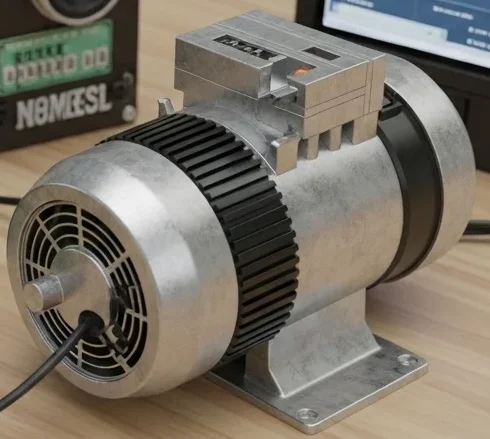
Electric Motors and Generators
Magnetic fields created by inductance enable energy conversion.
Communication Systems
Inductors are used in radio frequency tuning circuits.
Power Transmission Systems
Inductance affects how electricity flows through transmission lines.
Electronic Filters
Inductors filter unwanted frequencies in electronic circuits.
9. Comparison Section
Difference Between Inductance and Capacitance
| Feature | Inductance | Capacitance |
| Energy Storage | Magnetic field | Electric field |
| Main Component | Inductor | Capacitor |
| Opposes | Change in current | Change in voltage |
| Symbol | L | C |
| Unit | Henry (H) | Farad (F) |
Understanding the difference between inductance and capacitance is essential in circuit design.
10. Selection Guide
Choosing the correct inductor depends on several factors.
Important Factors
- Required inductance value
- Current rating
- Core material
- Frequency range
- Size and cost
Tips for Beginners
- Use air-core inductors for high-frequency circuits.
- Use iron-core inductors for power circuits.
- Ensure the inductor can handle the required current.
Selecting the correct component ensures efficient circuit performance.
11. Common Problems & Solutions
Why do inductors cause voltage spikes?
When current suddenly stops, the collapsing magnetic field produces high voltage.
Solution: Use protective components like diodes.
Why do inductors overheat?
Excess current or magnetic losses can cause overheating.
Solution: Use inductors with proper current ratings.
Why does inductance affect signal quality?
High inductance may slow signal response.
Solution: Choose inductance values suitable for the circuit frequency.
Why does electromagnetic interference occur?
Strong magnetic fields may interfere with nearby circuits.
Solution: Use proper shielding and circuit layout.
12. Future Trends
Inductance technology continues to evolve with modern electrical systems.
Miniaturized Inductors
Smaller inductors are being developed for compact electronic devices.
High-Efficiency Magnetic Materials
New magnetic materials improve energy efficiency.
Electric Vehicles
Inductance plays a key role in EV charging systems and motor control.
Wireless Power Transfer
Inductive coupling is used to transfer power wirelessly in modern devices.
These innovations show the growing importance of inductance in future technologies.
13. Conclusion
Understanding what is inductance is essential for anyone studying electrical or electronic engineering. Inductance is the property of a conductor that allows it to store energy in a magnetic field and resist sudden changes in current. This principle forms the foundation of many electrical devices such as transformers, motors, filters, and power supplies.
Learning the inductance working principle, its applications, and its advantages and disadvantages helps engineers design efficient and reliable circuits. Although inductance can introduce challenges such as voltage spikes or electromagnetic interference, proper circuit design can minimize these effects.
For beginners, mastering inductance is an important step toward understanding advanced topics like electromagnetic systems, power electronics, and communication circuits. As technology continues to evolve, inductance will remain a fundamental concept in modern electrical engineering.