
Imagine a modern factory where hundreds of machines operate at the same time. Motors, drives, computers, and automation systems all depend on stable electrical power. One day, several machines suddenly stop working, production slows down, and technicians begin searching for the cause. After inspection, engineers discover the real problem: poor power quality.
Power quality problems such as voltage drops, harmonics, frequency variations, and electrical noise can seriously affect electrical equipment. These issues may cause overheating, system failures, data loss, or even equipment damage. In industries where reliability is critical, monitoring power quality becomes extremely important.
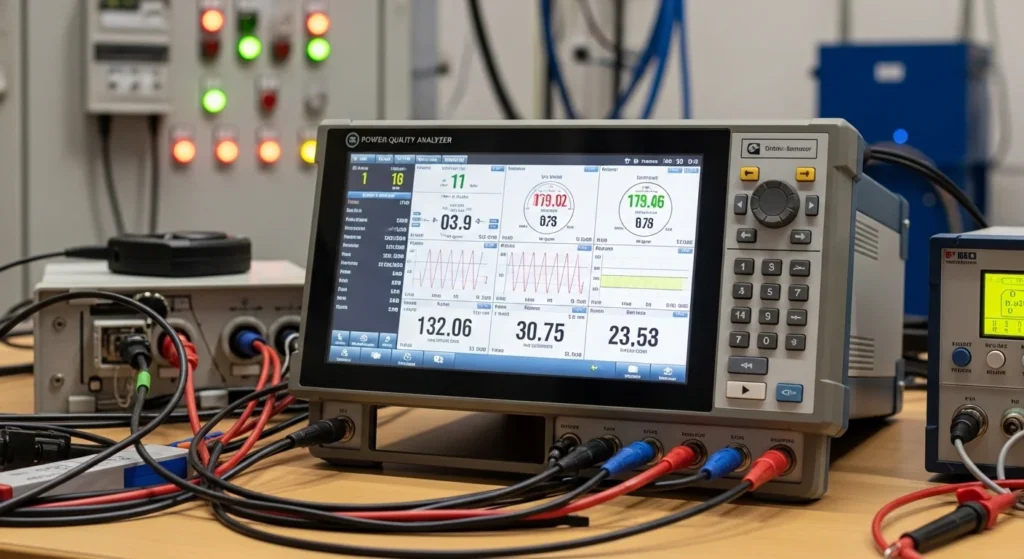
This is where a Power Quality Analyzer becomes an essential instrument. Engineers use this advanced device to measure and analyze electrical parameters such as voltage, current, frequency, harmonics, and power disturbances.
In this article, you will learn the Power Quality Analyzer working principle, different types, main components, and real-world Power Quality Analyzer applications. We will also explore the Power Quality Analyzer advantages and disadvantages, troubleshooting methods, and how to choose the right analyzer for electrical systems.
The explanation is written in simple language so that students, technicians, and beginners can clearly understand this important electrical testing instrument.
2. What is a Power Quality Analyzer?
A Power Quality Analyzer is a specialized electrical instrument used to measure, monitor, and analyze the quality of electrical power in a system.
Simple Definition
A Power Quality Analyzer is a device that measures electrical parameters such as voltage, current, frequency, harmonics, and disturbances to evaluate power quality.
Simple Explanation
Electrical systems require stable power to operate correctly. When the voltage fluctuates, harmonics increase, or frequency changes, equipment may malfunction. A power quality analyzer monitors these parameters and records any abnormalities.
The analyzer collects data over time and helps engineers identify power problems.
Practical Example
Consider a data center where thousands of servers operate continuously. Even a small voltage fluctuation can cause system crashes.
Engineers connect a Power Quality Analyzer to the electrical supply. The device records voltage dips, harmonic distortion, and frequency changes. By analyzing this data, engineers identify the problem source and improve system stability.
3. Power Quality Analyzer Working Principle
The Power Quality Analyzer working principle is based on continuously measuring electrical signals and analyzing their characteristics.
The device captures voltage and current waveforms and processes them using advanced electronic circuits.
Step-by-Step Working Process
Signal Measurement
The analyzer connects to the electrical system using voltage probes and current sensors.
Data Sampling
The device samples voltage and current signals many times per second.
Waveform Analysis
The analyzer studies the waveform shape to detect distortions, harmonics, and irregularities.
Parameter Calculation
The instrument calculates important values such as:
- Voltage
- Current
- Frequency
- Power factor
- Harmonic distortion
- Energy consumption
Event Detection
If abnormalities occur (like voltage sag or spike), the analyzer records the event.
Data Display and Storage
The results appear on the screen and are stored for further analysis.
Simple Analogy
Think of a Power Quality Analyzer as a health monitor for electricity.
Just like doctors use medical equipment to monitor heart rate and blood pressure, engineers use power quality analyzers to monitor the health of electrical power.
4. Types of Power Quality Analyzers
Different electrical environments require different types of analyzers.
Portable Power Quality Analyzer
Portable analyzers are compact and easy to carry.
Features
- Lightweight design
- Battery powered
- Field measurement capability
Applications
- Electrical maintenance
- Field inspections
- Industrial troubleshooting
Online Power Quality Analyzer
Online analyzers are permanently installed in electrical systems.
Features
- Continuous monitoring
- Real-time data analysis
- Remote monitoring capability
Applications
- Power plants
- Data centers
- Large industrial facilities
Three-Phase Power Quality Analyzer
These analyzers measure power quality in three-phase electrical systems.
Features
- Measures three-phase voltage and current
- Detects phase imbalance
- Calculates total power consumption
Applications
- Industrial power distribution
- Large electrical motors
- Power transmission systems
Handheld Power Quality Analyzer
Handheld analyzers are small instruments designed for quick measurements.
Features
- Easy to use
- Quick diagnostics
- Portable testing
Applications
- Electrical technicians
- Maintenance engineers
- Service technicians
5. Main Components of a Power Quality Analyzer
A Power Quality Analyzer contains several components that work together to measure electrical signals.
Voltage Sensors
Voltage sensors measure the voltage level of the electrical system.
They convert high voltage signals into safe levels for measurement.
Current Sensors
Current sensors measure the electrical current flowing through the circuit.
Common types include:
- Clamp sensors
- Current transformers
Signal Processing Unit
This unit analyzes electrical waveforms and calculates important parameters such as frequency and harmonic distortion.
Data Storage System
The analyzer stores measurement data for later analysis.
Engineers can review historical data to identify recurring problems.
Display Interface
The display shows electrical measurements and graphs.
Modern analyzers include:
- LCD screens
- Graphical waveform displays
Communication Interface
Some analyzers include communication ports for transferring data to computers or monitoring systems.
6. Power Quality Analyzer Advantages
Understanding the Power Quality Analyzer advantages and disadvantages helps engineers evaluate its usefulness.
Advantages
- Detects voltage fluctuations and power disturbances
- Helps prevent electrical equipment damage
- Improves system efficiency
- Supports preventive maintenance
- Identifies harmonic distortion in electrical systems
- Provides detailed power consumption data
These benefits make the Power Quality Analyzer an important diagnostic tool in electrical engineering.
7. Power Quality Analyzer Disadvantages
Despite its benefits, the device has some limitations.
Disadvantages
- High cost for advanced models
- Requires technical knowledge to interpret data
- Installation may require trained personnel
- Data analysis can be time-consuming
- Some portable models have limited measurement range
Understanding these limitations helps engineers choose the correct equipment.
8. Power Quality Analyzer Applications
There are many important Power Quality Analyzer applications in electrical systems.
Industrial Manufacturing
Factories use analyzers to monitor electrical power for motors, drives, and production machines.
This prevents unexpected downtime.
Power Generation Plants
Power plants use analyzers to monitor voltage stability, frequency, and harmonic levels.
This ensures reliable power generation.
Commercial Buildings
Large buildings use power quality analyzers to maintain stable electrical systems for lighting, elevators, and HVAC systems.
Data Centers
Power quality is critical in data centers where servers must operate continuously.
Analyzers detect voltage disturbances that could affect sensitive electronics.
Renewable Energy Systems
Solar plants and wind farms use analyzers to monitor power output and grid compatibility.
9. Comparison: Power Quality Analyzer vs Multimeter
Many beginners ask about the difference between power quality analyzer and multimeter.
| Feature | Power Quality Analyzer | Multimeter |
| Measurement Scope | Advanced power analysis | Basic electrical measurement |
| Parameters | Voltage, current, harmonics, power factor | Voltage, current, resistance |
| Data Recording | Yes | Limited |
| Application | Power system analysis | General electrical testing |
| Complexity | Advanced instrument | Simple instrument |
A multimeter is useful for basic testing, while a Power Quality Analyzer provides detailed power system analysis.
10. Selection Guide
Choosing the correct Power Quality Analyzer depends on several important factors.
Measurement Capability
Ensure the analyzer can measure parameters such as:
- Voltage
- Current
- Harmonics
- Power factor
- Frequency
System Type
Check whether the analyzer supports:
- Single-phase systems
- Three-phase systems
Data Storage
For long-term monitoring, choose a model with large data storage capacity.
Display Quality
Graphical displays help visualize waveforms and disturbances.
Beginner Tip
For students and technicians, a portable three-phase power quality analyzer is often the best starting option.
11. Common Problems & Solutions
Incorrect Readings
Cause:
Improper sensor connection.
Solution:
Ensure voltage probes and current clamps are connected correctly.
Data Not Recording
Cause:
Memory storage full.
Solution:
Clear previous data or increase storage capacity.
Unstable Measurement
Cause:
Electrical noise or loose connections.
Solution:
Secure connections and use proper grounding.
Analyzer Not Powering On
Cause:
Battery or power supply issue.
Solution:
Recharge battery or check power source.
12. Future Trends in Power Quality Analysis
Power quality monitoring technology is improving rapidly.
Smart Grid Integration
Modern analyzers are integrated with smart grids to monitor power systems in real time.
Cloud-Based Monitoring
Electrical data can now be stored and analyzed in cloud platforms for remote access.
AI-Based Power Analysis
Artificial intelligence is being used to detect power disturbances automatically.
Wireless Monitoring Systems
Wireless sensors allow remote monitoring without complex wiring.
Advanced Harmonic Analysis
Future analyzers will provide even more precise harmonic detection for modern electronic systems.
These innovations will expand Power Quality Analyzer applications in smart electrical networks.
13. Conclusion
A Power Quality Analyzer is one of the most important instruments for monitoring electrical power systems. Stable power quality is essential for the safe operation of modern equipment, industrial machines, and digital systems.
In this article, we explored the Power Quality Analyzer working principle, different types, and the major components used in these advanced measurement instruments. We also discussed real-world Power Quality Analyzer applications in industries, power plants, data centers, and renewable energy systems.
Understanding the Power Quality Analyzer advantages and disadvantages helps engineers choose the right analyzer and maintain reliable electrical systems. For students and beginners, learning how power quality analyzers work is an important step toward understanding power system diagnostics and electrical energy management.
As electrical systems become more advanced and interconnected, power quality analysis will continue to play a critical role in maintaining efficient and reliable power networks.