
Imagine a hospital during a sudden power failure. Within a few seconds, the lights come back on, medical equipment continues running, and doctors can continue their work without interruption. No technician rushes to start the generator manually. Instead, the generator starts automatically and supplies power instantly.
This happens because of an Automatic Generator Control System.
In modern electrical systems, power interruptions can cause serious problems. Industries may lose production, hospitals may face safety risks, and businesses may lose important data. For this reason, automatic generator control systems are widely used to ensure continuous power supply during outages.
An Automatic Generator Control System detects when the main power supply fails and automatically starts the generator. When the main power returns, the system safely switches back and stops the generator.
Understanding this system is important for electrical students, engineers, and technicians who work with backup power systems.
In this guide, you will learn:
- The concept of Automatic Generator Control System
- Automatic generator control system working principle
- Types of automatic generator control systems
- Important components used in these systems
- Automatic generator control system advantages and disadvantages
- Real-world automatic generator control system applications
This article explains the topic in simple and clear language so beginners can easily understand how these systems work in real electrical installations.
What is Automatic Generator Control System?
An Automatic Generator Control System is an electrical control system that automatically starts, stops, and manages a generator based on the condition of the main power supply.
In simple terms, it is a system that automatically controls generator operation without human intervention.
The main function of the system is to detect a power failure and immediately start the generator to supply electricity.
Simple Explanation
Normally, buildings receive power from the main electrical grid. If the grid fails, the control system detects the loss of voltage and immediately starts the generator. Once the generator reaches the correct speed and voltage, the system transfers the load to the generator.
When the main power returns, the system transfers the load back to the grid and shuts down the generator.
Practical Example
Consider a data center that stores important digital information. Even a few seconds of power loss can damage equipment and cause data loss. An automatic generator control system ensures the generator starts immediately during power failure.
This system is widely used in modern electrical installations.
Automatic Generator Control System Working Principle
The automatic generator control system working principle is based on continuous monitoring of the main power supply.
The system detects voltage loss and automatically performs several actions to restore power.
Think of it like an automatic emergency backup system.
Step-by-Step Working Process
The working principle follows these steps:
1. Monitoring the Main Power Supply
The control system constantly monitors:
- Voltage level
- Frequency
- Power availability
If voltage drops or disappears, the system recognizes a power failure.
2. Detecting Power Failure
When the main supply fails, the control system sends a signal to start the generator.
This process happens within seconds.
3. Generator Starting
The generator engine starts automatically using the battery starter system.
Once started, the generator begins producing electricity.
4. Generator Stabilization
Before supplying power to the load, the system checks:
- Voltage level
- Frequency
- Engine speed
The generator must reach stable operating conditions.
5. Load Transfer
The Automatic Transfer Switch (ATS) connects the generator to the electrical load.
The building now receives power from the generator.
6. Monitoring Main Supply Return
The system continues monitoring the main power supply even while the generator is running.
7. Returning to Main Power
When the main supply becomes stable again:
- The ATS transfers the load back to the main grid.
- The generator runs briefly to cool down.
- The generator then stops automatically.
This entire process occurs without manual intervention.
Types / Classification of Automatic Generator Control Systems
Automatic generator control systems can be classified based on their design and level of automation.
Automatic Transfer Switch (ATS) System
The ATS system is the most common type used in buildings.
It automatically switches the load between:
- Main power supply
- Generator power
When power fails, the ATS starts the generator and transfers the load.
When power returns, it switches back.
Manual Generator Control System
Although not fully automatic, some systems require manual operation.
In this system:
- Operators manually start the generator
- The load transfer is also manual
This system is cheaper but less reliable for emergency situations.
Fully Automatic Generator Control System
This advanced system performs all operations automatically.
Features include:
- Automatic generator start/stop
- Automatic load transfer
- Fault detection
- Alarm systems
These systems are used in hospitals, airports, and data centers.
Remote Monitoring Control System
Modern systems allow engineers to monitor generators remotely.
Using communication technology, operators can monitor:
- Generator status
- Fuel level
- Operating hours
This system is commonly used in large industrial facilities.
Main Components of Automatic Generator Control System
Several components work together to operate an automatic generator control system.
Automatic Transfer Switch (ATS)
The ATS is one of the most important components.
Its function is to switch electrical load between:
- Main power supply
- Generator power
It ensures safe and smooth power transfer.
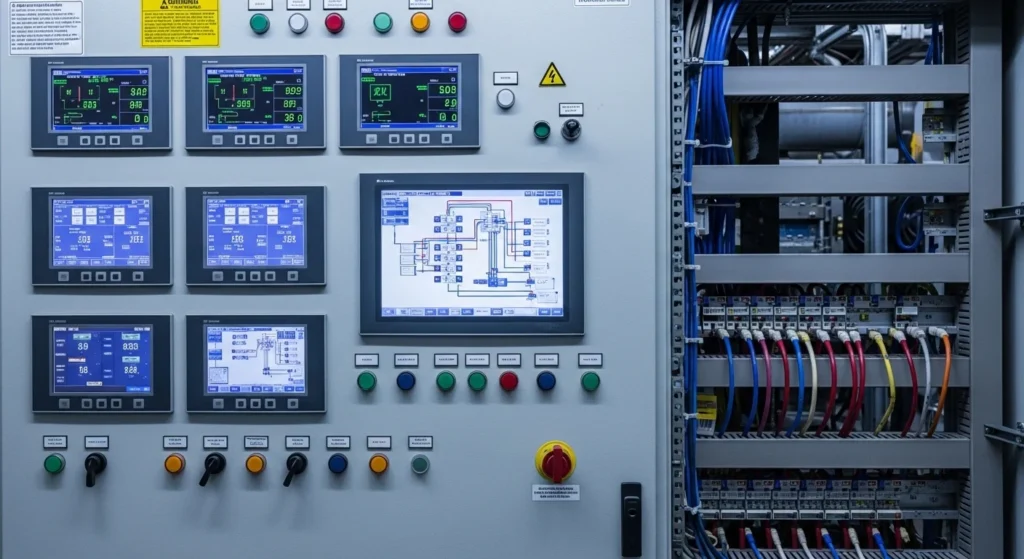
Generator Controller
The generator controller manages generator operation.
It performs functions such as:
- Starting the generator
- Monitoring engine speed
- Detecting faults
Modern controllers include digital displays and monitoring features.
Voltage Sensor
Voltage sensors monitor the main power supply.
If voltage drops below a safe level, the system triggers the generator startup.
Battery and Starter Motor
The battery powers the starter motor that starts the generator engine.
A weak battery can prevent automatic starting.
Circuit Breakers
Circuit breakers protect the system from electrical faults.
They disconnect power during overload or short circuits.
Automatic Generator Control System Advantages and Disadvantages
Understanding automatic generator control system advantages and disadvantages helps engineers decide when to use these systems.
Advantages
- Provides uninterrupted power supply
- Starts generator automatically during power failure
- Reduces need for manual operation
- Improves reliability of backup power systems
- Protects sensitive electrical equipment
- Suitable for critical facilities like hospitals and data centers
- Enhances safety and operational efficiency
These advantages make automatic systems essential in modern electrical infrastructure.
Disadvantages / Limitations
Despite their benefits, these systems have some limitations.
- Higher installation cost
- Requires skilled technicians for setup
- Control components may require maintenance
- System faults may affect generator operation
However, the benefits usually outweigh these limitations in critical applications.
Automatic Generator Control System Applications
Automatic generator control system applications are found in many industries.
Industrial Applications
Industries require continuous power for production.
Applications include:
- Manufacturing plants
- Oil and gas facilities
- Mining operations
- Chemical plants
Generators ensure machines keep operating during power outages.
Commercial Applications
Commercial buildings depend on backup power systems.
Examples include:
- Hospitals
- Airports
- Shopping malls
- Hotels
These facilities require reliable automatic backup power.
Residential Applications
Some large homes and apartments also use automatic generator systems.
These systems power:
- Lighting
- Security systems
- Water pumps
- Air conditioning
Comparison: Automatic vs Manual Generator Control System
Understanding the difference between automatic generator control system and manual generator control system helps in selecting the right system.
| Feature | Automatic Generator Control System | Manual Generator Control System |
| Operation | Fully automatic | Manual operation |
| Response time | Very fast | Slower |
| Reliability | High | Moderate |
| Cost | Higher | Lower |
| Human involvement | Minimal | Required |
| Applications | Hospitals, industries | Small facilities |
Automatic systems are preferred where power reliability is critical.
Selection Guide
Choosing the right automatic generator control system requires careful planning.
Determine Power Requirements
Calculate the total electrical load that the generator must supply.
Choose Proper ATS Capacity
The ATS should handle the maximum load safely.
Consider Reliability
Critical facilities require high-quality control systems.
Check Monitoring Features
Modern controllers provide monitoring functions like:
- Voltage display
- Fault alarms
- Maintenance reminders
Ensure Spare Parts Availability
Select systems with easily available replacement components.
Common Problems & Solutions
Understanding troubleshooting helps technicians maintain system reliability.
Why does the generator not start automatically?
Possible causes:
- Weak battery
- Faulty controller
- Sensor failure
Solution:
- Test battery
- Inspect controller settings
- Replace sensors
Why does the ATS fail to transfer load?
Possible causes:
- Mechanical fault
- Control circuit failure
- Electrical connection problems
Solution:
- Inspect ATS mechanism
- Check wiring connections
- Test control signals
Why does the generator stop suddenly?
Possible causes:
- Fuel shortage
- Engine fault
- Overload condition
Solution:
- Check fuel supply
- Inspect engine components
- Reduce electrical load
Future Trends in Automatic Generator Control Systems
Generator control technology continues to improve.
Smart Generator Controllers
Modern controllers use digital technology to monitor performance and detect faults.
Remote Monitoring Systems
Engineers can monitor generator systems from remote locations using internet-based systems.
IoT-Based Power Systems
Internet of Things technology allows generators to communicate with monitoring systems in real time.
Energy Management Integration
Future systems will integrate generators with renewable energy sources such as solar power.
This will improve energy efficiency and sustainability.
Conclusion
An Automatic Generator Control System plays a vital role in ensuring uninterrupted power supply during electrical failures. These systems automatically detect power outages, start generators, and transfer electrical loads without human intervention.
Understanding the automatic generator control system working principle helps electrical students and technicians appreciate how modern backup power systems operate. Important components such as automatic transfer switches, controllers, sensors, and circuit breakers work together to ensure reliable performance.
The automatic generator control system advantages and disadvantages show that although installation costs may be higher, the reliability and safety benefits are extremely valuable for critical facilities like hospitals, data centers, and industrial plants.
As technology continues to evolve, future generator control systems will include smart monitoring, remote control, and integration with modern energy systems. For electrical professionals, learning about automatic generator control systems is an essential step toward mastering modern power management technology.