
Imagine a hospital during a power outage. The main electricity supply suddenly fails, and within seconds the backup generator starts running. Life-saving equipment, lighting, and critical systems continue to operate without interruption. Now imagine if that generator failed because it was not properly maintained. The consequences could be serious.
This example shows why Generator Maintenance is extremely important. Generators are widely used as backup power sources in homes, hospitals, industries, construction sites, and commercial buildings. They ensure continuous electricity during power failures.
However, like any mechanical and electrical equipment, generators require regular maintenance to work reliably. Without proper inspection, cleaning, lubrication, and testing, generators may fail exactly when they are needed most.
Understanding generator maintenance helps technicians detect problems early, improve efficiency, and extend equipment life.
In this detailed guide, you will learn:
- The concept of Generator Maintenance
- Generator maintenance working principle
- Types of generator maintenance used in industry
- Important components that require inspection
- Generator maintenance advantages and disadvantages
- Common generator problems and troubleshooting techniques
This article is written in simple English so electrical students, engineers, and technicians can easily understand and apply the knowledge in real-world situations.
What is Generator Maintenance?
Generator Maintenance is the process of regularly inspecting, servicing, cleaning, and testing a generator to ensure it operates safely, efficiently, and reliably.
The main purpose of generator maintenance is to prevent unexpected failures and ensure the generator is ready whenever power is needed.
In simple terms:
Generator maintenance means taking care of a generator so it continues to produce electricity efficiently for a long time.
Practical Example
Consider a diesel generator used in a factory as backup power. If the fuel system becomes clogged or the battery is weak, the generator may fail to start during a power outage.
However, regular maintenance—such as checking fuel filters, testing the battery, and inspecting the cooling system—ensures the generator operates properly when required.
Generator maintenance is essential for:
- Industrial generators
- Backup power systems
- Portable generators
- Emergency power systems
Proper maintenance helps avoid costly breakdowns and ensures reliable power supply.
Generator Maintenance Working Principle
The generator maintenance working principle focuses on detecting and fixing small problems before they become major failures.
Instead of waiting for a generator to stop working, technicians perform scheduled inspections and tests to keep the machine in good condition.
Think of generator maintenance like routine servicing of a car. If oil changes and inspections are ignored, the engine may eventually fail.
Step-by-Step Generator Maintenance Process
The maintenance process typically involves the following steps.
Visual Inspection
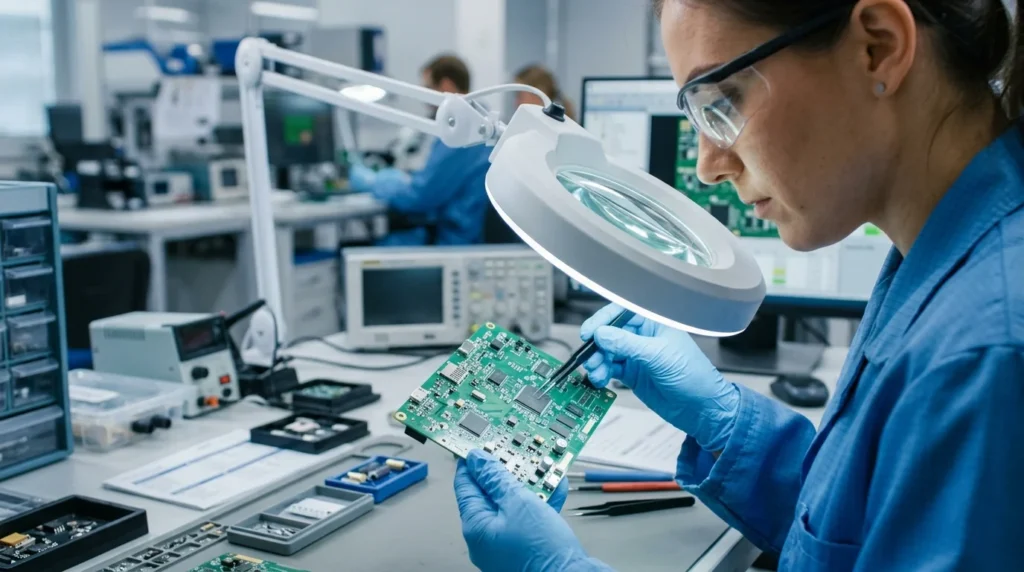
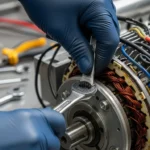
Visual inspection is the process of carefully examining electrical equipment, wiring systems, and electronic components using the eyes to identify visible defects, damage, or unsafe conditions before performing detailed testing. It is one of the first and most important steps in electrical maintenance and troubleshooting because many faults can be detected quickly without using advanced instruments. During visual inspection, technicians check for loose connections, burnt marks, damaged insulation, broken parts, corrosion, overheating signs, dust accumulation, moisture, and improper wiring arrangements. This method is widely used in homes, industries, power plants, workshops, and control panels to improve safety and prevent equipment failure. Visual inspection helps reduce maintenance time, avoid electrical hazards, and ensure that systems are installed correctly according to safety standards. Although it does not provide exact electrical measurements, it is highly effective for identifying obvious faults before using tools like multimeters or insulation testers. Understanding visual inspection is important for electrical students, engineers, and technicians because it is a basic and essential practice for safe operation, fault detection, and reliable maintenance of electrical and electronic systems.Technicians examine the generator for visible issues such as:
- Oil leaks
- Fuel leaks
- Loose wiring
- Damaged parts
This helps detect problems early.
Cleaning
Dust, dirt, and oil deposits can affect generator performance.
Cleaning tasks include:
- Removing dust from the alternator
- Cleaning air filters
- Wiping control panels
Clean equipment runs cooler and more efficiently.
Lubrication
Moving parts such as bearings require lubrication.
Proper lubrication helps:
- Reduce friction
- Prevent overheating
- Extend equipment life
Electrical Testing
Electrical tests ensure the generator produces correct voltage and current.
Common tests include:
- Voltage measurement
- Insulation resistance testing
- Load testing
These tests confirm that the generator is functioning correctly.
Cooling System Check
Generators produce heat during operation.
Maintenance checks include:
- Radiator inspection
- Coolant level monitoring
- Fan operation testing
Fuel System Inspection
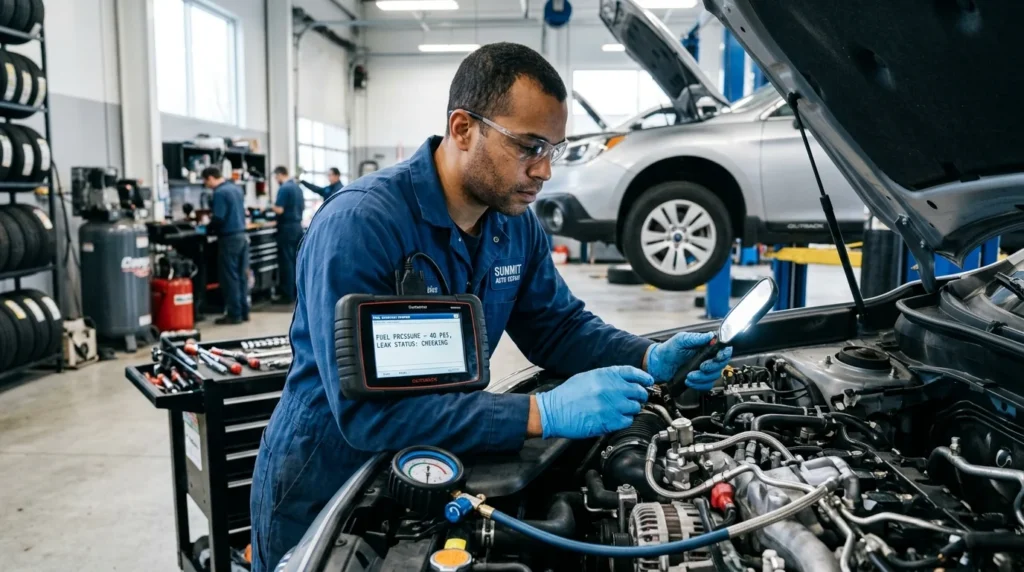
Fuel system inspection is the process of checking the condition, performance, and safety of the components used to store, supply, and deliver fuel in engines, generators, and power plants. It is an important maintenance procedure that helps ensure proper fuel flow, efficient combustion, and reliable engine operation. During fuel system inspection, technicians examine fuel tanks, fuel pumps, filters, injectors, pipelines, valves, and connections for leaks, blockages, corrosion, loose fittings, or contamination. The inspection also includes checking fuel pressure, fuel quality, and the proper operation of injectors and pumps to avoid engine performance problems. Fuel system inspection is widely used in diesel generators, automobiles, industrial machines, marine engines, and power plants because fuel-related faults can cause poor efficiency, increased fuel consumption, overheating, and engine failure. Regular inspection improves safety, reduces maintenance costs, and extends equipment lifespan. Understanding fuel system inspection is important for electrical students, engineers, and technicians because fuel systems play a major role in the efficient and safe operation of generators, diesel engines, and industrial power systems.
Technicians inspect:
- Fuel filters
- Fuel lines
- Fuel quality
Clean fuel systems prevent engine performance issues.
Types / Classification of Generator Maintenance
Generator maintenance can be classified into several types based on how maintenance is performed.
Preventive Maintenance
Preventive maintenance is performed regularly before problems occur.
This type of maintenance includes scheduled tasks such as:
- Oil changes
- Filter replacement
- Battery testing
- Cooling system inspection
Preventive maintenance is the most widely used maintenance strategy.
Predictive Maintenance
Predictive maintenance uses monitoring tools to predict potential failures.
Examples include:
- Vibration analysis
- Thermal imaging
- Oil analysis
This method allows technicians to detect faults before they cause damage.
Corrective Maintenance
Corrective maintenance is performed after a fault is detected.
Examples include:
- Replacing damaged alternator components
- Repairing the cooling system
- Fixing electrical wiring
Corrective maintenance restores the generator to normal operation.
Breakdown Maintenance
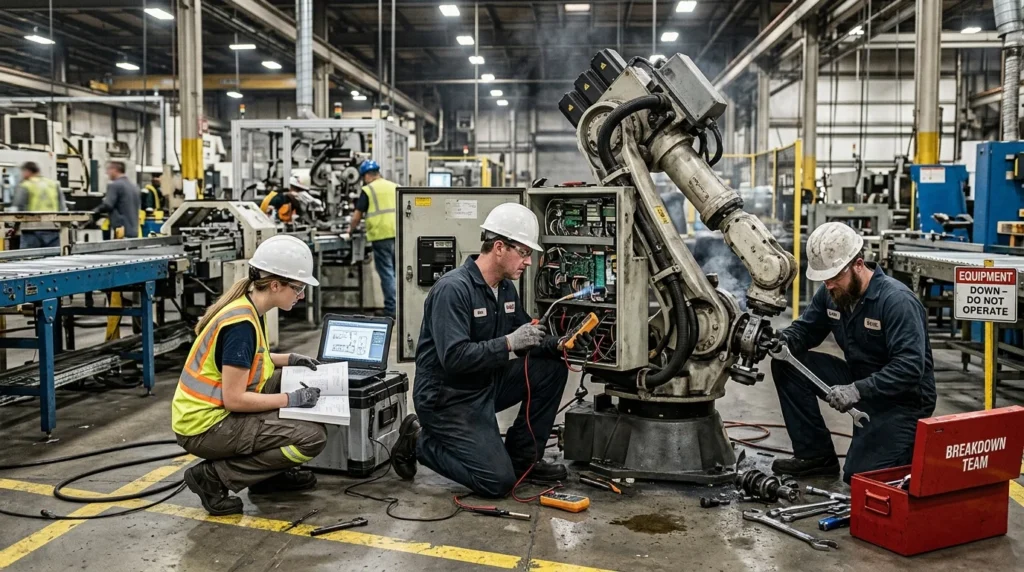
Breakdown maintenance occurs when the generator stops working completely.Breakdown maintenance is a type of maintenance performed after a machine, electrical system, or equipment stops working due to a fault or failure. In this maintenance method, repairs are carried out only when the equipment breaks down and can no longer operate properly. The main purpose of breakdown maintenance is to identify the fault, repair or replace damaged components, and restore the system to normal working condition as quickly as possible. This type of maintenance is commonly used for non-critical equipment where occasional failure does not cause major safety or production problems. During breakdown maintenance, technicians inspect the system, troubleshoot the fault, replace defective parts, and test the equipment after repair. Breakdown maintenance is widely used in small industries, workshops, household appliances, and backup systems because it may reduce regular maintenance costs for less important equipment. However, unexpected breakdowns can lead to downtime, production loss, and higher repair expenses if not managed properly. Understanding breakdown maintenance is important for electrical students, engineers, and technicians because it helps them learn fault diagnosis, repair techniques, troubleshooting methods, and equipment reliability management in electrical and industrial systems.
This type of maintenance is usually expensive because it may involve:
- Major repairs
- Replacement parts
- Long downtime
Most industries avoid relying only on breakdown maintenance.
Main Components Checked in Generator Maintenance
Effective generator maintenance requires careful inspection of several important components.
Engine
The engine is the mechanical part that drives the generator.
Maintenance tasks include:
- Oil level checks
- Fuel inspection
- Cooling system monitoring
Proper engine maintenance ensures reliable power generation.
Alternator
The alternator converts mechanical energy into electrical energy.
Maintenance checks include:
- Winding insulation
- Voltage output
- Cooling condition
Alternator faults can cause unstable power output.
Battery System
Most generators use batteries for starting.
Maintenance tasks include:
- Battery voltage testing
- Terminal cleaning
- Electrolyte level inspection
Weak batteries are a common cause of generator starting failures.
Cooling System
Generators generate heat during operation.
Maintenance includes checking:
- Radiator condition
- Coolant levels
- Cooling fans
Proper cooling prevents overheating.
Control Panel
The control panel monitors generator operation.
Technicians check:
- Voltage readings
- Frequency levels
- Alarm systems
The control panel ensures safe generator operation.
Generator Maintenance Advantages and Disadvantages
Understanding generator maintenance advantages and disadvantages helps technicians plan effective maintenance strategies.
Advantages
- Increases generator lifespan
- Improves reliability during power outages
- Reduces unexpected breakdowns
- Improves fuel efficiency
- Ensures stable power output
- Enhances safety of electrical systems
- Reduces long-term repair costs
Regular maintenance can significantly improve generator performance.
Disadvantages / Limitations
Although maintenance is essential, it has some limitations.
- Requires trained technicians
- Maintenance costs can be high
- Scheduled shutdowns may be necessary
- Advanced testing equipment may be expensive
Despite these challenges, maintenance is still far cheaper than replacing a damaged generator.
Generator Maintenance Applications
Generator maintenance applications are found in many sectors.
Industrial Applications
Industries depend heavily on generators.
Examples include:
- Manufacturing plants
- Mining operations
- Oil and gas facilities
- Data centers
Reliable generators ensure continuous production.
Commercial Applications
Commercial buildings also rely on backup power systems.
Examples include:
- Hospitals
- Shopping malls
- Airports
- Hotels
Maintenance ensures emergency power is always available.
Residential Applications
In many areas, generators are used in homes during power outages.
Maintenance helps ensure:
- Quick startup
- Reliable electricity supply
- Safe operation
Portable generators especially require regular inspection.
Comparison: Preventive vs Breakdown Maintenance
Understanding the difference between preventive maintenance and breakdown maintenance helps technicians choose the right maintenance strategy.
| Feature | Preventive Maintenance | Breakdown Maintenance |
| Timing | Before faults occur | After failure occurs |
| Reliability | High | Low |
| Cost | Lower long-term cost | Higher repair cost |
| Downtime | Minimal | Often long |
| Equipment Life | Longer lifespan | Shorter lifespan |
Preventive maintenance is always recommended for critical generator systems.
Generator Selection Guide
Choosing the right generator makes maintenance easier and improves performance.
Choose Proper Generator Capacity
The generator should match the required electrical load.
Undersized generators may overload and fail quickly.
Consider Fuel Type
Common generator fuel types include:
- Diesel generators
- Gas generators
- Petrol generators
Each type has different maintenance requirements.
Check Cooling System
Generators operating in hot environments require efficient cooling systems.
Proper cooling reduces maintenance needs.
Ensure Spare Parts Availability
Generators with easily available spare parts are easier and cheaper to maintain.
Common Generator Problems & Solutions
Generators can experience various problems. Understanding troubleshooting techniques is essential.
Why does the generator fail to start?
causes:
- Weak battery
- Empty fuel tank
- Faulty starter motor
Solution:
- Charge or replace battery
- Check fuel supply
- Inspect starter system
Why is the generator overheating?
causes:
- Low coolant level
- Blocked radiator
- Overloading
Solution:
- Refill coolant
- Clean radiator
- Reduce electrical load
Why is generator voltage unstable?
causes:
- Faulty voltage regulator
- Loose electrical connections
- Alternator problems
Solution:
- Check regulator
- Tighten connections
- Inspect alternator
Why does the generator produce unusual noise?
causes:
- Loose components
- Bearing wear
- Engine problems
Solution:
- Tighten parts
- Replace bearings
- Inspect engine components
Future Trends in Generator Maintenance
Generator technology continues to evolve with modern innovations.
Smart Generator Monitoring
Modern generators use sensors to monitor:
- Temperature
- Vibration
- Voltage
- Fuel levels
These sensors provide real-time monitoring.
IoT-Based Maintenance
Internet of Things (IoT) technology allows remote monitoring of generator performance.
Engineers can analyze generator data from anywhere.
AI Predictive Maintenance
Artificial intelligence systems analyze generator data to predict failures before they occur.
This greatly reduces downtime.
Eco-Friendly Generators
New generator designs focus on:
- Reduced emissions
- Better fuel efficiency
- Lower maintenance requirements
These technologies are shaping the future of power generation.
Conclusion
Generators play a critical role in providing backup electricity for homes, businesses, hospitals, and industries. Because they operate during emergencies, reliability is extremely important. This is why Generator Maintenance is essential.
Regular inspection, cleaning, lubrication, and testing ensure that generators remain ready for operation whenever power outages occur. Understanding the generator maintenance working principle allows technicians to detect small problems early and prevent major failures.
Different maintenance strategies such as preventive, predictive, and corrective maintenance help improve equipment reliability. Preventive maintenance is the most effective method for reducing unexpected generator breakdowns.
By learning about generator components, common faults, and troubleshooting techniques, electrical students and technicians can maintain generators more effectively. With new technologies like smart monitoring and AI-based maintenance systems, generator maintenance will become even more advanced in the future.
Mastering generator maintenance is an essential skill for anyone working with electrical power systems.