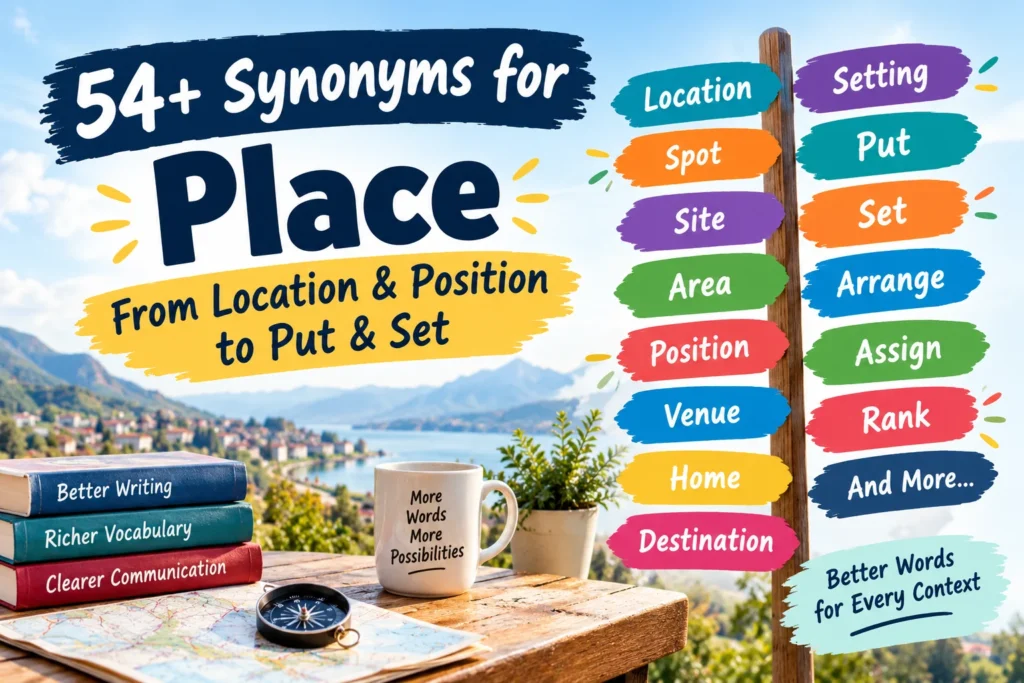

Finding a suitable alternative for the word “place” is not always as simple as it seems. This common English word can work as both a noun and a verb, and its meaning changes depending on how it is used. As a noun, place can describe a location, area, spot, site, venue, home, or position. As a verb, it can mean to put something somewhere, position an object, arrange something, assign a person, or achieve a particular position in a competition.
Words such as location, spot, site, area, position, venue, home, destination, put, set, position, arrange, assign, and rank can sometimes replace place. However, each alternative has its own meaning and is suitable for different situations.
For example, you may visit a historic site, find a quiet spot, choose a wedding venue, put a book on a shelf, or position a chair beside a window. Using the wrong synonym can make a sentence sound unnatural or change its intended meaning.
If you are looking for synonyms for place for an essay, blog post, conversation, email, travel writing, or everyday English, this guide will help. Below, you will find useful alternatives grouped by meaning, with simple definitions and examples.
Location
Meaning: Location refers to the exact or general position where someone or something can be found.
Examples:
- The hotel has an excellent location.
- Please send me your current location.
Spot
Meaning: A spot usually means a particular place, especially a small or clearly identified one.
Examples:
- We found a quiet spot beside the river.
- This is my favorite spot in the park.
Site
Meaning: A site is a particular place where something is located, built, or takes place.
Examples:
- The workers visited the construction site.
- The museum stands on an important historical site.
Area
Meaning: An area is a section or part of a larger space or region.
Examples:
- This area is popular with tourists.
- Please wait in the designated area.
Position
Meaning: Position describes the exact place or arrangement of a person or object.
Examples:
- The table is in the wrong position.
- Check the position of the chair before moving it.
Point
Meaning: A point can refer to a particular place, especially one that can be identified or marked.
Examples:
- We stopped at the highest point of the trail.
- Meet me at the same point after lunch.
Setting
Meaning: Setting refers to the surroundings or location where an event, story, movie, or activity happens.
Examples:
- The novel has a fascinating historical setting.
- The garden provided a beautiful setting for the ceremony.
Venue
Meaning: A venue is a place where an organized event, performance, meeting, or celebration occurs.
Examples:
- The conference venue can hold hundreds of people.
- We are still looking for a suitable wedding venue.
Locality
Meaning: Locality refers to a particular neighborhood, area, or geographical place.
Examples:
- The house is located in a peaceful locality.
- Several new stores have opened in the locality.
Locale
Meaning: Locale means a particular place or setting, often used in descriptive or formal writing.
Examples:
- The director selected a coastal locale for the movie.
- The village was an attractive locale for the project.
Vicinity
Meaning: Vicinity means the area surrounding or close to a particular location.
Examples:
- There are several restaurants in the vicinity.
- We booked a hotel in the vicinity of the airport.
Surroundings
Meaning: Surroundings are the people, buildings, landscape, and other things located around a particular place.
Examples:
- The hotel has peaceful surroundings.
- We enjoyed walking through the natural surroundings.
Environment
Meaning: Environment refers to the conditions and surroundings in which a person, animal, activity, or organization exists.
Examples:
- Students need a comfortable learning environment.
- The office provides a positive working environment.
Neighborhood
Meaning: A neighborhood is a local area where people live, usually within a town or city.
Examples:
- They moved to a quieter neighborhood.
- There is a supermarket in our neighborhood.
District
Meaning: A district is a defined section of a city, town, or larger geographical area.
Examples:
- The business district becomes crowded during the day.
- We explored the historic district.
Quarter
Meaning: A quarter can describe a particular section of a city or town.
Examples:
- The restaurant is in the old quarter.
- We spent the afternoon exploring the historic quarter.
Region
Meaning: A region is a larger geographical area with shared physical, cultural, or political characteristics.
Examples:
- The region is known for its beautiful mountains.
- Farmers in this region grow wheat and corn.
Zone
Meaning: A zone is an area set aside for a particular purpose, activity, or condition.
Examples:
- Cars cannot enter this pedestrian zone.
- The children stayed inside the designated play zone.
Territory
Meaning: Territory refers to land or an area controlled, occupied, owned, or claimed by a person, group, organization, or animal.
Examples:
- The company is expanding into new territory.
- The animals defend their territory from intruders.
Ground
Meaning: Ground can refer to an area of land, especially one used for a particular activity.
Examples:
- The children were playing on the school grounds.
- The stadium grounds were crowded after the match.
Land
Meaning: Land means an area of ground, especially when it is owned, purchased, developed, or used for a purpose.
Examples:
- They purchased land outside the city.
- The farmer uses the land to grow vegetables.
Property
Meaning: Property can mean a piece of land, a house, or another building owned by someone.
Examples:
- They recently purchased a large property.
- The property includes a garage and garden.
Premises
Meaning: Premises refers to a building and the land connected with it, particularly when discussing a business or organization.
Examples:
- Employees must keep the premises clean.
- Visitors are not allowed on the premises after closing time.
Home
Meaning: Home is the place where a person normally lives and feels that they belong.
Examples:
- I will be staying at home tonight.
- Their new home is near the city center.
House
Meaning: A house is a physical building designed for people to live in.
Examples:
- They bought a small house near the lake.
- Her house has a large front garden.
Residence
Meaning: Residence is a more formal word for a place where someone lives.
Examples:
- His official residence is in the capital.
- The family moved to a new residence.
Dwelling
Meaning: A dwelling is a building or shelter used as someone’s home.
Examples:
- The village contains several traditional dwellings.
- They built a simple dwelling near the farmland.
Accommodation
Meaning: Accommodation refers to a place where someone lives or stays temporarily, such as a hotel, apartment, or guesthouse.
Examples:
- We found affordable accommodation near the station.
- The university provides accommodation for students.
Shelter
Meaning: Shelter is a place that provides protection from weather, danger, or difficult conditions.
Examples:
- We looked for shelter when the storm began.
- The organization provides shelter for homeless families.
Refuge
Meaning: Refuge is a safe place where someone can escape danger, difficulty, or unwanted attention.
Examples:
- The travelers found refuge from the storm.
- The forest became a refuge for wildlife.
Haven
Meaning: A haven is a peaceful or protected place where people, animals, or activities can feel safe.
Examples:
- The garden is a quiet haven in the middle of the city.
- The island became a haven for visitors seeking peace.
Retreat
Meaning: A retreat is a place where someone goes to rest, relax, or get away from everyday activities.
Examples:
- We spent the weekend at a mountain retreat.
- The countryside cottage makes an excellent retreat.
Hideaway
Meaning: A hideaway is a private or secluded place where someone can escape from other people.
Examples:
- They discovered a beautiful hideaway in the mountains.
- The cabin is a perfect weekend hideaway.
Nook
Meaning: A nook is a small, cozy, or partly enclosed area.
Examples:
- She created a reading nook beside the window.
- We found a comfortable nook in the café.
Corner
Meaning: A corner is a particular part of a room, street, or area, often where two sides meet.
Examples:
- Put the bookshelf in the corner.
- I found a quiet corner in the library.
Room
Meaning: Room can mean an available area or sufficient space for someone or something.
Examples:
- There is enough room for another chair.
- We need more room in the garage.
Space
Meaning: Space refers to an area that is available or suitable for someone or something.
Examples:
- There is plenty of space in the parking lot.
- I need some extra space on my desk.
Seat
Meaning: A seat is a place where a person can sit.
Examples:
- Is this seat available?
- We reserved a seat near the entrance.
Berth
Meaning: A berth is a sleeping or resting place on a train or ship.
Examples:
- I reserved a lower berth for the journey.
- Her berth was close to the window.
Station
Meaning: A station can be a place where transportation, communication, public service, or another organized activity operates.
Examples:
- We arrived at the train station early.
- The fire station is only a few blocks away.
Base
Meaning: A base is a place from which a person, organization, military unit, or team operates.
Examples:
- The team returned to its training base.
- The company uses Dubai as its regional base.
Headquarters
Meaning: Headquarters is the main office or central location of an organization.
Examples:
- The company moved its headquarters to another city.
- She works at the organization’s headquarters.
Office
Meaning: An office is a place where professional, administrative, or business work is carried out.
Examples:
- I left the documents at the office.
- Her office is on the third floor.
Workplace
Meaning: Workplace means the location where a person performs their job.
Examples:
- A positive workplace can improve employee satisfaction.
- His workplace is close to the train station.
Destination
Meaning: A destination is the place someone is traveling toward or intends to reach.
Examples:
- Rome was our final destination.
- We arrived at our destination before dark.
Address
Meaning: An address is the information used to identify where a person, building, home, or business can be found.
Examples:
- Please enter your delivery address.
- I wrote the new address on the form.
Whereabouts
Meaning: Whereabouts refers to the location of a person or thing, especially when the exact location is uncertain.
Examples:
- Nobody knew his whereabouts.
- The police asked about the missing person’s whereabouts.
Role
Meaning: When place refers to someone’s function or contribution in a group, role can be a suitable alternative.
Examples:
- She plays an important role on the team.
- Everyone should understand their role in the project.
Rank
Meaning: Rank refers to a person’s or team’s position in a competition, list, organization, or hierarchy.
Examples:
- The team moved up in the rankings.
- She achieved a high rank in the competition.
Standing
Meaning: Standing describes someone’s position, reputation, or status within a group or organization.
Examples:
- He has a respected standing in the community.
- Her professional standing has improved over the years.
How to Choose the Right Synonym for Place
The word place has many meanings, so the best synonym depends on the sentence. A word that works well in one situation may sound incorrect in another.
Use location when you are talking about where a person, object, or building is.
The store has a convenient location.
Choose spot for a particular or relatively small place.
We found a perfect spot for a picnic.
Use site when referring to a location connected with construction, history, business, or an event.
The old building is now a protected historical site.
Choose venue when discussing a place where an event takes place.
The organizers selected a larger venue.
Use home, residence, or dwelling when referring to somewhere a person lives.
Choose destination when discussing the place someone is traveling to.
For non-physical meanings, position, rank, standing, or role may be more appropriate.
The important point is to focus on the meaning of place in your sentence instead of replacing it with the first synonym you find.
Synonyms for Place in Different Contexts
Synonyms for a Physical Place
When place refers to a physical location, useful alternatives include location, spot, site, area, point, position, locale, and setting.
These words are useful for describing where a person, object, building, or event is situated.
Synonyms for a Place to Live
For a place where someone lives, consider home, house, residence, dwelling, accommodation, shelter, or refuge.
The choice depends on whether you are describing a permanent home, temporary accommodation, or a place offering protection.
Synonyms for a Place to Visit
When talking about somewhere people travel to or visit, useful choices include destination, location, spot, venue, locale, and setting.
For example, a tourist may choose a destination, while a photographer may search for a beautiful spot.
Synonyms for a Place at an Event
For events, the most suitable alternatives often include venue, seat, space, and sometimes berth, depending on the situation.
A concert has a venue, while an audience member has a seat.
Synonyms for Position or Rank
When place describes someone’s position, alternatives include position, rank, standing, and role.
These words are especially useful in professional, academic, social, and competitive contexts.
Frequently Asked Questions About Synonyms for Place
What is the most common synonym for place?
Location is one of the most common alternatives when place refers to where someone or something is situated. Spot is also common for a specific or smaller place.
What is a simple word for place?
Spot is a simple and natural alternative in many everyday sentences. Location is another common option when referring to where something is.
What synonyms for place work well in an essay?
For academic or formal writing, you can use words such as location, site, area, region, setting, position, environment, and district. The correct choice depends on the intended meaning.
What can I say instead of place in writing?
Depending on the context, alternatives include location, spot, site, area, venue, setting, destination, residence, position, and locale.
What is another word for a beautiful place?
Words such as haven, retreat, hideaway, destination, setting, spot, and locale can describe an attractive, peaceful, or memorable place.
What is another word for a place where someone lives?
Common options include home, house, residence, dwelling, accommodation, and shelter. Each word carries a slightly different meaning.
Why are synonyms for place useful?
Learning alternatives to place helps reduce repetition and makes your communication more precise. It also allows you to choose vocabulary that better matches formal, informal, academic, professional, or creative writing.
Conclusion
Understanding different synonyms for place can make your English more varied, accurate, and natural. Words such as location, spot, site, setting, venue, destination, residence, position, and area can all replace place in certain situations, but they do not have exactly the same meaning.
The best approach is to first identify what place means in your sentence. If you are talking about where something is, location may be suitable. For a small or specific area, spot may sound more natural. For an event, venue is usually better, while destination works for travel. When discussing someone’s position, rank, standing, position, or role may be the better choice.
By learning these distinctions and practicing them in real sentences, you can avoid repetitive vocabulary and communicate your ideas with greater clarity and precision.