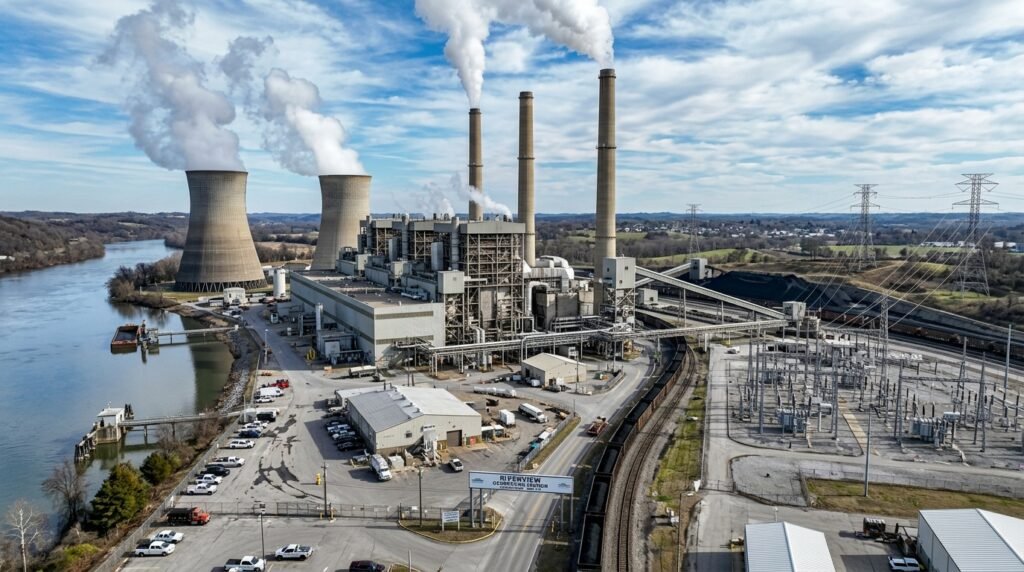

Imagine a hot summer evening in a city. Fans are running, air conditioners are cooling rooms, factories are operating, and hospitals are saving lives with medical equipment. Now imagine suddenly there is no electricity. Everything stops instantly. This is where an electrical power plant becomes the most important system in modern life.
An electrical power plant is the heart of the power system. It generates electricity in large quantities and supplies it to homes, industries, and commercial areas. Without it, modern civilization cannot function properly.
What Is an Electrical Power Plant?
An electrical power plant is a facility designed to generate electrical energy on a large scale. It converts a primary energy source, such as coal, natural gas, water, wind, nuclear energy, or sunlight, into electrical energy that can be supplied to homes, businesses, industries, and other consumers.
Power plants are an important part of the electrical power system because they provide the electricity needed for lighting, heating, motors, machines, communication systems, transportation, and many other applications.
Simple Definition
An electrical power plant is a facility where electrical energy is generated from another form of energy and then delivered to the electrical grid or consumers.
The method of electricity generation depends on the type of power plant. For example:
- A thermal power plant uses heat to produce steam and drive a turbine.
- A hydroelectric power plant uses flowing or falling water to rotate a turbine.
- A wind power plant uses wind to rotate turbine blades.
- A nuclear power plant uses nuclear energy to produce heat and steam.
- A solar photovoltaic (PV) plant converts sunlight directly into electrical energy without using a conventional turbine.
Easy Explanation
Think of an electrical power plant as a large-scale energy conversion system.
It takes energy from a primary source and converts it into electrical energy. In many conventional power plants, the process follows this path:
Primary Energy → Mechanical Energy → Electrical Energy
For example, in a thermal power plant, fuel is used to produce heat. The heat converts water into high-pressure steam. The steam rotates a turbine, and the turbine drives an electrical generator.
In a solar PV plant, however, sunlight is converted directly into electrical energy through photovoltaic cells.
Practical Example
Consider a thermal power plant:
- Fuel such as coal or natural gas is used as an energy source.
- The fuel produces heat.
- Heat converts water into high-pressure steam.
- The steam rotates a turbine.
- The turbine drives a generator.
- The generator produces electrical energy.
- A transformer increases the voltage.
- The electricity is transmitted through high-voltage power lines.
This example shows how different forms of energy can be converted into useful electrical power.
Working Principle of an Electrical Power Plant
The working principle of a power plant depends on its energy source and generation technology. In conventional rotating-generator plants, the basic process is:
Energy Source → Mechanical Energy → Generator → Electrical Energy → Transformer → Transmission
The generator produces electricity through electromagnetic induction. When the generator’s magnetic field and conductors move relative to each other, an electromotive force (EMF) is induced, producing electrical power.
However, not every power plant follows this exact sequence. Solar PV systems, for example, convert sunlight directly into DC electricity and then use power electronic inverters to produce AC electricity.
Step-by-Step Process
1. Energy Input
The power plant receives energy from a primary source.
Common sources include:
- Coal
- Natural gas
- Water
- Wind
- Nuclear fuel
- Biomass
- Geothermal heat
- Sunlight
The type of energy source determines the design and operating principle of the plant.
2. Energy Conversion
The primary energy is converted into a usable form for electricity generation.
For example:
- Thermal plants convert fuel energy into heat.
- Hydroelectric plants use water’s potential or kinetic energy.
- Wind plants use the kinetic energy of moving air.
- Nuclear plants convert nuclear energy into heat.
- Solar PV plants convert sunlight directly into electrical energy.
3. Turbine or Prime Mover Operation
In many power plants, a turbine or another prime mover converts the available energy into mechanical rotation.
Examples include:
- Steam turbines in thermal and nuclear plants
- Water turbines in hydroelectric plants
- Wind turbines in wind power plants
- Gas turbines in gas turbine power plants
The rotating turbine or prime mover provides mechanical input to the generator.
4. Electricity Generation
The mechanical energy is transferred to an electrical generator.
The generator converts mechanical energy into electrical energy through electromagnetic induction.
In a typical AC generator:
- The rotor rotates.
- A magnetic field interacts with the stator conductors.
- An EMF is induced.
- Electrical current flows when the circuit is connected to a load.
The generator output is then controlled and prepared for connection to the electrical grid.
5. Voltage Transformation
The generated electricity is usually supplied to a step-up transformer before long-distance transmission.
The transformer increases the voltage to a high transmission level. Higher transmission voltage allows the same amount of power to be transmitted with lower current, which helps reduce resistive losses in transmission lines.
At the receiving end, substations use transformers to reduce the voltage to suitable levels for distribution and consumer use.
6. Transmission
After voltage is increased, electrical power travels through high-voltage transmission lines.
The transmission network connects power plants with substations and major load centers such as:
- Cities
- Industrial areas
- Commercial centers
- Residential regions
7. Distribution
Distribution substations reduce the voltage to levels suitable for local electrical networks.
Electricity is then delivered through distribution lines to homes, businesses, factories, and other users.
Simple Analogy
A bicycle dynamo provides a simple way to understand the basic concept.
When the bicycle wheel rotates:
Wheel Rotation → Dynamo → Electrical Energy → Light
A conventional generator in a power plant works on a similar basic principle, but on a much larger scale.
Instead of a bicycle wheel, the generator may be driven by a steam turbine, water turbine, gas turbine, or wind turbine.
The main difference is the energy source and scale of operation.
Important Key Points
- A power plant converts primary energy into electrical energy.
- Many power plants use a turbine or prime mover to produce mechanical rotation.
- Generators commonly use electromagnetic induction to generate electricity.
- Transformers are used to increase or decrease voltage.
- High-voltage transmission helps reduce electrical losses over long distances.
- Distribution systems deliver electricity to consumers.
- Not all power plants use turbines; solar PV plants generate electricity directly from sunlight using photovoltaic cells.
- Reliable power generation requires proper control, protection, cooling, and monitoring systems.
- The amount of electricity generated depends on the available energy source, plant capacity, operating conditions, and efficiency.
Basic Power Generation Flow
For a conventional rotating-generator plant:
Primary Energy → Turbine/Prime Mover → Generator → Electrical Energy → Step-Up Transformer → Transmission → Substation → Distribution → Consumers
For a solar PV plant:
Sunlight → Solar Panels → DC Electricity → Inverter → AC Electricity → Transformer → Grid
Types / Classification of Electrical Power Plant
Electrical power plants are classified based on energy sources.
Thermal Power Plant
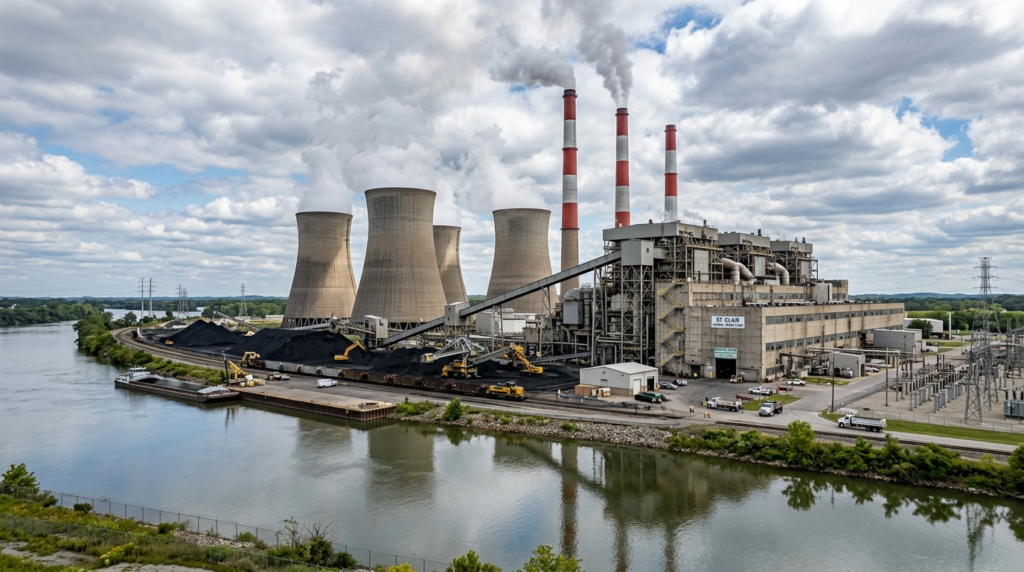
A Thermal Power Plant is a power generation facility that produces electricity by converting the heat energy obtained from burning fossil fuels such as coal, natural gas, or oil into electrical energy. In a thermal power plant, fuel is burned in a boiler to heat water and produce high-pressure steam. The steam flows through a steam turbine, causing it to rotate at high speed. The turbine is connected to an electrical generator, which converts the mechanical energy into electrical energy. After passing through the turbine, the steam is cooled in a condenser and converted back into water, which is reused in the boiler, completing a continuous cycle. The generated electricity is then stepped up by transformers and transmitted through high-voltage transmission lines to the power grid for distribution. Thermal power plants are capable of producing large amounts of electricity continuously and are widely used to meet base-load and peak electricity demand. However, they consume fossil fuels and release carbon dioxide and other pollutants into the atmosphere, making them less environmentally friendly than renewable energy sources. Despite these challenges, thermal power plants remain an important source of reliable electricity in many countries due to their high power generation capacity and well-established technology.
A thermal power plant uses coal, oil, or natural gas to produce heat energy.
- Most widely used plant
- Works on steam generation
- High electricity output
Hydroelectric Power Plant
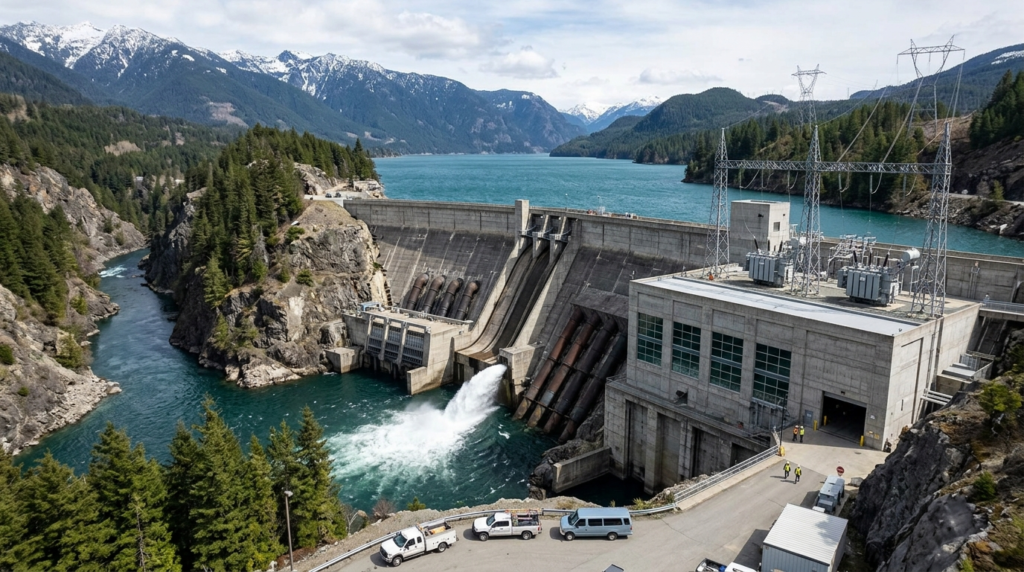
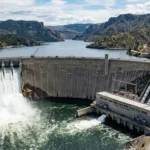
A Hydroelectric Power Plant is a renewable energy facility that generates electricity by using the energy of flowing or falling water. It is usually built near rivers or dams, where water is stored in a large reservoir. When electricity is needed, the stored water is released through large pipes called penstocks. The fast-moving water spins the blades of a hydraulic turbine, converting the water’s kinetic energy into mechanical energy. The turbine is connected to a generator, which converts the mechanical energy into electrical energy. The generated electricity is then stepped up by transformers and transmitted through high-voltage transmission lines to the power grid for distribution to homes, industries, and commercial areas. Hydroelectric power plants are environmentally friendly because they produce clean electricity without burning fossil fuels or releasing harmful greenhouse gases during operation. They are highly efficient, reliable, and capable of generating large amounts of electricity for many years. Although they require high initial construction costs and suitable geographical locations, hydroelectric power plants remain one of the most important and sustainable sources of renewable energy worldwide.
This plant uses moving water energy to generate electricity.
- Built near rivers or dams
- Renewable energy source
- Low operating cost
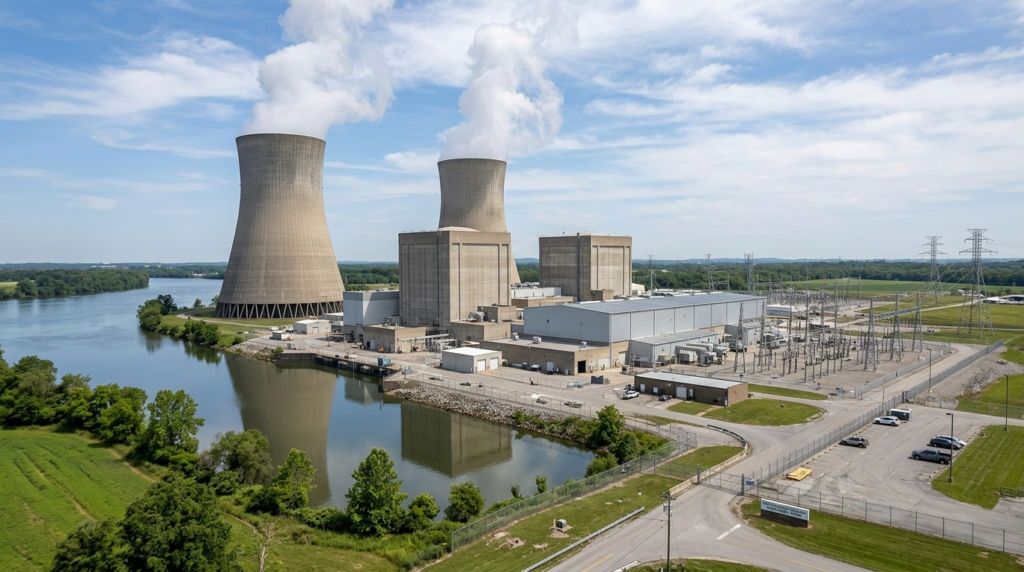
Nuclear Power Plant
A Nuclear Power Plant is a power generation facility that produces electricity by using the heat released from nuclear fission. In a nuclear reactor, atoms of radioactive fuel such as uranium-235 undergo controlled splitting, releasing a large amount of heat energy. This heat is used to convert water into high-pressure steam, which rotates a steam turbine connected to an electrical generator. The generator then converts the mechanical energy into electrical energy, which is transmitted to the power grid through transformers and transmission lines. Nuclear power plants can generate a large amount of electricity continuously with very low greenhouse gas emissions during operation, making them an important source of clean and reliable base-load power. They require strict safety systems, regular maintenance, and careful handling of radioactive materials to ensure safe operation. Although nuclear power plants involve high construction costs and radioactive waste management challenges, they remain one of the most efficient energy sources for meeting the growing electricity demand of modern societies while reducing dependence on fossil fuels.
Uses nuclear fission to generate heat energy.
- Very high energy production
- Requires strict safety systems
- Low fuel requirement
Solar Power Plant
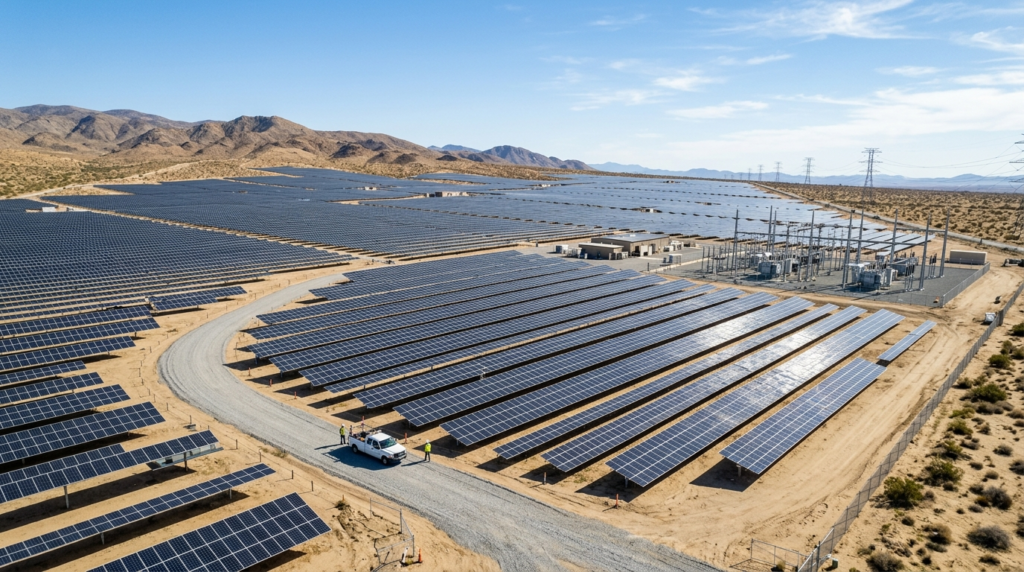
A Solar Power Plant is a renewable energy facility that generates electricity by converting sunlight into electrical energy using solar panels or photovoltaic (PV) cells. These solar panels absorb sunlight and produce direct current (DC) electricity through the photovoltaic effect. An inverter then converts the DC electricity into alternating current (AC), which is suitable for homes, industries, and the national power grid. Large solar power plants consist of thousands of solar panels connected together to produce significant amounts of electricity. They are commonly installed in open areas with abundant sunlight, such as deserts, fields, and rooftops. Solar power plants are environmentally friendly because they generate clean energy without producing air pollution or greenhouse gas emissions during operation. They also reduce dependence on fossil fuels and help lower electricity costs over time. Although their power generation depends on sunlight and weather conditions, advances in solar technology and energy storage systems have made solar power one of the fastest-growing and most reliable renewable energy sources in the world.
Uses sunlight converted into electricity using solar panels.
- Clean energy source
- No fuel required
- Depends on sunlight availability
Wind Power Plant
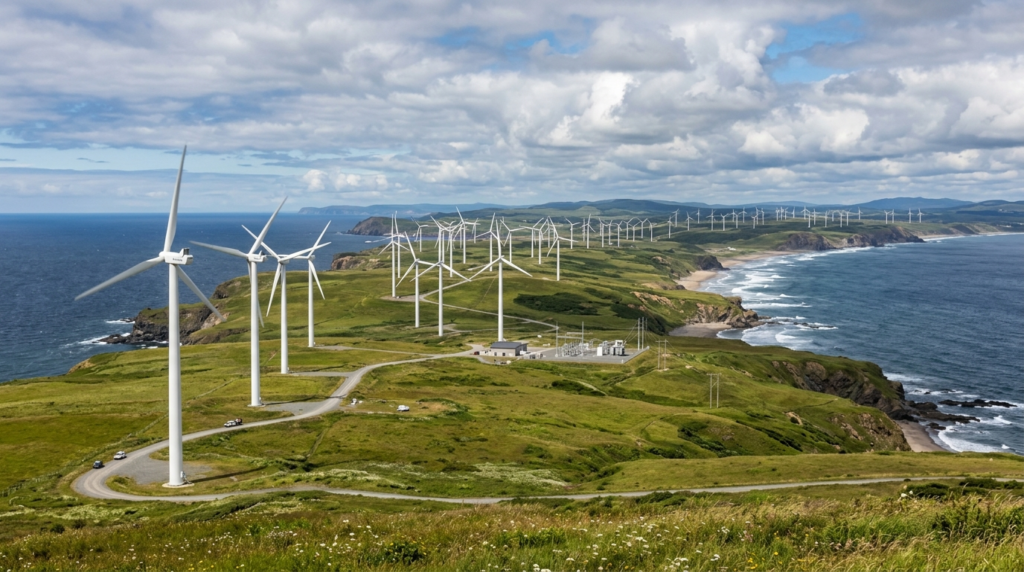
A Wind Power Plant is a renewable energy facility that generates electricity by converting the kinetic energy of moving wind into electrical energy. It consists of multiple wind turbines installed in areas with strong and consistent wind, such as coastal regions, open plains, and hilltops. When the wind blows, it rotates the turbine blades, which turn a shaft connected to a generator. The generator then converts this mechanical energy into electrical energy. The electricity produced is transmitted through transformers and substations before being supplied to the power grid for homes, industries, and commercial buildings. Wind power plants are environmentally friendly because they produce clean electricity without burning fossil fuels or releasing harmful greenhouse gases. They also reduce dependence on non-renewable energy sources and help lower electricity generation costs over time. Although wind power depends on weather conditions and requires significant installation space, it has become one of the fastest-growing sources of renewable energy worldwide due to its sustainability, low operating costs, and contribution to a cleaner environment.
Uses wind energy to rotate turbines.
- Eco-friendly system
- Best in windy regions
- Renewable and sustainable
Each type has its own role in modern energy systems and supports the growing demand for electricity.
Main Components of an Electrical Power Plant
An electrical power plant consists of several major components that work together to convert a primary energy source into electrical energy. The exact components depend on the type of power plant. For example, a thermal power plant uses a boiler, steam turbine, and condenser, while a hydroelectric plant uses a water turbine and water-control system.
The main purpose of these components is to generate, control, protect, transform, and deliver electrical power safely and reliably. Some components are directly involved in electricity generation, while others support cooling, control, protection, and transmission.
1. Prime Mover
The prime mover is the machine that converts energy from the available source into mechanical energy, usually in the form of rotating motion.
Examples include:
- Steam turbine
- Water turbine
- Gas turbine
- Wind turbine
- Internal combustion engine
In a conventional power plant, the prime mover rotates the shaft connected to the electrical generator. The speed of the prime mover must be controlled according to the generator and grid requirements.
For example, in a hydroelectric power plant, flowing water rotates the hydraulic turbine. In a thermal power plant, high-pressure steam rotates the steam turbine.
The prime mover is therefore an important link between the energy source and the generator.
2. Electrical Generator
The electrical generator is one of the most important components of a conventional power plant. It converts mechanical energy from the prime mover into electrical energy.
The generator works mainly on the principle of electromagnetic induction.
During operation:
- The prime mover rotates the generator rotor.
- The rotor produces or carries a magnetic field.
- The rotating magnetic field interacts with the stator windings.
- An electromotive force (EMF) is induced in the stator conductors.
- Electrical power is produced at the generator terminals.
Large power plants commonly use three-phase AC generators because three-phase power is suitable for transmission and distribution systems.
Generator output must be carefully controlled because changes in voltage, frequency, current, or load can affect the stability of the electrical system.
3. Boiler
A boiler is mainly used in steam-based thermal power plants. Its function is to convert water into high-pressure, high-temperature steam using heat.
The heat may come from the combustion of fuels such as:
- Coal
- Natural gas
- Oil
- Biomass
The basic process is:
Fuel Energy → Heat → Water → High-Pressure Steam
The steam produced by the boiler is supplied to the steam turbine. As the steam expands through the turbine, it produces mechanical rotation.
A boiler may include several supporting components, such as:
- Furnace
- Water tubes
- Steam drum
- Superheater
- Economizer
- Air preheater
- Fuel supply system
The exact design depends on the type and capacity of the thermal power plant.
4. Steam Turbine
A steam turbine converts the energy of high-pressure steam into mechanical rotational energy.
High-pressure steam enters the turbine and passes through specially designed stationary and rotating blades. As the steam expands, it transfers energy to the turbine rotor.
The rotating turbine shaft is connected to the generator.
The basic energy conversion is:
Steam Energy → Turbine Mechanical Energy → Generator → Electrical Energy
Steam turbines are widely used in thermal and nuclear power plants because both systems can produce steam to drive the turbine.
The turbine must operate at the correct speed to maintain stable generator frequency and reliable electrical output.
5. Water Turbine
A water turbine is mainly used in hydroelectric power plants. It converts the energy of flowing or falling water into mechanical rotational energy.
Water is directed toward the turbine blades with controlled pressure and flow. The force of the water causes the turbine runner to rotate.
The rotating shaft drives the electrical generator.
Common types include:
- Francis turbine
- Kaplan turbine
- Pelton turbine
The appropriate turbine depends on factors such as water head, flow rate, and plant design.
6. Wind Turbine
A wind turbine is used in wind power plants to convert the kinetic energy of moving air into mechanical rotation.
The basic process is:
Wind → Rotor Blades → Shaft Rotation → Generator → Electricity
The wind turns the blades, which rotate a shaft connected directly or indirectly to a generator.
Modern wind turbines also include control systems that can adjust blade angle and monitor operating conditions to improve performance and protect the equipment.
7. Condenser
A condenser is mainly used in steam-based power plants. Its primary function is to convert exhaust steam from the turbine back into water.
After steam passes through the turbine, it still contains heat. The condenser removes much of this heat and changes the steam into liquid water.
The condensed water can then be returned to the boiler system for reuse.
The basic process is:
Turbine Exhaust Steam → Condenser → Condensate Water → Feedwater System → Boiler
The condenser helps conserve water and supports efficient operation of the steam cycle.
It also maintains a low pressure at the turbine exhaust in many steam power plants, which helps improve turbine performance.
8. Cooling System
The cooling system removes unwanted or excess heat from different parts of the power plant.
Cooling is particularly important in thermal and steam power plants because large amounts of heat are produced during energy conversion.
Cooling systems may use:
- Cooling towers
- Cooling water
- Heat exchangers
- Air-cooled systems
- Pumps
- Fans
For example, cooling water can absorb heat from the condenser and then release that heat through a cooling tower or another heat-rejection system.
A properly designed cooling system helps prevent overheating and maintains reliable plant operation.
9. Transformer
A transformer is used to change the voltage level of electrical power.
At a power plant, the generator produces electricity at a voltage suitable for generator operation. A step-up transformer increases this voltage to a much higher level for transmission.
Higher transmission voltage allows the same power to be transmitted at lower current, which helps reduce resistive losses in transmission conductors.
The basic sequence is:
Generator → Step-Up Transformer → High-Voltage Transmission Line
At substations closer to consumers, transformers reduce the voltage to suitable distribution levels.
Transformers are therefore essential for connecting power generation with the transmission and distribution network.
10. Switchgear and Circuit Breakers
Switchgear is used to control, protect, and isolate electrical equipment within a power plant.
It may include:
- Circuit breakers
- Disconnect switches
- Fuses
- Protective relays
- Busbars
- Current transformers
- Voltage transformers
Circuit breakers can interrupt electrical current when a serious fault occurs. Protective relays detect abnormal conditions and send signals to the appropriate circuit breaker.
This equipment helps protect generators, transformers, cables, busbars, and other important plant equipment from electrical faults.
11. Control and Automation System
The control system monitors and controls the operation of the power plant.
Modern power plants use computerized control and automation systems to monitor important operating parameters.
These may include:
- Voltage
- Current
- Frequency
- Temperature
- Pressure
- Speed
- Water or steam flow
- Generator output
- Equipment status
The control system can adjust operating conditions and provide alarms when abnormal conditions are detected.
Advanced plants may use systems such as SCADA, DCS, PLCs, and digital protection systems, depending on the plant design.
Automation reduces manual work and helps operators maintain safe and stable operation.
12. Fuel Supply System
Fuel supply equipment is required in power plants that use combustible fuels.
For example, a coal-fired power plant may require:
- Coal storage
- Conveyors
- Crushers
- Pulverizers
- Feeders
- Fuel-handling equipment
A natural-gas power plant requires appropriate gas supply, regulation, filtration, and safety equipment.
The fuel system must provide a reliable supply while maintaining proper safety and control.
13. Water Supply and Feedwater System
Water systems are especially important in steam-based power plants.
The feedwater system supplies treated water to the boiler. It may include:
- Feedwater pumps
- Water treatment equipment
- Deaerators
- Feedwater heaters
- Piping
- Control valves
Water treatment is important because impurities can cause corrosion, scaling, and other problems in boilers, pipes, and heat-transfer equipment.
The water and steam cycle is designed to reuse water as efficiently as possible.
14. Protection System
The protection system protects power plant equipment and personnel from abnormal electrical and mechanical conditions.
Protection devices can detect conditions such as:
- Short circuits
- Overcurrent
- Earth faults
- Overvoltage
- Undervoltage
- Overfrequency
- Underfrequency
- Generator faults
- Transformer faults
- Overheating
When a dangerous condition is detected, the protection system can isolate the affected equipment to prevent further damage.
Protection is essential because power plants contain high-voltage equipment and large amounts of electrical and mechanical energy.
15. Busbars
Busbars are heavy electrical conductors used to collect and distribute electrical power within a power plant or substation.
They provide a common electrical connection between equipment such as:
- Generators
- Transformers
- Circuit breakers
- Transmission feeders
- Auxiliary systems
Busbars are designed to carry high currents safely and are normally installed inside suitable switchgear or substations with appropriate insulation and protection.
16. Auxiliary Power System
A power plant also requires electricity to operate its own equipment. This is known as the auxiliary power system.
Auxiliary loads may include:
- Pumps
- Fans
- Motors
- Lighting
- Control systems
- Cooling equipment
- Fuel-handling equipment
- Instrumentation
Even though the main purpose of the plant is to generate electricity for the grid, some of the generated power is consumed internally to operate these systems.
Reliable auxiliary power is essential for continuous plant operation.
17. Exhaust and Heat-Rejection System
Power plants that use combustion or steam cycles require systems for managing exhaust gases and rejecting unwanted heat.
In thermal plants, exhaust systems may include:
- Flue-gas ducts
- Chimneys or stacks
- Emission-control equipment
- Fans
Heat-rejection equipment may include:
- Cooling towers
- Condensers
- Heat exchangers
- Cooling-water pumps
These systems help maintain operating temperatures and manage waste heat or exhaust products.
18. Solar Panels and Inverters in Solar Power Plants
Solar photovoltaic power plants use a different generation method from conventional rotating-generator plants.
Solar panels contain photovoltaic cells that convert sunlight directly into DC electrical energy.
The basic process is:
Sunlight → Solar Panels → DC Electricity → Inverter → AC Electricity → Transformer → Grid
The inverter converts DC electricity from the solar array into AC electricity suitable for grid connection.
Solar plants may also include:
- Solar modules
- DC combiner boxes
- Inverters
- Transformers
- Protection equipment
- Monitoring systems
- Mounting structures
- Grid connection equipment
Unlike conventional thermal or hydroelectric plants, a solar PV plant does not require a steam turbine or boiler for electricity generation.
How These Components Work Together
The components of a power plant do not operate independently. They form an interconnected system in which each component performs a specific function.
For a conventional steam power plant, the process can be summarized as:
Fuel → Boiler → Steam → Turbine → Generator → Transformer → Transmission Grid
At the same time, the exhaust steam follows another path:
Turbine → Condenser → Water → Feedwater System → Boiler
The control and protection systems continuously monitor these processes to maintain safe and reliable operation.
Importance of Power Plant Components
Each component has a specific role in maintaining reliable electricity generation.
- Prime mover: Provides mechanical energy to the generator.
- Generator: Converts mechanical energy into electrical energy.
- Boiler: Produces steam in steam-based thermal plants.
- Turbine: Converts fluid or steam energy into mechanical rotation.
- Condenser: Converts exhaust steam back into water.
- Transformer: Changes voltage for transmission and distribution.
- Cooling system: Removes unwanted heat.
- Control system: Monitors and regulates plant operation.
- Protection system: Protects equipment during abnormal conditions.
- Switchgear: Controls and isolates electrical circuits.
- Busbars: Collect and distribute electrical power.
- Auxiliary system: Supplies power to equipment required for plant operation.
Together, these components allow a power plant to generate electricity safely, efficiently, and continuously.
Key Takeaway
The main components of an electrical power plant depend on the type of plant and its energy source. Generators, transformers, control systems, and protection systems are fundamental to many power-generation facilities, while boilers, steam turbines, and condensers are mainly associated with steam-based plants. Understanding the function of each component makes it easier to understand how electricity is generated and delivered from the power plant to the consumer.
Advantages
The Electrical power plant advantages and disadvantages must be understood clearly for real engineering knowledge.
Advantages:
- Produces large-scale electricity
- Supports industrial and economic growth
- Reliable and continuous power supply
- Can use different energy sources
- Helps modern technology development
- Improves living standards
- Supports urban and rural electrification
Disadvantages / Limitations
Despite many benefits, electrical power plants also have limitations:
- Environmental pollution (especially thermal plants)
- High installation cost
- Large land requirement
- Fuel dependency in some plants
- Nuclear safety risks
- Renewable energy depends on weather conditions
- Maintenance requires skilled workers
Understanding these issues helps engineers design better and more efficient systems.
Applications
The Electrical power plant applications are seen everywhere in daily life.
Home Applications
- Lighting systems
- Fans and air conditioners
- Refrigerators and appliances
Industrial Applications
- Heavy machinery operation
- Manufacturing industries
- Mining and production plants
Commercial Applications
- Shopping malls
- Offices and buildings
- Data centers and IT systems
Modern Technology Applications
- Electric vehicles charging stations
- Smart grids and automation
- Communication systems
- Artificial intelligence systems infrastructure
Without electrical power plants, modern society cannot function.
Comparison Section
Difference Between Thermal Power Plant and Renewable Power Plant
| Feature | Thermal Power Plant | Renewable Power Plant |
| Energy Source | Coal, oil, gas | Sun, wind, water |
| Pollution | High | Very low |
| Operating Cost | High fuel cost | Low cost |
| Reliability | High and stable | Weather dependent |
| Setup Cost | Moderate | High initial cost |
| Environmental Impact | Harmful | Eco-friendly |
This shows the difference between thermal power plant and renewable power plant clearly for better understanding.
Selection Guide for an Electrical Power Plant
Selecting the right electrical power plant requires careful consideration of technical, economic, environmental, and operational factors. There is no single type of power plant that is suitable for every location. The best choice depends on the available energy resources, required power output, local conditions, investment budget, environmental requirements, and long-term operating costs.
A power plant should be selected based on both its initial cost and lifetime performance. A plant with a lower installation cost may have higher fuel or maintenance costs, while a renewable plant may require a larger initial investment but have lower fuel costs during operation.
1. Availability of Energy Resources
The first factor is the availability of the primary energy source.
For example:
- Coal and natural gas are suitable for thermal power plants.
- Rivers and dams can support hydroelectric plants.
- Areas with strong and consistent winds are suitable for wind power plants.
- Regions with high solar radiation are suitable for solar power plants.
- Geothermal plants require suitable underground heat resources.
- Nuclear plants require access to nuclear fuel and specialized infrastructure.
The availability and reliability of the energy source directly affect plant performance.
2. Power Demand
The required electrical output must be considered before selecting a power plant.
Important factors include:
- Current electricity demand
- Future demand growth
- Peak load
- Base load requirements
- Industrial and commercial demand
- Seasonal variations
A small community may require a different generation solution from a large industrial region or major city.
3. Installation Cost
The initial investment required to construct the plant is another major consideration.
Costs may include:
- Land
- Buildings and civil works
- Generators
- Turbines
- Transformers
- Electrical equipment
- Fuel systems
- Transmission connections
- Control and protection systems
- Environmental equipment
The total project cost should be evaluated before construction begins.
4. Operating and Fuel Costs
The cost of operating a power plant can have a major effect on the price of electricity.
Thermal plants may have significant fuel costs, while solar and wind plants do not require conventional fuel during electricity generation. However, renewable plants still have maintenance, grid connection, land, and equipment costs.
The expected lifetime operating cost should therefore be considered along with the initial investment.
5. Environmental Conditions
Local environmental conditions can influence the selection of a power plant.
Important factors include:
- Temperature
- Water availability
- Wind conditions
- Solar radiation
- Humidity
- Land availability
- Environmental regulations
- Air-quality requirements
For example, a hydroelectric plant requires suitable water resources, while a solar plant requires sufficient sunlight and suitable land.
6. Environmental Impact
The environmental impact of the plant should also be considered.
Fossil-fuel power plants can produce greenhouse-gas emissions and other pollutants. Renewable energy systems generally have lower operational emissions, although their construction and equipment manufacturing still have environmental impacts.
Modern power projects increasingly consider emissions reduction, efficient resource use, and sustainable operation.
7. Reliability and Availability
A power plant should be capable of supplying electricity reliably when required.
Factors include:
- Equipment reliability
- Fuel availability
- Maintenance requirements
- Weather dependency
- Backup generation
- Grid connection
- Energy storage
For variable renewable generation, such as solar and wind, storage, grid flexibility, or other generation sources may be used to help manage changes in power output.
8. Maintenance Requirements
Maintenance requirements should be evaluated before selecting a plant.
A good power plant design should allow:
- Regular inspection
- Preventive maintenance
- Easy access to critical components
- Availability of spare parts
- Skilled technical personnel
- Condition monitoring
A plant that requires highly specialized maintenance may need greater technical resources and operating costs.
9. Safety Requirements
Safety is essential because power plants contain high-voltage electrical equipment, rotating machinery, high temperatures, pressure systems, fuels, and other hazards.
The design should include appropriate:
- Electrical protection
- Grounding systems
- Fire protection
- Emergency shutdown systems
- Protective relays
- Circuit breakers
- Safety monitoring
- Operator protection systems
Tips for Beginners Learning About Power Plants
Beginners should learn power plants step by step instead of trying to understand every component at once.
Start With Basic Power Plant Types
Begin with the basic operating principles of:
- Thermal power plants
- Hydroelectric power plants
- Solar power plants
- Wind power plants
- Nuclear power plants
Understanding these basic types makes it easier to learn more advanced generation systems.
Understand Energy Conversion
Focus on how one form of energy is converted into another.
For example:
Fuel Energy → Heat Energy → Mechanical Energy → Electrical Energy
For hydroelectric generation:
Water Energy → Mechanical Energy → Electrical Energy
For solar PV:
Solar Energy → Electrical Energy
Study Flow Diagrams
Flow diagrams make power plant operation easier to understand.
For example, a basic thermal plant can be represented as:
Fuel → Boiler → Steam → Turbine → Generator → Transformer → Grid
Study what happens at each stage and how the components are connected.
Learn Real-World Applications
Connect theoretical concepts with practical examples such as:
- Power generation for cities
- Industrial power supply
- Renewable energy farms
- Remote-area electricity
- Backup generation
- Grid-connected generation
Study Efficiency and Power Losses
Learn how efficiency affects power generation.
Important losses can occur in:
- Boilers
- Turbines
- Generators
- Transformers
- Transmission lines
- Auxiliary equipment
Understanding these losses helps explain why efficient equipment and proper system design are important.
Common Problems in Electrical Power Plants and Their Solutions
Power plants operate continuously under demanding conditions. Electrical, mechanical, thermal, and environmental problems can affect their performance. Regular inspection, monitoring, preventive maintenance, and proper protection systems help reduce failures.
1. Low Power Output
Possible Causes:
- Insufficient fuel supply
- Reduced water flow
- Low wind speed
- Reduced solar radiation
- Turbine problems
- Generator faults
- Equipment degradation
- Excessive internal losses
Possible Solutions:
- Check the availability and quality of the energy source.
- Inspect the prime mover and generator.
- Perform scheduled maintenance.
- Optimize fuel or water usage where applicable.
- Clean and inspect solar modules when required.
- Monitor plant operating parameters.
- Identify and correct excessive mechanical or electrical losses.
The exact cause depends on the type of power plant.
2. Generator Overheating
Possible Causes:
- Excessive electrical load
- Poor ventilation
- Cooling-system failure
- Blocked airflow
- High ambient temperature
- Bearing problems
- Electrical faults
Possible Solutions:
- Check the generator load.
- Inspect the cooling system.
- Ensure proper airflow.
- Monitor winding and bearing temperatures.
- Inspect cooling fans or pumps.
- Investigate abnormal electrical conditions.
Continuous overheating can damage generator insulation and reduce equipment life.
3. Turbine Problems
Possible Causes:
- Bearing wear
- Excessive vibration
- Poor lubrication
- Blade damage
- Incorrect operating conditions
- Steam, water, or gas flow problems
Possible Solutions:
- Monitor vibration levels.
- Check lubrication systems.
- Inspect bearings.
- Examine turbine blades during scheduled maintenance.
- Maintain proper operating conditions.
- Investigate unusual noise or vibration immediately.
Turbine maintenance is particularly important because the turbine is a major mechanical component in many conventional power plants.
4. Cooling System Failure
Possible Causes:
- Cooling-water pump failure
- Fan failure
- Blocked heat exchanger
- Low cooling-water flow
- Cooling tower problems
- High ambient temperature
Possible Solutions:
- Inspect pumps and fans.
- Check cooling-water flow.
- Clean heat-transfer surfaces when required.
- Inspect cooling towers.
- Monitor temperature and pressure.
- Maintain the cooling system according to the manufacturer’s requirements.
A cooling-system problem can reduce plant efficiency and may force equipment to operate at reduced output or shut down.
5. Transmission Losses
Cause:
Electrical power is lost as heat when current flows through the resistance of transmission conductors. Long transmission distances can increase these losses.
Solution:
Use appropriate high-voltage transmission systems to reduce current for a given power transfer. Lower current reduces resistive losses in the transmission lines.
Other measures include:
- Proper conductor sizing
- Efficient transformer operation
- Good power-factor management
- Regular inspection of transmission equipment
- Appropriate grid planning
6. Transformer Failure
Possible Causes:
- Overloading
- Insulation deterioration
- Overheating
- Short circuits
- Oil problems in oil-filled transformers
- Internal electrical faults
- Poor maintenance
Possible Solutions:
- Monitor transformer temperature.
- Avoid prolonged overloading.
- Inspect protection systems.
- Perform appropriate insulation testing.
- Check transformer oil where applicable.
- Use protective relays and circuit breakers.
- Follow scheduled maintenance procedures.
Transformer protection is essential because transformers are critical links between generators and the transmission network.
7. Equipment Failure
Possible Causes:
- Continuous operation
- Mechanical wear
- Electrical faults
- Poor maintenance
- Excessive temperature
- Vibration
- Aging components
Possible Solutions:
- Perform preventive maintenance.
- Inspect critical equipment regularly.
- Monitor temperature and vibration.
- Replace worn components.
- Maintain adequate spare parts.
- Use condition-monitoring systems where appropriate.
Predictive and condition-based maintenance can help identify developing problems before they cause major equipment failure.
8. Environmental Pollution
Possible Causes:
Fossil-fuel power plants can produce emissions such as carbon dioxide and other pollutants depending on the fuel and combustion technology.
Possible Solutions:
- Improve plant efficiency.
- Use cleaner fuels where practical.
- Install appropriate emission-control equipment.
- Increase renewable energy generation.
- Improve energy efficiency.
- Consider carbon-reduction technologies where technically and economically suitable.
Environmental requirements vary by location, so power plants must comply with applicable regulations.
Future Trends in Electrical Power Plants
The future of electrical power generation is moving toward cleaner energy, higher efficiency, digital control, flexible operation, and greater integration with energy storage and smart grids.
1. Growth of Renewable Energy Plants
Solar and wind power are becoming increasingly important sources of electricity generation.
Modern power systems are integrating renewable generation with conventional generation, energy storage, and improved grid-management systems.
Major developments include:
- Large solar farms
- Offshore and onshore wind farms
- Hybrid renewable plants
- Distributed generation
- Renewable-energy microgrids
2. Smart Grid Technology
Smart grids use digital communication, sensors, automation, and advanced control systems to improve the management of electricity generation and distribution.
Smart-grid technology can help with:
- Real-time monitoring
- Load management
- Fault detection
- Renewable integration
- Demand response
- Grid stability
This allows power systems to respond more effectively to changing electricity demand and generation.
3. AI-Based Power Plant Control
Artificial intelligence and advanced analytics are increasingly being explored for power-system monitoring and optimization.
AI-based systems can analyze large amounts of operational data to help identify:
- Equipment abnormalities
- Efficiency changes
- Maintenance requirements
- Load patterns
- Potential equipment failures
AI is expected to support operators rather than completely replace engineering judgment and safety procedures.
4. Advanced Energy Storage Systems
Energy storage is becoming increasingly important, particularly for systems with variable renewable generation.
Modern storage technologies include:
- Lithium-ion batteries
- Flow batteries
- Other advanced battery technologies
- Pumped-storage hydropower
- Thermal energy storage
Energy storage can help balance supply and demand and provide electricity when renewable generation is temporarily low.
5. Hybrid Power Plants
Hybrid power plants combine two or more energy technologies.
Examples include:
- Solar + battery storage
- Wind + battery storage
- Solar + wind
- Renewable generation + conventional generation
- Solar + pumped storage
Hybrid systems can improve flexibility and make better use of available energy resources.
6. Carbon Reduction Technologies
Existing thermal power plants are being improved through higher efficiency and emissions-control technologies.
Future developments may include:
- More efficient combustion systems
- Improved heat recovery
- Carbon capture technologies
- Low-carbon fuels
- Renewable and low-carbon generation integration
The goal is to reduce emissions while maintaining reliable electricity production.
7. Digital Monitoring and Automation
Modern power plants are increasingly using digital sensors, computerized control systems, remote monitoring, and automated protection.
These technologies can provide:
- Real-time equipment data
- Automatic alarms
- Remote operation
- Predictive maintenance
- Improved fault detection
- Better plant efficiency
Digitalization can also help operators make faster and more informed decisions.
8. More Flexible Power Generation
Future power plants will need to respond quickly to changing electricity demand and variable renewable generation.
Flexible generation systems can adjust their output according to grid requirements. This is becoming increasingly important as electricity systems include larger amounts of solar and wind generation.
Overall Future Direction
The electrical power industry is moving from traditional centralized generation toward a more diverse, digital, flexible, and lower-carbon power system. Renewable generation, energy storage, smart-grid technology, advanced automation, and improved efficiency will play important roles in future electricity systems.
The main objective is to provide reliable, affordable, efficient, and environmentally responsible electricity while meeting the growing demand for electrical energy.
Conclusion
An electrical power plant is the backbone of modern electrical energy systems. It converts natural or fuel-based energy into electrical power that supports homes, industries, and modern technologies. Understanding its working principle, types, components, and applications is essential for every electrical student and engineer.
From thermal to renewable systems, each plant has its own importance in the global energy network. While traditional systems provide stable power, future systems are moving toward cleaner and smarter energy solutions.
A strong understanding of electrical power plants helps build a solid foundation in electrical engineering and prepares learners for real-world power system challenges.


Pingback: Calibration of Instruments: Complete Guide