
Imagine a massive hydroelectric power plant located hundreds of kilometers away from a busy industrial city. Every second, enormous amounts of electricity must travel long distances to power homes, hospitals, factories, schools, and transportation systems. If this electricity were transmitted at a lower voltage, a significant amount of energy would be lost before reaching consumers. This is where a 765kV Grid Station becomes essential.
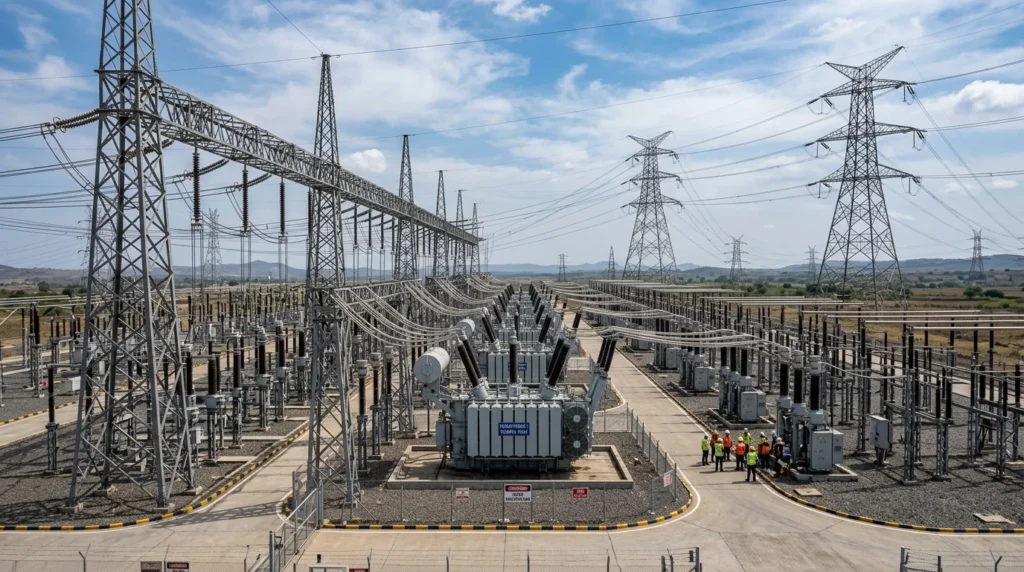
A 765kV grid station is one of the highest-voltage substations used in Extra High Voltage (EHV) transmission systems. It serves as a critical link between power generation plants and the national transmission network, allowing huge amounts of electrical power to be transferred safely, efficiently, and with minimal losses. As electricity demand continues to increase worldwide, these grid stations play an even greater role in maintaining a stable and reliable power supply.
In this article, you will learn everything about the 765kV Grid Station, including its definition, 765kV Grid Station working principle, types, major components, advantages, disadvantages, applications, comparison with other voltage levels, selection guidelines, common problems, future developments, and practical tips. Whether you are an electrical engineering student, technician, engineer, or beginner, this guide explains the topic in simple and easy-to-understand English.
What is a 765kV Grid Station?
A 765kV Grid Station is an Extra High Voltage (EHV) electrical substation that operates at 765 kilovolts (kV). It is designed to receive, control, protect, transform, and transmit large amounts of electrical power over very long distances.
Simply put, a 765kV grid station acts as a central control point in the power transmission system. It receives electricity from generating stations or other transmission networks, manages the power flow, protects equipment from electrical faults, and transfers electricity to lower-voltage substations for further distribution.
Think of a 765kV grid station like a major airport. Just as airplanes arrive, depart, and are directed safely to different destinations, electricity enters the grid station, is monitored and controlled, and then flows toward different transmission lines.
Practical Example
A large thermal or hydroelectric power station generates thousands of megawatts of electricity. This power is transmitted through 765kV transmission lines to a distant regional grid station. There, transformers reduce the voltage to 500kV, 400kV, or 220kV before it continues toward cities and industrial areas.
765kV Grid Station Working Principle
The 765kV Grid Station working principle is based on transmitting electrical energy at an extremely high voltage. Higher voltage reduces current for the same amount of power, which significantly decreases transmission losses.
Imagine carrying water over a long distance. Using a high-pressure pipeline allows more water to move efficiently with less waste. Similarly, transmitting electricity at 765kV allows enormous amounts of power to travel long distances with improved efficiency.
The working process includes the following steps:
Electricity is generated at a power plant.
A step-up transformer increases the voltage to 765kV.
The electricity enters the 765kV grid station.
Busbars distribute power to different transmission circuits.
Circuit breakers and isolators control and protect each transmission line.
Current transformers (CTs) and voltage transformers (VTs) measure electrical quantities.
Protective relays continuously monitor the system for abnormal conditions.
If a fault occurs, the relays send a trip signal to the circuit breaker.
The faulty section is isolated automatically.
Healthy transmission lines continue supplying electricity without interruption.
Simple Working Flow
- Power generation
- Voltage increased to 765kV
- Long-distance transmission
- Switching and protection
- Voltage reduction at receiving stations
- Distribution through lower-voltage networks
This process ensures efficient, reliable, and safe transmission of electrical power across large regions.
Types of 765kV Grid Stations
The classification of 765kV grid stations depends mainly on insulation technology and installation location.
Air Insulated Substation (AIS)
Air Insulated Substations use atmospheric air as the insulation medium.
Features
- Lower installation cost
- Simple construction
- Easy maintenance
- Requires large land area
- Commonly installed in rural locations
Gas Insulated Substation (GIS)
Gas Insulated Substations use sulfur hexafluoride (SF₆) gas for insulation.
Features
- Compact design
- High reliability
- Excellent protection against dust and moisture
- Suitable for densely populated urban areas
- Higher installation cost
Hybrid Grid Station
Hybrid substations combine Air Insulated and Gas Insulated technologies.
Features
- Better space utilization
- Lower cost than full GIS
- Flexible expansion
- Improved operational reliability
Indoor Grid Station
Installed inside specially designed buildings.
Features
- Protected from harsh weather
- Reduced environmental impact
- Suitable where space is limited
Outdoor Grid Station
Installed in open areas.
Features
- Easier inspection
- Lower construction cost
- Most commonly used for national transmission systems
Main Components of a 765kV Grid Station
Every 765kV grid station contains several essential components that work together to ensure reliable operation.
Power Transformer
The transformer changes voltage levels according to transmission and distribution requirements.
Function
- Step-up voltage
- Step-down voltage
- Improve transmission efficiency
Circuit Breaker
Circuit breakers interrupt current during abnormal conditions.
Function
- Fault protection
- Equipment safety
- Automatic disconnection
Isolator (Disconnect Switch)
The isolator disconnects equipment safely during maintenance.
Function
- Visible isolation
- Safe maintenance procedures
Busbar
Busbars collect and distribute electrical power throughout the station.
Function
- Power distribution
- Flexible system configuration
Current Transformer (CT)
Measures high current safely for protection and metering.
Function
- Current measurement
- Protective relay input
Voltage Transformer (VT)
Measures high voltage accurately.
Function
- Voltage monitoring
- Metering
- Protection
Lightning Arrester
Protects equipment against lightning and switching surges.
Function
- Divert surge energy
- Protect insulation
Protective Relay
Relays detect abnormal operating conditions.
Function
- Fault detection
- Circuit breaker control
- Equipment protection
Control Room
The control room is the operational center of the grid station.
It includes:
- SCADA system
- Protection panels
- Communication equipment
- Monitoring displays
- Alarm systems
Earthing System
The grounding system provides a safe path for fault currents.
Function
- Personnel safety
- Equipment protection
- Voltage stabilization
765kV Grid Station Advantages
Understanding the 765kV Grid Station advantages and disadvantages helps engineers evaluate its suitability for modern transmission systems.
Advantages
- Very low transmission losses over long distances.
- Efficient transmission of large amounts of electrical power.
- Excellent voltage regulation.
- High transmission reliability.
- Supports national interconnected power grids.
- Reduces the number of transmission lines required.
- Improves overall grid stability.
- Suitable for long-distance renewable energy integration.
- Better utilization of power generation resources.
- Lower operating cost over the long term.
- Improves system reliability during peak demand.
- Supports future expansion of the power network.
Disadvantages and Limitations
Although highly efficient, 765kV grid stations also have certain limitations.
- Very high construction cost.
- Expensive transformers and switchgear.
- Requires highly skilled engineers.
- Large safety clearance distances.
- Complex protection systems.
- Longer project construction time.
- Higher maintenance requirements.
- GIS stations require careful handling of SF₆ gas.
- Difficult fault analysis in complex networks.
- Requires regular inspection and preventive maintenance.
765kV Grid Station Applications
The 765kV Grid Station applications are mainly found in large-scale power transmission systems.
National Transmission Networks
Connects major power generation stations with regional grids.
Thermal Power Plants
Transfers large quantities of electricity generated from coal, gas, or oil-fired plants.
Hydroelectric Power Stations
Carries electricity from remote dams to populated cities.
Nuclear Power Plants
Supports transmission of high-capacity electrical power.
Renewable Energy Projects
Integrates large wind farms and solar parks into national grids.
Heavy Industries
Provides reliable electricity to steel mills, aluminum plants, mining operations, and refineries.
Cross-Border Power Exchange
Supports international electricity trading between neighboring countries.
Smart Grid Infrastructure
Acts as the backbone of modern digital power systems.
Although homes do not receive electricity directly from a 765kV grid station, residential consumers benefit because these stations enable stable and reliable power delivery through lower-voltage distribution networks.
Comparison: 765kV Grid Station vs 500kV Grid Station
| Feature | 765kV Grid Station | 500kV Grid Station |
| Operating Voltage | 765kV | 500kV |
| Voltage Class | Extra High Voltage | Extra High Voltage |
| Power Transfer Capacity | Extremely High | Very High |
| Transmission Distance | Longer | Long |
| Transmission Losses | Lower | Slightly Higher |
| Equipment Cost | Higher | Lower |
| Construction Cost | Higher | Moderate |
| Land Requirement | Larger | Large |
| System Complexity | Higher | Moderate |
| Typical Application | National backbone transmission | Regional and national transmission |
Understanding the difference between 765kV Grid Station and 500kV Grid Station helps engineers select the appropriate transmission voltage based on power demand, transmission distance, and project economics.
Selection Guide
Choosing the right grid station requires careful technical and financial planning.
Consider Transmission Distance
Longer distances generally benefit from higher transmission voltages.
Evaluate Power Demand
Large generating stations often require 765kV transmission.
Check Future Expansion
Allow sufficient space and capacity for future network growth.
Consider Available Budget
Higher-voltage substations require greater initial investment.
Study Environmental Conditions
Climate, pollution, temperature, and humidity influence equipment selection.
Select Proper Insulation Technology
Use GIS where land is expensive or limited.
Choose AIS where sufficient land is available.
Focus on Reliability
Critical infrastructure requires highly reliable equipment and protection systems.
Tips for Beginners
- Learn the basics of high-voltage substations.
- Understand transformer operation.
- Study protection relays carefully.
- Always prioritize electrical safety.
- Follow national and international standards.
Common Problems & Solutions
Why does a circuit breaker trip repeatedly?
Causes
- Short circuit
- Equipment failure
- Relay malfunction
- Overload
Solution
Inspect the affected feeder, verify relay settings, and repair faulty equipment.
Why does transformer temperature become too high?
Causes
- Excessive loading
- Cooling system failure
- Low insulating oil quality
Solution
Reduce transformer load, inspect cooling equipment, and perform oil testing.
Why does insulation fail?
Causes
- Aging
- Moisture
- Pollution
- Lightning surges
Solution
Perform insulation resistance testing, replace damaged insulation, and maintain surge protection.
Why does voltage fluctuate?
Causes
- Load variation
- Faulty tap changer
- Weak transmission network
Solution
Adjust transformer tap settings and improve voltage regulation.
How can preventive maintenance improve reliability?
Routine inspections, thermal imaging, oil analysis, relay testing, insulation testing, and equipment cleaning help prevent unexpected outages and extend equipment life.
Future Trends
Power transmission technology continues to evolve, making 765kV grid stations more efficient and intelligent.
Digital Substations
Digital communication replaces many traditional control cables, improving reliability.
Smart Monitoring Systems
Online sensors continuously monitor equipment health.
Artificial Intelligence
AI-based software predicts equipment failures before breakdowns occur.
Renewable Energy Integration
Future grid stations will connect larger renewable energy projects.
Eco-Friendly Insulation
Research continues into environmentally friendly alternatives to SF₆ gas.
Advanced Protection Systems
High-speed digital relays improve fault detection and system stability.
Remote Operation
Modern control centers allow engineers to monitor substations from remote locations.
Cybersecurity
Greater protection against cyber threats has become an important part of substation design.
Conclusion
The 765kV Grid Station is one of the most important facilities in modern electrical power transmission. It enables the efficient transfer of enormous amounts of electrical energy across long distances while reducing transmission losses and improving overall grid reliability. Understanding the 765kV Grid Station working principle, components, classifications, applications, and maintenance practices provides a strong foundation for anyone studying power systems. Although these substations require significant investment, advanced protection systems, and skilled maintenance, their ability to support growing electricity demand makes them essential for national power networks. As digital substations, smart monitoring, renewable energy integration, and environmentally friendly technologies continue to develop, 765kV grid stations will remain a key part of future electrical infrastructure. Continuous learning and practical experience will help engineers and technicians operate these complex systems safely and efficiently.