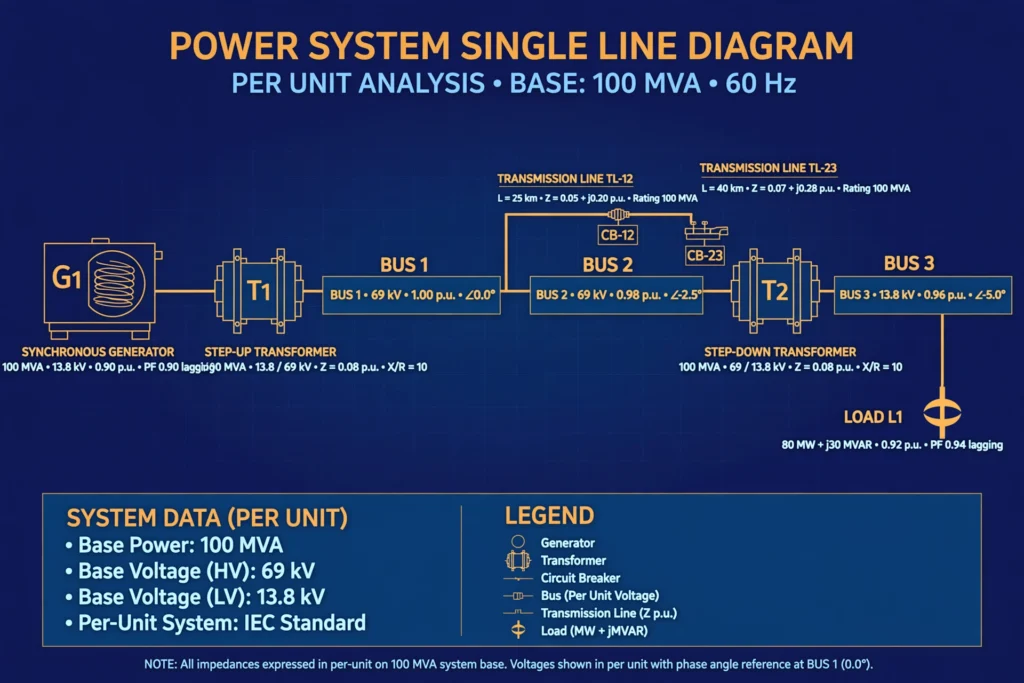
Posted inElectrical Per Unit System in Power Systems: Explained with Examples Posted by Maxwell brok November 22, 2026 Power system engineers routinely work with voltages from 400 V to 765 kV and currents…
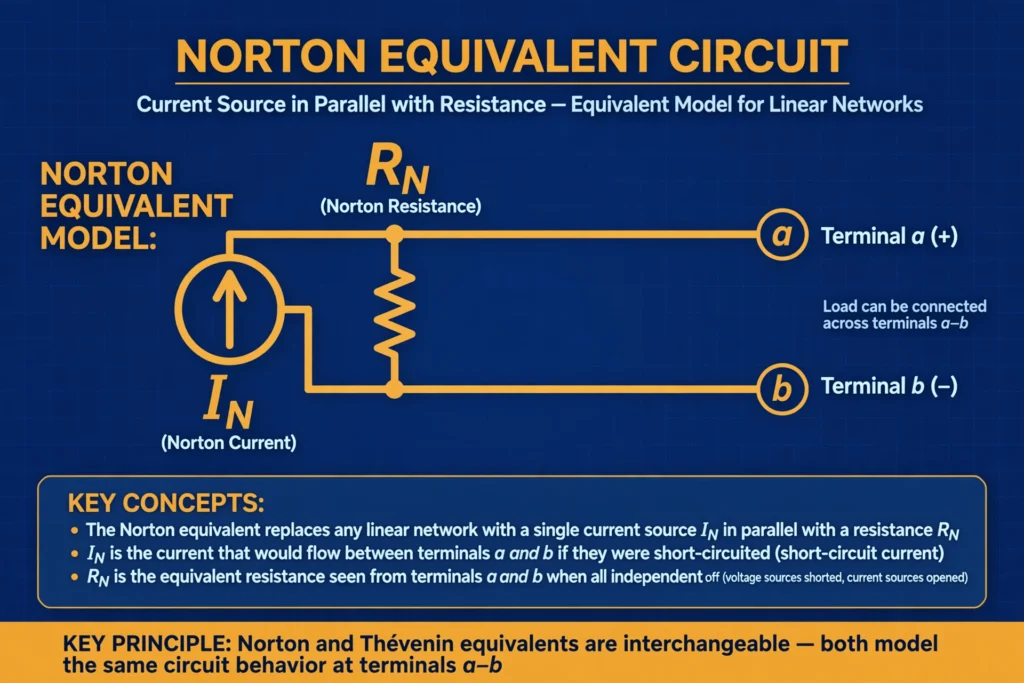
Posted inElectrical Norton Theorem Explained with Solved Examples Posted by david villy November 22, 2026 The Norton theorem is the current-source twin of the Thevenin equivalent: any linear network, seen…
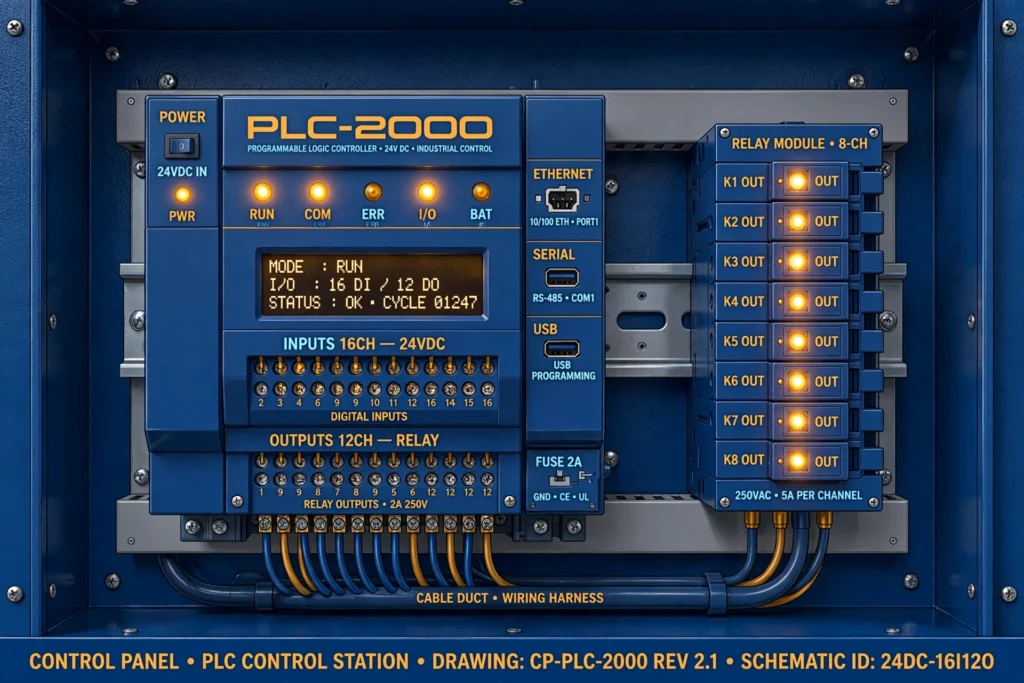
Posted inElectrical What Is PLC? Programmable Logic Controller Explained Posted by david villy November 21, 2026 A PLC, or Programmable Logic Controller, is a rugged industrial computer designed to control machines…
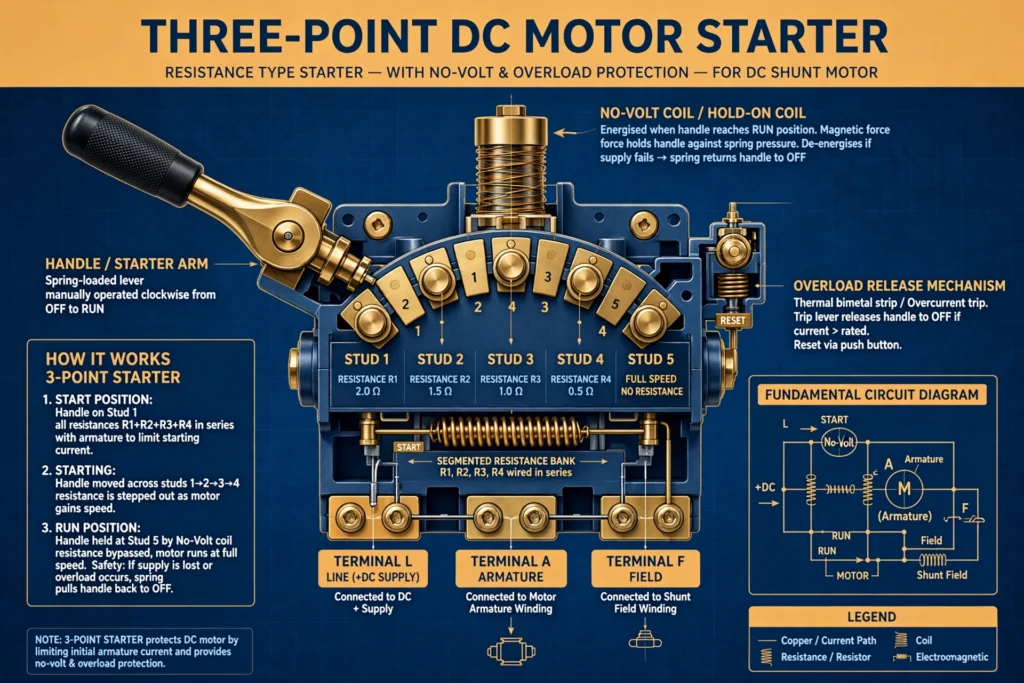
Posted inElectrical 3 Point Starter for DC Motors: Working, Diagram & Types Posted by Maxwell brok November 21, 2026 A 3 point starter is a manual starter designed for DC shunt (and compound) motors.…
Posted inElectrical Fleming’s left-hand rule Posted by david villy November 20, 2026 Fleming's left-hand rule is a simple way to work out the direction of the force…
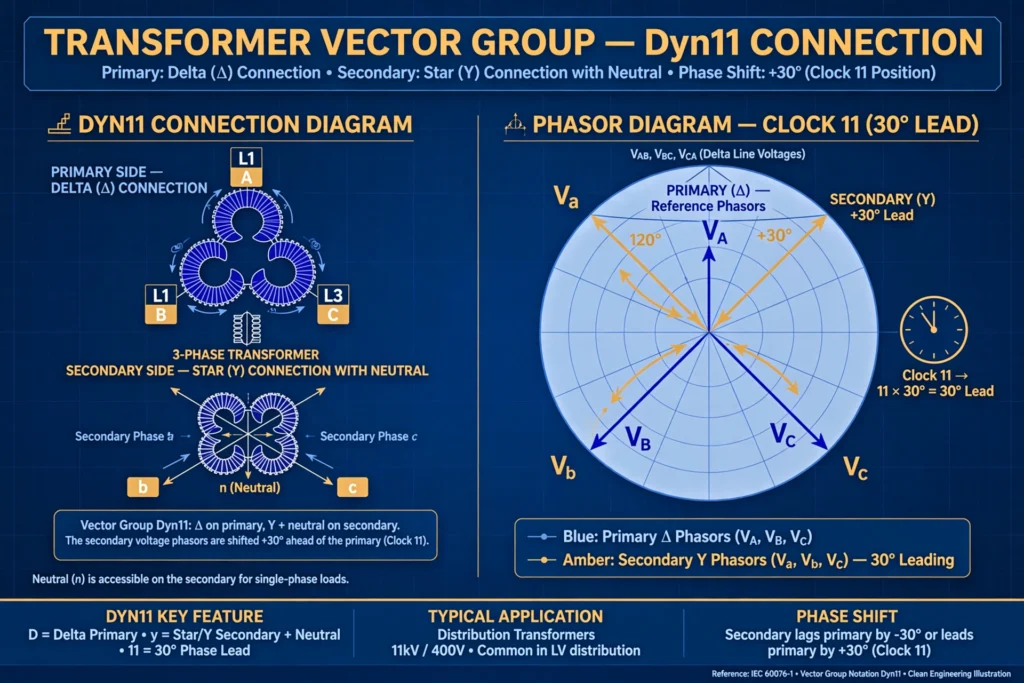
Posted inElectrical Transformer Vector Group Explained: Dyn11, Yd11 & More Posted by Maxwell brok November 20, 2026 Two transformers can have identical voltage ratings and still destroy each other if connected in…
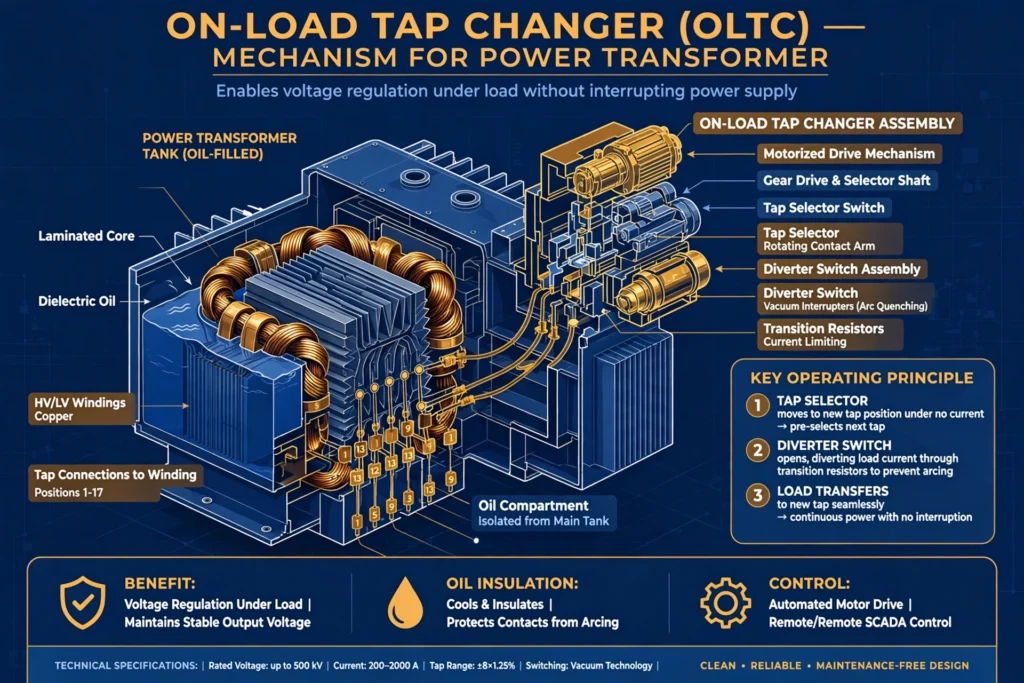
Posted inElectrical OLTC (On-Load Tap Changer): Working Principle & Types Posted by david villy November 19, 2026 Load on a power system never stays constant. As factories start up and switch off,…
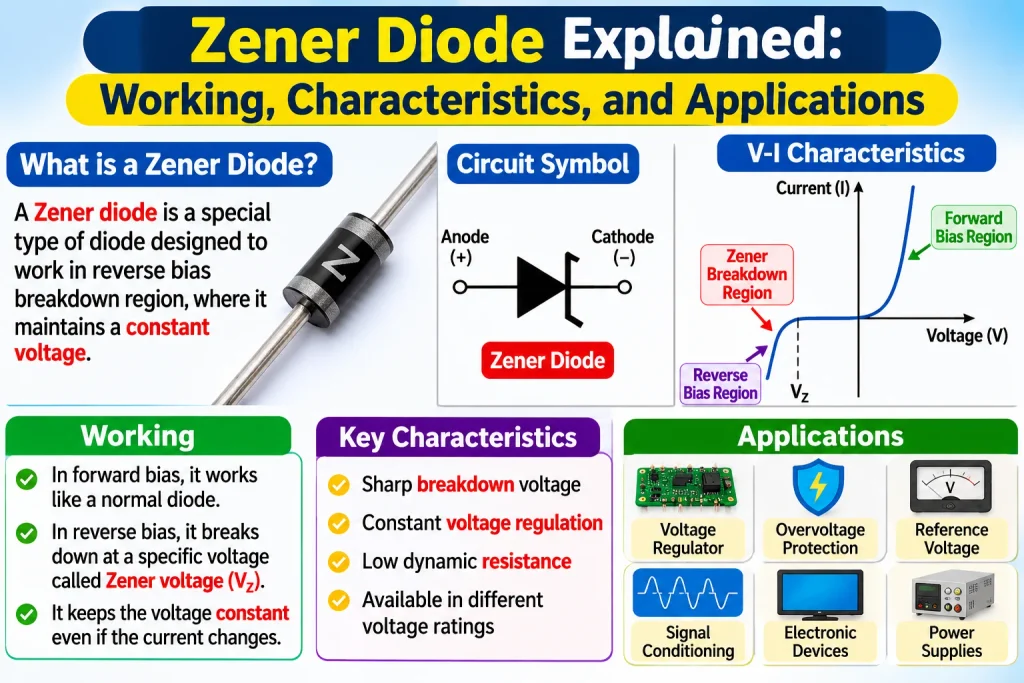
Posted inElectrical Zener Diode Explained: Working, Characteristics, and Applications Posted by david villy November 18, 2026 A Zener diode is a special kind of diode that does something ordinary diodes are…
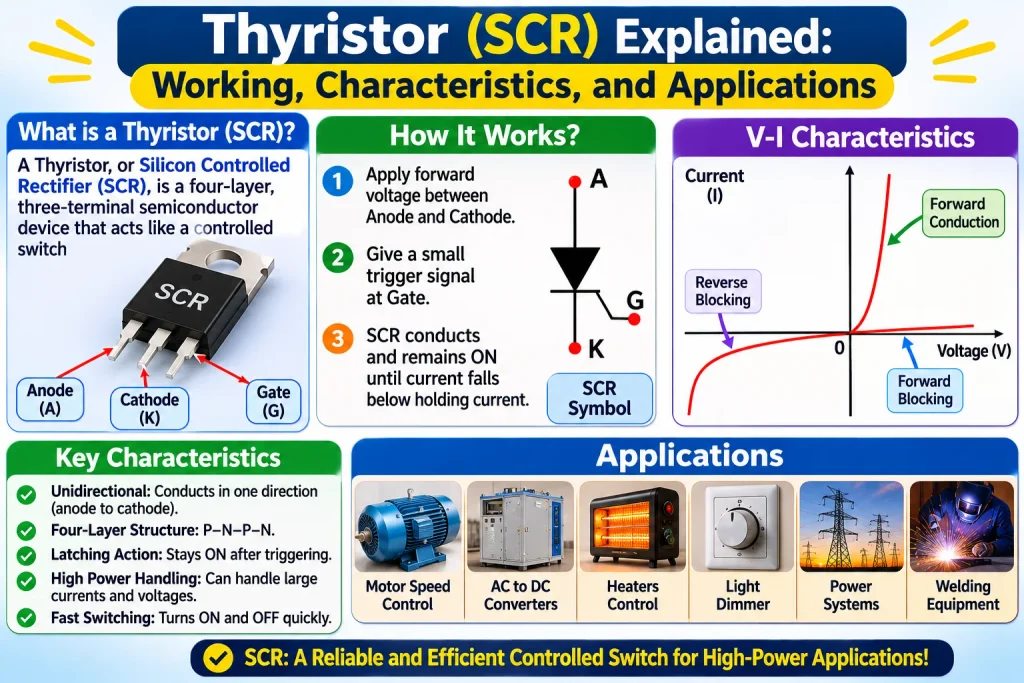
Posted inElectrical Thyristor (SCR) Explained: Working, Characteristics, and Applications Posted by Maxwell brok November 17, 2026 A thyristor is a semiconductor switch that can handle far more power than a transistor.…
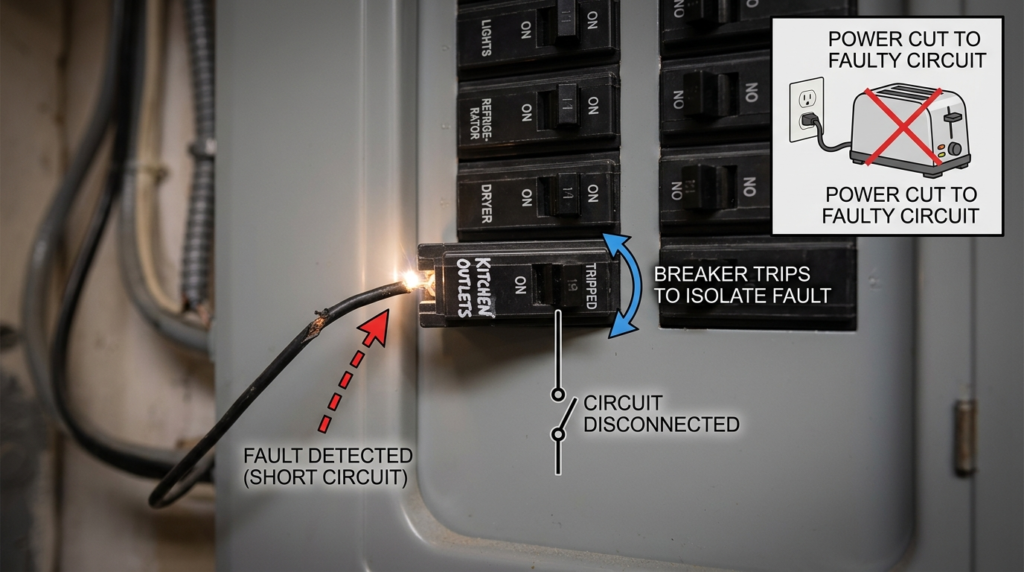
Posted inElectrical Short Circuit: Causes, Effects, and Protection Explained Posted by david villy November 16, 2026 A short circuit is one of the most common and most dangerous electrical faults. It…