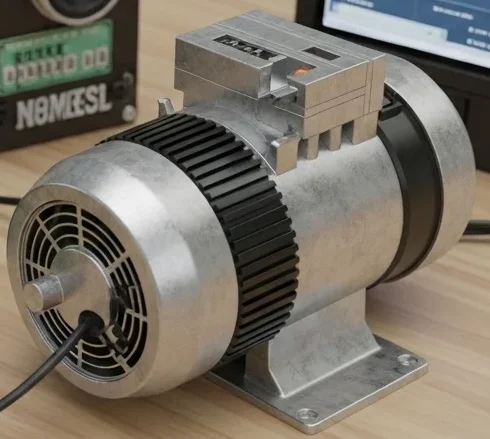
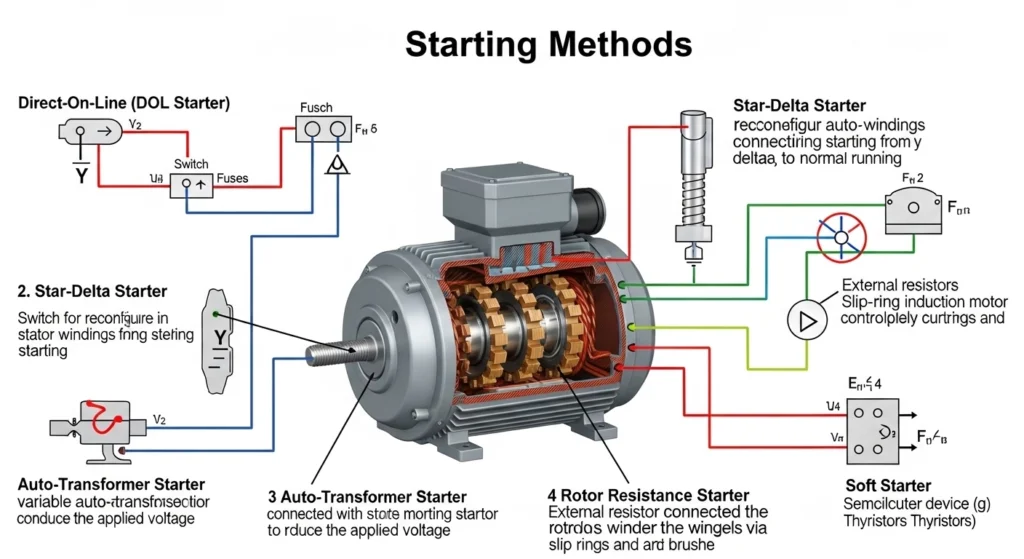

Imagine switching on a large industrial motor directly from the power supply. Instead of a smooth start, it suddenly draws a very high current, causing voltage drops, overheating, and even damage to the system. This is a common problem in electrical systems, and it highlights the importance of proper starting methods of induction motor.
Induction motors are widely used because they are simple, reliable, and cost-effective. However, one major challenge is their high starting current, which can be 5 to 7 times the normal operating current. Without proper starting methods, this can harm both the motor and the electrical network.
Understanding the starting methods of induction motor is essential for electrical students, engineers, technicians, and beginners. It helps in selecting the right method for smooth operation, reducing stress on equipment, and improving efficiency.
In this article, you will learn the complete starting methods of induction motor working principle, types, components, applications, advantages and disadvantages, and practical selection tips. By the end, you will clearly understand how to start induction motors safely and efficiently.
2. What is Starting Methods of Induction Motor?
Starting methods of induction motor refer to the techniques used to reduce the high starting current and ensure smooth motor startup.
Simple Explanation
When an induction motor starts, it behaves like a short circuit and draws very high current. Starting methods help control this current.
Practical Example
- A water pump motor started directly may cause voltage drop
- Using a starter reduces current and protects the system
3. Working Principle
The starting methods of induction motor working principle is based on controlling voltage or resistance during startup.
Step-by-Step Explanation
- Motor is connected to power supply
- Starting method reduces voltage or current
- Motor begins to rotate gradually
- As speed increases, voltage is increased
- Motor reaches normal operating condition
Easy Analogy
Think of pushing a heavy car:
- You don’t push with full force instantly
- You gradually increase force
- Same concept applies to motor starting
Key Points
- High starting current must be limited
- Voltage control reduces current
- Smooth starting increases motor life
4. Types / Classification
Direct-On-Line (DOL) Starter
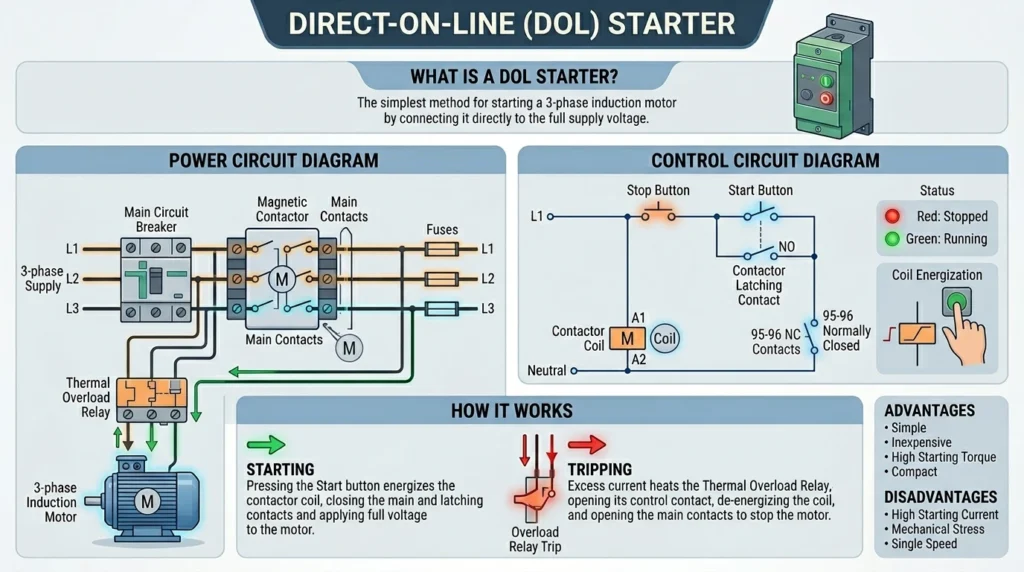
Direct-On-Line (DOL) Starter is a simple and widely used motor starting method in which the full line voltage is directly applied to the motor terminals when starting. It is mainly used for small three-phase induction motors where high starting current does not cause serious issues to the supply system. When the start button is pressed, the contactor closes and the motor receives full voltage, allowing it to develop maximum starting torque. A DOL starter also includes protection devices such as overload relays and fuses or circuit breakers to safeguard the motor from excessive current and faults. Due to its simple design, low cost, and easy operation, the DOL starter is commonly used in pumps, compressors, fans, and small industrial machines.
- Motor connected directly to supply
- Full voltage applied
Features:
- Simple and low cost
- High starting current
Star-Delta Starter
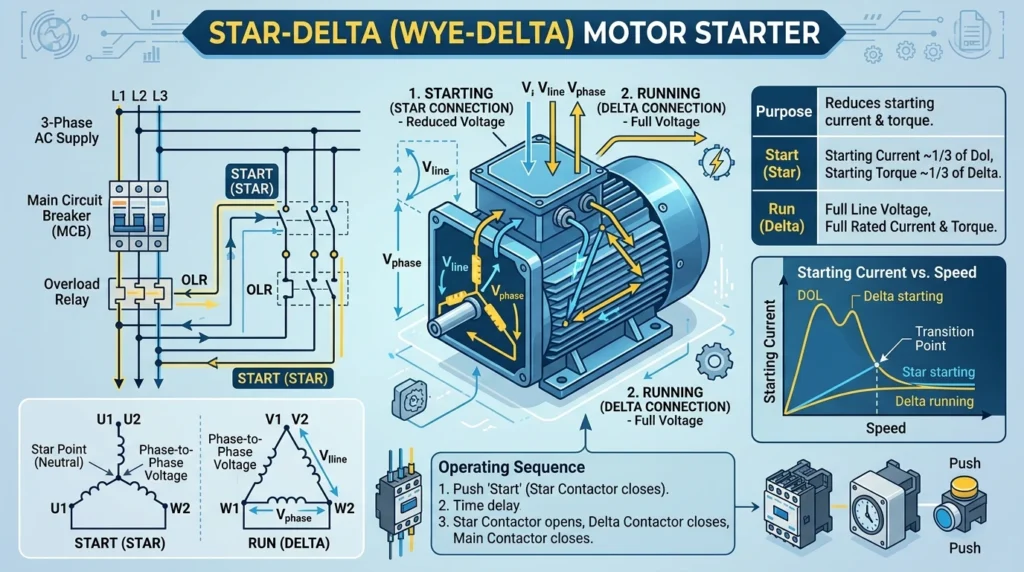
Star-Delta Starter is a reduced voltage starting method used for three-phase induction motors to limit high starting current and provide smooth acceleration. In this method, the motor is initially connected in a star (Y) configuration during starting, which reduces the voltage across each winding to about 58% of the line voltage, thereby reducing the starting current and torque. Once the motor reaches a certain speed, the connection is automatically changed to delta (Δ) configuration, allowing the motor to run at full line voltage and develop normal operating torque. Star-Delta starters are commonly used in medium to large motors in industrial applications such as pumps, compressors, and conveyor systems, where controlled starting and reduced electrical stress on the supply system are required.
- Starts motor in star connection
- Switches to delta after startup
Features:
- Reduces starting current
- Common in industrial motors
Auto Transformer Starter
- Uses transformer to reduce voltage
Features:
- Adjustable voltage levels
- Better control than star-delta
Rotor Resistance Starter
- Used in slip ring motors
- Adds external resistance to rotor
Features:
- High starting torque
- Smooth operation
Soft Starter
- Uses electronic control
- Gradually increases voltage
Features:
- Smooth acceleration
- Reduces mechanical stress
Variable Frequency Drive (VFD)
- Controls frequency and voltage
- Provides full control
Features:
- Best performance
- Energy efficient
5. Main Components
Contactor
- Switches motor ON/OFF
- Controls power supply
Overload Relay
- Protects motor from overheating
- Trips during overload
Timer
- Used in star-delta starter
- Controls switching time
Transformer
- Used in auto transformer starter
- Reduces voltage
Resistors
- Used in rotor resistance starter
- Controls current
Electronic Controller
- Used in soft starter and VFD
- Provides smooth control
6. Advantages
Starting Methods of Induction Motor Advantages
- Reduces starting current
- Protects electrical system
- Increases motor life
- Improves performance
- Reduces voltage drop
- Provides smooth operation
7. Disadvantages / Limitations
Starting Methods of Induction Motor Disadvantages
- Increased system cost
- Complex design in advanced methods
- Maintenance required
- Not all methods suitable for every motor
- Requires proper selection
8. Applications
Starting Methods of Induction Motor Applications
Home Applications
- Air conditioners
- Water pumps
Industrial Applications
- Conveyor systems
- Compressors
- Heavy machinery
Modern Technology
- Automated systems
- Robotics
- Electric vehicles
- Smart factories
9. Comparison Section
Difference Between DOL and Star-Delta Starter
| Feature | DOL Starter | Star-Delta Starter |
| Voltage | Full voltage | Reduced voltage |
| Starting Current | High | Low |
| Cost | Low | Moderate |
| Complexity | Simple | More complex |
| Application | Small motors | Medium motors |
10. Selection Guide
Choosing the right starting method is very important.
Tips for Beginners
- Use DOL for small motors
- Use star-delta for medium motors
- Use VFD for advanced control
Key Factors to Consider
- Motor size
- Load type
- Starting torque requirement
- Budget
- Efficiency
Practical Advice
- Avoid direct starting for large motors
- Use soft starters for smooth operation
- Choose VFD for energy savings
11. Common Problems & Solutions
Why motor draws high current at start?
No starting method used.
Use proper starter.
Why motor jerks during startup?
Sudden voltage application.
Use soft starter.
Why voltage drops in system?
High starting current.
Use star-delta or auto transformer.
Why motor overheats?
Improper starting method.
Check starter and load.
Q5: Which method is best?
Depends on application and motor size.
12. Future Trends
Motor starting technology is improving rapidly.
Key Trends
- Smart Motor Starters
- IoT-Based Monitoring Systems
- AI-Based Control Systems
- Energy-Efficient VFDs
- Advanced Soft Starters
Future systems will focus on automation, efficiency, and reliability.
13. Conclusion
Understanding the starting methods of induction motor is essential for safe and efficient motor operation. These methods help reduce starting current, protect equipment, and improve overall performance.
By learning the starting methods of induction motor working principle, types, and applications, you can select the right method for different situations. From simple DOL starters to advanced VFDs, each method has its own advantages and limitations.
For electrical students and professionals, mastering these concepts is crucial for designing reliable systems. Focus on practical knowledge and proper selection to ensure long-term performance and safety.


Pingback: What Is a Soft Starter? Working Principle & Types