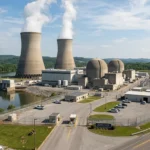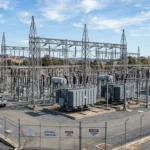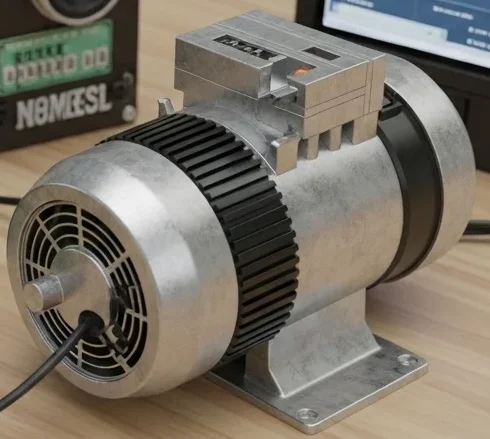

Imagine living in a cold region where homes stay warm during winter without burning large amounts of coal, oil, or gas. In countries like Iceland, many buildings are heated using natural heat from deep inside the Earth. This heat source is called geothermal energy, and it is becoming one of the most reliable renewable energy resources in the world.
As electricity demand increases and environmental concerns grow, engineers and energy experts are searching for cleaner and more sustainable power solutions. Geothermal energy offers a dependable source of electricity and heating with lower pollution compared to fossil fuels. Unlike solar and wind power, geothermal systems can operate continuously, day and night, throughout the year.
Understanding geothermal energy is important for electrical students, technicians, engineers, and beginners who want to learn modern power generation technologies. This article explains the geothermal energy working principle, types, components, applications, advantages and disadvantages, and future developments in simple and easy language.
By the end of this guide, you will have a strong practical understanding of how geothermal energy systems work and why they are important in modern electrical engineering.
What is Geothermal Energy?
Geothermal energy is heat energy obtained from inside the Earth. The word “geothermal” comes from two Greek words:
- “Geo” meaning Earth
- “Thermal” meaning heat
This energy is produced naturally beneath the Earth’s surface due to radioactive decay and the heat remaining from the planet’s formation.
In simple words, geothermal energy uses underground heat to produce electricity or provide heating and cooling.
For example, underground hot water or steam can be brought to the surface through wells. The steam then rotates a turbine connected to a generator, producing electrical power.
Geothermal energy is considered a renewable energy source because the Earth continuously produces heat. It is widely used in power plants, district heating systems, greenhouses, and industrial processes.
Geothermal Energy Working Principle
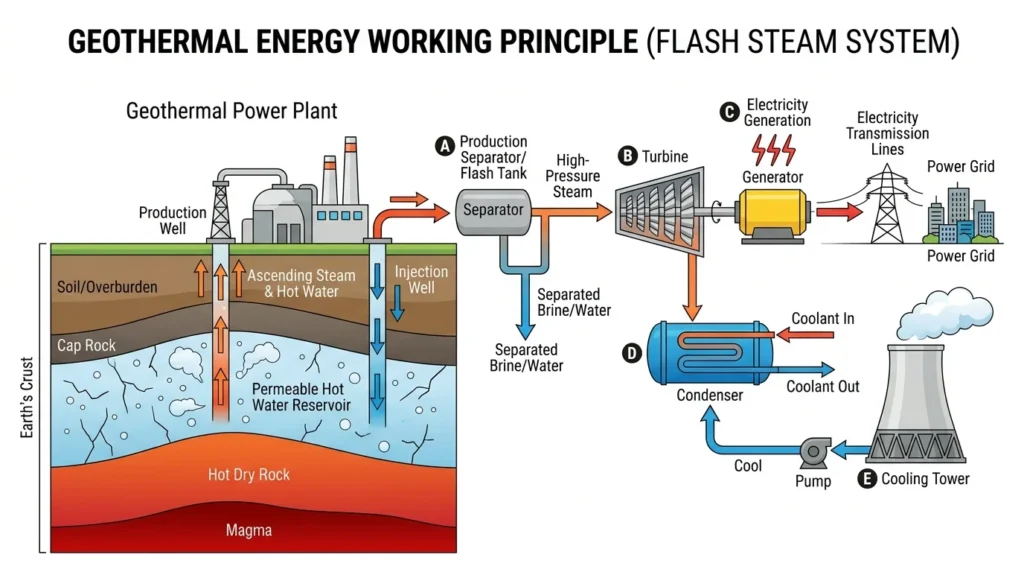
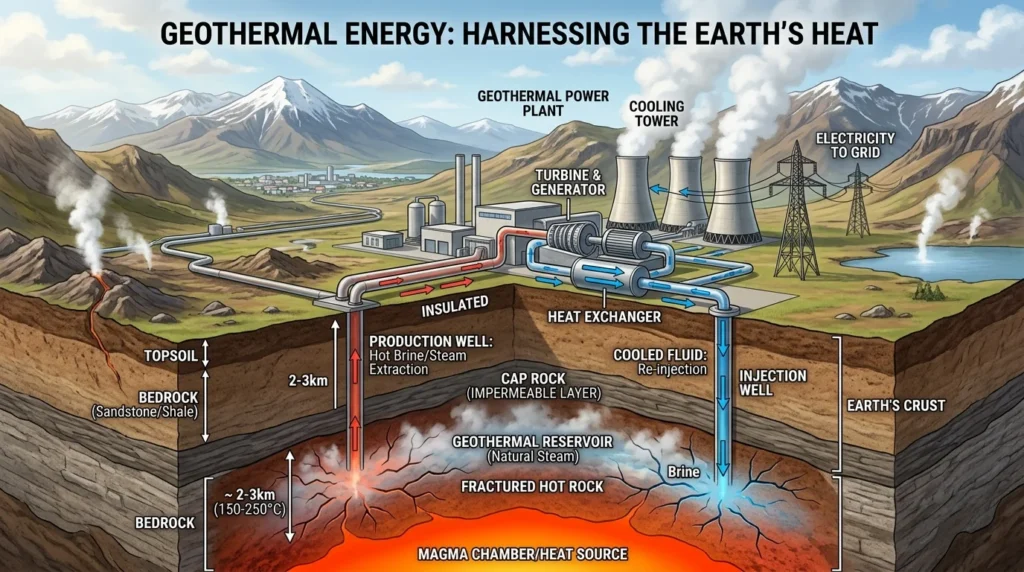
The geothermal energy working principle is based on converting underground heat into usable electrical or thermal energy.The working principle of geothermal energy is based on using the Earth’s natural heat to generate electricity or provide heating. Wells are drilled deep into the ground to reach hot water and steam trapped beneath the Earth’s surface. The steam is brought to the surface and used to rotate a turbine connected to a generator, which produces electricity. After the steam is cooled, the water is pumped back underground to be reheated, making the process renewable and environmentally friendly.
Simple Analogy
Think about boiling water in a kettle:
- Heat is applied below the kettle.
- Water turns into steam.
- Steam creates pressure and movement.
A geothermal power plant works in a similar way, except the Earth itself provides the heat.
Step-by-Step Working Principle
Heat Exists Beneath the Earth
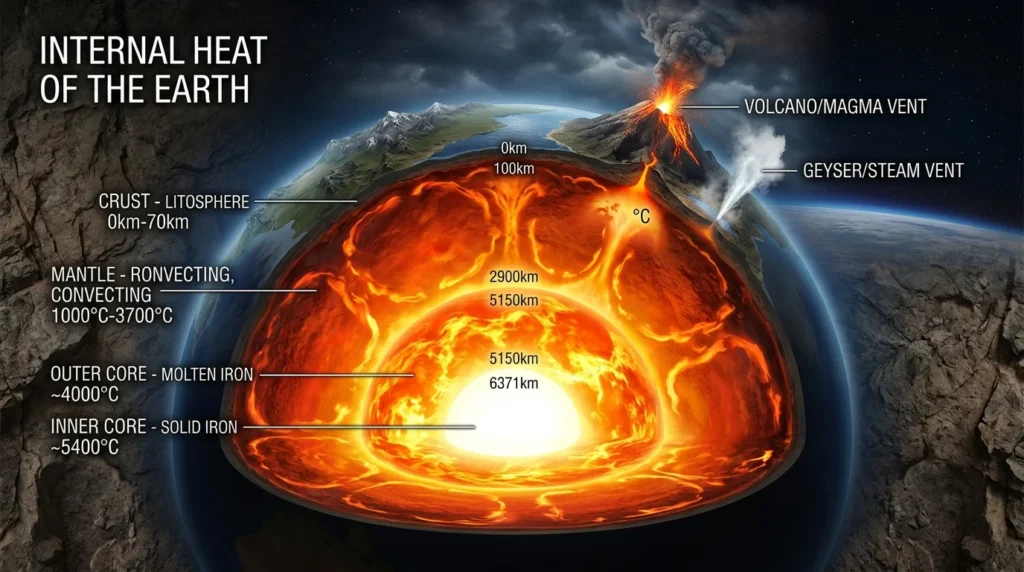
Heat exists beneath the Earth’s surface because of the hot molten rocks and the natural decay of radioactive materials inside the Earth. This underground heat is called geothermal energy. It can be used to produce electricity and to provide heating for homes and buildings. Geothermal energy is a clean, renewable, and environmentally friendly source of energy that is available in many parts of the world.
Deep underground rocks contain extremely high temperatures.
Water Reaches Hot Rocks
Underground water comes into contact with heated rocks and becomes hot water or steam.
Wells Bring Steam to the Surface
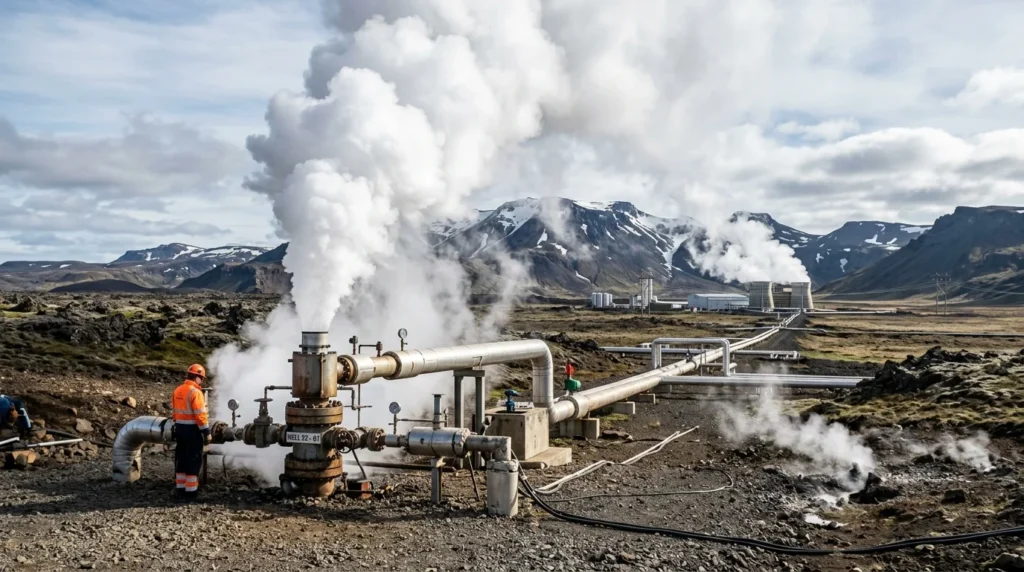
Deep wells are drilled into the Earth to reach underground reservoirs of hot water and steam. The steam is brought to the surface through these wells and is used to spin turbines connected to generators. This process produces electricity without burning fossil fuels. After use, the cooled water is often pumped back into the Earth to be heated again, making geothermal energy a renewable and environmentally friendly source of power.
Special geothermal wells are drilled to extract the steam or hot water.
Steam Rotates the Turbine
The high-pressure steam spins turbine blades.
Generator Produces Electricity
The turbine shaft rotates the generator.
The electrical generation process follows electromagnetic induction principles:
P = VI
Where:
- (P) = Power
- (V) = Voltage
- (I) = Current
Steam is Condensed
After turbine operation, steam is cooled and converted back into water.
Water is Re-injected
The cooled water is pumped back underground to maintain the geothermal reservoir.
Key Features of the Geothermal Energy Working Principle
- Uses natural Earth heat
- Continuous power generation
- Low fuel requirement
- Renewable operation
Types / Classification of Geothermal Energy Systems
Different geothermal systems are designed based on underground temperature and fluid conditions.
Dry Steam Power Plant
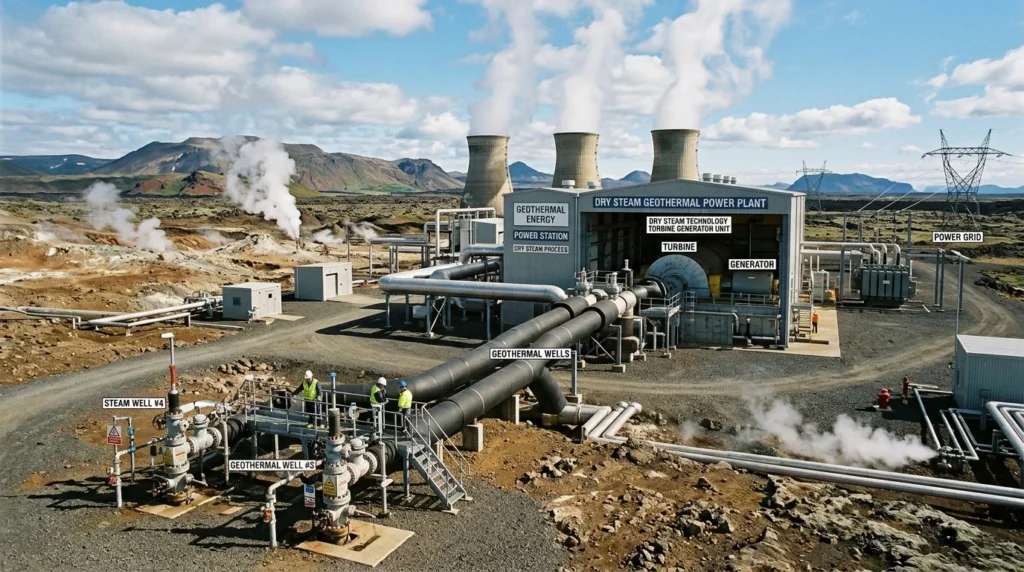
A dry steam power plant is the simplest type of geothermal power plant. It uses natural steam that comes directly from underground reservoirs. The steam is piped through wells to the surface, where it spins a turbine connected to a generator. The generator produces electricity, and the used steam is cooled and often returned underground as water. This method is clean, efficient, and uses renewable geothermal energy.
This is the oldest geothermal power generation method.
Working
- Natural steam directly comes from underground wells.
- Steam rotates the turbine directly.
Advantages
- Simple design
- High efficiency
Applications
- Large geothermal power stations
Flash Steam Power Plant
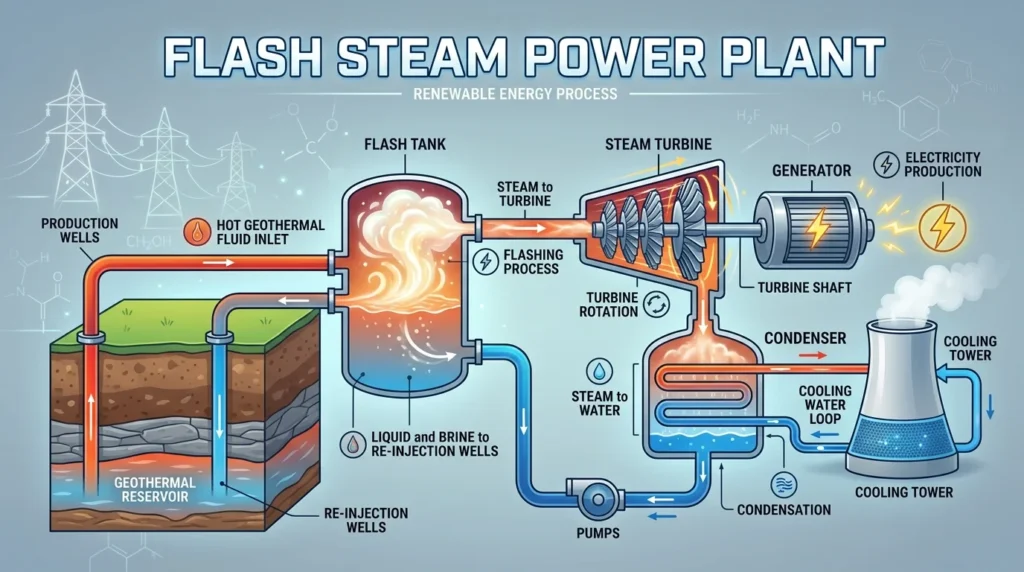
A flash steam power plant uses hot water from deep underground geothermal reservoirs. When the high-pressure hot water reaches the surface, the pressure drops suddenly, causing some of the water to “flash” into steam. The steam is then used to spin a turbine connected to a generator, producing electricity. After the steam is cooled, the water is pumped back underground for reuse. Flash steam power plants are one of the most common types of geothermal power plants because they are efficient and environmentally friendly.
Flash steam plants are the most common geothermal systems.
Working
- High-pressure hot water is extracted.
- Pressure reduction converts water into steam.
- Steam drives the turbine.
Features
- Suitable for high-temperature reservoirs
- Better energy utilization
Binary Cycle Power Plant
Binary systems use two separate fluids.
Working
- Geothermal water heats another liquid with a lower boiling point.
- The second liquid vaporizes and drives the turbine.
Advantages
- Works with moderate temperatures
- Lower emissions
Applications
- Modern geothermal plants
Geothermal Heat Pump System
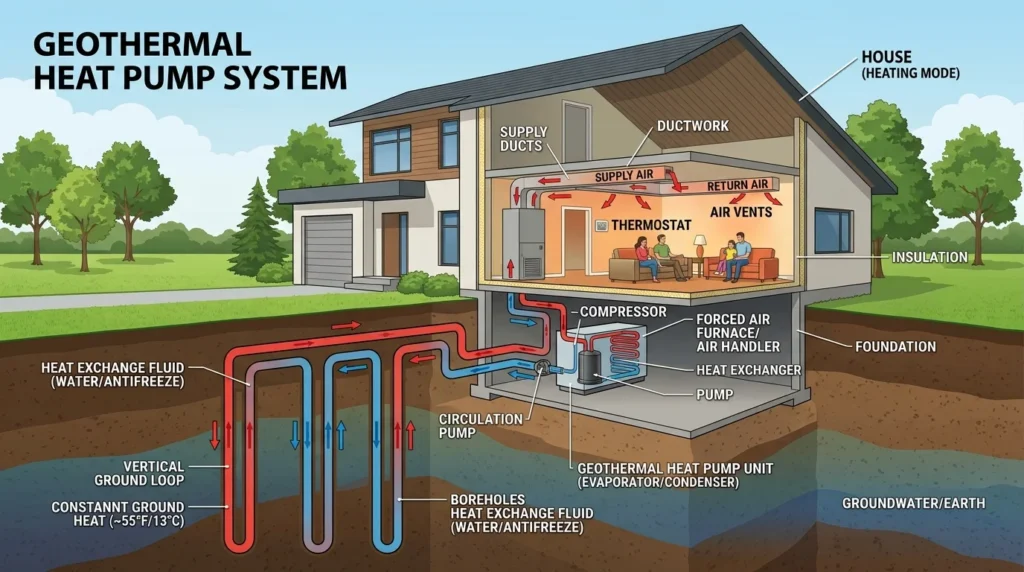
A geothermal heat pump system uses the Earth’s constant underground temperature to heat and cool buildings. Pipes called ground loops are buried beneath the ground, where they absorb or release heat depending on the season. In winter, the system transfers heat from the Earth into the building, while in summer, it removes heat from the building and sends it back into the ground. Geothermal heat pump systems are energy-efficient, environmentally friendly, and help reduce electricity costs.
This system is mainly used for heating and cooling buildings.
Working
- Underground temperature remains stable year-round.
- Heat pumps transfer heat between buildings and the ground.
Applications
- Residential heating
- Commercial cooling systems
Main Components of a Geothermal Energy System
Understanding the main parts helps students and technicians understand geothermal
plant operation.
Geothermal Reservoir
This is the underground source of hot water or steam.
Function
- Stores thermal energy
Production Wells
Deep wells extract steam or hot water.
Function
- Transport geothermal fluid to the surface
Turbine
The turbine converts steam energy into mechanical energy.
Function
- Rotates using high-pressure steam
Generator
The generator converts mechanical energy into electrical energy.
Function
- Produces electricity
Condenser
The condenser cools steam after turbine operation.
Function
- Converts steam into water
Cooling System
Cooling towers remove unwanted heat.
Function
- Maintains system efficiency
Injection Wells
These wells return cooled water underground.
Function
- Maintains reservoir pressure
- Supports sustainability
Advantages
Understanding geothermal energy advantages and disadvantages helps engineers evaluate system performance realistically.
Advantages of Geothermal Energy
- Renewable and sustainable energy source
- Low greenhouse gas emissions
- Continuous power generation
- Reliable baseload electricity
- Small land requirement
- Low fuel cost
- Long operational life
- Reduced dependence on fossil fuels
Real-World Benefits
Stable Electricity Supply
Unlike solar and wind energy, geothermal systems work continuously.
Lower Environmental Impact
Geothermal plants produce much less pollution compared to coal power plants.
Energy Security
Countries with geothermal resources can reduce imported fuel dependence.
Low Operating Costs
After installation, operational expenses are relatively low.
Disadvantages / Limitations
Although geothermal energy has many benefits, it also has practical limitations.
Disadvantages of Geothermal Energy
- High initial installation cost
- Limited suitable locations
- Drilling complexity
- Risk of underground gas release
- Possible mineral scaling in pipes
- Reservoir cooling over long periods
Practical Limitations
Geographic Dependency
Geothermal plants can only be installed in areas with suitable underground heat resources.
Drilling Risks
Deep drilling requires expensive equipment and skilled workers.
Maintenance Challenges
Minerals in geothermal water may damage pipes and turbines.
Applications
Geothermal energy applications continue expanding in residential, industrial, and modern energy systems.
Home Applications
- Space heating
- Water heating
- Geothermal heat pumps
Industrial Applications
- Food drying
- Chemical processing
- Industrial heating systems
Electricity Generation Applications
- Utility-scale power plants
- Remote area power supply
Agricultural Applications
- Greenhouse heating
- Fish farming
- Soil warming
Modern Technology Applications
- Smart district heating
- Hybrid renewable systems
- Sustainable urban infrastructure
Geothermal energy applications are becoming increasingly important in clean energy systems worldwide.
Comparison Section
Difference Between Geothermal Energy and Solar Energy
| Feature | Geothermal Energy | Solar Energy |
| Energy Source | Earth’s internal heat | Sunlight |
| Availability | 24/7 continuous | Daytime only |
| Weather Dependence | Very low | High |
| Initial Cost | High | Moderate |
| Maintenance | Moderate | Low |
| Land Requirement | Small | Large |
| Power Stability | Stable baseload | Variable |
| Environmental Impact | Low | Very low |
Understanding the difference between geothermal energy and solar energy helps engineers choose suitable renewable technologies.
Selection Guide
Selecting the right geothermal system depends on several important factors.
Resource Availability
Check underground temperature and geothermal activity.
Areas near volcanic regions are often suitable.
Temperature Level
Different systems require different temperatures:
- Low temperature → Heat pumps
- High temperature → Power generation
Application Requirement
Select based on purpose:
- Home heating
- Industrial process heating
- Electricity generation
Budget Considerations
Geothermal systems require high initial investment but lower operating costs.
Environmental Conditions
Study underground geology carefully before installation.
Tips for Beginners
- Learn basic thermodynamics
- Understand turbine operation
- Study renewable energy systems
- Follow safety procedures during drilling and maintenance
Common Problems & Solutions
Low Power Output
Causes
- Reduced steam pressure
- Reservoir decline
Solution
- Improve well management
- Reinject water properly
Mineral Scaling
Causes
- Minerals depositing inside pipes
Solution
- Use chemical cleaning methods
- Install filtration systems
Corrosion Problems
Causes
- Chemical gases in geothermal fluids
Solution
- Use corrosion-resistant materials
High Maintenance Cost
Causes
- Complex drilling equipment
- Turbine wear
Solution
- Schedule preventive maintenance
Reservoir Cooling
Causes
- Excessive heat extraction
Solution
- Maintain balanced water reinjection
Future Trends
The future of geothermal energy looks promising due to growing global demand for clean and reliable power.
Enhanced Geothermal Systems (EGS)
EGS technology creates artificial geothermal reservoirs in areas without natural steam.
Benefits
- Expands geothermal availability
- Increases energy production potential
Smart Monitoring Systems
Modern plants now use:
- Real-time sensors
- Automated controls
- Predictive maintenance systems
Hybrid Renewable Systems
Future power plants may combine:
- Geothermal energy
- Solar energy
- Wind energy
This improves energy reliability and grid stability.
Advanced Drilling Technologies
New drilling methods are reducing installation costs and improving efficiency.
Sustainable Urban Heating
Cities are increasingly adopting geothermal district heating systems for low-carbon infrastructure development.
The future of geothermal energy applications is strongly connected with sustainable engineering and smart energy management.
Conclusion
Geothermal energy is one of the most reliable and environmentally friendly renewable energy sources available today. By using natural heat from inside the Earth, geothermal systems can generate electricity, provide heating, and support industrial operations with lower emissions compared to traditional fossil fuels.
This article explained the geothermal energy working principle, system types, components, applications, advantages and disadvantages, and future technologies in simple and practical language. You also learned the difference between geothermal and solar energy, along with important selection and troubleshooting tips.
For electrical students, engineers, technicians, and beginners, understanding geothermal energy is valuable because renewable energy technologies are becoming increasingly important in modern power systems. As the world moves toward cleaner and more sustainable energy solutions, geothermal technology will continue playing a major role in future electrical engineering and industrial development.