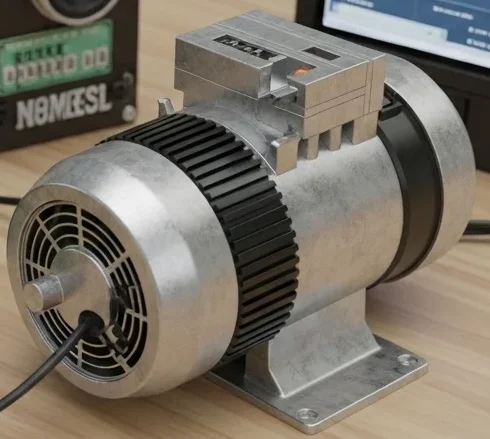
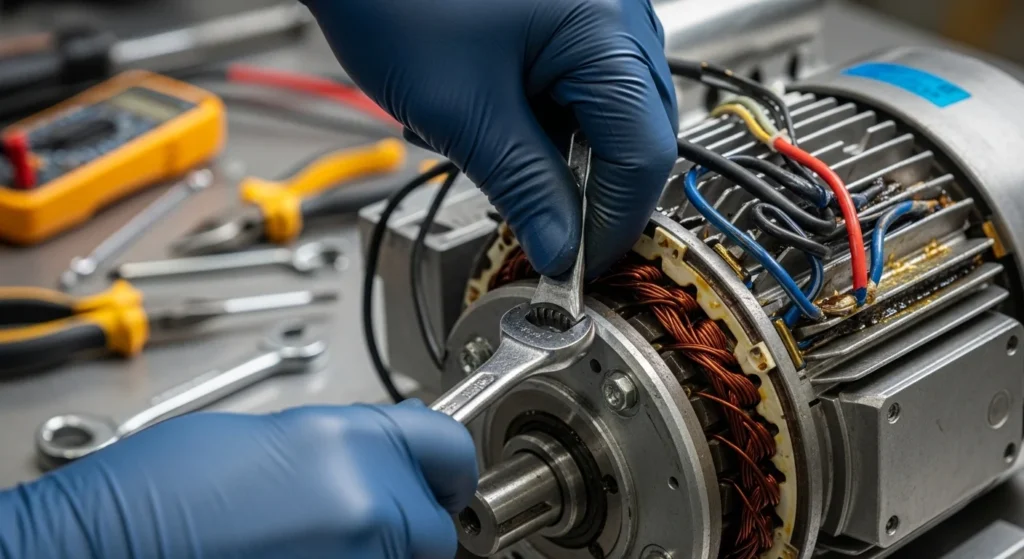

Imagine a factory where all machines suddenly stop working. Production stops, workers wait, and the company loses money every minute. In many cases, the real reason behind such failures is a poorly maintained electric motor.
Electric motors are the heart of many electrical and mechanical systems. They are used in industries, homes, pumps, fans, compressors, and many automated machines. When a motor fails, the entire system may stop working.
This is why Motor Maintenance is extremely important. Proper maintenance keeps motors running smoothly, increases efficiency, reduces unexpected breakdowns, and extends equipment life.
Many beginners think motor maintenance only means cleaning or lubricating a motor. In reality, it includes inspection, testing, preventive checks, and troubleshooting.
In this guide, you will learn:
- The basic concept of Motor Maintenance
- Motor maintenance working principle
- Types of maintenance used in industry
- Important motor components to check
- Motor maintenance advantages and disadvantages
- Common problems and practical solutions
- Real-world motor maintenance applications
This article is written in simple English so electrical students, engineers, and technicians can easily understand and apply the knowledge in real life.
What is Motor Maintenance?
Motor Maintenance is the process of regularly inspecting, cleaning, testing, and servicing an electric motor to ensure it operates safely and efficiently.
The main goal of motor maintenance is to prevent failures before they happen.
In simple words:
Motor maintenance means taking care of a motor so it continues to run properly for a long time.
Practical Example
Consider a water pump motor used in a building. If the bearings are not lubricated or dust accumulates inside the motor, it may overheat and eventually stop working.
However, if the motor is regularly inspected and serviced, the problem can be fixed before it becomes serious.
That is the basic idea behind motor maintenance.
Motor maintenance is important for:
- Industrial motors
- HVAC systems
- Pumps
- Compressors
- Conveyors
- Home appliances
Understanding motor maintenance helps engineers reduce downtime and improve system reliability.
Motor Maintenance Working Principle
The motor maintenance working principle is based on preventing problems before they occur.
Instead of waiting for a motor to fail, technicians perform regular inspections and tests to detect early signs of damage.
Think of it like regular health checkups for a machine.
Step-by-Step Maintenance Process
Motor maintenance usually follows these steps:
1. Visual Inspection
Technicians check for:
- Dust and dirt accumulation
- Loose wires
- Burn marks
- Oil leakage
2. Cleaning
Motors are cleaned to remove:
- Dust
- Oil
- Moisture
- Debris
Cleaning improves cooling and prevents insulation damage.
3. Lubrication
Bearings require proper lubrication to reduce friction.
Without lubrication:
- Bearings wear out
- Temperature increases
- Motor may seize
4. Electrical Testing
Important tests include:
- Insulation resistance test
- Winding resistance test
- Current measurement
These tests help identify hidden electrical problems.
5. Mechanical Inspection
Technicians check:
- Shaft alignment
- Bearings
- Couplings
- Mounting bolts
6. Performance Monitoring
Motor parameters are monitored such as:
- Temperature
- Vibration
- Noise
- Current draw
If values are abnormal, maintenance is performed immediately.
This systematic approach keeps motors running safely and efficiently.
Types / Classification of Motor Maintenance
Motor maintenance is generally divided into several types based on how and when maintenance is performed.
Preventive Maintenance
Preventive maintenance is performed before a fault occurs.
It includes scheduled inspections and servicing.
Examples include:
- Cleaning motors monthly
- Checking insulation resistance
- Lubricating bearings
Advantages:
- Reduces breakdowns
- Improves motor life
- Prevents costly repairs
This is the most commonly used maintenance method.
Predictive Maintenance
Predictive maintenance uses monitoring tools to predict motor failure.
Technicians analyze motor conditions using:
- Vibration analysis
- Thermal imaging
- Current monitoring
This method helps detect problems early.
Industries prefer predictive maintenance because it reduces unnecessary maintenance work.
Corrective Maintenance
Corrective maintenance is performed after a fault occurs.
For example:
- Replacing damaged bearings
- Rewinding motor windings
- Fixing broken parts
This type of maintenance can be expensive because production may stop.
Breakdown Maintenance
Breakdown maintenance occurs when the motor fails completely and must be repaired.
This method is not recommended for critical systems because it causes:
- Production loss
- High repair costs
- Safety risks
Main Components Checked in Motor Maintenance
To perform effective motor maintenance, technicians must inspect important motor components.
Stator Windings
The stator contains copper windings that create the magnetic field.
Maintenance checks include:
- Insulation condition
- Winding resistance
- Burn marks
Damaged windings can cause motor failure.
Rotor
The rotor is the rotating part of the motor.
Maintenance checks:
- Rotor balance
- Rotor bar damage
- Mechanical alignment
Rotor faults often cause vibration problems.
Bearings
Bearings support the motor shaft.
They reduce friction and allow smooth rotation.
Maintenance tasks include:
- Lubrication
- Wear inspection
- Replacement if damaged
Most motor failures occur due to bearing problems.
Cooling System
Motors generate heat during operation.
Cooling methods include:
- Air cooling
- Fans
- Ventilation openings
Blocked ventilation can cause overheating.
Electrical Connections
Loose or damaged connections can lead to:
- Voltage drop
- Overheating
- Electrical faults
Regular tightening and inspection are necessary.
Motor Maintenance Advantages and Disadvantages
Understanding motor maintenance advantages and disadvantages helps engineers decide the best maintenance strategy.
Advantages
- Increases motor lifespan
- Reduces unexpected breakdowns
- Improves energy efficiency
- Enhances equipment reliability
- Reduces maintenance costs in the long run
- Improves workplace safety
- Prevents production losses in industries
Proper maintenance can extend motor life by many years.
Disadvantages / Limitations
Although maintenance is essential, it also has some limitations.
- Requires skilled technicians
- Maintenance equipment can be expensive
- Scheduled shutdowns may be needed
- Predictive tools require training
Despite these limitations, maintenance is still far cheaper than replacing motors.
Motor Maintenance Applications
Motor maintenance applications are found in almost every industry.
Industrial Applications
- Manufacturing plants
- Conveyor systems
- Pumps and compressors
- Steel mills
- Textile industries
These systems rely heavily on electric motors.
Commercial Applications
- HVAC systems
- Elevators
- Escalators
- Cooling towers
Regular maintenance ensures safety and efficiency.
Residential Applications
Even household devices require motor maintenance.
Examples include:
- Washing machines
- Ceiling fans
- Water pumps
- Air conditioners
Although maintenance is simpler, it still improves performance.
Comparison: Preventive vs Predictive Maintenance
Understanding the difference between preventive and predictive maintenance helps technicians choose the right strategy.
| Feature | Preventive Maintenance | Predictive Maintenance |
| Method | Scheduled servicing | Condition-based monitoring |
| Tools | Basic tools | Advanced sensors |
| Cost | Lower initial cost | Higher initial cost |
| Efficiency | Moderate | Very high |
| Downtime | May require scheduled stops | Minimal downtime |
| Accuracy | General maintenance | Precise fault detection |
Both methods are widely used in modern motor maintenance systems.
Motor Selection Guide for Easy Maintenance
Choosing the right motor also affects maintenance requirements.
Here are important tips.
Choose High-Quality Motors
Good-quality motors last longer and require less maintenance.
Consider Operating Environment
Motors used in dusty or wet environments need:
- Sealed enclosures
- Better insulation
Check Cooling Design
Proper cooling prevents overheating and reduces maintenance frequency.
Select Proper Motor Size
Undersized motors overload easily and require frequent maintenance.
Availability of Spare Parts
Motors with easily available spare parts are easier to maintain.
Common Motor Problems & Solutions
Motor problems are common, but many can be fixed easily.
Why does a motor overheat?
Possible causes:
- Overloading
- Poor ventilation
- Bearing failure
Solution:
- Reduce load
- Clean ventilation openings
- Replace bearings
Why is the motor making noise?
Possible reasons:
- Worn bearings
- Misalignment
- Loose components
Solution:
- Replace bearings
- Align shaft
- Tighten bolts
Why does the motor draw high current?
Possible causes:
- Voltage imbalance
- Shorted windings
- Overload
Solution:
- Check power supply
- Test windings
- Reduce mechanical load
Why does the motor vibrate?
Possible causes:
- Rotor imbalance
- Loose mounting
- Bearing wear
Solution:
- Balance rotor
- Tighten mounting bolts
- Replace bearings
Future Trends in Motor Maintenance
Motor maintenance technology is evolving rapidly.
Smart Motor Monitoring
Modern motors use IoT sensors to monitor:
- Temperature
- Vibration
- Current
These sensors send real-time data to engineers.
AI-Based Predictive Maintenance
Artificial intelligence can analyze motor data and predict failures before they happen.
This reduces downtime dramatically.
Remote Monitoring Systems
Engineers can monitor motors from anywhere using cloud systems.
Factories increasingly use centralized monitoring systems.
Energy-Efficient Motors
New motor designs focus on efficiency and lower maintenance needs.
Examples include:
- High-efficiency IE3 motors
- Brushless motors
- Smart drives
These innovations will shape the future of motor maintenance.
Conclusion
Motor maintenance is one of the most important practices in electrical engineering. Electric motors are used in almost every industry and many household systems. When motors fail, production stops, equipment becomes unsafe, and repair costs increase.
Understanding the motor maintenance working principle helps engineers prevent failures before they happen. Regular inspection, cleaning, lubrication, and testing ensure motors operate efficiently and safely.
Different maintenance strategies such as preventive, predictive, and corrective maintenance are used depending on system requirements. Each approach has its advantages, but preventive and predictive methods are the most effective for modern industries.
By understanding motor components, common faults, and troubleshooting techniques, technicians can significantly extend motor life. With new technologies like smart sensors and AI monitoring, motor maintenance will become even more efficient in the future.
For electrical students and technicians, mastering motor maintenance is a valuable skill that improves reliability, safety, and performance in real-world electrical systems