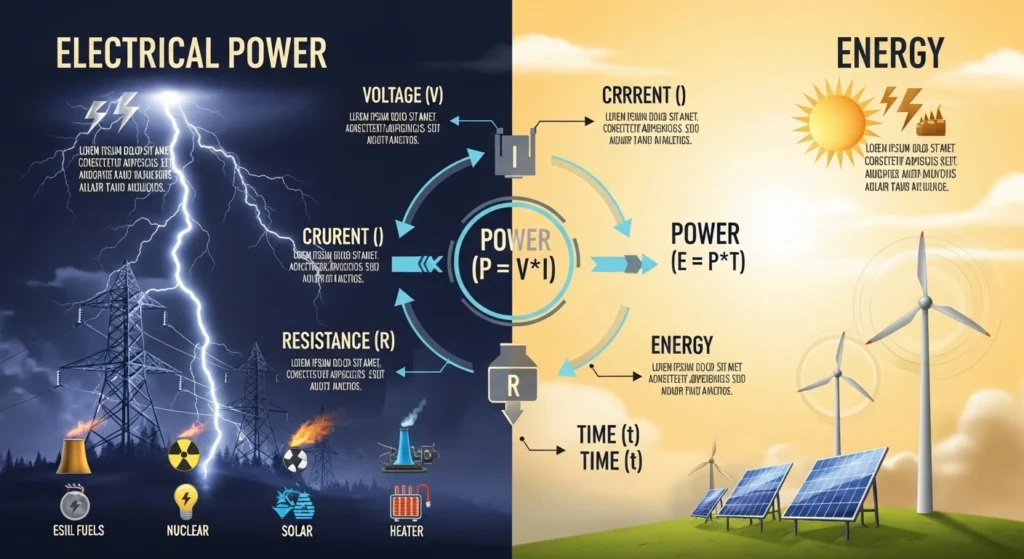

Think about your electricity bill at the end of the month. You are charged based on how much electricity you used—but what exactly are you paying for? Is it power, energy, or both? This simple question often confuses many beginners in electrical engineering.
Understanding electrical power and energy is essential for anyone working with electrical systems. Whether you are designing circuits, managing power consumption, or troubleshooting equipment, these concepts are fundamental. They help you measure how much electricity is being used and how efficiently systems operate.
In this article, you will learn Electrical Power and Energy Explained in a simple and practical way. We will cover definitions, working principles, types, real-world applications, advantages and disadvantages, and the key difference between power and energy. By the end, you will clearly understand how electricity is generated, consumed, and measured in everyday life.
What is Electrical Power and Energy?
Electrical Power
Definition:
Electrical power is the rate at which electrical energy is used or transferred.
Simple explanation:
Power tells you how fast electricity is being consumed.
Formula:
Power (P) = Voltage (V) × Current (I)
Practical example:
A 100-watt bulb uses electricity faster than a 40-watt bulb.
Electrical Energy
Definition:
Electrical energy is the total amount of electrical work done over time.
Simple explanation:
Energy tells you how much electricity is used over a period.
Formula:
Energy (E) = Power (P) × Time (t)
Practical example:
If a 100W bulb runs for 10 hours, it consumes 1000 watt-hours (1 kWh) of energy.
Working Principle
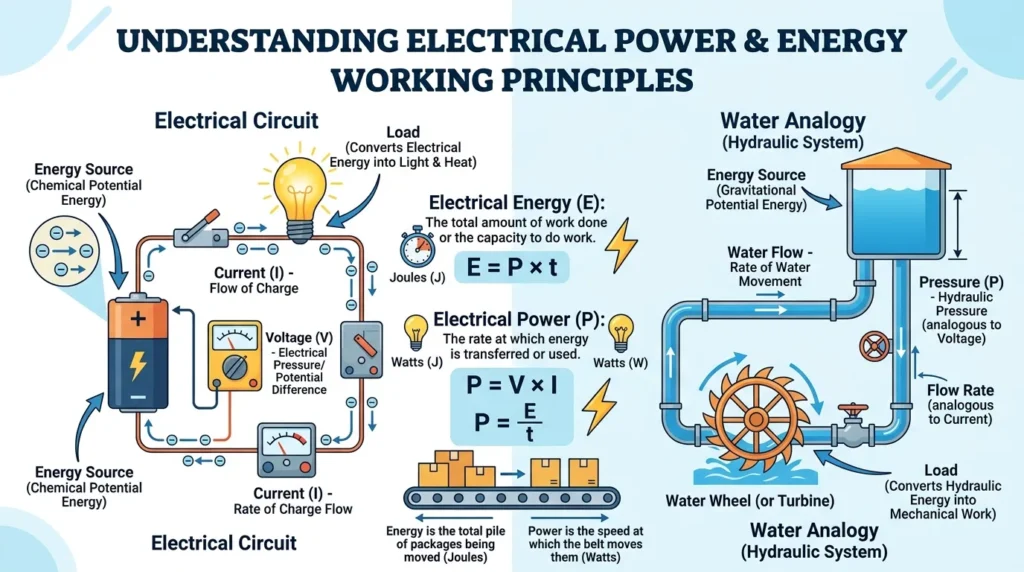
Electrical power is the rate at which electrical energy is generated, transferred, or consumed in an electrical circuit, while electrical energy is the total amount of power used over a period of time. The working principle is based on the flow of electric current through a load when a voltage is applied. As current passes through electrical devices such as lamps, motors, or heaters, electrical energy is converted into useful forms of energy such as light, heat, or mechanical motion. Electrical power is measured in watts (W) or kilowatts (kW) and is calculated by multiplying voltage and current. Electrical energy is measured in watt-hours (Wh) or kilowatt-hours (kWh) and is calculated by multiplying power by the time of operation. Understanding electrical power and energy helps in designing efficient electrical systems, reducing energy consumption, and accurately calculating electricity usage and costs.
The electrical power and energy working principle is based on how electrical charges move and perform work.
Step-by-Step Explanation
- A voltage source creates an electric potential difference
- This causes current (flow of electrons) to move
- When current flows through a device, work is done
- The rate of this work is called power
- The total work done over time is energy
Easy Analogy
- Power: Like the speed of a car
- Energy: Like the total distance traveled
A car moving fast uses more fuel quickly (high power), but total fuel used depends on how long it runs (energy).
Key Points
- Power is instantaneous
- Energy is cumulative
- Both are directly related
Types / Classification
Types of Electrical Power
Active Power (Real Power)
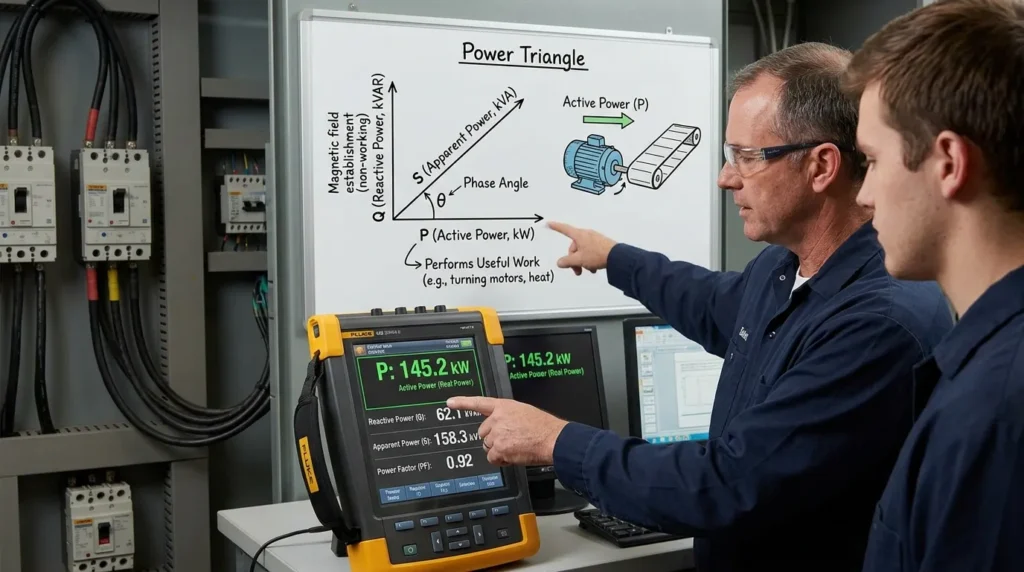
Active power, also known as real power or true power, is the actual electrical power that performs useful work in an electrical circuit. It is the power consumed by electrical devices and converted into useful forms of energy such as heat, light, or mechanical motion. In AC circuits, active power depends on the voltage, current, and power factor of the load. It is measured in watts (W) or kilowatts (kW). Examples of loads that consume active power include electric heaters, lamps, motors, and household appliances. Active power is the portion of electrical power that is effectively used to operate electrical equipment, making it the most important form of power in residential, commercial, and industrial electrical systems.
- Measured in watts (W)
- Does actual work (lighting, heating)
Reactive Power
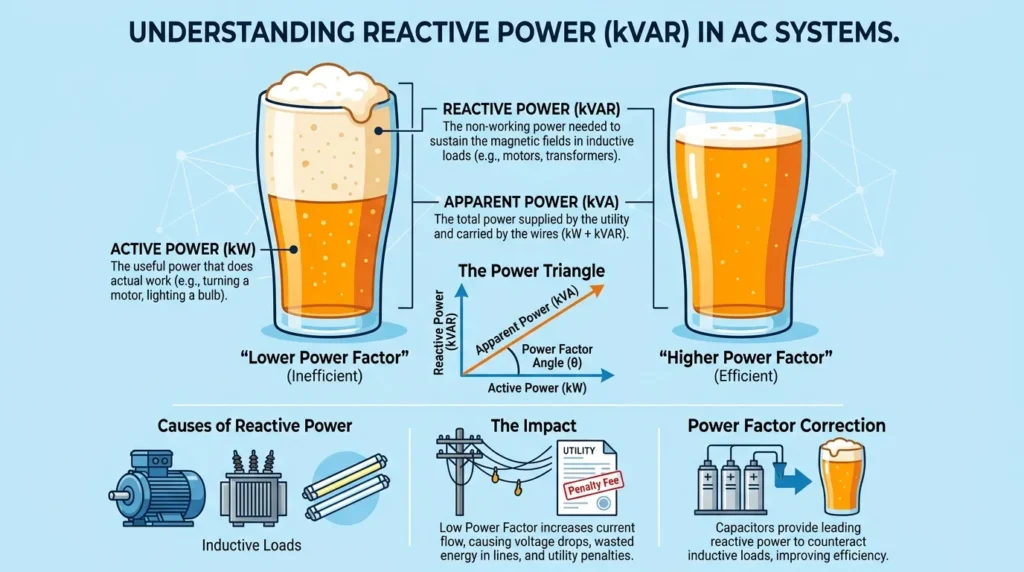
Reactive power is the portion of electrical power that does not perform any useful work but is essential for creating and maintaining the magnetic and electric fields required by inductive and capacitive equipment. It continuously flows back and forth between the power source and the load without being converted into useful energy. Reactive power is mainly consumed by motors, transformers, inductors, and fluorescent lighting systems. It is measured in volt-ampere reactive (VAR) or kilovolt-ampere reactive (kVAR). Although reactive power does not produce useful output such as heat, light, or mechanical motion, it is necessary for the proper operation of many AC electrical devices. Excessive reactive power lowers the power factor, increases current flow, and reduces the overall efficiency of the electrical power system.
- Measured in VAR (Volt-Ampere Reactive)
- Does not perform useful work
- Helps maintain voltage levels
Apparent Power
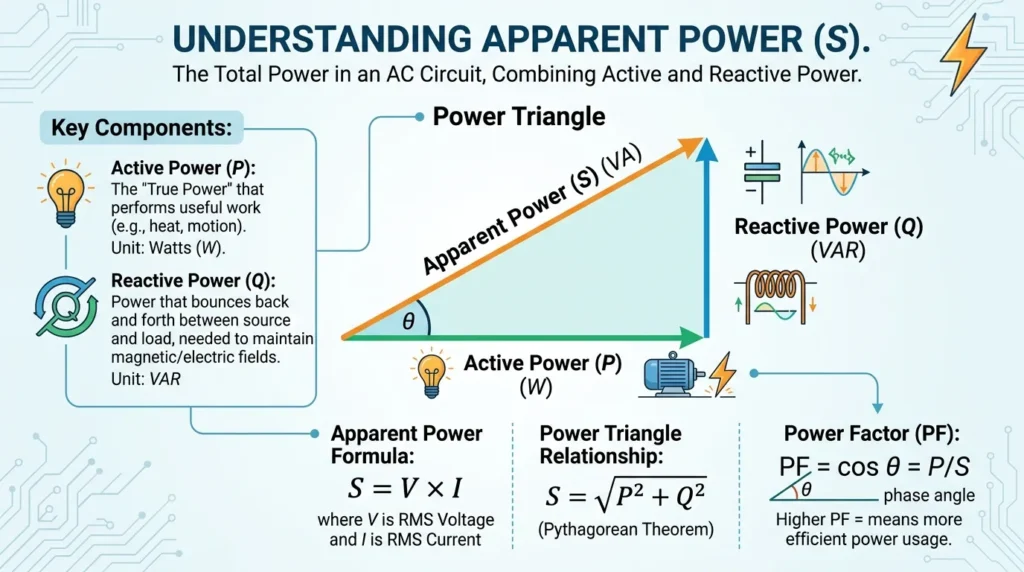
Apparent power is the total power supplied by an AC electrical source to a load. It is the combination of active power (real power), which performs useful work, and reactive power, which creates and maintains magnetic and electric fields. Apparent power represents the total demand placed on the electrical system and is measured in volt-amperes (VA) or kilovolt-amperes (kVA). It depends on the supply voltage and current, regardless of the power factor. Apparent power is an important parameter for selecting and sizing electrical equipment such as transformers, generators, cables, and circuit breakers, ensuring they can safely handle the total electrical load in residential, commercial, and industrial power systems.
- Measured in VA (Volt-Ampere)
- Combination of active and reactive power
Types of Electrical Energy
Electrical Energy in DC Circuits
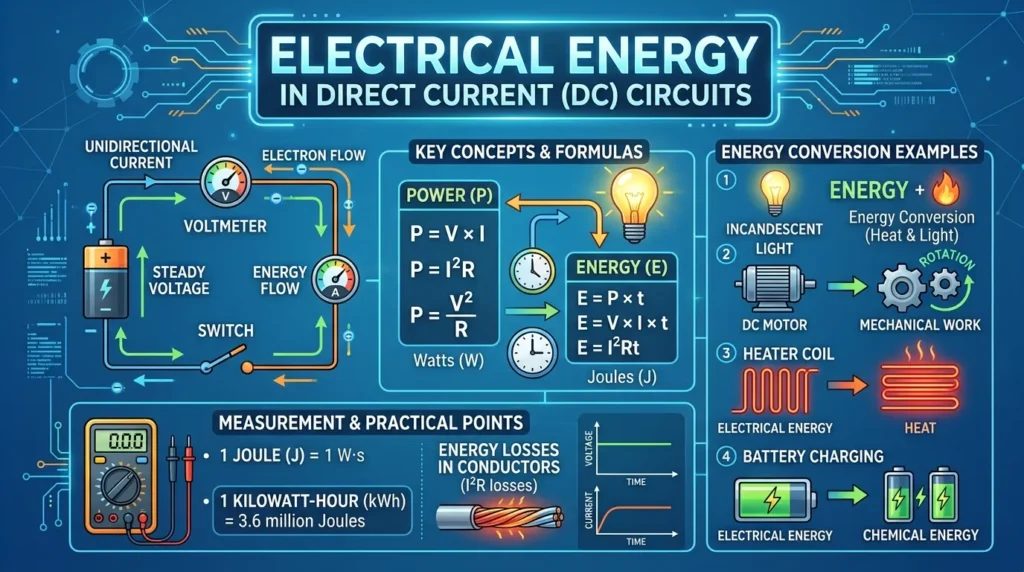
Electrical energy in DC (Direct Current) circuits is the energy supplied by a DC source, such as a battery or DC power supply, to operate electrical loads. Its working principle is based on the continuous flow of current in one direction through a closed circuit. When a constant DC voltage is applied, current flows through the load and electrical energy is converted into useful forms such as heat, light, or mechanical energy. The amount of electrical energy consumed depends on the power of the load and the time for which it operates. Electrical energy in DC circuits is measured in joules (J) or watt-hours (Wh) and is commonly used in batteries, solar power systems, electronic devices, electric vehicles, and DC motors. Understanding DC electrical energy is essential for designing efficient circuits and calculating energy consumption.
- Constant voltage and current
- Simple calculation
Electrical Energy in AC Circuits
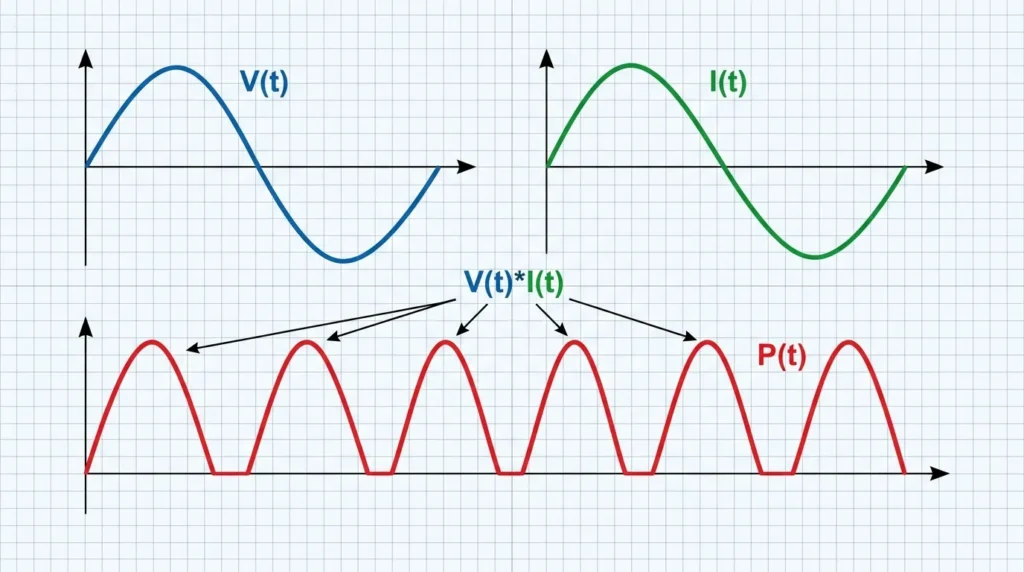
Electrical energy in AC (Alternating Current) circuits is the energy supplied by an AC source and consumed by electrical loads over a period of time. Its working principle is based on the alternating flow of current, which continuously changes direction while transferring energy from the power source to the load. In AC circuits, electrical energy is converted into useful forms such as heat, light, and mechanical energy by devices like lamps, heaters, motors, and household appliances. The amount of energy consumed depends on the active (real) power and the duration of operation. Electrical energy in AC circuits is measured in watt-hours (Wh) or kilowatt-hours (kWh), which are the units used for electricity billing. Understanding electrical energy in AC circuits is essential for calculating power consumption, improving energy efficiency, and designing reliable residential, commercial, and industrial electrical systems.
- Voltage and current vary
- Requires RMS values
Main Components
Understanding electrical power and energy requires knowledge of key components:
Voltage Source
- Provides electrical pressure
- Example: battery or generator
Current Flow
- Movement of electrons
- Responsible for energy transfer
Load Devices
- Consume power
- Example: bulbs, motors, heaters
Energy Meter
- Measures electrical energy usage
- Used in homes and industries
Conductors
- Carry current
- Connect components
Function:
These components work together to generate, transfer, and consume electrical power and energy efficiently.
Advantages
Electrical Power and Energy Advantages
- Easy to measure and monitor
- Essential for all electrical systems
- Enables efficient energy management
- Supports industrial and domestic usage
- Helps optimize power consumption
- Widely applicable in modern technology
Disadvantages / Limitations
Electrical Power and Energy Disadvantages
- Power loss during transmission
- Energy wastage due to inefficiency
- Requires proper measurement systems
- Overuse leads to high costs
- Complex calculations in AC systems
Applications
Electrical Power and Energy Applications
Home Applications
- Running appliances
- Lighting systems
- Heating and cooling
Industrial Applications
- Operating machinery
- Power plants
- Manufacturing systems
Modern Technology
- Electric vehicles
- Renewable energy systems
- Smart grids
- Data centers
Electrical power and energy are used everywhere electricity is required.
Comparison Section
Difference Between Electrical Power and Electrical Energy
| Feature | Electrical Power | Electrical Energy |
| Definition | Rate of energy use | Total energy consumed |
| Unit | Watt (W) | Watt-hour (Wh) |
| Time Factor | Instantaneous | Over time |
| Formula | P = V × I | E = P × t |
| Example | 100W bulb rating | Monthly electricity bill |
This table clearly explains the difference between electrical power and energy, which is essential for understanding usage and billing.
Selection Guide
Choosing between power and energy concepts depends on your goal.
Use Power when:
- Designing circuits
- Selecting equipment
- Calculating load capacity
Use Energy when:
- Measuring electricity consumption
- Calculating bills
- Analyzing efficiency
Tips for Beginners:
- Always check device power ratings
- Monitor energy usage regularly
- Use efficient appliances
- Understand units clearly (W vs kWh)
Common Problems & Solutions
Why is my electricity bill high?
Problem: High energy consumption
Solution: Reduce usage time or use energy-efficient devices
Why do devices heat up?
Problem: High power consumption
Solution: Ensure proper rating and cooling
How to calculate energy usage?
Solution:
Energy = Power × Time
Example:
100W × 10 hours = 1000Wh (1 kWh)
What causes power loss?
Problem: Resistance in wires
Solution: Use proper conductors and reduce distance
Future Trends
Electrical power and energy systems are rapidly evolving.
- Smart energy meters
- Renewable energy integration
- Energy-efficient appliances
- Electric vehicles growth
- Smart grid technology
- Energy storage systems
Future systems focus on efficiency, sustainability, and better control of energy usage.
Conclusion
Electrical Power and Energy Explained is a fundamental topic in electrical engineering. Power tells us how fast energy is used, while energy tells us how much is consumed over time.
Understanding these concepts helps you design efficient systems, reduce energy waste, and manage electricity costs effectively. Both are essential in homes, industries, and modern technologies.
As an electrical learner or professional, mastering these basics will strengthen your understanding of advanced topics. Keep practicing calculations and observing real-life systems to gain confidence.