
Imagine a situation where a technician is called to fix a power fault in a house. Without the right tools, even a simple wiring issue can turn into a long, unsafe, and frustrating job. But with a proper set of electrician tools, the same problem can be solved quickly, safely, and professionally.
This is why understanding the Electrician Tools List is extremely important for electrical students, engineers, technicians, and beginners. Tools are not just accessories—they are essential for safety, accuracy, and efficiency in electrical work.
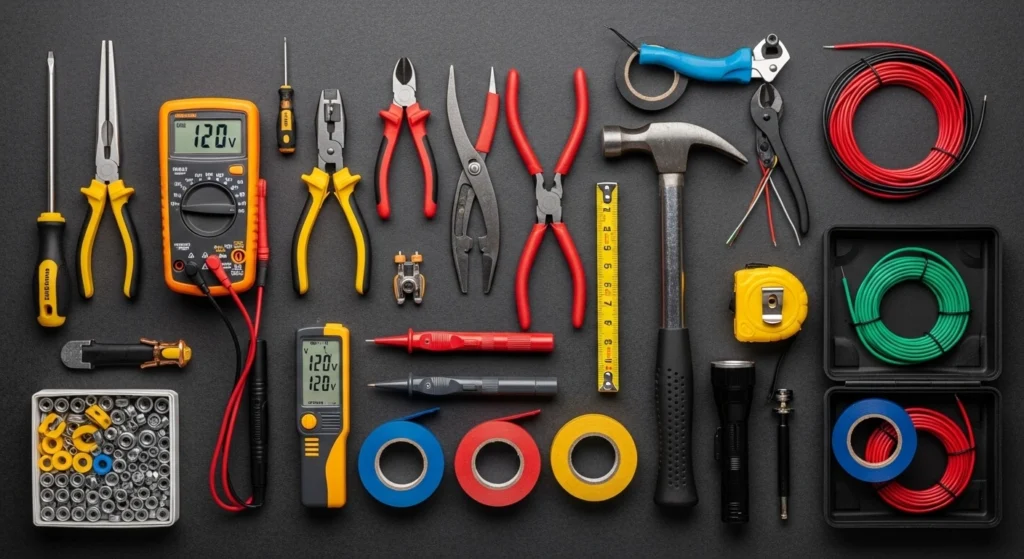
In this guide, you will learn a complete Electrician Tools List, including hand tools, measuring instruments, safety equipment, and advanced devices. We will also cover the working principle of electrician tools, their applications, advantages and disadvantages, selection tips, and common troubleshooting advice. By the end, you will clearly understand what tools are required and how professionals use them in real electrical work.
What is Electrician Tools List?
The Electrician Tools List refers to a collection of essential tools used by electricians to install, repair, test, and maintain electrical systems safely and efficiently.
Simple Explanation
Electrician tools are used for:
- Cutting and stripping wires
- Measuring voltage and current
- Installing electrical components
- Ensuring safety during electrical work
Practical Example
When installing a switchboard, an electrician uses:
- Screwdrivers to fix switches
- Wire strippers to prepare cables
- Tester to check voltage
Without these tools, the job becomes unsafe and inaccurate.
Working Principle
Electrician Tools Working Principle
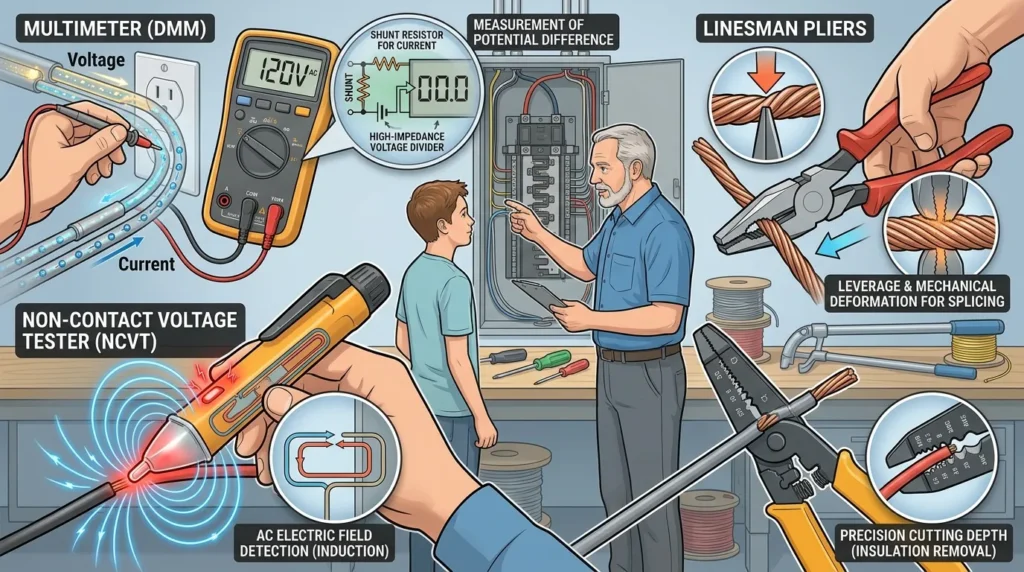
The Electrician Tools List working principle depends on mechanical force, electrical measurement, or safety protection.Electrical tools are specially designed instruments used to install, test, repair, and maintain electrical systems safely and efficiently. Their working principle is based on performing specific electrical or mechanical functions such as cutting, gripping, stripping insulation, tightening connections, measuring electrical quantities, and testing circuits. Insulated hand tools protect electricians from electric shock by preventing direct contact with live conductors, while testing instruments measure voltage, current, resistance, continuity, and other electrical parameters to identify faults and ensure proper operation. Common electrician tools include pliers, screwdrivers, wire strippers, cable cutters, multimeters, clamp meters, voltage testers, insulation testers (Meggers), and crimping tools. These tools improve safety, accuracy, and efficiency in residential, commercial, and industrial electrical work.
Step-by-step explanation:
- Tools interact with electrical or physical systems
- They help measure, cut, or connect components
- Some tools detect electrical signals
- Others ensure safe handling of live circuits
Simple Analogy
Think of electrician tools like a doctor’s instruments:
- Stethoscope → Multimeter
- Scalpel → Wire cutter
- Gloves → Safety equipment
Each tool has a specific role in ensuring safe and accurate work.
Types / Classification
Types of Electrician Tools
Hand Tools
Hand tools are basic tools used by electricians to install, repair, and maintain electrical systems without the need for external power. Their working principle is based on applying manual force to perform tasks such as cutting, gripping, bending, stripping, tightening, and loosening electrical components and conductors. Most electrician hand tools are made with insulated handles to protect the user from electric shock while working on electrical installations. Common hand tools include combination pliers, long-nose pliers, side-cutting pliers, screwdrivers, wire strippers, cable cutters, utility knives, hammers, spanners, and measuring tapes. These tools are widely used in residential, commercial, and industrial electrical work to ensure safe, accurate, and efficient installation and maintenance.
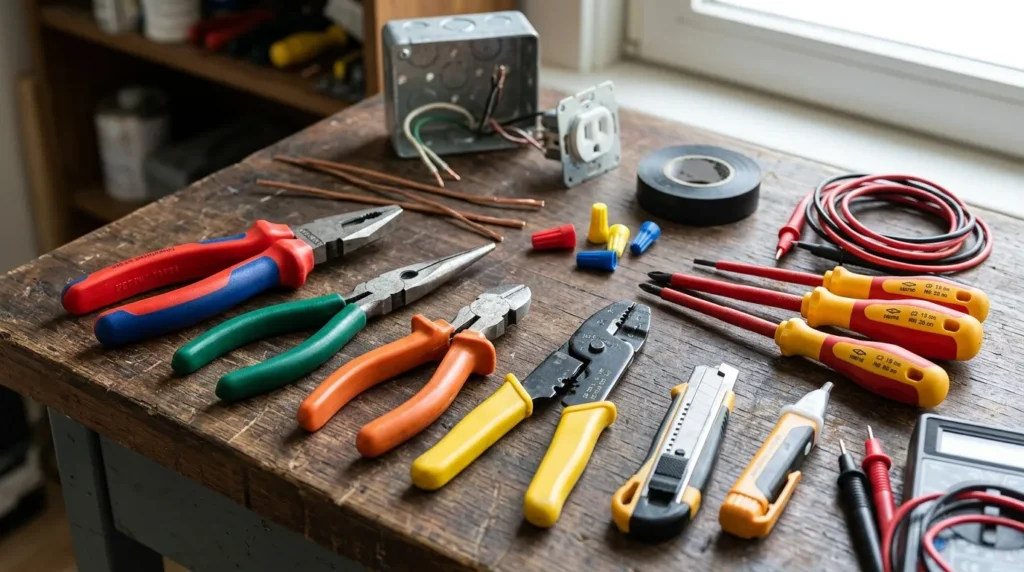
Basic tools used for mechanical tasks:
- Screwdrivers
- Pliers
- Wire cutters
- Strippers
Measuring Tools
Used for electrical testing and measurement:
- Multimeter
- Clamp meter
- Voltage tester
Power Tools

Power tools are electrically or battery-operated tools used to perform electrical installation, maintenance, and repair work quickly and efficiently. Their working principle is based on converting electrical energy into mechanical motion through an electric motor. The motor drives the tool’s moving parts, allowing it to perform tasks such as drilling, cutting, grinding, fastening, and polishing with less manual effort and greater accuracy. Common power tools used by electricians include electric drills, rotary hammers, angle grinders, impact drivers, circular saws, heat guns, and cordless screwdrivers. These tools increase productivity, reduce physical effort, improve precision, and are widely used in residential, commercial, and industrial electrical projects.
Electric or battery-operated tools:
- Electric drill
- Angle grinder
- Impact driver
Safety Tools
Essential for protection:
- Insulated gloves
- Safety goggles
- Rubber mats
Specialized Tools
Used for advanced electrical work:
- Crimping tool
- Cable fault locator
- Phase tester
Main Components
Cutting Tools
- Used to cut wires and cables
- Ensure clean and safe cuts
Measuring Instruments
Measuring instruments are devices used to measure and monitor electrical quantities such as voltage, current, resistance, frequency, power, and continuity. Their working principle is based on sensing electrical signals and converting them into readable values on an analog or digital display. These instruments help electricians and engineers test electrical circuits, detect faults, verify system performance, and ensure safe operation. Common measuring instruments include multimeters, clamp meters, voltmeters, ammeters, ohmmeters, insulation resistance testers (Meggers), frequency meters, power meters, and continuity testers. They are widely used in residential, commercial, industrial, and power distribution systems to improve accuracy, safety, and efficiency during electrical installation, maintenance, and troubleshooting.
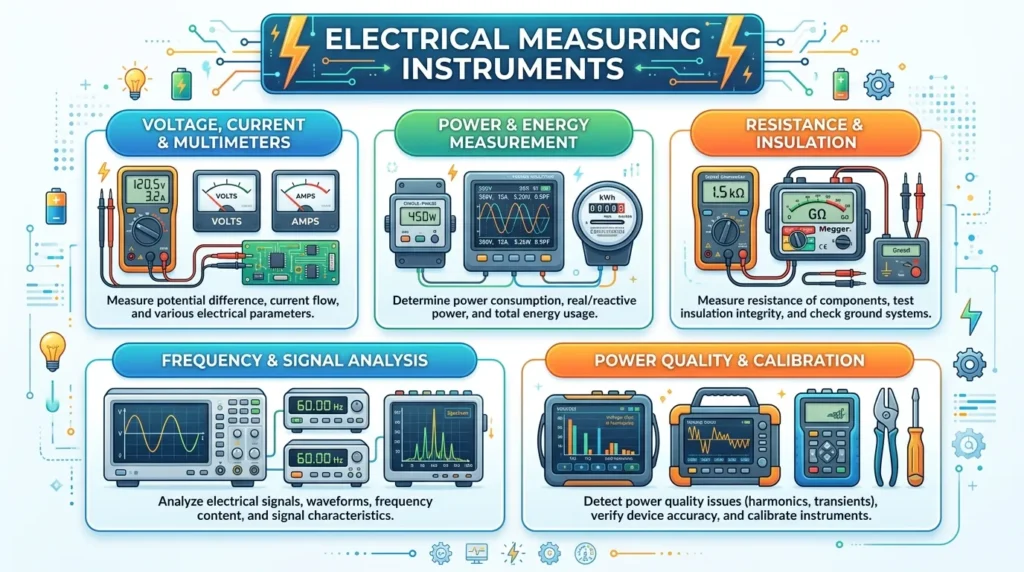
- Measure voltage, current, and resistance
- Help in fault detection
Insulated Handles
- Protect users from electric shock
- Made from non-conductive material
Test Probes
- Used with multimeters
- Touch electrical points safely
Tool Storage Kit
- Organizes tools properly
- Improves efficiency
Advantages
Electrician Tools Advantages
- Improve safety during electrical work
- Increase accuracy of installation
- Save time and effort
- Help in quick fault detection
- Essential for professional work
Real-World Benefits
- Faster repairs in homes and industries
- Reduced risk of accidents
- Better quality electrical installations
- Increased productivity
Disadvantages / Limitations
Electrician Tools Disadvantages
- High-quality tools can be expensive
- Requires proper training to use
- Tools can wear out over time
- Improper use can cause accidents
Practical Limitations
- Not all tools are suitable for every job
- Requires regular maintenance
- Some tools need calibration
Applications
Electrician Tools Applications
Home Applications
- Wiring installation
- Repairing appliances
- Fixing switches and sockets
Industrial Applications
- Machine maintenance
- Power system installation
- Factory wiring systems
Modern Technology
- Solar system installation
- Electric vehicle charging stations
- Smart home systems
Comparison Section
Difference Between Basic Tools and Advanced Tools
| Feature | Basic Tools | Advanced Tools |
| Usage | Simple tasks | Complex systems |
| Cost | Low | High |
| Skill Level | Beginner | Professional |
| Examples | Screwdriver, pliers | Multimeter, clamp meter |
| Application | Home repair | Industrial systems |
Selection Guide
How to Choose Electrician Tools
For Beginners
- Start with basic hand tools
- Choose insulated tools for safety
- Learn proper usage first
For Professionals
- Invest in high-quality measuring tools
- Use certified safety equipment
- Choose durable industrial-grade tools
Tips
- Always check tool insulation
- Avoid cheap low-quality tools
- Maintain tools regularly
- Keep tools organized
Common Problems & Solutions
Tools not giving accurate readings
Causes:
- Low battery in multimeter
- Poor calibration
Solution:
- Replace battery
- Recalibrate instrument
Wire cutter becomes dull
Causes:
- Overuse
- Cutting hard materials
Solution:
- Sharpen or replace tool
- Use correct tool for material
Electric shock risk
Causes:
- Damaged insulation
- Improper handling
Solution:
- Replace damaged tools
- Always use safety gloves
Tools rusting or damaged
Causes:
- Poor storage
- Moisture exposure
Solution:
- Store in dry box
- Apply anti-rust protection
Future Trends
Modern Developments
- Smart digital measuring tools
- Wireless testing devices
- AI-based diagnostic tools
Industry Direction
- Integration with IoT systems
- Lightweight and ergonomic tool designs
- More safety-focused innovations
Conclusion
Understanding the Electrician Tools List is essential for anyone working in electrical fields. Tools are the backbone of safe, efficient, and accurate electrical work. From basic hand tools to advanced measuring instruments, each tool plays a critical role in installation, maintenance, and troubleshooting.
We explored different types of tools, their working principles, real-world electrician tools applications, and the electrician tools advantages and disadvantages. We also discussed selection tips and common issues faced by technicians.
With proper knowledge and practice, using electrician tools becomes safe and efficient. Whether you are a beginner or a professional, building a strong toolset and using it correctly is key to success in electrical work.