
Imagine a busy manufacturing plant where machines are running smoothly for months. Suddenly, a motor burns out, production stops, and the company suffers heavy losses. Later, engineers discover the issue was poor electrical maintenance—something that could have been easily prevented.
This is why Electrical Maintenance Tips are extremely important for electrical students, engineers, technicians, and beginners. Electrical systems are the backbone of homes, industries, and modern infrastructure. Without proper maintenance, even the best-designed systems can fail unexpectedly.
In this guide, you will learn practical and professional Electrical Maintenance Tips, including inspection methods, safety practices, system care, troubleshooting techniques, and long-term maintenance planning. We will also explore the electrical maintenance working principle, types of maintenance, applications, advantages and disadvantages, and common real-world problems with solutions. By the end, you will understand how to keep electrical systems safe, reliable, and efficient.
2. What is Electrical Maintenance Tips?
Electrical Maintenance Tips refer to practical guidelines and best practices used to inspect, test, repair, and maintain electrical systems for safe and efficient operation.
Simple Explanation
Electrical maintenance means:
- Checking electrical equipment regularly
- Fixing small issues before they become big problems
- Ensuring safety and performance
Practical Example
If a fan starts making noise, early maintenance like cleaning and tightening wiring prevents motor failure. Ignoring it may lead to complete breakdown.
3. Working Principle
Electrical Maintenance Working Principle
The electrical maintenance working principle is based on prevention, detection, and correction of faults in electrical systems.
Step-by-step process:
- Inspection: Regular visual checks of equipment
- Testing: Measuring voltage, current, and insulation
- Diagnosis: Identifying faults or weak points
- Repair: Fixing or replacing damaged parts
- Monitoring: Ensuring system stability after repair
Simple Analogy
Think of electrical maintenance like servicing a car:
- Regular check-ups prevent breakdowns
- Small repairs avoid major engine failure
- Monitoring ensures smooth performance
4. Types / Classification
Types of Electrical Maintenance
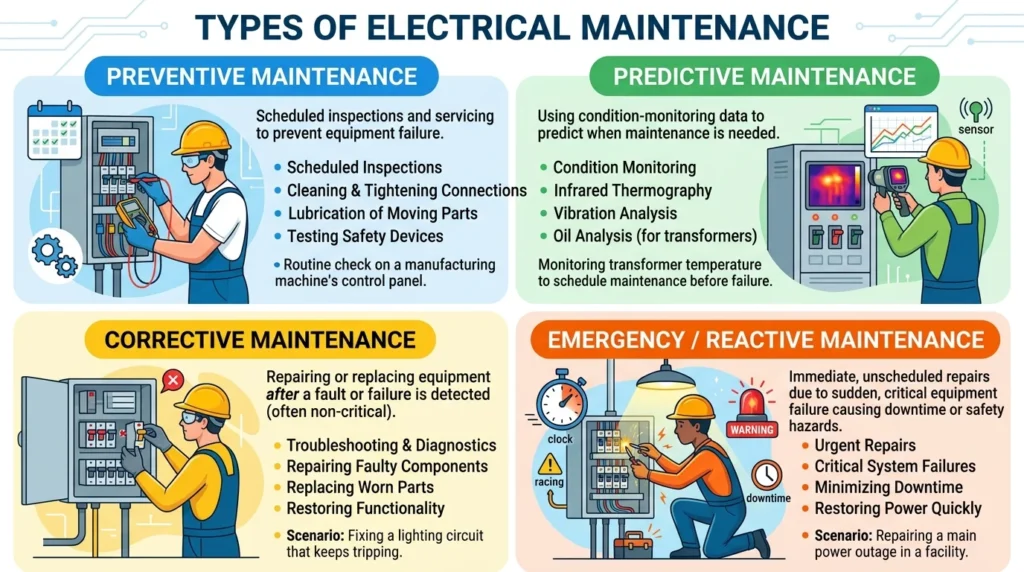
Electrical maintenance is the process of inspecting, testing, repairing, and servicing electrical systems and equipment to ensure safe and reliable operation. There are several types of electrical maintenance used in homes, industries, and commercial systems. Preventive maintenance is performed regularly to reduce the chances of equipment failure by cleaning, tightening connections, and checking system performance. Predictive maintenance uses monitoring tools and condition analysis to identify problems before breakdowns occur. Corrective maintenance is carried out after a fault or failure is detected to restore equipment operation. Breakdown maintenance, also called reactive maintenance, is performed only when equipment stops working completely. Routine maintenance includes daily or weekly inspections to ensure smooth operation of electrical systems. Emergency maintenance is done immediately during dangerous or unexpected electrical failures. Each type of maintenance plays an important role in improving equipment life, reducing downtime, increasing safety, and maintaining efficient electrical system performance.
. Preventive Maintenance
- Performed regularly before failure occurs
- Includes cleaning, tightening, and inspection
- Reduces risk of sudden breakdown
Corrective Maintenance
- Done after a fault occurs
- Involves repairing or replacing damaged parts
- Restores system functionality
Predictive Maintenance
- Uses data and monitoring tools
- Identifies issues before they happen
- Based on condition of equipment
Routine Maintenance
- Daily or weekly checks
- Includes basic inspection and cleaning
- Ensures smooth operation
. Emergency Maintenance
- Done during unexpected failures
- Focuses on quick restoration
- Critical in industrial systems
5. Main Components
Electrical Panels
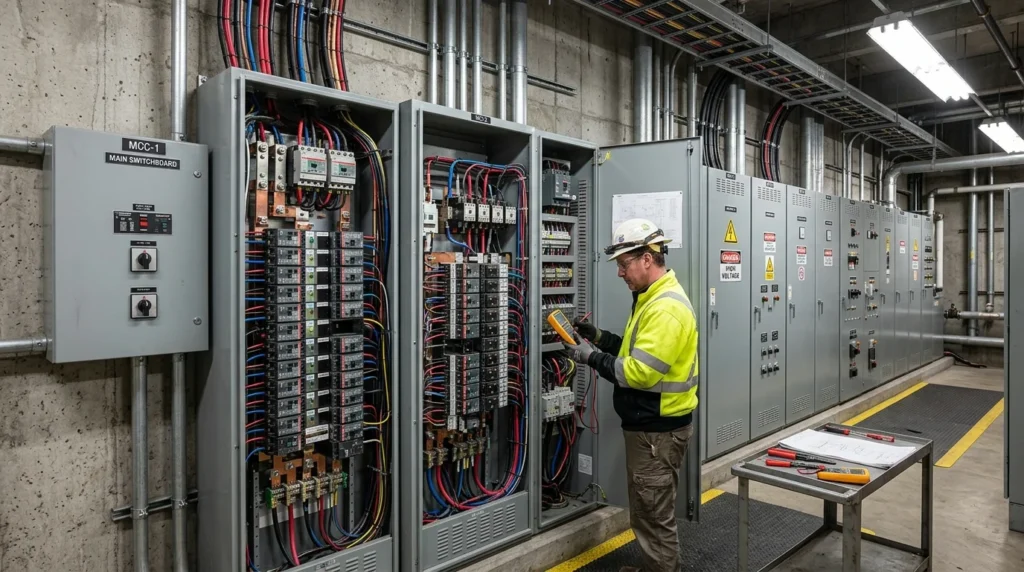
Electrical panels are important components of an electrical power system that distribute and control electricity within homes, industries, and commercial buildings. An electrical panel, also known as a distribution board or breaker panel, receives electrical power from the main supply and safely distributes it to different circuits. It contains protective devices such as circuit breakers, fuses, busbars, and switches that help protect electrical equipment from overloads, short circuits, and electrical faults. In simple words, an electrical panel acts like a control center for managing electrical power. For example, separate breakers inside the panel may control lighting, air conditioners, motors, or power outlets in a building. Electrical panels improve safety, simplify maintenance, and help technicians isolate faulty circuits easily. They are widely used in residential buildings, factories, substations, commercial complexes, and industrial automation systems for efficient and reliable power distribution.
- Distribute power across circuits
- Contain breakers and fuses
Wiring System
- Connects all electrical devices
- Must be properly insulated
Circuit Breakers
- Protect against overload and faults
- Automatically disconnect power
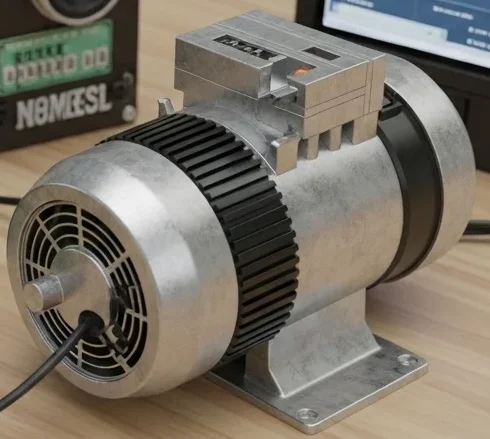
Motors and Machines
- Convert electrical energy into mechanical work
- Require regular lubrication and inspection
Protective Devices
- Include relays and surge protectors
- Prevent electrical damage
6. Advantages
Electrical Maintenance Advantages
- Improves system safety
- Reduces equipment failure
- Extends equipment life
- Saves repair costs
- Ensures energy efficiency
Real-World Benefits
- Fewer production shutdowns
- Better machine performance
- Lower electricity waste
- Increased workplace safety
7. Disadvantages / Limitations
Electrical Maintenance Disadvantages
- Requires skilled technicians
- Can be time-consuming
- Needs regular scheduling
- May increase short-term costs
Practical Limitations
- Some faults are hidden
- Requires proper tools
- Downtime may be necessary during maintenance
8. Applications
Electrical Maintenance Applications
Home Applications
- Wiring inspection
- Appliance servicing
- Safety checks
Industrial Applications
- Factory machines
- Power distribution systems
- Motor maintenance
Modern Technology
- Data centers
- Renewable energy systems
- Smart electrical grids
9. Comparison Section
Difference Between Preventive and Corrective Maintenance
| Feature | Preventive Maintenance | Corrective Maintenance |
| Timing | Before failure | After failure |
| Cost | Lower in long term | Higher due to breakdowns |
| Downtime | Minimal | High |
| Approach | Proactive | Reactive |
| Efficiency | High system reliability | Temporary solution |
10. Selection Guide
How to Choose Electrical Maintenance Strategy
For Beginners
- Start with routine inspection
- Focus on safety checks
- Learn basic testing tools
For Professionals
- Use predictive maintenance systems
- Analyze performance data
- Plan scheduled maintenance cycles
Tips for Better Maintenance
- Always switch off power before work
- Use proper safety equipment
- Keep records of inspections
- Replace damaged parts immediately
11. Common Problems & Solutions
Frequent circuit tripping
Causes:
- Overloaded circuits
- Faulty wiring
Solution:
- Reduce load
- Inspect wiring system
Motor overheating
Causes:
- Poor ventilation
- Lack of lubrication
Solution:
- Improve cooling
- Perform regular servicing
Voltage fluctuation
Causes:
- Loose connections
- Power supply issues
Solution:
- Tighten connections
- Use stabilizers
Electrical shock risk
Causes:
- Damaged insulation
- Improper grounding
Solution:
- Replace insulation
- Ensure proper earthing
12. Future Trends
Modern Developments
- Smart sensors for real-time monitoring
- AI-based predictive maintenance systems
- IoT-enabled electrical panels
Industry Direction
- Automation in maintenance scheduling
- Remote diagnostics systems
- Energy-efficient maintenance practices
13. Conclusion
Understanding Electrical Maintenance Tips is essential for anyone working with electrical systems. Proper maintenance ensures safety, improves efficiency, and prevents unexpected breakdowns in homes, industries, and modern technologies.
We explored different maintenance types, the electrical maintenance working principle, key components, and real-world electrical maintenance applications. We also discussed the electrical maintenance advantages and disadvantages, helping you understand when and how to apply each method effectively.
With proper planning, regular inspection, and modern tools, electrical maintenance becomes more reliable and efficient. Whether you are a beginner or an experienced technician, following these tips will help you build safer and more dependable electrical systems.