
Imagine you are at home and suddenly the lights go off while using a microwave and air conditioner at the same time. You walk to the electrical panel, reset a small switch, and everything comes back to normal. That small device is a circuit breaker, and it protects your entire electrical system from overload and short circuits.
Knowing how to install circuit breaker is a critical skill for electrical students, engineers, technicians, and even informed homeowners. A properly installed circuit breaker ensures safety, prevents electrical fires, and protects expensive equipment from damage.
In this guide, you will learn the complete process of how to install circuit breaker, including its working principle, types, components, advantages, and real-world applications. We will also cover safety steps, selection tips, and troubleshooting methods. By the end, you will understand not just installation, but also how and why circuit breakers are essential in modern electrical systems.
2. What is How to Install Circuit Breaker?
How to install circuit breaker refers to the safe and correct process of fitting a protective electrical switch into a distribution board to control and protect electrical circuits.
Simple Definition
A circuit breaker installation means:
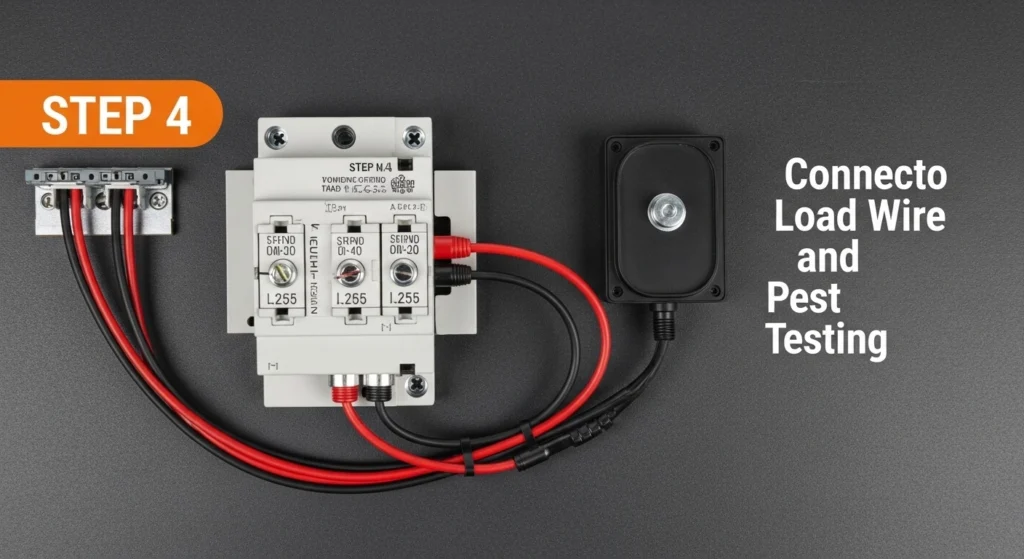
- Connecting the breaker to live electrical supply
- Securing it inside a distribution panel
- Ensuring proper wiring for load protection
Practical Example
If a house has multiple rooms, each connected through a breaker, and one room has a short circuit, only that breaker trips—protecting the rest of the house.
3. Working Principle
Circuit Breaker Working Principle
The circuit breaker working principle is based on automatic interruption of electrical flow during faults.
Step-by-step explanation:
- Electricity flows through the circuit breaker
- Current is continuously monitored
- If current exceeds safe limit, internal mechanism activates
- The contacts open and break the circuit
- Power flow stops immediately
Easy Analogy
Think of a circuit breaker like a security guard:
- Normal condition → allows entry
- Dangerous condition → blocks entry immediately
Key Installation Concept
When installing, the breaker must be:
- Properly rated for load
- Correctly connected to phase and neutral
- Securely mounted in the panel
4. Types / Classification
Types of Circuit Breakers
Miniature Circuit Breaker (MCB)
Miniature Circuit Breaker (MCB) is an automatic electrical protection device designed to protect circuits from overloads and short circuits. When the current flowing through the circuit exceeds the safe limit, the MCB automatically trips and disconnects the power supply, preventing damage to wiring, appliances, and electrical equipment. It operates using thermal and magnetic tripping mechanisms, where the thermal element responds to overload conditions and the magnetic element reacts instantly to short circuits. MCBs are widely used in residential, commercial, and industrial electrical installations because they provide reliable protection, quick fault isolation, easy resetting, and improved safety compared to traditional fuses.
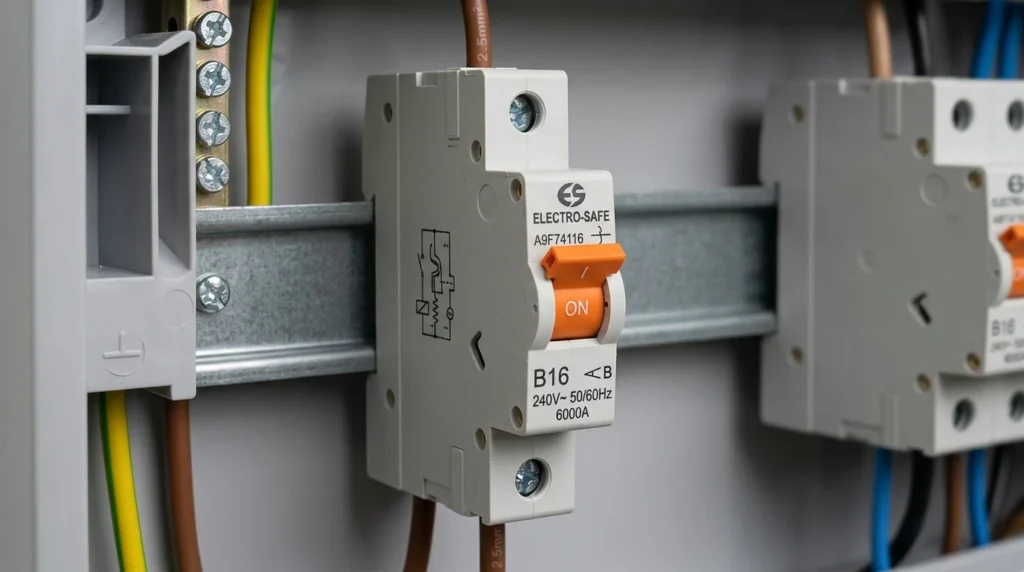
- Used in homes
- Protects against overload and short circuits
- Easy to reset
Molded Case Circuit Breaker (MCCB)
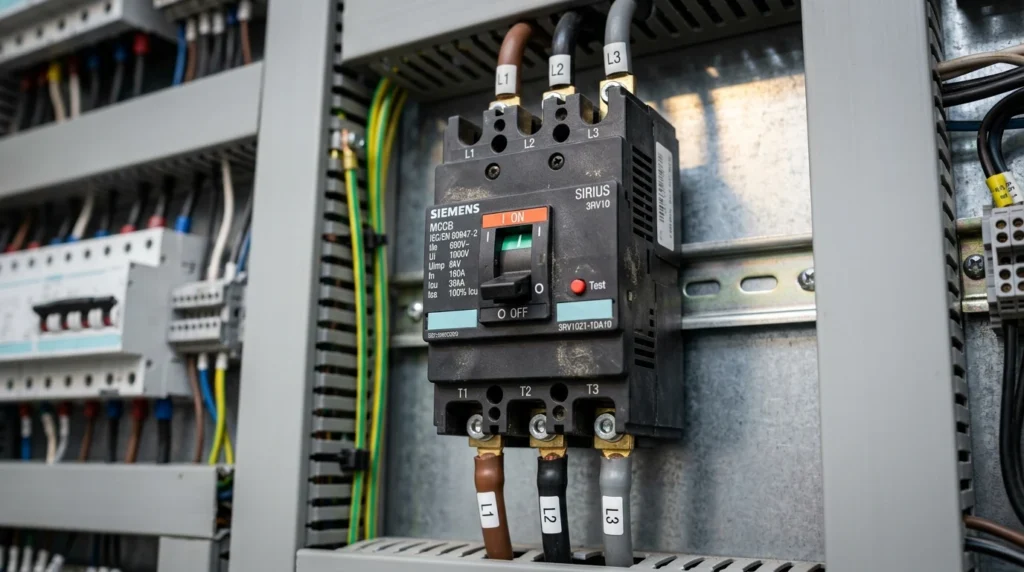
Molded Case Circuit Breaker (MCCB) is a robust electrical protection device used to protect circuits and equipment from overloads, short circuits, and fault currents. It is enclosed in a durable molded insulating case that provides mechanical strength and electrical safety. MCCBs operate using thermal and magnetic tripping mechanisms, allowing them to automatically disconnect the power supply when abnormal current conditions occur. Unlike MCBs, MCCBs are designed for higher current ratings and often include adjustable trip settings for better protection control. They are widely used in industrial plants, commercial buildings, power distribution systems, and large electrical installations where reliable protection, high breaking capacity, and operational flexibility are required.
- Used in industries
- Handles high current loads
- Adjustable settings
Earth Leakage Circuit Breaker (ELCB)
Earth Leakage Circuit Breaker (ELCB) is a protective device used to detect leakage current flowing from an electrical circuit to the earth and automatically disconnect the power supply to prevent electric shock and fire hazards. It continuously monitors the circuit and trips when it detects an abnormal leakage current that exceeds a predetermined safe value. ELCBs are commonly installed in residential, commercial, and industrial electrical systems, especially in areas where moisture or direct human contact with electrical equipment is possible. By providing fast fault detection and automatic disconnection, an Earth Leakage Circuit Breaker improves electrical safety, protects people from electric shocks, and helps prevent damage caused by earth faults.
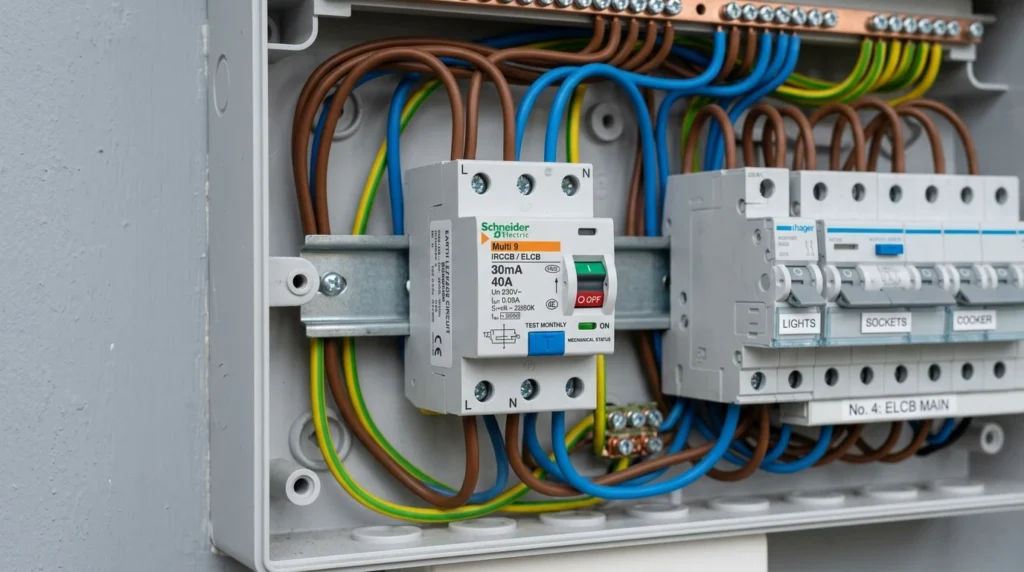
- Protects against electric shock
- Detects leakage current
Residual Current Circuit Breaker (RCCB)
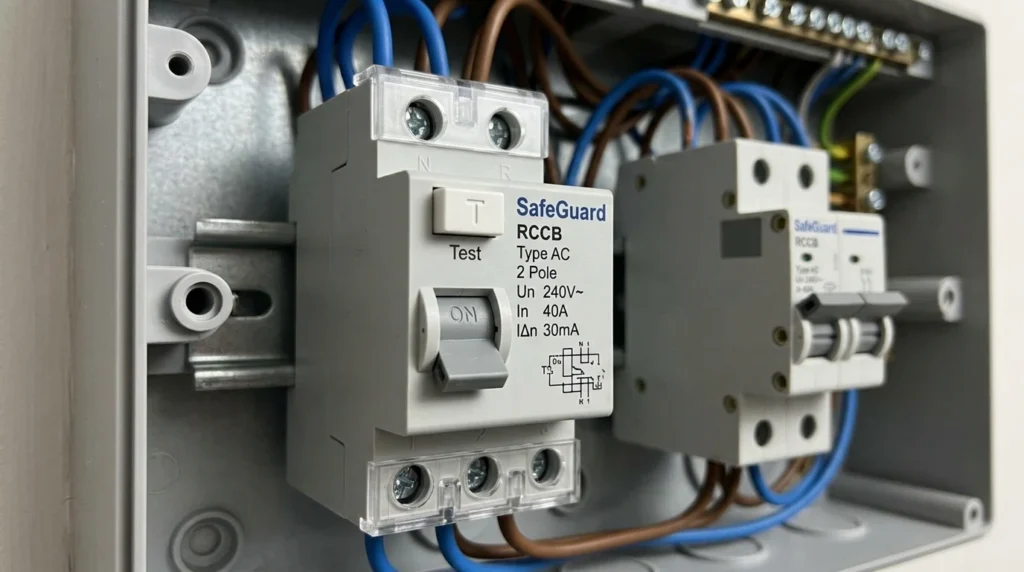
Residual Current Circuit Breaker (RCCB) is an electrical safety device designed to protect people from electric shocks and prevent fires caused by earth leakage currents. It works by continuously comparing the current flowing through the live and neutral conductors. Under normal conditions, these currents are equal, but if a leakage current flows to the earth due to a fault, the RCCB detects the imbalance and quickly disconnects the power supply. Unlike an MCB, an RCCB does not provide overload or short-circuit protection; it specifically protects against leakage currents. RCCBs are widely used in residential, commercial, and industrial installations to enhance electrical safety and ensure reliable protection against earth fault hazards.
- Very sensitive protection
- Trips during leakage faults
Air Circuit Breaker (ACB)
Air Circuit Breaker (ACB) is a protective switching device used to safeguard electrical circuits from overloads, short circuits, and other fault conditions. It operates by using air at atmospheric pressure as the arc-extinguishing medium. When a fault occurs, the ACB automatically interrupts the flow of current by separating its contacts, and the arc produced during contact separation is extinguished by air. Air Circuit Breakers are commonly used in low-voltage power distribution systems, industrial plants, commercial buildings, and substations where high current ratings are required. They provide reliable protection, easy maintenance, adjustable protection settings, and safe operation, making them an essential component of modern electrical power systems.
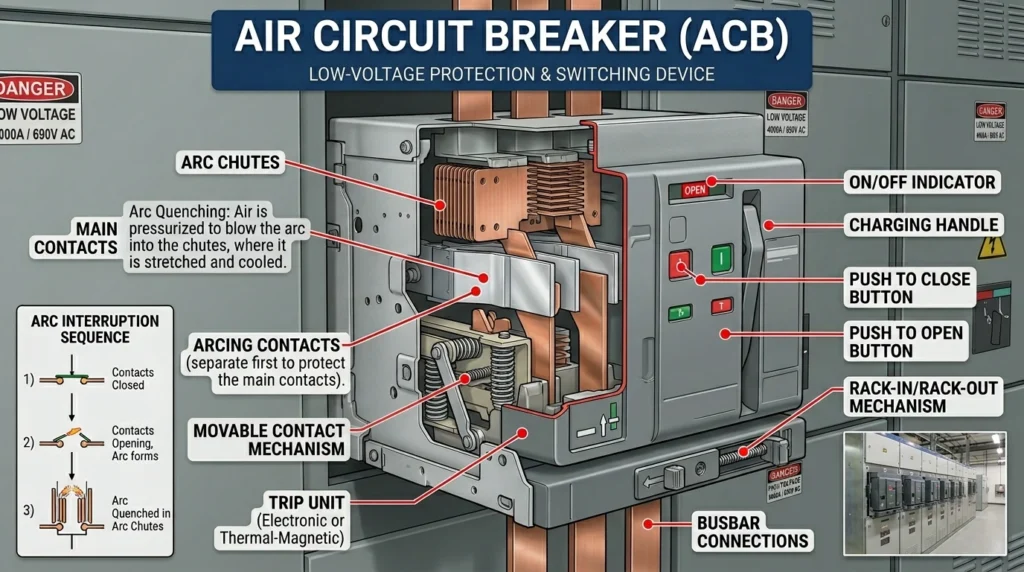
- Used in large industrial systems
- Handles very high currents
5. Main Components
Contacts
- Carry current during normal operation
- Open during fault conditions
Operating Mechanism
- Mechanical system for switching
- Can be manual or automatic
Trip Unit
- Detects fault conditions
- Triggers circuit opening
Arc Extinguisher
- Stops electric arc during switching
- Improves safety
Terminal Connections
- Connect incoming and outgoing wires
- Ensure proper flow of electricity
6. Advantages
Circuit Breaker Advantages
- Protects electrical systems from damage
- Prevents electrical fires
- Easy to reset after tripping
- Long operational life
- Improves system safety
Benefits of Installation
- Ensures safe power distribution
- Reduces maintenance cost
- Protects appliances
- Allows controlled power management
7. Disadvantages / Limitations
Circuit Breaker Disadvantages
- Higher cost compared to fuses
- Requires proper installation skills
- May fail if not maintained
- Complex in large industrial systems
Practical Limitations
- Incorrect installation can cause hazards
- Requires correct load calculation
- Sensitive devices may trip frequently
8. Applications
Circuit Breaker Applications
Home Applications
- Lighting systems
- Air conditioners
- Kitchen appliances
Industrial Applications
- Heavy machinery
- Manufacturing plants
- Power distribution units
Modern Technology
- Data centers
- Renewable energy systems
- Electric vehicle charging stations
9. Comparison Section
Difference Between Circuit Breaker and Fuse
| Feature | Circuit Breaker | Fuse |
| Reset | Can be reset | Must be replaced |
| Speed | Fast | Fast |
| Cost | Higher | Low |
| Reusability | Yes | No |
| Maintenance | Easy | Frequent replacement |
10. Selection Guide
How to Choose Circuit Breaker
Check Load Rating
- Calculate total current load
- Select breaker with slightly higher rating
Choose Type
- MCB for homes
- MCCB for industries
- RCCB for safety protection
Check Voltage Rating
- Match system voltage
- Ensure compatibility
Tips for Beginners
- Always switch off power before installation
- Use insulated tools
- Follow wiring diagram carefully
- Never exceed rated load
11. Common Problems & Solutions
Circuit breaker trips frequently
Possible Causes:
- Overloaded circuit
- Short circuit
Solution:
- Reduce load
- Inspect wiring
Breaker not resetting
Causes:
- Internal fault
- Persistent short circuit
Solution:
- Check circuit before reset
- Replace breaker if damaged
Heating of breaker
Causes:
- Loose connections
- Overload
Solution:
- Tighten terminals
- Reduce load
No power after installation
Causes:
- Incorrect wiring
- Faulty breaker
Solution:
- Verify connections
- Replace faulty unit
12. Future Trends
Modern Developments
- Smart circuit breakers with IoT monitoring
- Remote control via mobile apps
- AI-based fault detection systems
Industry Direction
- Integration with smart homes
- Energy-efficient protection systems
- Advanced safety automation
13. Conclusion
Learning how to install circuit breaker is essential for safe and reliable electrical systems. A circuit breaker is not just a switch—it is a critical safety device that protects people, equipment, and infrastructure from electrical faults.
We explored the circuit breaker working principle, types, components, installation considerations, and real-world circuit breaker applications. We also discussed the circuit breaker advantages and disadvantages, helping you understand its practical importance.
Proper selection and installation ensure long-term safety and performance. Whether you are working in residential wiring or industrial systems, mastering this skill builds a strong foundation in electrical engineering. Always follow safety rules, use correct ratings, and double-check wiring before energizing any circuit.