
Every home has a gray metal box, usually tucked away in a garage, basement, or utility room, that quietly controls all the electricity in the building. That box is the load center, and it is one of the most important parts of a home electrical system. When a circuit trips, when you add a new appliance, or when an electrician upgrades your service, the work happens at the load center. Yet most homeowners never open it and have only a vague idea of what is inside. This guide explains what a load center is, how it works, what its parts do, and how to choose and size one, so that you can understand the heart of your electrical system and talk to an electrician with confidence.
A load center is also known as a breaker panel, an electrical panel, or a service panel, and these names are often used interchangeably. Its job is simple to describe but critical to get right: it takes the power coming in from the utility meter and divides it safely among the circuits that feed lights, outlets, appliances, and equipment throughout the building. Inside, circuit breakers protect each circuit from overloads and short circuits, and the panel’s bus bars, neutral bar, and grounding bar organize the wiring so that power flows where it should and fault current has a safe path back. Understanding the load center is the first step toward understanding any electrical installation.
What Is a Load Center?
A load center is the central distribution point for electricity in a building. Power arrives from the utility through the service entrance conductors and the meter, and enters the load center through the main breaker. From there, it flows onto two hot bus bars, and each branch circuit breaker taps power from those bus bars to feed a single circuit in the building. The load center also houses the neutral and ground bars, which complete the circuits and provide the grounding path that protects people and equipment. In most homes, the load center is a single enclosure with a hinged door, a dead-front cover that hides the live bus bars, and a directory label that lists which breaker controls each circuit. For a closer look at the panel family, see our guide to the distribution board, which explains how panels are organized in different types of buildings.
Main Parts of a Load Center
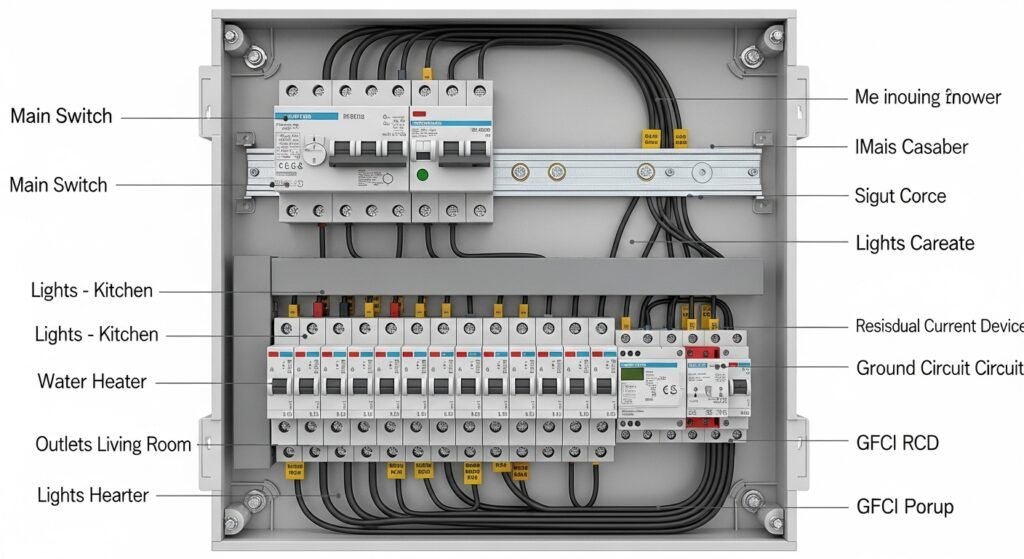
Although load centers come in many sizes, they all share the same basic parts. The enclosure is the steel cabinet that houses everything and keeps fingers away from live parts. The main breaker is the large switch at the top that can shut off all power to the panel at once; it also protects the panel itself from overloads. The bus bars are flat copper or aluminum bars that carry power from the main breaker to the branch breakers. Each branch circuit breaker protects one circuit, such as the kitchen outlets or the air conditioner, and trips open when the current exceeds its rating. The neutral bar collects the return current from the circuits, while the ground bar connects the equipment grounding conductors to the grounding electrode system. Finally, the directory label on the inside of the door records which breaker serves each circuit, which is essential for safe troubleshooting and maintenance.
- Main breaker: the master switch and overcurrent protection for the whole panel.
- Bus bars: hot bars that distribute power to the branch breakers.
- Branch circuit breakers: one per circuit, each protecting a single run of wiring.
- Neutral bar: the common return path for circuit current.
- Ground bar: connects equipment grounding conductors to earth.
- Enclosure and dead-front cover: the steel cabinet and inner cover that guard live parts.

How a Load Center Works
Electricity flows through a load center in a clear sequence. Power from the utility enters through the service conductors and passes through the meter, which measures how much energy the building uses. From the meter, the conductors land on the main breaker, and when that breaker is closed, power flows onto the two hot bus bars. Each branch breaker clips onto a bus bar and feeds one circuit: the current travels out along the hot wire, powers the load, and returns along the neutral wire to the neutral bar. If a fault occurs, such as a short circuit or an overload, the affected breaker trips in a fraction of a second and stops the current before the wiring can overheat. The grounding system provides a low-resistance path for fault current, which helps the breaker trip quickly and keeps metal parts of the installation from becoming energized.
Types of Load Centers
Load centers are made in several types, and the right choice depends on the building and the service. A main breaker load center has a built-in main breaker and is the standard choice for a home’s main panel. A main lug load center has no main breaker of its own and is fed from a breaker in another panel, which makes it the usual choice for a sub-panel. Outdoor load centers are weatherproof and mount on exterior walls, while indoor panels are made for dry locations. Load centers are also sold by the number of circuits they accept, commonly 8, 12, 20, 30, or 40 spaces, and by their amperage rating, most often 100, 150, or 200 amps for homes. Choosing a panel with spare spaces is wise, because adding circuits later is far easier when the panel has room for them.
| Type | Where It Is Used | Key Feature |
|---|---|---|
| Main breaker load center | Main panel in a home | Built-in main breaker shuts off all power |
| Main lug load center | Sub-panel fed from another panel | No main breaker; fed by an upstream breaker |
| Outdoor load center | Exterior walls and meter combinations | Weatherproof enclosure |
| Indoor load center | Garages, basements, utility rooms | Standard steel enclosure |
Load Center vs Distribution Board
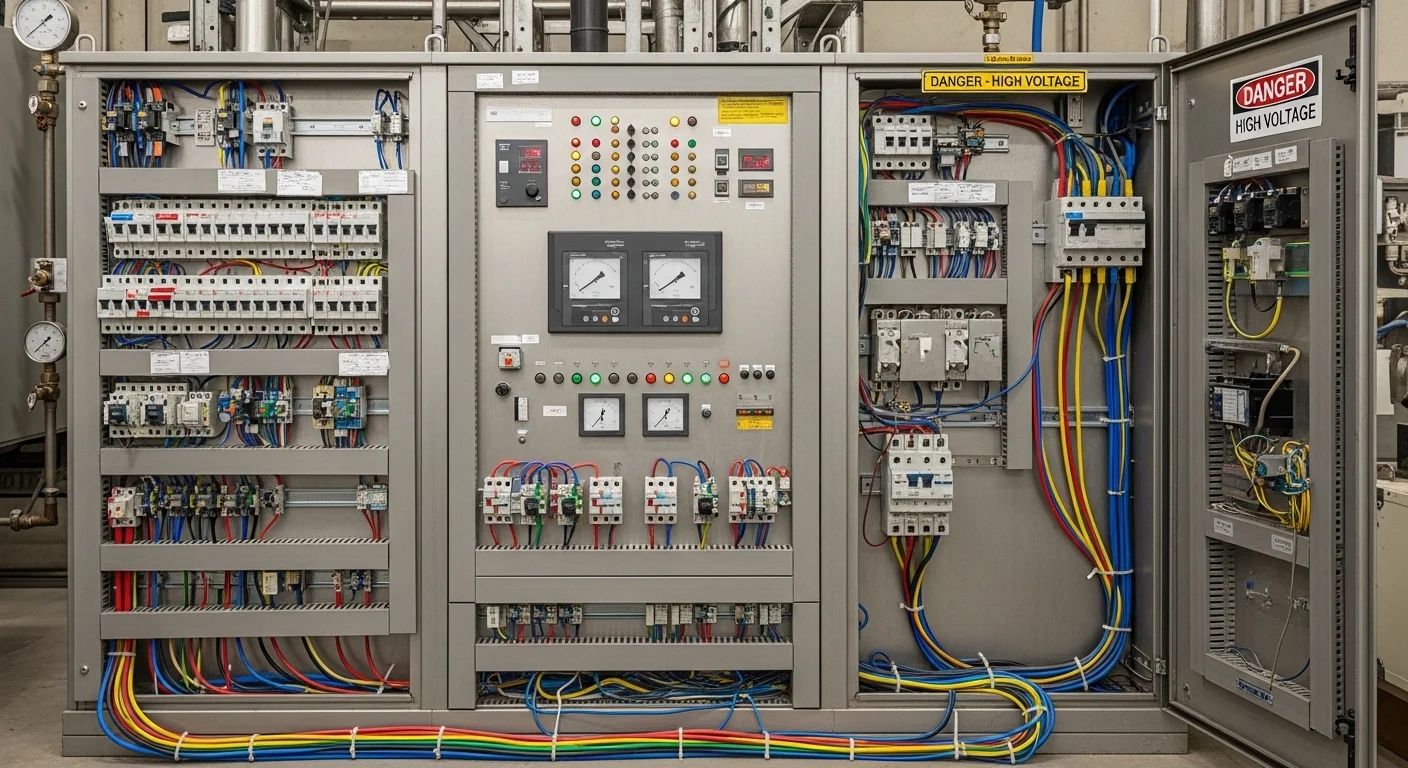
The terms load center and distribution board are often used to mean the same thing, but there is a small difference in how they are used. A load center usually refers to the main breaker panel in a home or small commercial building, while a distribution board is the broader term for any panel that distributes power to circuits, including sub-distribution boards in large buildings. In practice, a load center is a type of distribution board, and in the United States the two words are frequently swapped. What matters is not the name but the function: the panel must safely divide power among circuits, provide overcurrent protection, and give a clear way to isolate any circuit for maintenance. Our guide to electrical panel design explains how panels are laid out in larger installations.
How to Size a Load Center
Sizing a load center means matching its amperage and number of circuits to the building’s demand. The first step is a load calculation, which adds up the expected demand of lighting, outlets, heating, cooling, and fixed appliances using the methods in the National Electrical Code. A small home may need a 100-amp panel, while a larger home with electric cooking, heating, and an electric vehicle charger will usually need 200 amps. The number of spaces matters too: count the circuits the building needs today, then add at least 20 percent spare spaces for future additions such as a workshop, a heat pump, or a home office. The panel must also match the service voltage, usually 120/240 volts in a US home, and the breakers must be the type listed for that panel. If you are adding circuits, see our guide on how to install a circuit breaker safely.

Frequently Asked Questions
What is the difference between a load center and a breaker box?
There is no real difference; a breaker box is the common name for a load center. Both terms describe the metal enclosure that holds the main breaker and the branch circuit breakers that distribute power through a building.
How many amps should a load center be?
Most modern homes use a 200-amp load center, which leaves room for electric cooking, heating, air conditioning, and vehicle charging. Older or smaller homes may have 100-amp panels, which can be enough if the total load is low and no large electric appliances are planned.
Can I add more circuits to my load center?
Yes, if the panel has spare spaces and the service can handle the added load. If the panel is full, an electrician can add a sub-panel, replace breakers with tandem breakers where the panel allows it, or upgrade the panel to a larger one.
How long does a load center last?
A well-built load center typically lasts 25 to 40 years. It should be inspected if breakers trip often, if the panel feels warm, if there is rust or a burning smell, or after any major electrical upgrade.
Is a load center the same as a fuse box?
They serve the same purpose, but a fuse box uses fuses that must be replaced after they blow, while a load center uses circuit breakers that can simply be reset. Modern installations use load centers because breakers are safer and easier to manage.
Conclusion
The load center is the heart of a building’s electrical system. It takes the power from the utility, divides it among the circuits, and protects every run of wiring with a breaker that trips before damage can occur. Knowing its parts, its types, and how to size it helps you plan additions, understand an electrician’s recommendations, and spot problems before they become hazards. Keep the directory label up to date, leave spare spaces for the future, and have the panel inspected whenever it shows signs of age or trouble, and the load center will do its quiet job for decades.
For a general overview of the parts of a home electrical system, including the service panel, see the US Department of Energy guide to the home electrical system.