
Imagine using a smartphone charger, switching on a ceiling fan, or listening to sound through speakers. All these devices work because of electromagnetism. From electric motors and transformers to wireless communication and power generation, electromagnetism is one of the most important concepts in electrical engineering and modern technology.
Electromagnetism connects electricity and magnetism into one powerful principle. It explains how electric current creates magnetic fields and how magnetic fields can generate electricity. Without electromagnetism, modern electrical systems, industries, transportation, and communication networks would not exist.
Understanding electromagnetism basics is essential for electrical students, technicians, engineers, and beginners because it forms the foundation of motors, generators, relays, transformers, solenoids, and many other electrical devices. In this article, you will learn the electromagnetism working principle, types, main components, applications, advantages and disadvantages, practical troubleshooting methods, and future trends. The explanations are written in simple and clear English so even beginners can understand this important electrical engineering topic easily.
What is Electromagnetism Basics?
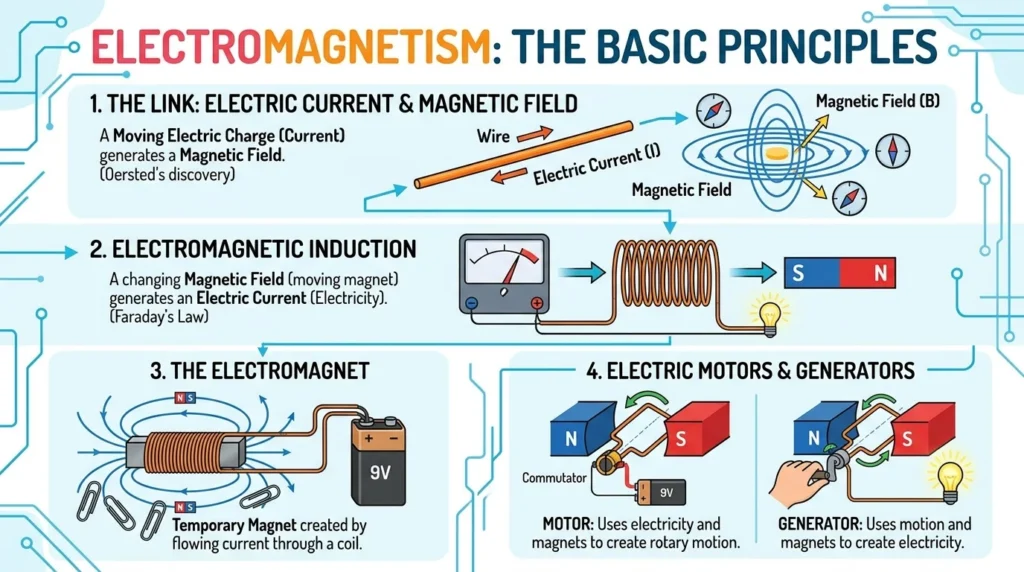
Electromagnetism is the branch of science that studies the relationship between electricity and magnetism.
In simple words, when electric current flows through a conductor, it creates a magnetic field around it. Similarly, when a magnetic field changes near a conductor, electricity is generated.
Simple Explanation
Electricity and magnetism are connected forces. One can create or affect the other.
This principle is the foundation of most electrical machines and electronic devices.
Practical Example
When current flows through a fan motor winding, a magnetic field is produced. This magnetic field rotates the motor and drives the fan blades.
Electromagnetism Working Principle
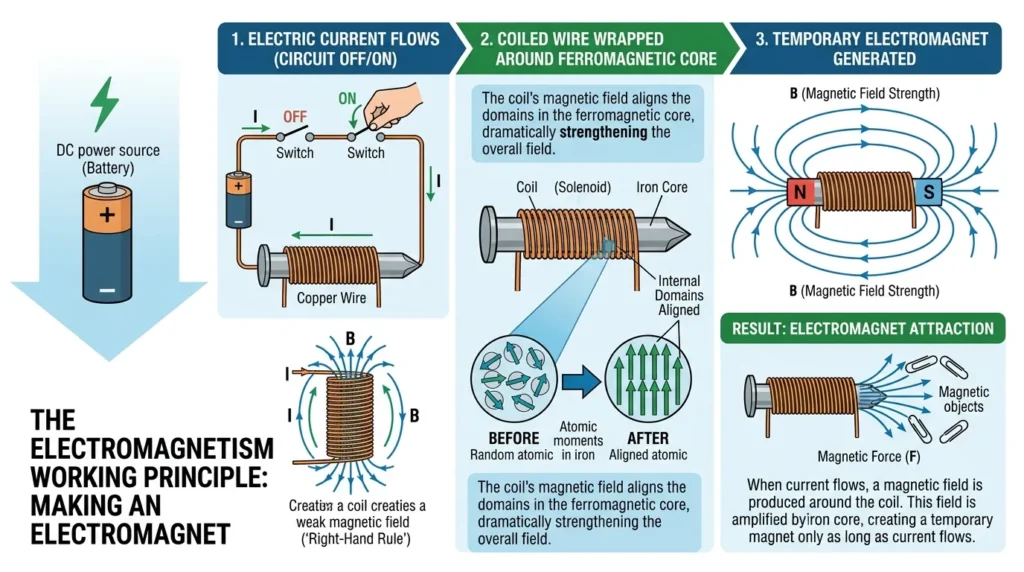
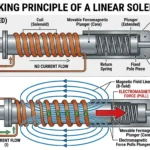
The working principle of electromagnetism is based on the relationship between electricity and magnetism. When an electric current flows through a conductor, it creates a magnetic field around the conductor. If the conductor is wound into a coil and current passes through it, the magnetic field becomes much stronger. Placing a soft iron core inside the coil further increases the magnetic field, forming an electromagnet. The strength of the electromagnet depends on the amount of current flowing through the coil, the number of turns in the coil, and the type of core material. When the electric current is switched off, the magnetic field disappears, allowing the electromagnet to be turned on and off as needed. This principle is widely used in electric motors, generators, transformers, relays, solenoids, magnetic locks, lifting magnets, and many other electrical and industrial applications.
The electromagnetism working principle is based on the interaction between electric current and magnetic fields.
Step-by-Step Working Principle
Electric Current Flows
Electric current passes through a wire or conductor.
Magnetic Field is Produced
A magnetic field forms around the conductor.
Magnetic Interaction Occurs
Magnetic interaction occurs when the magnetic field produced by an electric current interacts with another magnetic field or a magnetic material. This interaction creates a force of attraction or repulsion, depending on the direction and polarity of the magnetic fields. In electrical devices, such as motors and relays, the magnetic field generated by a current-carrying coil interacts with permanent magnets or other electromagnets to produce mechanical motion or switching action. This principle is fundamental to the operation of many electrical and electromechanical devices, where electrical energy is converted into mechanical energy or controlled movement through magnetic forces.
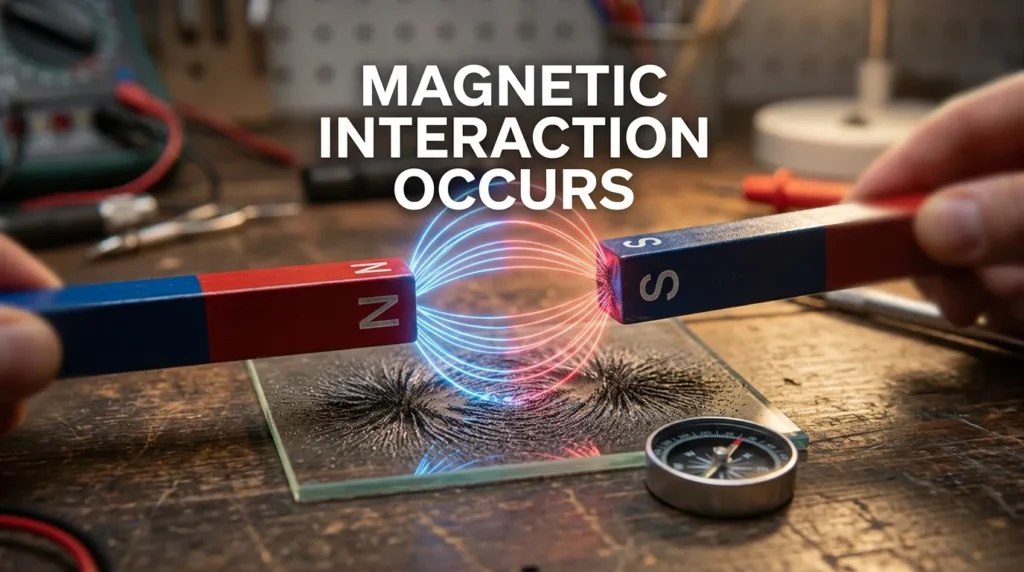
The magnetic field interacts with nearby magnetic materials or coils.
Mechanical or Electrical Action Happens
The interaction may create movement, force, or electrical energy.
Simple Analogy
Imagine water flowing through a pipe. Around the flowing water, waves spread outward. Similarly, electric current creates magnetic effects around the conductor.
Magnetic Field Around a Conductor
A magnetic field around a conductor is created whenever an electric current flows through the conductor. As electrons move through the wire, they generate invisible magnetic field lines that form concentric circles around the conductor. The direction of the magnetic field can be determined using the right-hand thumb rule, where the thumb points in the direction of the current and the curled fingers indicate the direction of the magnetic field. The strength of the magnetic field depends on the amount of current flowing through the conductor—the higher the current, the stronger the magnetic field. This principle forms the foundation of electromagnetism and is widely used in the operation of electric motors, generators, transformers, relays, solenoids, and other electrical devices.
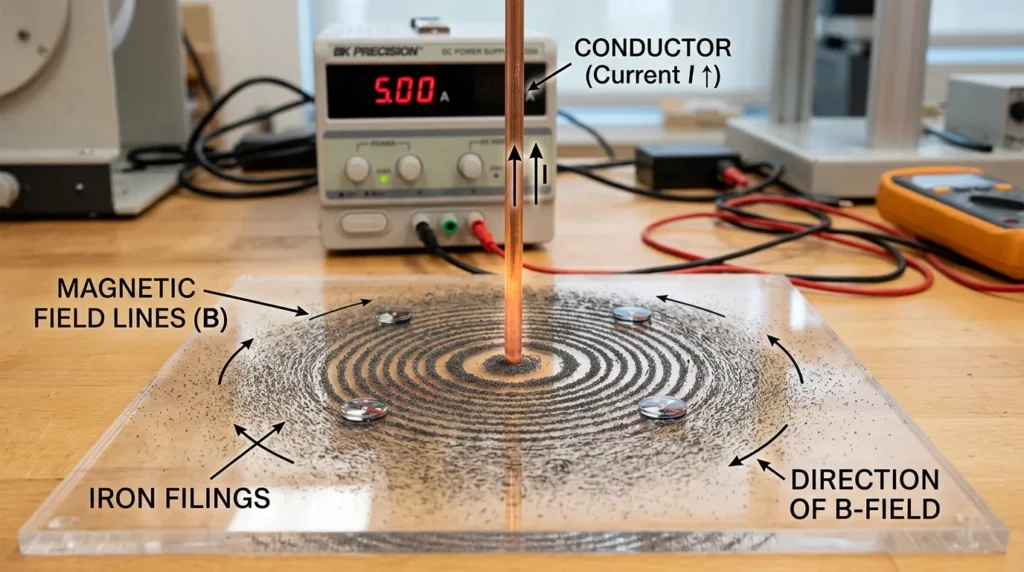
The strength of the magnetic field depends on the current flowing through the conductor.
B \propto I
Where:
- (B) = Magnetic field strength
- (I) = Electric current
Right-Hand Rule
The right-hand rule helps determine magnetic field direction.
Method
- Point thumb in current direction
- Curved fingers show magnetic field direction
Types / Classification
Types of Electromagnetism
Static Electromagnetism
Static electromagnetism deals with stationary electric charges and magnetic fields.
Features
- Charges do not move
- Magnetic field remains stable
Applications
- Electrostatic systems
- Capacitors
Dynamic Electromagnetism
Dynamic electromagnetism refers to the study of magnetic fields produced by moving electric charges or changing electric currents. Unlike static electromagnetism, where charges remain stationary, dynamic electromagnetism involves continuously changing magnetic and electric fields that interact with each other. When an alternating current (AC) flows through a conductor or coil, it creates a changing magnetic field that can induce a voltage in a nearby conductor, a phenomenon known as electromagnetic induction. This principle is the foundation of many electrical devices, including generators, transformers, electric motors, inductors, wireless charging systems, and communication equipment. Dynamic electromagnetism enables the efficient conversion and transfer of electrical energy, making it one of the most important concepts in electrical engineering.
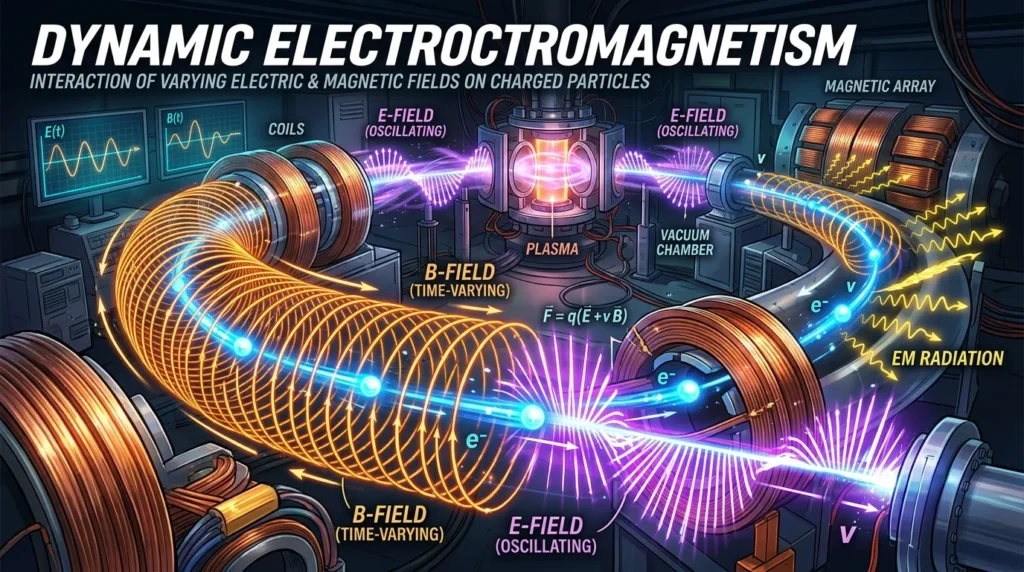
Dynamic electromagnetism involves moving electric charges.
Features
- Current flow exists
- Magnetic field changes continuously
Applications
- Electric motors
- Generators
- Transformers
Electromagnets
Electromagnets produce magnetism using electric current.
Features
- Magnetic field exists only with current
- Strength can be controlled
Applications
- Relays
- Cranes
- Solenoids
Permanent Magnet Systems
Permanent magnet systems are electrical and mechanical systems that use permanent magnets to produce a constant magnetic field without requiring an external power source. These magnets are made from materials such as neodymium, ferrite, samarium-cobalt, or alnico, which retain their magnetic properties for a long time. Unlike electromagnets, permanent magnets do not need electric current to generate magnetism, making them energy-efficient and reliable. Permanent magnet systems are widely used in electric motors, generators, loudspeakers, magnetic sensors, magnetic locks, wind turbines, and medical equipment. Their ability to provide a stable magnetic field improves efficiency, reduces energy consumption, and minimizes maintenance, making them ideal for many residential, commercial, and industrial applications.
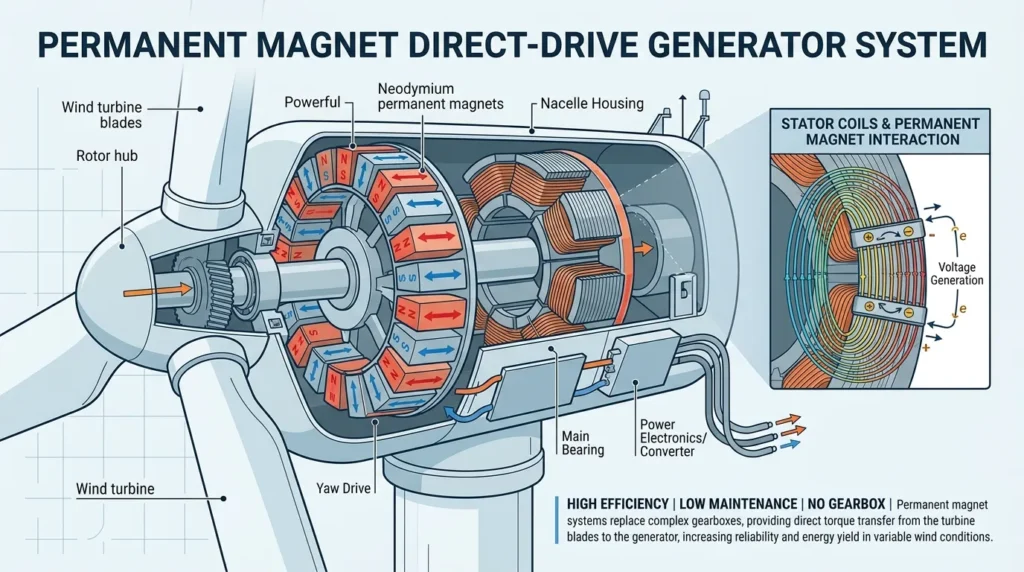
These systems use naturally magnetized materials.
Features
- Constant magnetic field
- No external power required
Applications
- Speakers
- Small motors
- Magnetic sensors
Main Components
Conductor
A conductor carries electric current.
Function
- Allows electron flow
- Produces magnetic field
Coil or Winding
A coil is a wire wound in circular turns.
Function
- Strengthens magnetic field
- Improves electromagnetic effect
Magnetic Core
The core is usually made of iron or magnetic material.
Function
- Concentrates magnetic field
- Increases efficiency
Power Source
The power source supplies electrical energy.
Function
- Creates current flow
- Activates electromagnetic action
Insulation
Insulation prevents electrical leakage.
Function
- Improves safety
- Prevents short circuits
Magnetic Field
The magnetic field is the invisible force around current-carrying conductors.
Function
- Creates motion or electrical induction
Advantages of Electromagnetism
Electromagnetism Advantages
- Enables electrical energy conversion
- Supports automation systems
- Makes electric motors possible
- Allows wireless communication
- Magnetic strength can be controlled
- Improves industrial efficiency
- Essential for power generation
- Supports modern electronics
Real-World Benefits
Electromagnetism allows machines to operate automatically and efficiently in factories, homes, and transportation systems.
Disadvantages / Limitations
Electromagnetism Disadvantages
- Heat generation during operation
- Energy losses occur
- Magnetic interference possible
- Requires electrical power
- Strong magnetic fields may affect electronics
- Maintenance may be needed in large systems
Practical Limitation
Excessive electromagnetic heating can damage electrical insulation over time.
Electromagnetism Applications
Electromagnetism applications are found almost everywhere in modern life.
Home Applications
Electric Fans
Motors use electromagnetic force for rotation.
Doorbells
Electromagnets create striking action.
Speakers
Magnetic fields produce sound vibrations.
Microwave Ovens
Use electromagnetic waves for heating food.
Industrial Applications
Electric Motors
Convert electrical energy into mechanical movement.
Transformers
Transfer electrical energy between circuits.
Relays and Contactors
Control electrical switching operations.
Industrial Cranes
Electromagnets lift heavy metal objects.
Power System Applications
Generators
Produce electricity using electromagnetic induction.
Transmission Systems
Use electromagnetic principles for power distribution.
Substations
Contain electromagnetic equipment for voltage control.
Modern Technology Applications
Wireless Charging
Uses electromagnetic induction for power transfer.
MRI Machines
Use powerful electromagnetic fields for medical imaging.
Electric Vehicles
Motors operate using electromagnetism principles.
Robotics
Electromagnetic systems control movement and automation.
Difference Between Electromagnetism and Permanent Magnetism
The difference between electromagnetism and permanent magnetism is important for understanding electrical devices.
| Feature | Electromagnetism | Permanent Magnetism |
| Power Requirement | Requires electricity | No electricity needed |
| Magnetic Strength | Adjustable | Fixed |
| ON/OFF Control | Possible | Not possible |
| Applications | Motors, relays, cranes | Speakers, sensors |
| Heat Generation | Possible | Minimal |
| Flexibility | High | Limited |
Selection Guide
Choosing the right electromagnetic system depends on application needs.
Choose Electromagnets When
- Adjustable magnetic force is required
- ON/OFF control is needed
- Automation systems are used
Choose Permanent Magnets When
- Constant magnetism is required
- Low power consumption is important
- Compact devices are needed
Tips for Beginners
- Understand current and magnetic field relationship
- Learn right-hand rule carefully
- Use proper insulation in circuits
- Avoid overheating in coils
- Select correct wire size for electromagnetic systems
Common Problems & Solutions
Why is the Electromagnet Weak?
Causes
- Low current supply
- Damaged coil
- Weak core material
Solution
- Increase supply current
- Check coil continuity
- Replace magnetic core
Why Does the Coil Overheat?
Causes
- Excessive current
- Continuous operation
- Poor ventilation
Solution
- Reduce operating current
- Improve cooling system
- Use proper duty cycle
Why is Magnetic Force Inconsistent?
Causes
- Loose connections
- Voltage fluctuation
- Coil damage
Solution
- Tighten connections
- Stabilize power supply
- Replace faulty winding
Electromagnetic Interference Problem
Causes
- Strong magnetic field leakage
- Poor shielding
Solution
- Use proper grounding
- Install shielding materials
- Maintain safe spacing
Why is the Motor Not Rotating Properly?
Causes
- Weak magnetic field
- Faulty winding
- Power supply issue
Solution
- Test coil resistance
- Verify voltage
- Inspect motor windings
Future Trends
The future of electromagnetism is strongly linked with smart technology and clean energy systems.
Wireless Power Transfer
Wireless charging systems are rapidly improving using advanced electromagnetic induction methods.
Electric Vehicles
Modern EV motors depend heavily on efficient electromagnetic designs for better performance and energy savings.
Smart Automation Systems
Industries are using electromagnetism in:
- Robotics
- Smart factories
- IoT systems
- Automated machinery
Renewable Energy Systems
Wind turbines and renewable energy generators use electromagnetic induction for power production.
High-Efficiency Electromagnetic Materials
Researchers are developing advanced magnetic materials with:
- Lower heat losses
- Higher efficiency
- Better durability
Medical Technology Growth
Electromagnetism is expanding in:
- MRI machines
- Medical sensors
- Surgical robotics
- Diagnostic equipment
Conclusion
Understanding electromagnetism basics is essential for anyone studying electrical engineering or modern technology. Electromagnetism explains how electricity and magnetism interact to produce motion, force, and electrical energy. It forms the foundation of motors, generators, transformers, relays, solenoids, and many other electrical devices used every day.
Although electromagnetic systems can produce heat and energy losses, their advantages make them extremely valuable in homes, industries, transportation, medical systems, and communication technology. Learning the electromagnetism working principle, applications, advantages and disadvantages, and troubleshooting methods helps students and technicians understand how modern electrical systems operate efficiently and safely.
As technology continues advancing toward automation, renewable energy, and smart devices, electromagnetism will remain one of the most important principles in electrical engineering.