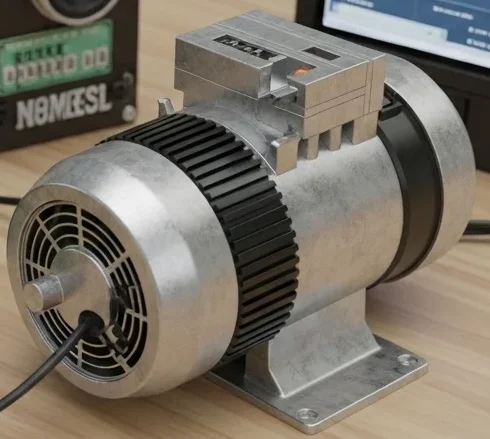

Imagine switching on a ceiling fan in your room or starting a small water pump at home. Within seconds, the motor begins rotating smoothly and performs its job quietly. Most household electrical appliances work using a single phase induction motor. These motors are among the most commonly used electrical machines in homes, offices, shops, and small industries.
Single phase induction motors are popular because they are simple, reliable, affordable, and easy to maintain. Since most domestic power supplies are single-phase AC, these motors are specially designed to operate efficiently on household electricity. From refrigerators and washing machines to air coolers and exhaust fans, these motors are part of daily life.
Understanding the single phase induction motor working principle is extremely important for electrical students, technicians, engineers, and beginners. It helps in troubleshooting motor problems, selecting suitable motors, improving efficiency, and understanding the basics of electrical machines.
In this article, you will learn what a single phase induction motor is, how it works, its types, components, advantages and disadvantages, applications, troubleshooting methods, comparison tables, and future trends. Everything is explained in simple and practical language for easy learning.
What is a Single Phase Induction Motor?
A single phase induction motor is an AC motor that operates using a single-phase power supply and converts electrical energy into mechanical energy.
Unlike three-phase motors, a single phase induction motor is not naturally self-starting. It requires additional starting methods to begin rotation.
Simple Explanation
When single-phase AC supply is applied to the motor winding, it creates a magnetic field. This magnetic field produces torque that rotates the rotor and drives the connected load.
Practical Example
Single phase induction motors are commonly used in:
- Ceiling fans
- Water pumps
- Air conditioners
- Washing machines
- Exhaust fans
- Refrigerators
These applications mainly operate on household single-phase electricity.
Single Phase Induction Motor Working Principle
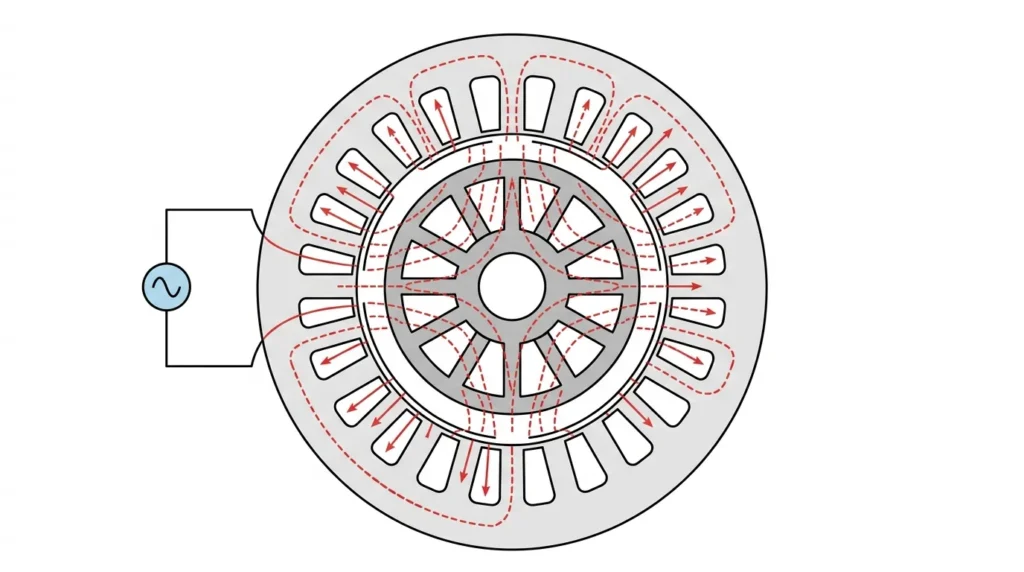
A single-phase induction motor works on the principle of electromagnetic induction. When a single-phase AC supply is applied to the stator winding, it produces an alternating magnetic field. This magnetic field induces current in the rotor conductors, creating a magnetic field around the rotor. However, the alternating magnetic field alone cannot produce the starting torque needed to rotate the rotor. Therefore, a starting winding and capacitor are commonly used to create a phase difference, producing a rotating magnetic field that starts the motor. Once the motor reaches a certain speed, the starting winding is disconnected (in some motor types), and the motor continues to run on the main winding. Single-phase induction motors are widely used in household appliances, fans, water pumps, washing machines, and small industrial machines because they are simple, reliable, and economical.
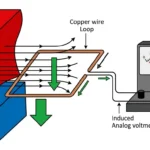
The single phase induction motor working principle is based on electromagnetic induction.
When AC current flows through the stator winding, it creates an alternating magnetic field. This magnetic field induces current in the rotor conductors. The interaction between magnetic fields produces torque and causes the rotor to rotate.
Important Formula
The synchronous speed of the motor is:
N_s=\frac{120f}{P}
Where:
- Ns = Synchronous speed
- f = Frequency
- P = Number of poles
Step-by-Step Working Process
AC Supply is Applied
Single-phase AC voltage is supplied to the stator winding.
This creates an alternating magnetic field.
Pulsating Magnetic Field is Produced
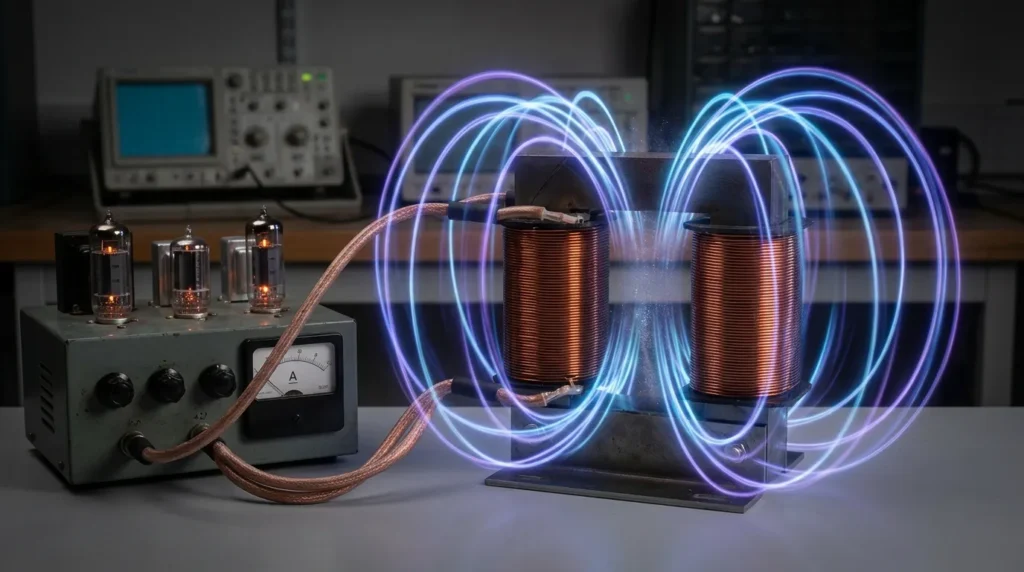
When a single-phase AC supply is applied to the stator winding of a motor, it produces a pulsating magnetic field instead of a rotating magnetic field. This magnetic field continuously increases and decreases in strength while remaining in the same direction. Since a pulsating magnetic field does not create starting torque, the motor cannot start by itself. To overcome this problem, a starting winding and capacitor are used to create a phase difference, which produces a rotating magnetic field and provides the necessary starting torque. Once the motor starts rotating, it continues to run efficiently on the main winding.
Unlike three-phase motors, the magnetic field does not rotate naturally.
Instead, it pulsates back and forth.
Starting Mechanism is Used
Since the motor is not self-starting, an auxiliary method creates starting torque.
Common starting methods include:
- Capacitor
- Split phase winding
- Shaded pole arrangement
Rotor Current is Induced
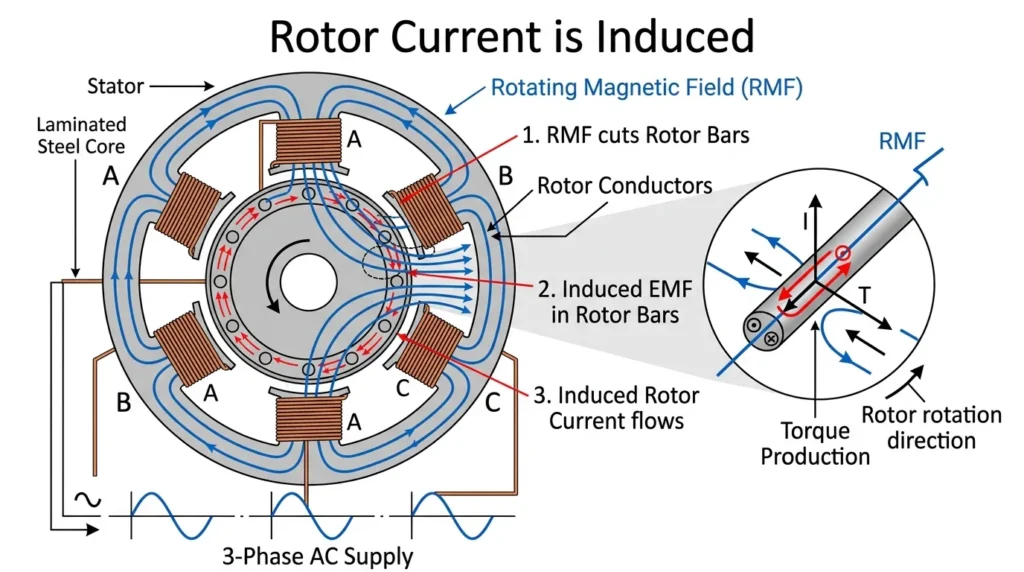
When the stator of a single-phase induction motor is energized with an AC supply, it produces a changing magnetic field. This changing magnetic field cuts the rotor conductors and, according to the principle of electromagnetic induction, induces an electric current in the rotor. The induced rotor current creates its own magnetic field, which interacts with the stator magnetic field to produce torque. As a result, the rotor begins to rotate. The rotor continues to turn as long as there is a difference between the speed of the rotating magnetic field and the rotor speed, a difference known as slip.
The magnetic field cuts rotor conductors and induces current.
Rotor Begins Rotation
Interaction between stator and rotor magnetic fields produces torque.
The rotor starts rotating.
Continuous Rotation Occurs
Once the motor reaches operating speed:
- The rotor continues rotating
- Mechanical energy is produced
Easy Analogy
Imagine pushing a playground swing.
The first push is needed to start movement.
Similarly, a single phase induction motor requires a starting mechanism to begin rotation.
Slip in Induction Motor
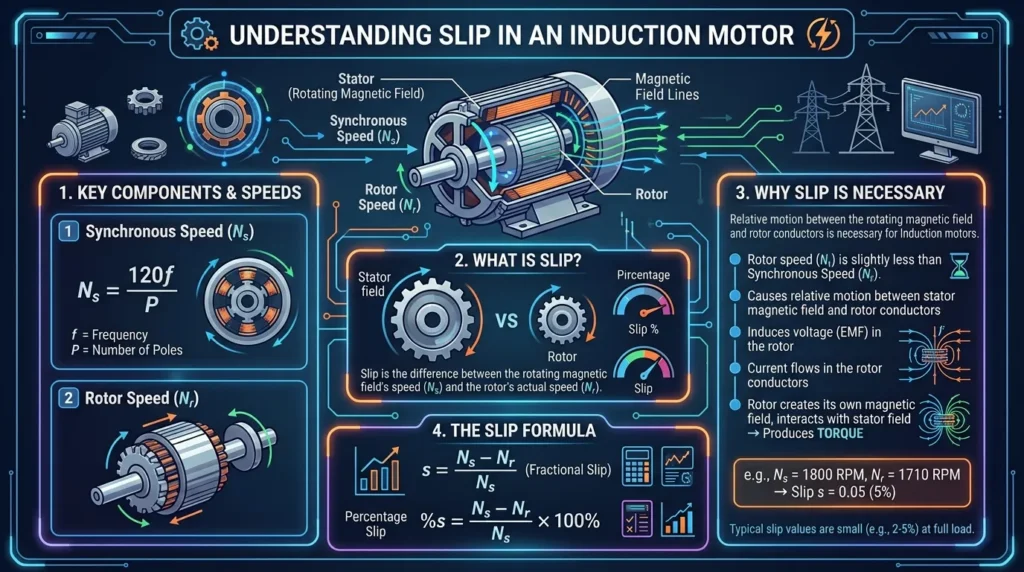
Slip is the difference between the synchronous speed of the rotating magnetic field and the actual speed of the rotor in an induction motor. It is necessary because if the rotor reached synchronous speed, there would be no relative motion between the magnetic field and the rotor, so no current would be induced and the motor would stop producing torque. Slip is usually expressed as a percentage and is calculated using the formula:
Slip (%) = [(Synchronous Speed − Rotor Speed) / Synchronous Speed] × 100
A small amount of slip is always present during normal operation, allowing the induction motor to produce continuous torque and operate efficiently.
The rotor speed is always slightly lower than synchronous speed.
This difference is called slip.
Slip Formula
s=\frac{N_s-N_r}{N_s}\times100
Where:
- s = Slip
- Ns = Synchronous speed
- Nr = Rotor speed
Types / Classification
Split Phase Induction Motor
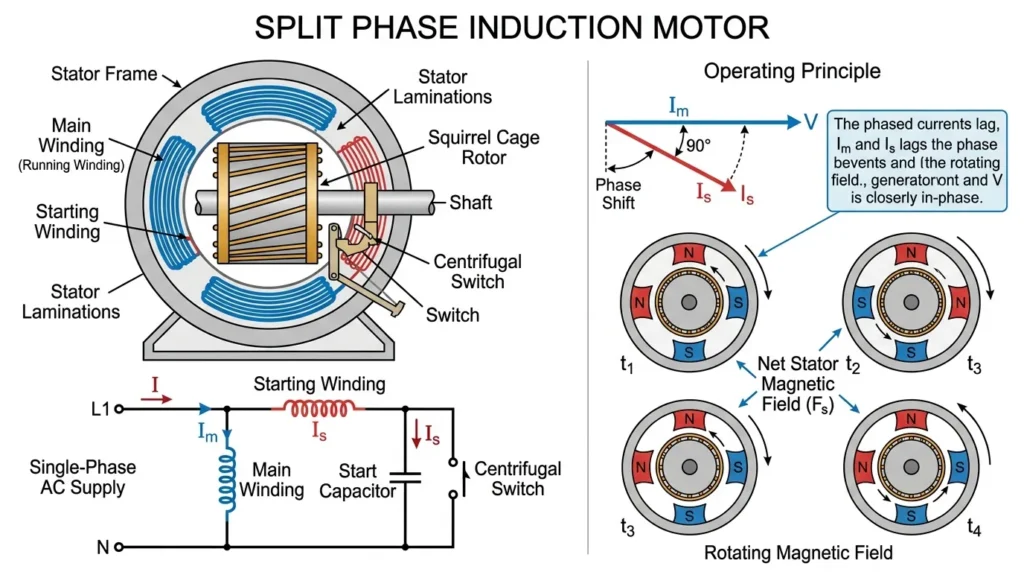
A split phase induction motor is a type of single-phase induction motor that uses two stator windings: the main (running) winding and the starting (auxiliary) winding. When the AC supply is applied, the difference in resistance and reactance between these two windings creates a phase difference in the current, producing a rotating magnetic field. This rotating magnetic field generates the starting torque required to start the motor. Once the motor reaches about 70–80% of its rated speed, a centrifugal switch disconnects the starting winding, and the motor continues to run on the main winding only. Split phase induction motors are commonly used in fans, blowers, washing machines, grinders, and small pumps because they are simple, reliable, and economical.
This motor uses:
- Main winding
- Starting winding
The starting winding creates phase difference for starting torque.
Features
- Simple construction
- Moderate starting torque
Applications
- Fans
- Blowers
- Washing machines
Capacitor Start Induction Motor
Uses a capacitor in series with starting winding.
Features
- High starting torque
- Better performance
Applications
- Air compressors
- Pumps
- Refrigeration systems
Capacitor Start Capacitor Run Motor
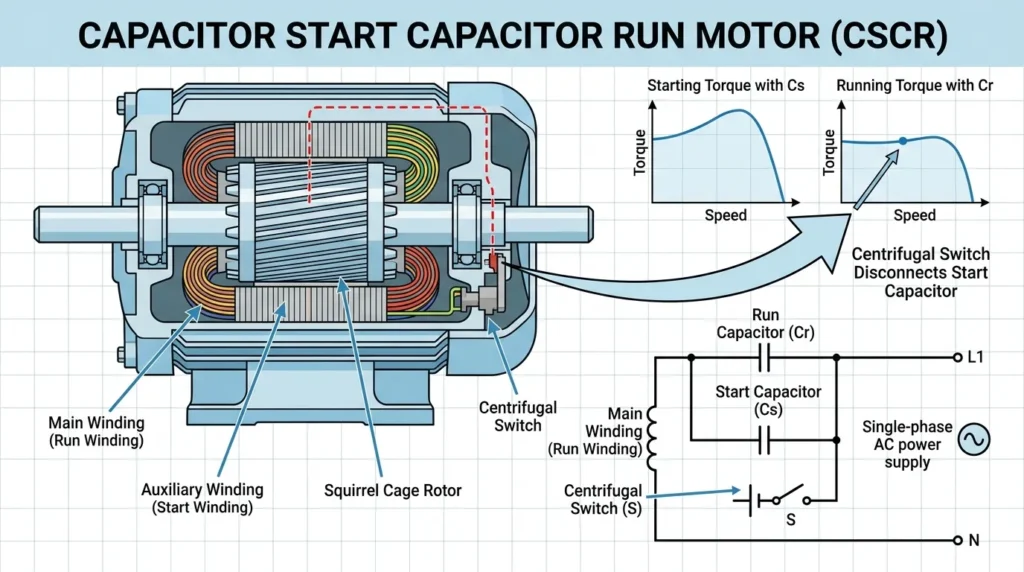
A capacitor start capacitor run motor is a type of single-phase induction motor that uses two capacitors: a starting capacitor and a running capacitor. At start up, both capacitors are connected to the auxiliary winding to create a large phase difference, producing a strong starting torque. When the motor reaches about 70–80% of its rated speed, the starting capacitor is disconnected by a centrifugal switch or relay, while the running capacitor remains connected to improve power factor, efficiency, and smooth operation. This type of motor provides high starting torque, quiet performance, and better efficiency, making it suitable for air conditioners, refrigerators, compressors, water pumps, and other heavy-duty applications.
Uses two capacitors:
- Starting capacitor
- Running capacitor
Features
- Smooth operation
- High efficiency
Applications
- Air conditioners
- Heavy-duty pumps
Shaded Pole Induction Motor
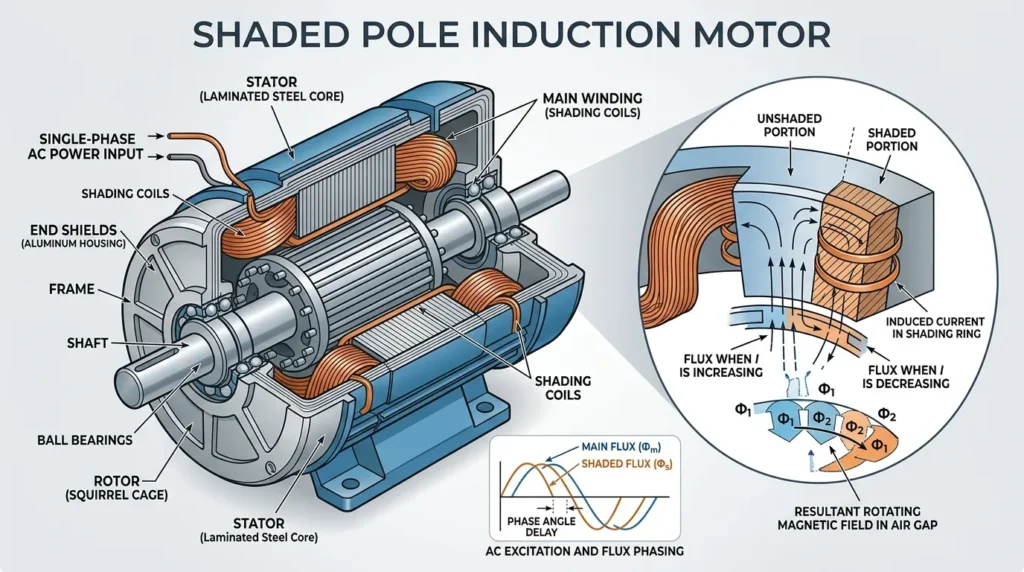
A shaded pole induction motor is a type of single-phase induction motor that uses a shading coil (copper ring) around a portion of each stator pole to produce a weak rotating magnetic field. When AC supply is applied, the shading coil delays the magnetic flux in the shaded part of the pole, creating a phase difference between the shaded and unshaded portions. This phase difference produces a small starting torque, allowing the motor to start without a capacitor or centrifugal switch. Shaded pole motors have a simple, low-cost, and reliable design but provide low starting torque and low efficiency. They are commonly used in small fans, exhaust fans, electric clocks, hair dryers, and other low-power household appliances.
Uses a shading coil to create weak rotating magnetic field.
Features
- Very simple design
- Low cost
- Low starting torque
Applications
- Small fans
- Hair dryers
- Toys
Permanent Split Capacitor Motor
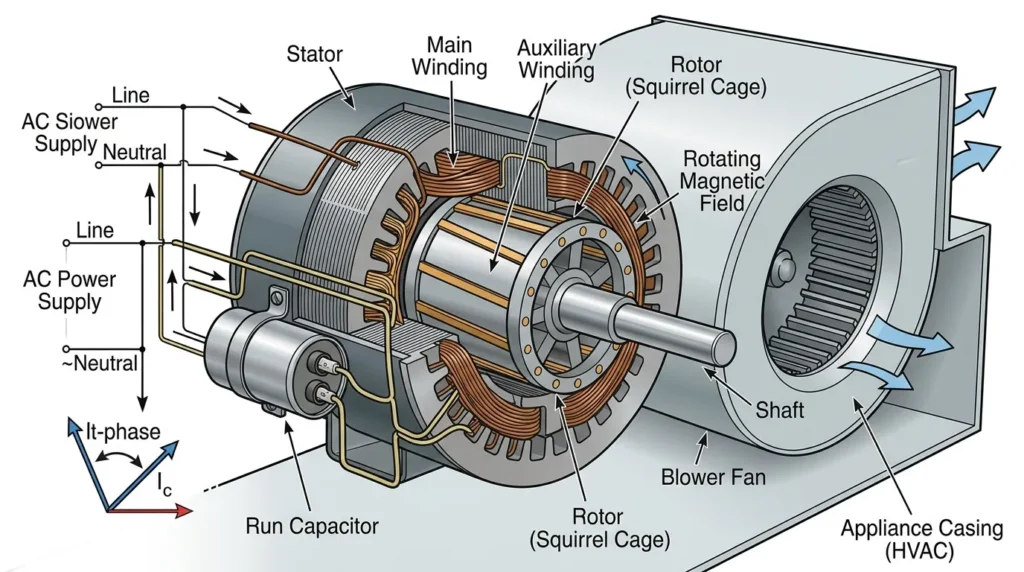
A permanent split capacitor (PSC) motor is a type of single-phase induction motor that uses a single running capacitor permanently connected in series with the auxiliary winding. Unlike capacitor-start motors, it does not use a starting capacitor or a centrifugal switch. The running capacitor creates a phase difference between the main and auxiliary windings, producing a rotating magnetic field that provides smooth starting and continuous operation. PSC motors have quiet operation, good efficiency, and low maintenance, but they produce only moderate starting torque. They are commonly used in ceiling fans, blowers, air conditioners, ventilation systems, and small water pumps.
Uses a permanently connected capacitor.
Features
- Quiet operation
- Good efficiency
Applications
- Fans
- HVAC systems
- Blowers
Main Components
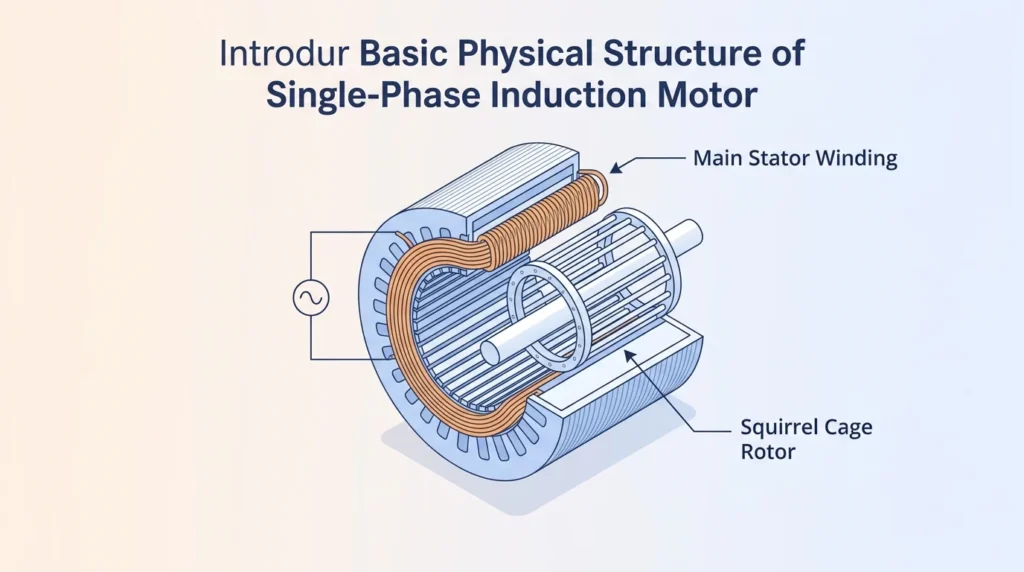
Stator
The stationary outer part containing windings.
Function
Produces magnetic field.
Rotor
The rotating inner part.
Function
Rotates due to induced current and torque.
Main Winding
Connected directly to power supply.
Function
Creates primary magnetic field.
Starting Winding
Used during motor startup.
Function
Creates phase difference and starting torque.
Capacitor
Used in capacitor-type motors.
Function
Improves starting torque and efficiency.
Centrifugal Switch
Disconnects starting winding after startup.
Function
Protects motor and improves operation.
Bearings
Support rotor rotation.
Function
Reduce friction and vibration.
Advantages
Advantages of Single Phase Induction Motor
Simple Construction
The design is easy to manufacture and maintain.
Low Cost
Suitable for household and small industrial applications.
Reliable Operation
Provides long service life with proper maintenance.
Easily Available
Single-phase supply is available in most homes.
Compact Size
Fits easily into domestic appliances.
Low Maintenance
Requires minimal servicing.
Good Efficiency for Small Loads
Performs well in low and medium power applications.
Disadvantages / Limitations
Disadvantages of Single Phase Induction Motor
Not Self-Starting
Requires external starting mechanism.
Lower Efficiency Than Three-Phase Motors
Single-phase motors generally have lower efficiency.
Lower Starting Torque
Some types provide weak starting performance.
Speed Control is Difficult
Basic designs have limited speed control.
Higher Vibration and Noise
Compared to three-phase motors, operation may be less smooth.
Single Phase Induction Motor Applications
Home Applications
Single phase motors are widely used in homes.
Ceiling fans
- Water pumps
- Refrigerators
- Washing machines
Commercial Applications
Used in:
- Office ventilation systems
- Air handling units
- Small compressors
Industrial Applications
Suitable for light industrial loads.
- Small machinery
- Drilling machines
- Blowers
Modern Technology Applications
HVAC Systems
Air conditioners and ventilation systems use capacitor motors.
Automation Equipment
Small automation devices use compact single-phase motors.
Renewable Energy Systems
Small solar-powered water pumps may use single-phase induction motors.
Comparison Section
Difference Between Single Phase and Three Phase Induction Motor
| Feature | Single Phase Motor | Three Phase Motor |
| Power Supply | Single-phase AC | Three-phase AC |
| Starting | Not self-starting | Self-starting |
| Efficiency | Lower | Higher |
| Starting Torque | Lower | Higher |
| Cost | Lower | Higher |
| Maintenance | Simple | Moderate |
| Applications | Home appliances | Industrial machinery |
| Noise and Vibration | Higher | Lower |
Selection Guide
How to Choose the Right Single Phase Induction Motor
Choosing the correct motor depends on application, load, and operating conditions.
Choose Split Phase Motor When
Applications
- Light-load equipment
- Fans
- Blowers
Advantages
- Low cost
- Simple design
Choose Capacitor Start Motor When
Applications
- Pumps
- Compressors
- Heavy startup loads
Advantages
- High starting torque
Choose Shaded Pole Motor When
Applications
- Very small appliances
- Low-power devices
Advantages
- Economical
- Compact
Tips for Beginners
Check Voltage Rating
Always match motor voltage with supply voltage.
Understand Load Requirement
Heavy loads require high starting torque motors.
Consider Duty Cycle
Continuous-duty motors are needed for long operating hours.
Check Efficiency
Efficient motors save electricity and reduce heating.
Common Problems & Solutions
Why Does the Motor Fail to Start?
Possible causes include:
- Faulty capacitor
- Low voltage
- Damaged starting winding
- Test capacitor
- Check power supply
- Inspect winding resistance
Why Does the Motor Overheat?
Overloading or poor ventilation.
- Reduce load
- Clean ventilation openings
- Inspect bearings
Why Does the Motor Produce Humming Noise?
Rotor may not start properly.
- Check starting mechanism
- Replace faulty capacitor
Why Is the Motor Running Slowly?
Excessive load or voltage drop.
- Reduce mechanical load
- Improve power supply quality
Why Does the Circuit Breaker Trip?
Short circuit or excessive current.
- Check insulation
- Measure current draw
- Inspect wiring
Future Trends
Energy-Efficient Motors
Modern motors are being designed for lower power consumption.
Smart Motor Technology
New motors include:
- Sensors
- Remote monitoring
- Fault detection systems
Improved Capacitor Technology
Advanced capacitors improve:
- Starting performance
- Efficiency
- Reliability
Integration with Renewable Energy
Single-phase motors are increasingly used with solar-powered systems.
Compact High-Performance Designs
Modern appliances require smaller and more efficient motors.
Conclusion
Understanding single phase induction motor explained concepts is essential for electrical students, engineers, technicians, and beginners. These motors operate using electromagnetic induction and are widely used because they are reliable, economical, and suitable for household power supplies.
Although single phase induction motors are not naturally self-starting, different starting methods make them highly practical for domestic and commercial applications. Their advantages and disadvantages help engineers choose the right motor type based on load requirements and operating conditions.
From ceiling fans and pumps to air conditioners and automation systems, single phase induction motors continue playing an important role in modern electrical engineering. A strong understanding of their working principles and applications creates a solid foundation for learning advanced electrical machines and motor control systems.