
Imagine working from home on your laptop, with your phone charging, a desk fan running, and a printer connected—all plugged into a single extension board. After a few hours, you notice a burning smell and the plug becomes unusually hot. In many real-life cases, this situation leads to melted sockets or even electrical fires.
Extension boards are extremely common in homes, offices, and workshops, but they are also one of the most misused electrical accessories. Most electrical accidents involving small appliances are linked to improper use of extension boards, overloading, or poor-quality products.
This Extension Board Safety Tips guide is designed to help electrical students, engineers, technicians, and beginners understand safe usage practices. You will learn the extension board safety tips working principle, types, internal components, advantages, risks, applications, comparisons, selection methods, troubleshooting, and future trends. By the end, you will be able to use extension boards safely and confidently in real-world situations.
What is Extension Board Safety Tips?
Extension board safety tips refer to guidelines and practices used to ensure the safe operation of electrical extension boards and prevent overheating, short circuits, and fire hazards.
Simple Definition
An extension board is a device that allows multiple electrical appliances to be connected to a single power outlet. Safety tips ensure it is used without overloading or damaging electrical systems.
Practical Example
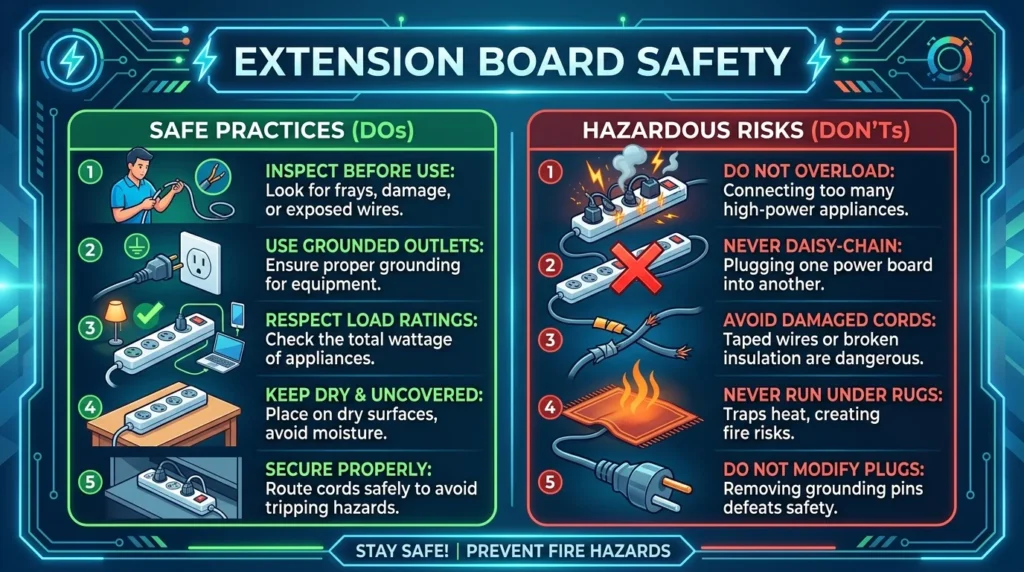
If a 10-amp extension board is used to power a heater, microwave, and iron together, it may overheat because the total load exceeds its capacity. Safety tips help avoid such dangerous situations.
Extension Board Safety Tips Working Principle
The working principle of extension board safety is based on using the extension board within its designed electrical limits while relying on built-in protective features to prevent accidents and equipment damage. A safe extension board distributes electrical power from a single wall outlet to multiple devices through internal copper conductors. Many modern extension boards include overload protectors, surge protectors, fuses, or circuit breakers that automatically disconnect the power supply when excessive current, overheating, or voltage surges occur. Following safety practices—such as avoiding overload, using properly rated appliances, keeping the board dry, and regularly checking for damaged cables or loose sockets—ensures efficient power distribution and reduces the risk of electrical shock, fire, and equipment failure. By combining proper usage with built-in protection, an extension board provides a safe and reliable way to power multiple electrical devices.
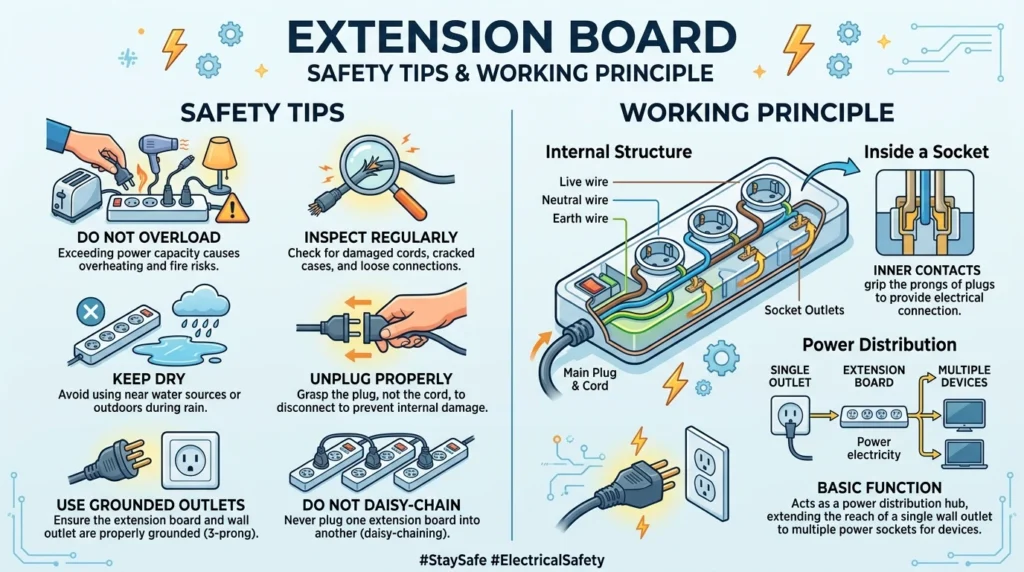
The extension board safety tips working principle is based on controlling electrical load, ensuring proper current flow, and preventing overheating or short circuits.
Step-by-Step Working Principle
Power Input
Electricity enters the extension board from the main wall socket.
Distribution of Power
The board distributes electricity to multiple outlets connected inside it.
Load Control
Each connected device draws current based on its power requirement.
Heat Monitoring
If too many devices are connected, excessive current causes heating of wires.
Safety Intervention
Safety features like switches, fuses, or circuit breakers prevent damage by cutting off power.
Easy Analogy
Think of an extension board like a water pipeline splitter. If too many taps are opened at once, water pressure drops or pipes may burst. Similarly, too many electrical devices overload the extension board.
Types / Classification
Basic Extension Boards
Simple boards without advanced protection features.
Features
- Multiple sockets
- No surge protection
- Manual switch control
Applications
- Home use
- Light appliances
Surge-Protected Extension Boards
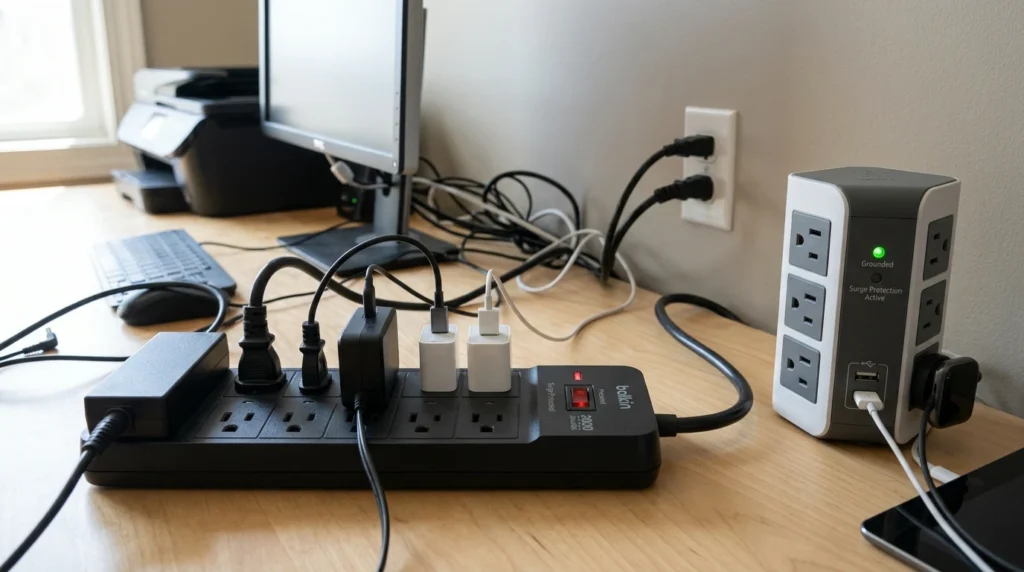
Surge-protected extension boards are electrical power strips designed to protect connected devices from sudden voltage spikes or power surges. They contain built-in surge protection components, such as metal oxide varistors (MOVs), which absorb or divert excess voltage away from sensitive electronic equipment. During a power surge caused by lightning strikes, switching operations, or electrical faults, the surge protector limits the voltage reaching connected devices, helping prevent damage to computers, televisions, routers, gaming consoles, and other electronic appliances. In addition to providing multiple power outlets, many surge-protected extension boards include features such as overload protection, individual power switches, indicator lights, and child safety shutters. They are widely used in homes, offices, and commercial environments to improve electrical safety and extend the lifespan of valuable electronic equipment.These include protection against voltage spikes.
Features
- Built-in surge protection
- Indicator lights
- Improved safety for electronics
Applications
- Computers
- TVs
- Office equipment
Heavy-Duty Extension Boards
Designed for high-power appliances.
Features
- Thick wiring
- High current rating
- Thermal protection
Applications
- Workshops
- Industrial tools
- Construction sites
Smart Extension Boards
Modern boards with digital control and automation.
Features
- Remote control
- USB charging ports
- Power monitoring
Applications
- Smart homes
- Modern offices
Main Components
Power Cable
Supplies electricity from the main socket.
Function
- Transfers electrical power safely to the board
Socket Outlets
Provide connection points for appliances.
Function
- Distribute electricity to multiple devices
Switch
Controls ON/OFF function of the board.
Function
- Cuts or allows power flow
Fuse or Circuit Breaker
Protects against overload and short circuits.
Function
- Automatically stops power during faults
Indicator Light
Shows whether the board is active.
Function
- Provides visual status of power supply
Internal Wiring
Connects all sockets inside the board.
Function
- Ensures proper current distribution
Advantages of Extension Board Safety Tips
Extension Board Safety Tips Advantages
- Prevents electrical overload
- Reduces fire risk
- Extends device lifespan
- Improves electrical safety awareness
- Helps avoid circuit damage
- Ensures proper load management
- Supports safe multi-device usage
Real-World Benefits
Following safety tips ensures that sensitive electronics like laptops and TVs are protected from voltage spikes and overheating issues.
Disadvantages / Limitations
Extension Board Safety Tips Limitations
- Cannot fix poor-quality extension boards
- Depends on user discipline
- Does not replace proper wiring systems
- Overuse can still cause damage
- Cheap boards lack proper safety features
Practical Challenges
Even with safety tips, users often ignore load limits, leading to overheating and socket damage.
Extension Board Safety Tips Applications
Home Applications
Extension boards are widely used in households.
Uses
- Charging devices
- Connecting appliances
- Home entertainment systems
Office Applications
Used for multiple office devices.
Uses
- Computers
- Printers
- Networking devices
Industrial Applications
Used in workshops and temporary setups.
Uses
- Power tools
- Testing equipment
- Portable machines
Modern Technology Applications
Modern systems rely heavily on safe power distribution.
Uses
- Smart home devices
- IoT systems
- Charging stations
Comparison Section
Extension Board vs Wall Socket
Understanding the difference between extension board and direct socket usage is important.
| Feature | Extension Board | Wall Socket |
| Number of Devices | Multiple | Single or limited |
| Mobility | Portable | Fixed |
| Safety Level | Depends on quality | Generally safer |
| Overload Risk | Higher | Lower |
| Convenience | High | Limited |
| Best Use | Temporary setups | Permanent wiring |
Selection Guide
How to Choose the Right Extension Board
Choosing the right extension board improves safety and performance.
For Home Use
Choose:
- Surge-protected boards
- Medium load capacity (10–16A)
Tips
- Avoid cheap plastic bodies
- Check wire thickness
For Office Use
Choose:
- Multiple socket boards
- USB charging ports
- Surge protection
Tips
- Ensure overload protection
- Use certified brands
For Heavy Use
Choose:
- High current rating boards
- Metal casing
- Thermal protection
Tips
- Use only for industrial tools
- Avoid mixing light and heavy loads
Beginner Safety Tips
- Never overload extension boards
- Do not connect heaters with electronics
- Always switch OFF when not in use
- Keep away from water and heat
- Check for overheating regularly
Common Problems & Solutions
Why Does an Extension Board Heat Up?
- Overloading
- Loose connections
- Reduce load
- Replace damaged wiring
Why Do Sockets Become Loose?
- Frequent plugging and unplugging
- Replace worn-out board
- Use high-quality sockets
Why Does the Extension Board Spark?
- Faulty plug insertion
- Damaged internal wiring
- Stop using immediately
- Inspect or replace board
Why Does the Fuse Blow Frequently?
- Excess current load
- Reduce connected devices
- Upgrade to higher-rated board
Can Extension Boards Cause Fire?
Yes, if overloaded or poorly maintained, they can overheat and cause fire hazards.
Future Trends
Smart Extension Boards
Modern boards include smart controls and monitoring systems.
IoT-Enabled Power Management
Users can monitor energy usage through mobile apps.
Built-in Safety Sensors
Advanced sensors detect overheating and shut down power automatically.
Wireless Charging Integration
Future boards may include wireless charging pads for devices.
Energy-Efficient Designs
New designs reduce power loss and improve efficiency.
Conclusion
Extension boards are extremely useful in modern homes, offices, and industries, but they must be used carefully. Understanding Extension Board Safety Tips helps prevent overheating, electrical fires, and equipment damage.
The extension board safety tips working principle focuses on load control, safe current distribution, and fault protection. When used correctly, extension boards provide convenience and flexibility, but improper usage can lead to serious hazards.
Always choose the right type of extension board, avoid overloading, and follow basic electrical safety rules. As technology advances, smart and safer extension boards will further reduce risks and improve user safety.
For students, engineers, and beginners, learning these safety practices is essential for building strong electrical awareness and preventing real-world accidents.