
Imagine a thunderstorm at night. Lightning strikes near a residential area, and suddenly your TV, computer, and refrigerator stop working. In many cases, the appliances are not damaged by direct lightning, but by a sudden increase in voltage known as a power surge. These surges can silently destroy sensitive electronic equipment within milliseconds.
This is why Surge Protection Devices (SPDs) are extremely important in modern electrical systems. Whether it is a home, office, hospital, or industrial plant, electrical systems are constantly exposed to voltage spikes caused by lightning, switching operations, and grid disturbances.
In this Surge Protection Devices guide, you will learn how SPDs work, their types, internal components, advantages, disadvantages, applications, selection methods, and troubleshooting tips. This knowledge is essential for electrical students, technicians, engineers, and beginners who want to understand real-world electrical protection systems in a simple and practical way.
What is a Surge Protection Device?
A Surge Protection Device (SPD) is an electrical safety device designed to protect electrical and electronic equipment from sudden voltage spikes.
Definition
An SPD detects extra high voltage in the system and safely diverts it to the ground before it can damage appliances.
Example
If lightning strikes a power line, the voltage may suddenly rise thousands of volts. An SPD immediately redirects this excess energy to earth, protecting your devices like TVs, computers, and industrial machines.
Surge Protection Devices Working Principle
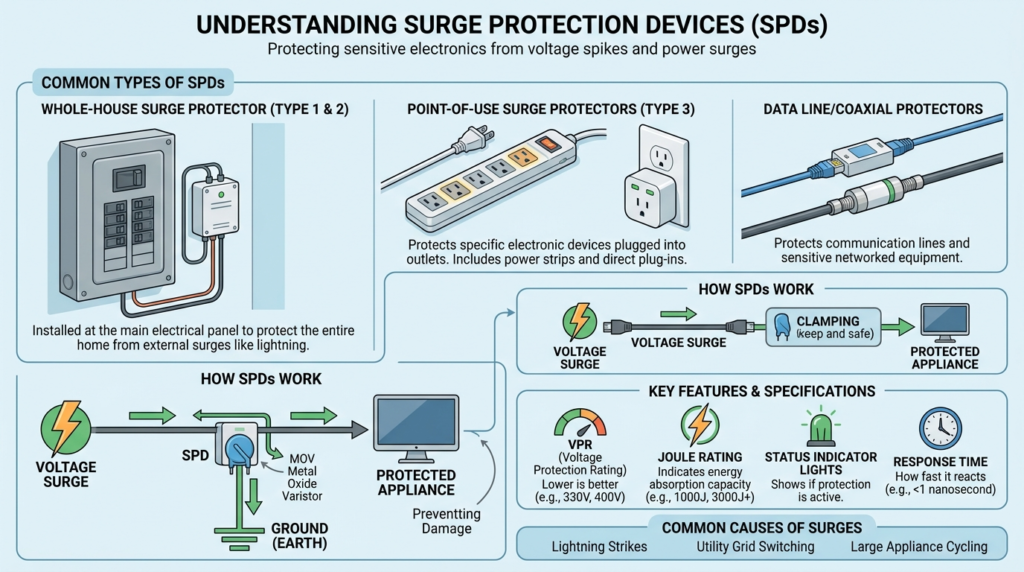
A Surge Protection Device (SPD) works by protecting electrical equipment from sudden voltage spikes, also called surges. These surges can be caused by lightning strikes, power grid switching, or large electrical machines turning on and off. Under normal operating conditions, the SPD remains inactive and allows the normal electrical current to flow through the circuit without interruption.
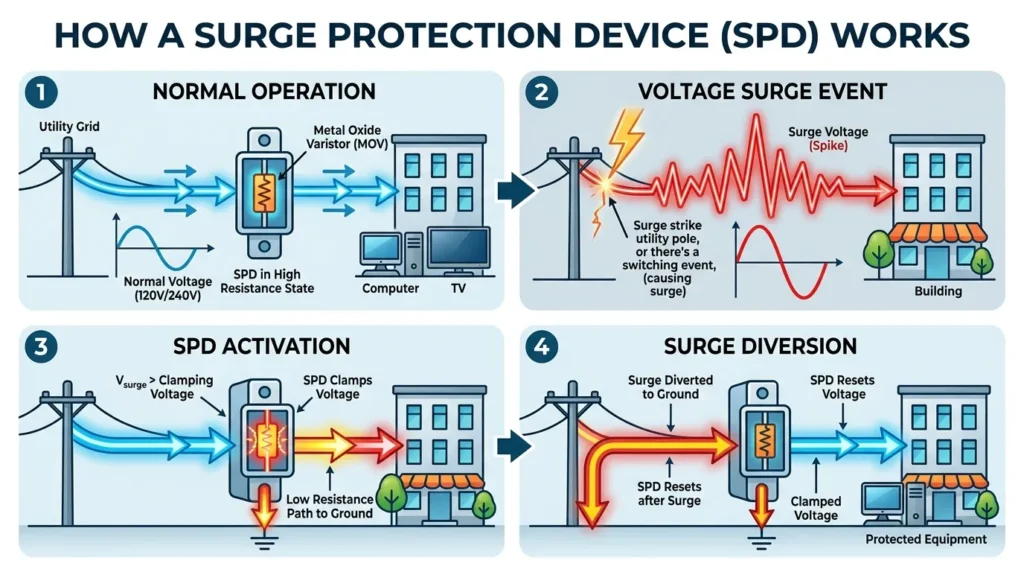
When a voltage surge occurs, the SPD quickly detects the excess voltage and provides a low-resistance path to divert the surge current safely to the ground. This action prevents the high voltage from reaching sensitive electrical devices such as computers, control panels, PLCs, and household appliances. Once the surge has passed and the voltage returns to its normal level, the SPD automatically returns to its standby state and continues normal operation. This entire process happens within a few nanoseconds, ensuring reliable protection for electrical systems and connected equipment.
The surge protection devices working principle is based on detecting high voltage spikes and safely redirecting them away from sensitive equipment.
Step-by-Step Working
Normal Operation
Under normal conditions, the SPD remains inactive and allows regular voltage to pass through the circuit.
Surge Occurrence
A sudden voltage spike occurs due to:
- Lightning strikes
- Switching of large electrical loads
- Power grid faults
- Generator switching
Detection of High Voltage
The SPD senses when voltage exceeds safe limits.
Activation of Protection Path
Inside the SPD, special components become conductive and create a low-resistance path.
Energy Diverted to Ground
When a voltage surge enters the electrical system, the Surge Protection Device (SPD) immediately redirects the excess electrical energy to the grounding system. Instead of allowing the high-voltage surge to pass through connected equipment, the SPD creates a low-resistance path that safely carries the surge current to the earth. This process protects sensitive devices such as computers, PLCs, motors, and household appliances from damage caused by overvoltage. After the surge energy has been safely diverted to the ground and the voltage returns to its normal level, the SPD automatically resumes its normal standby mode, ready to protect the system from future surges.
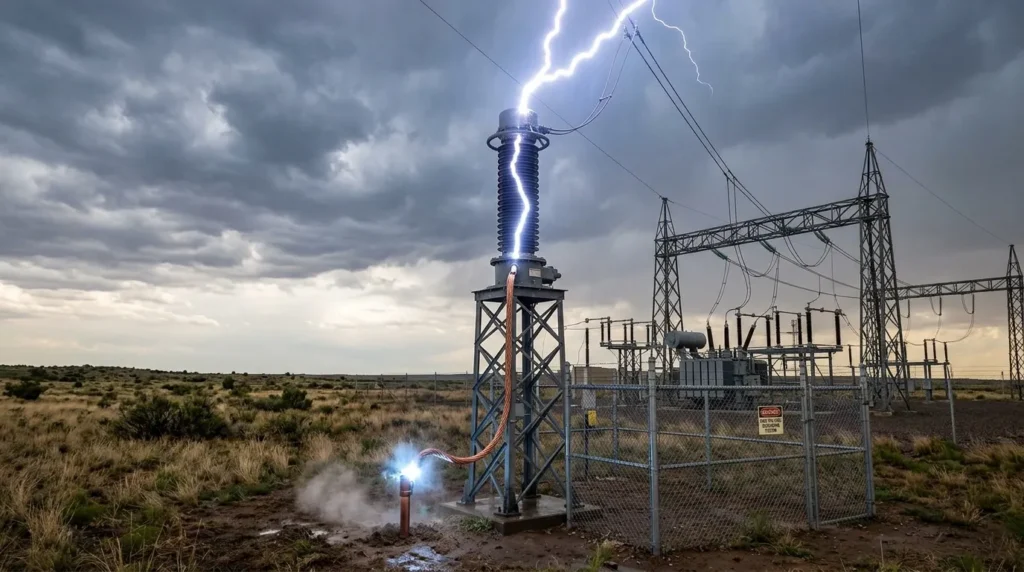
Excess energy is safely sent to the grounding system instead of passing through equipment.
System Returns to Normal
Once the surge is gone, the SPD resets automatically or prepares for the next event.
Easy Analogy
Think of an SPD like a pressure relief valve in a water tank. When pressure becomes too high, the valve opens and releases excess water safely. Similarly, SPDs release extra electrical energy safely to the ground.
Types / Classification of Surge Protection Devices
SPD (Lightning Protection Device)
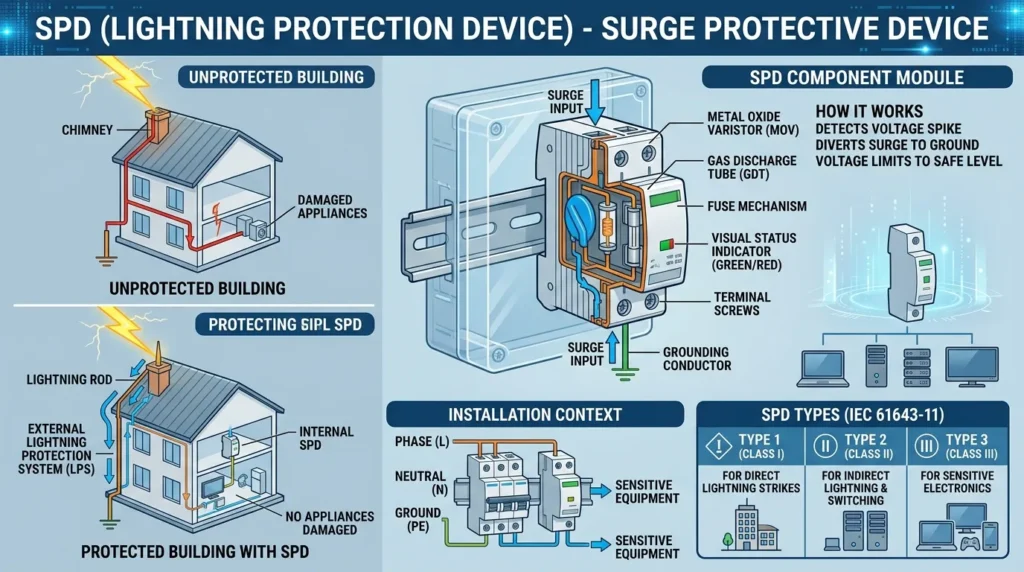
A Surge Protection Device (SPD), also known as a Lightning Protection Device, is an electrical safety device designed to protect electrical systems and electronic equipment from sudden voltage surges caused by lightning strikes, switching operations, or power system faults. It works by detecting excessive voltage and quickly diverting the surge current to the grounding system before it reaches connected equipment. This helps prevent damage to sensitive devices such as computers, PLCs, industrial control panels, communication systems, and household appliances. Once the surge has passed, the SPD automatically returns to its normal operating state, providing continuous protection without interrupting the power supply.
Type 1 SPDs are installed at the main electrical entrance of a building.
Features
- Handles direct lightning strikes
- High surge current capacity
- Installed at distribution panels
Applications
- Industrial plants
- Large commercial buildings
- Outdoor electrical systems
SPD (Distribution Protection Device)
A Distribution Protection Device (DPD) is a protective device used in electrical distribution systems to ensure the safe and reliable delivery of electrical power. It protects distribution circuits and connected equipment from electrical faults such as overloads, short circuits, and abnormal operating conditions. These devices automatically detect faults and disconnect the affected section of the network, preventing damage to transformers, cables, switchgear, and other electrical equipment. Distribution protection devices help improve system reliability, reduce downtime, and enhance the overall safety of residential, commercial, and industrial power distribution systems.
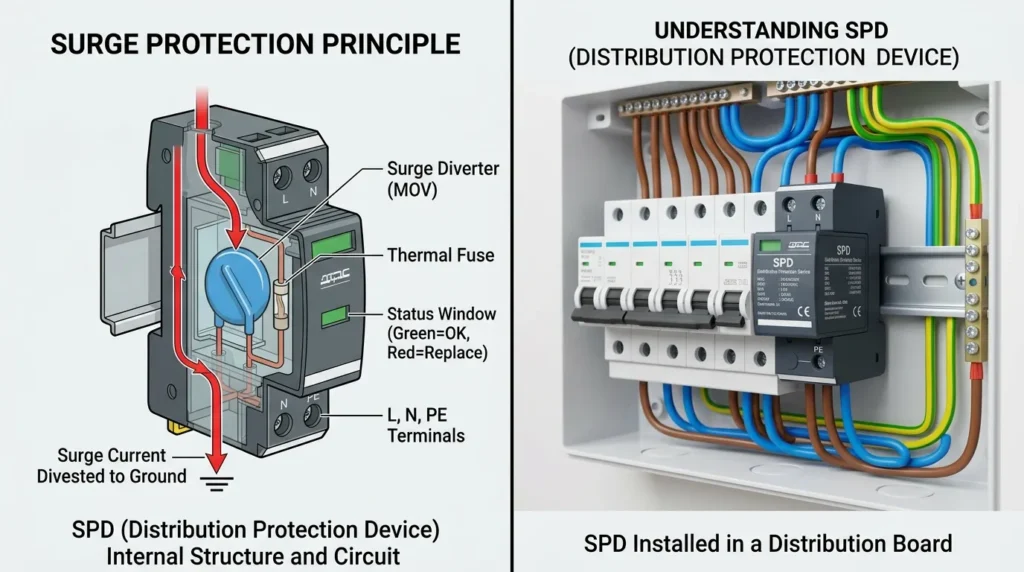
Type 2 SPDs protect internal electrical systems from switching surges.
Features
- Installed in distribution boards
- Protects against indirect surges
- Common in homes and offices
Applications
- Residential buildings
- Commercial offices
- Small industries
SPD (Point-of-Use Protection Device)
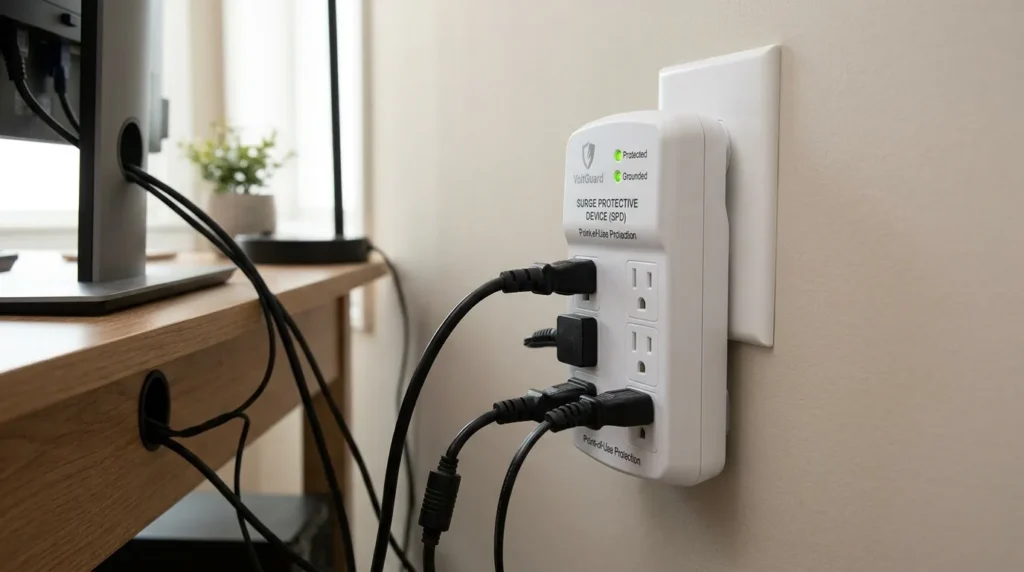
A Point-of-Use Protection Device is installed close to the electrical equipment it is designed to protect. It provides the final level of protection against voltage surges that may pass through the main surge protection system. These devices are commonly used for sensitive equipment such as computers, televisions, medical devices, communication systems, and industrial control panels. By limiting excess voltage and diverting surge energy safely to the ground, a point-of-use protection device helps prevent equipment damage, extends the lifespan of electrical devices, and ensures reliable operation. It is often used together with main distribution surge protection to provide complete and effective surge protection throughout the electrical system.
Type 3 SPDs provide final protection for sensitive devices.
Features
- Installed near appliances
- Low surge capacity
- High precision protection
Applications
- Computers
- Televisions
- Medical devices
Combined SPDs
Some systems use combined Type 1 + Type 2 SPDs for layered protection.
Features
- Multi-level protection
- Suitable for critical installations
Main Components of Surge Protection Devices
Metal Oxide Varistor (MOV)
The MOV is the most important component inside an SPD.
Function
- Absorbs excess voltage
- Diverts surge energy to ground
Gas Discharge Tube (GDT)
A GDT conducts high voltage during extreme surges.
Function
- Handles lightning-level surges
- Provides strong discharge path
Thermal Disconnect
This component prevents overheating of the SPD.
Function
- Disconnects SPD during failure
- Prevents fire hazards
Indicator Display
Shows the operational status of the SPD.
Function
- Indicates protection status
- Helps in maintenance checks
Grounding Terminal
Connects surge energy safely to earth.
Function
- Provides safe discharge path
- Essential for proper SPD operation
Advantages of Surge Protection Devices
Surge Protection Devices Advantages
- Protects sensitive electronics from damage
- Increases lifespan of electrical equipment
- Reduces repair and replacement costs
- Prevents data loss in digital systems
- Improves system reliability
- Essential for modern smart homes
- Reduces downtime in industries
Real-World Benefits
A properly installed SPD can save expensive equipment such as servers, medical devices, and industrial machines from sudden voltage spikes, reducing financial losses significantly.
Disadvantages / Limitations
Surge Protection Devices Limitations
- SPDs wear out over time
- Cannot protect against direct lightning strikes completely
- Requires proper grounding system
- Poor installation reduces effectiveness
- Needs periodic inspection and replacement
Practical Challenges
Many users assume SPDs provide permanent protection, but they must be replaced after absorbing multiple surges.
Surge Protection Devices Applications
Home Applications
SPDs are widely used in residential buildings.
Uses
- TV protection
- Refrigerator safety
- Air conditioner protection
- Home computer systems
Industrial Applications
Industries require strong surge protection due to heavy machinery.
Uses
- Motor control centers
- PLC systems
- Automation panels
- Heavy electrical equipment
Commercial Applications
Commercial buildings depend on continuous power reliability.
Uses
- Office computers
- Security systems
- Banking equipment
- Data centers
Modern Technology Applications
Modern systems depend heavily on surge protection.
Uses
- Smart homes
- Solar power systems
- EV charging stations
- Telecommunications networks
Comparison Section
SPD vs Circuit Breaker
Understanding the difference between surge protection devices and circuit breakers is very important.
| Feature | Surge Protection Device | Circuit Breaker |
| Main Function | Protects from voltage spikes | Protects from overcurrent |
| Response Time | Very fast (nanoseconds) | Fast (milliseconds) |
| Protection Type | Voltage surge protection | Overload and short circuit |
| Damage Prevention | Sensitive electronics | Wiring and circuits |
| Reset Ability | Automatic or replaceable | Resettable |
| Usage Area | Electronics and systems | Electrical distribution |
Selection Guide
How to Choose the Right SPD
Choosing the correct SPD depends on system type, voltage level, and risk exposure.
For Homes
Choose:
- Type 2 SPD for distribution board
- Type 3 SPD for appliances
Tips
- Ensure proper earthing
- Match voltage rating with supply
For Industries
Choose:
- Type 1 + Type 2 combined protection
- High surge current capacity SPDs
Tips
- Install at main panel
- Perform regular maintenance checks
For Beginners
Key Advice
- Never install SPD without proper grounding
- Check voltage rating before installation
- Replace SPD after major surge events
- Always follow electrical safety rules
Common Problems & Solutions
Why Does an SPD Stop Working?
- Repeated surge absorption
- Internal component failure
- Replace SPD unit
- Check grounding system
Why Does SPD Indicator Show Fault?
- Device has reached end of life
- Overvoltage damage
- Replace with new SPD
- Inspect surge history
Why Is SPD Not Protecting Equipment?
- Improper installation
- Poor grounding
- Incorrect rating
- Fix grounding system
- Install correct SPD type
Can SPD Fail During Lightning?
Yes. If surge is extremely high, SPD may get damaged but still protect equipment partially.
How Long Does an SPD Last?
It depends on surge frequency, but typically 3–10 years under normal conditions.
Future Trends
Smart Surge Protection Systems
Modern SPDs now include digital monitoring and smart alerts.
IoT-Based Protection
Connected SPDs can send real-time status updates to mobile devices.
AI Predictive Protection
AI systems can predict surge conditions and activate protection in advance.
Improved Materials
New semiconductor materials improve response speed and durability.
Renewable Energy Integration
SPDs are becoming essential in solar and wind power systems due to unstable voltage conditions.
Conclusion
Surge Protection Devices play a critical role in protecting modern electrical systems from unpredictable voltage spikes. From homes to large industries, SPDs ensure that sensitive equipment remains safe from damage caused by lightning, switching surges, and electrical faults.
Understanding the surge protection devices working principle helps engineers, technicians, and beginners design safer and more reliable electrical systems. SPDs work silently but are essential for preventing costly equipment failure and improving system stability.
Although SPDs have limitations and require proper installation and maintenance, their benefits far outweigh their drawbacks. With the rise of smart homes, renewable energy, and digital infrastructure, surge protection devices have become more important than ever.
For anyone working in electrical systems, learning about SPDs is not optional—it is a fundamental safety requirement.


Pingback: Lightning Arrester: Working Principle & Types