
Imagine entering a dark room and turning on the light with a simple press of a switch. This small action may seem ordinary, but behind it is an important electrical system working safely and efficiently. Electrical switches are one of the most commonly used devices in homes, offices, industries, and commercial buildings. From controlling lights and fans to operating machines and smart devices, switches play a major role in modern electrical systems.
Learning how to install a switch is an essential skill for electrical students, technicians, engineers, and beginners. Proper switch installation improves electrical safety, ensures reliable operation, and prevents common electrical problems such as short circuits and loose connections.
Understanding the switch installation working principle also helps in troubleshooting and maintaining electrical systems. Whether you are installing a simple wall switch or working with advanced smart switches, knowing the correct procedure is very important.
In this article, you will learn the complete process of how to install a switch, including its working principle, types, components, advantages and disadvantages, applications, comparison, safety tips, troubleshooting methods, and future trends in switch technology.
What is a Switch Installation?
Switch installation is the process of connecting an electrical switch into a circuit to control the flow of electricity. A switch works like a gate that either allows current to flow or stops it.
When the switch is turned ON, the electrical circuit becomes complete, and current flows to operate the connected device. When the switch is turned OFF, the circuit breaks and stops the current flow.
Simple Explanation
A switch acts like a road barrier for electricity.
ON position = road open
OFF position = road closed
This simple mechanism helps control electrical equipment safely and conveniently.
Practical Example
A wall switch used to control a room light is the most common example. When you press the switch ON, electricity flows to the bulb and produces light. Turning it OFF stops the flow of current.
Switch Installation Working Principle
The working principle of switch installation is based on opening and closing an electrical circuit to control the flow of electric current. During installation, the switch is connected in series with the live (phase) wire, ensuring it can safely interrupt or allow current to pass to the connected load. When the switch is turned ON (closed), its internal contacts touch each other, completing the circuit and allowing electricity to flow to the electrical device, such as a lamp or fan. When the switch is turned OFF (open), the contacts separate, breaking the circuit and stopping the flow of current, which turns the device off. Proper switch installation ensures safe operation, reliable performance, and protection against electrical hazards, making it an essential part of residential, commercial, and industrial electrical systems.
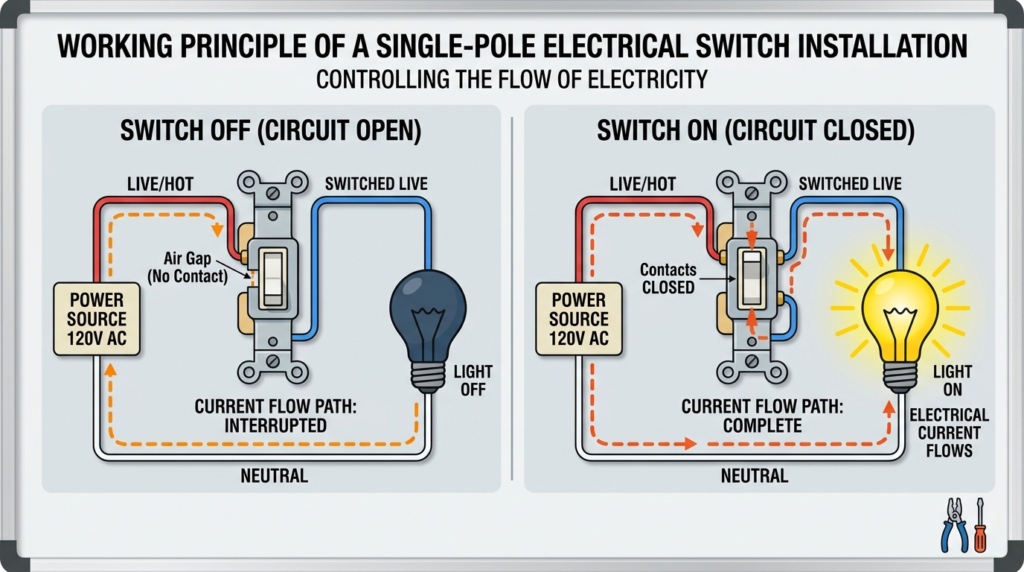
The switch installation working principle is based on opening and closing an electrical circuit.
Step-by-Step Working Process
Power Supply Connection
Electricity comes from the main power source through the phase wire.
Switch Connection
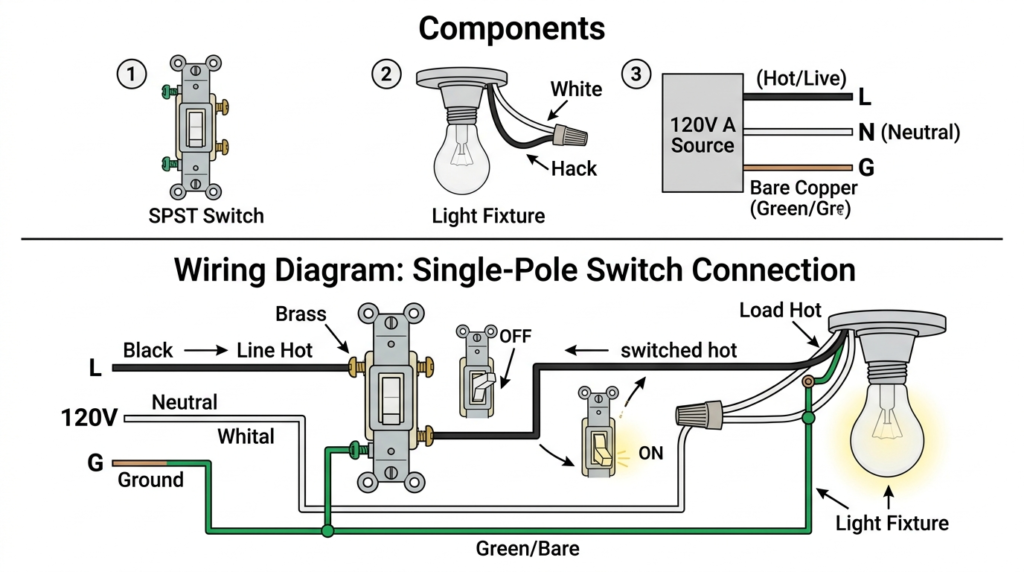
A switch connection is an electrical wiring arrangement used to control the flow of electric current to a load such as a light, fan, or motor. The switch is connected in series with the live (phase) wire so that it can safely open or close the electrical circuit. When the switch is turned ON, it completes the circuit, allowing current to flow and the connected device to operate. When the switch is turned OFF, it breaks the circuit, stopping the flow of current and turning the device off. Different types of switch connections, including one-way, two-way, and intermediate connections, are used depending on the application’s requirements. Proper switch connection is essential for safe operation, energy efficiency, and reliable control of electrical equipment in homes, commercial buildings, and industrial installations.
The switch is connected in series with the load such as a bulb or fan.
ON Position
When the switch is ON:
Internal contacts touch each other
Circuit becomes complete
Current flows to the load
OFF Position
When the switch is OFF:
Contacts separate
Circuit breaks
Current stops flowing
Easy Analogy
Think of a water pipe system:
A switch is like a water valve
Open valve = water flows
Closed valve = water stops
Similarly, a switch controls the flow of electricity.
Basic Safety Principle
Before installing a switch:
Turn OFF the main power supply
Use insulated tools
Check wires carefully
Avoid touching live conductors
Electrical safety is always the first priority.
Types / Classification
Different electrical systems use different types of switches depending on the application.
Single Pole Switch
A single pole switch controls one circuit from one location.
Features
Most common household switch
Simple wiring
Easy installation
Applications
Room lights
Fans
Basic home appliances
Double Pole Switch
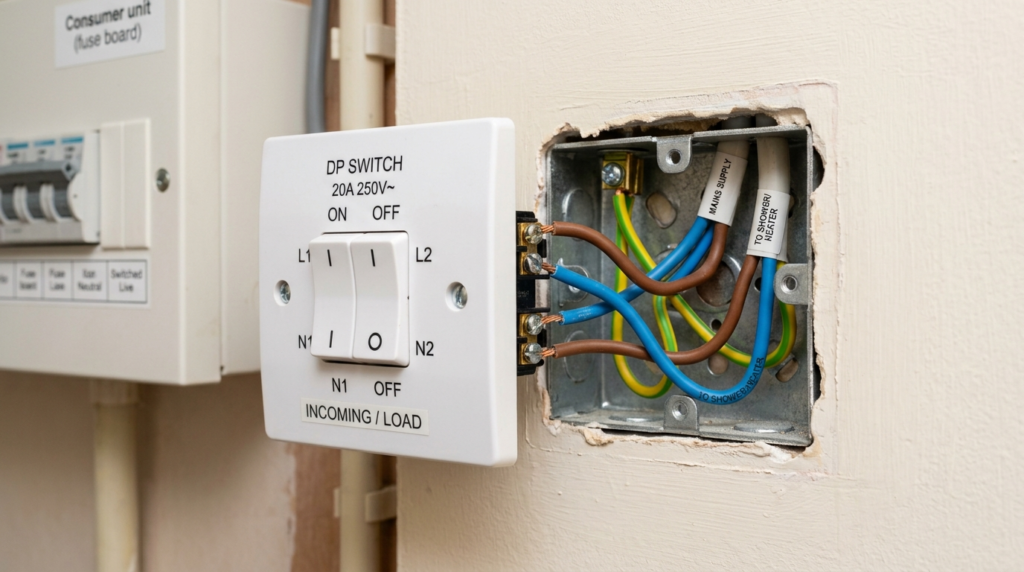
A Double Pole Switch (DP Switch) is an electrical switch designed to control and disconnect both the live (phase) and neutral wires simultaneously using a single switch mechanism. It provides complete isolation of the electrical circuit, making it safer than a single pole switch, which disconnects only the live wire. When the switch is turned ON, both poles close, allowing current to flow to the connected load. When it is turned OFF, both poles open, completely disconnecting the power supply. Double pole switches are commonly used for high-power appliances such as water heaters, air conditioners, electric ovens, and industrial equipment, where complete electrical isolation is essential for safety and maintenance.
A double pole switch controls both phase and neutral wires simultaneously.
Features
Better safety
Handles higher loads
Strong electrical isolation
Applications
Water heaters
Air conditioners
Industrial equipment
Two-Way Switch
A two-way switch controls one load from two different locations.
Applications
Staircases
Hallways
Large rooms
Push Button Switch
This switch operates when pressed.
Applications
Doorbells
Control panels
Industrial machines
Smart Switch
Smart switches use wireless or internet technology.
Features
Remote control
Voice commands
Energy monitoring
Applications
Smart homes
Automation systems
Dimmer Switch
A dimmer switch controls light brightness.
Applications
Decorative lighting
Energy saving systems
Main Components
Understanding switch components helps in proper installation and maintenance.
Switch Body
The outer casing protects internal parts and provides insulation.
Terminals
Terminals are connection points where wires are attached.
Phase terminal
Load terminal
Ground terminal
Internal Contacts
These metal contacts open and close the circuit.
Actuator
The actuator is the movable part pressed by the user.
Examples
Toggle
Push button
Rocker
Mounting Box
The mounting box holds the switch securely inside the wall.
Face Plate
The face plate covers the switch and improves appearance and safety.
Advantages
Understanding the switch advantages and disadvantages is important before installation.
Advantages of Switch Installation
Easy control of electrical devices
Improves electrical safety
Prevents unnecessary power usage
Supports automation systems
Simple maintenance
Reduces electrical accidents
Convenient operation
Helps energy conservation
Reliable for daily use
Available in many designs and ratings
Disadvantages / Limitations
Although switches are highly useful, they also have some limitations.
Disadvantages of Switch Installation
Improper installation may cause electric shock
Loose wiring can create sparks
Mechanical wear occurs over time
Cheap quality switches may fail early
Smart switches are more expensive
Moisture can damage switches
Requires regular inspection in industrial areas
How to Install a Switch – Step-by-Step Guide
This section explains the practical process of installing a switch safely.
Tools Required
Before starting, collect these tools:
Screwdriver
Voltage tester
Insulated pliers
Wire stripper
Electrical tape
Safety gloves
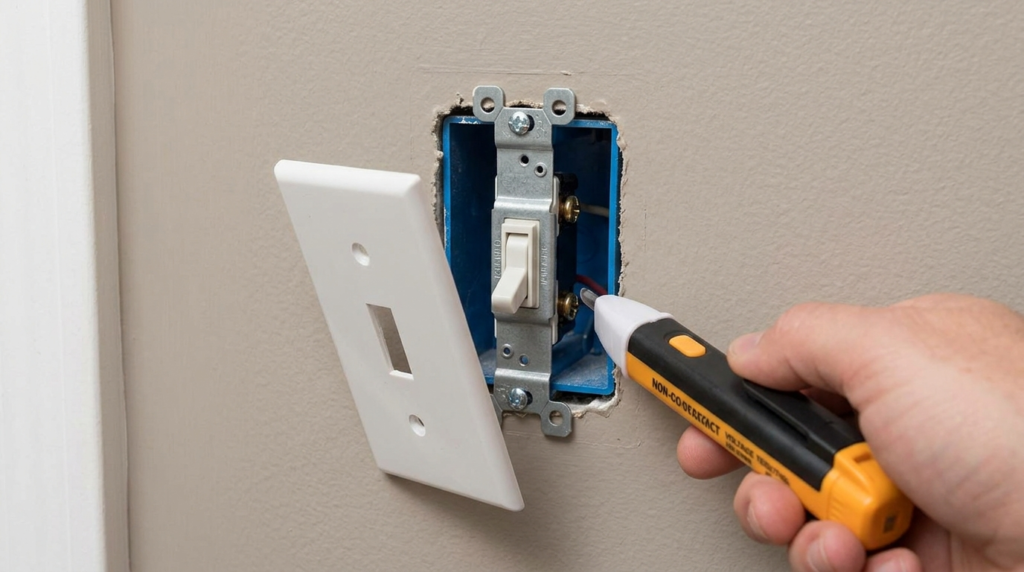
Turn OFF Main Power
Always switch OFF the circuit breaker before touching wires.
Safety Tip
Use a voltage tester to confirm there is no live current.
Identify the Wires
Normally, electrical wiring includes:
Phase wire
Neutral wire
Ground wire
The phase wire is connected through the switch.
Connect the Switch
Basic Wiring Process
Connect phase wire to input terminal
Connect load wire to output terminal
Tighten terminal screws properly
Fix the Switch
Place the switch inside the mounting box and tighten screws carefully.
Attach Face Plate
Install the cover plate securely.
Turn ON Power
Restore the power supply and test the switch operation.
Switch Installation Applications
Switch installation applications are found everywhere in modern electrical systems.
Home Applications
Lighting control
Fan operation
Kitchen appliances
Water pumps
Commercial Applications
Office lighting
Elevators
Security systems
HVAC control
Industrial Applications
Machine operation
Motor control panels
Emergency shutdown systems
Automation equipment
Modern Technology Applications
Smart home systems
IoT devices
Wireless automation
Voice-controlled systems
Comparison Section
Difference Between Single Pole and Double Pole Switch
| Feature | Single Pole Switch | Double Pole Switch |
| Number of Circuits | One | Two |
| Safety Level | Normal | Higher |
| Wiring Complexity | Simple | Moderate |
| Power Handling | Low to medium | Medium to high |
| Applications | Lights and fans | Heavy appliances |
| Cost | Lower | Higher |
| Installation | Easier | Slightly difficult |
Selection Guide
Choosing the right switch depends on electrical load, safety needs, and application type.
Choose Single Pole Switch When
Installing home lighting
Operating small appliances
Using low-power circuits
Choose Double Pole Switch When
Handling high-power devices
Better isolation is needed
Industrial safety is important
Choose Smart Switch When
Home automation is required
Remote control is needed
Energy monitoring is important
Tips for Beginners
Check Current Rating
Always select a switch with the correct current capacity.
Buy Quality Products
Use certified switches from trusted manufacturers.
Consider Environment
Use waterproof switches in wet areas.
Follow Safety Standards
Never ignore grounding and insulation requirements.
Common Problems & Solutions
Why Is the Switch Not Working?
reasons:
Loose connection
Damaged switch
No power supply
Solution
Tighten connections
Replace faulty switch
Check circuit breaker
Why Does the Switch Spark?
Sparking usually occurs because of loose terminals or overload.
Solution
Tighten screws properly
Use correct load rating
Replace damaged switch
Why Does the Switch Heat Up?
Overheating may happen due to excessive current or poor contact.
Solution
Reduce load
Use higher-rated switch
Inspect wiring condition
Why Does the Circuit Breaker Trip?
Short circuits or overloads commonly cause breaker tripping.
Solution
Inspect wiring carefully
Remove faulty equipment
Check insulation
Why Is the Smart Switch Offline?
reasons:
Weak Wi-Fi signal
Power interruption
Software issue
Solution
Restart device
Improve internet connection
Update firmware
Future Trends
Switch technology is evolving rapidly with modern electrical systems.
Smart Switch Technology
Smart switches are becoming common in homes and industries.
Features
Mobile app control
Voice assistant integration
Energy monitoring
Touchless Switches
Motion sensors and touchless systems improve hygiene and convenience.
Applications
Hospitals
Hotels
Public buildings
IoT-Based Automation
Internet of Things technology allows switches to communicate with smart devices automatically.
Energy-Efficient Systems
Modern switches help reduce power consumption using intelligent control systems.
Wireless Electrical Control
Wireless switch systems reduce wiring complexity and improve flexibility.
Conclusion
Learning how to install a switch is a valuable skill for electrical students, engineers, technicians, and beginners. A properly installed switch improves safety, convenience, and electrical system performance. Understanding the switch installation working principle also helps in troubleshooting and selecting the correct switch type for different applications.
From simple home lighting systems to advanced smart automation networks, switches are an essential part of every electrical installation. Different switch types are designed for different loads, environments, and safety requirements. Choosing high-quality switches and following proper installation methods ensures reliable and long-lasting operation.
As electrical technology continues to advance, modern smart switches and automation systems are becoming more common. Continuous learning, practical experience, and safety awareness are the keys to becoming skilled in electrical installation work.