
Imagine plugging multiple high-power appliances into a single extension board during summer. After some time, the wires begin to heat up, a burning smell appears, and suddenly sparks come from the socket. Within seconds, a small electrical fault can turn into a dangerous fire. Situations like this happen in homes, offices, workshops, and industries every day, often because people ignore basic electrical safety practices.
Electrical fires are among the most dangerous types of fires because electricity can continue feeding the flames until the power source is disconnected. These fires not only damage property but also cause serious injuries, equipment failures, and even loss of life. Understanding electrical fire safety is essential for electrical students, technicians, engineers, homeowners, and beginners.
This Electrical Fire Safety Guide explains the complete concept in simple and easy English. You will learn the electrical fire safety working principle, causes of electrical fires, safety devices, prevention methods, applications, troubleshooting, advantages and disadvantages, and future safety technologies. By the end of this guide, you will understand how to prevent electrical fires and respond safely during emergencies.
What is Electrical Fire Safety Guide?
Electrical fire safety refers to the methods, devices, and practices used to prevent fires caused by electrical faults, overheating, short circuits, and overloaded systems.
The main goal of electrical fire safety is to protect people, buildings, and equipment from electrical hazards.
Simple Explanation
Electrical systems carry current through wires and devices. If the wiring becomes damaged or overloaded, excessive heat can build up and start a fire. Electrical fire safety focuses on stopping these dangerous conditions before they become serious.
Practical Example
A damaged extension cord with exposed wires may create sparks when connected to power. Using proper insulation, circuit breakers, and safe wiring practices can prevent the fire from starting.
Electrical Fire Safety Working Principle
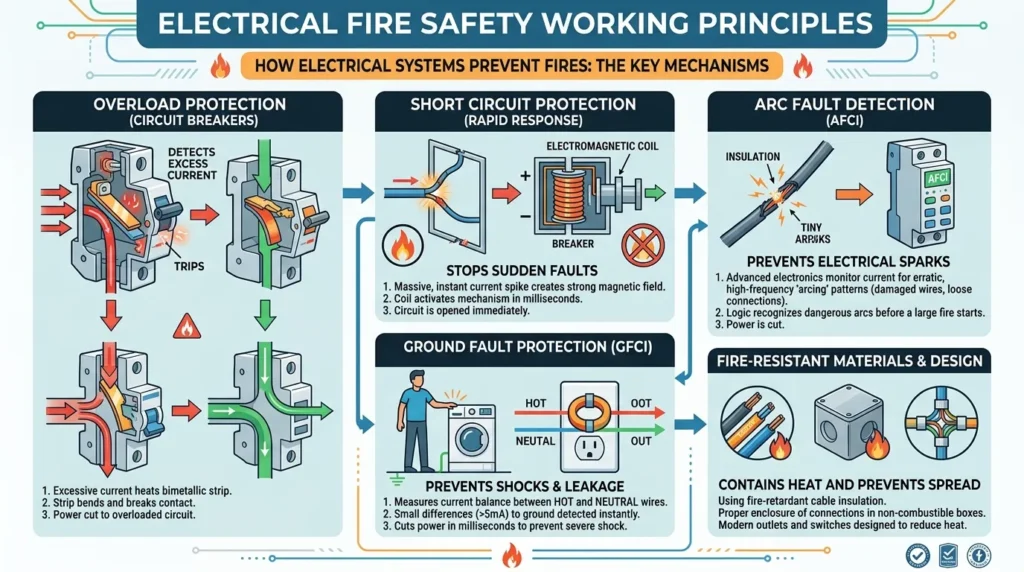
The working principle of electrical fire safety is based on preventing electrical faults from developing into dangerous fires. Electrical fire safety systems continuously monitor the flow of electricity and detect abnormal conditions such as overloads, short circuits, ground faults, overheating, or electrical arcs. When a fault is detected, protective devices such as circuit breakers, fuses, residual current devices (RCDs), arc fault detection devices (AFDDs), and smoke detectors automatically disconnect the power supply or trigger an alarm. This immediate response prevents excessive heat, sparks, and electrical arcing that could ignite nearby combustible materials. Proper grounding, insulation, and regular maintenance further improve electrical fire safety by reducing the risk of electrical failures. Together, these protective measures help safeguard people, buildings, and electrical equipment from fire hazards while ensuring the safe and reliable operation of electrical systems.
The electrical fire safety working principle is based on detecting dangerous electrical conditions early and disconnecting the power supply before overheating or sparks create a fire.
Step-by-Step Working Principle
Electrical Current Flows Normally
Under normal conditions, wires and equipment operate safely within their rated current limits.
Fault or Overload Occurs
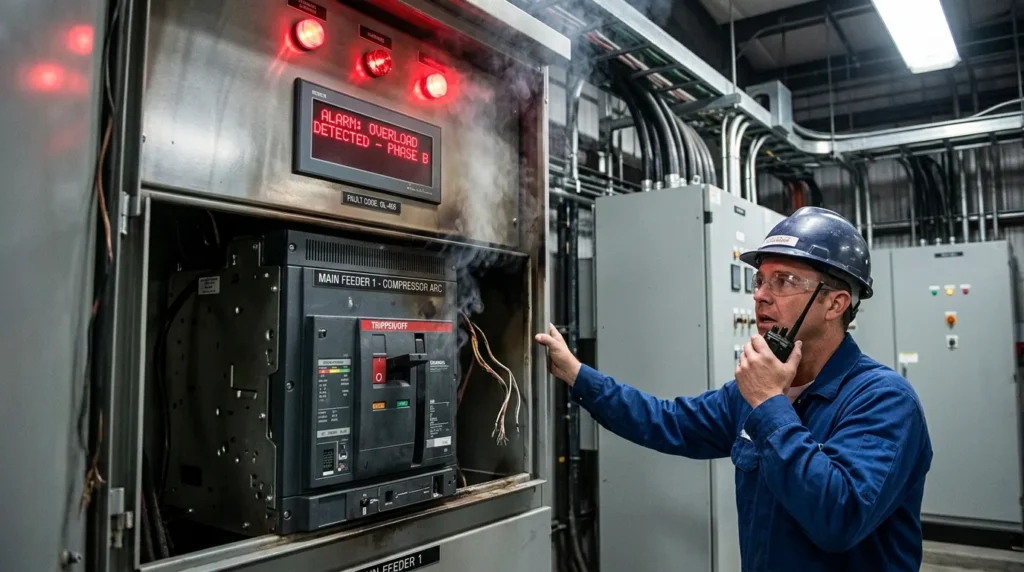
A fault or overload occurs when an electrical circuit carries more current than it is designed to handle or when an abnormal condition, such as a short circuit or ground fault, develops. During an overload, excessive current flows through wires and electrical equipment, causing them to overheat. Similarly, electrical faults can produce sparks, arcs, and high temperatures that increase the risk of equipment damage and fire. Protective devices such as fuses, circuit breakers, residual current devices (RCDs), and arc fault detection devices (AFDDs) continuously monitor the circuit. When they detect a fault or overload, they automatically disconnect the power supply, preventing further damage and ensuring the safety of people and electrical installations.
Problems may include:
- Short circuits
- Loose connections
- Overloaded sockets
- Damaged insulation
- Faulty appliances
These faults increase current flow and heat generation.
Protective Devices Detect the Problem
Safety devices monitor abnormal electrical conditions.
Examples include:
- Circuit breakers
- Fuses
- Residual current devices
- Thermal protection systems
Power Supply Disconnects
Protective devices automatically interrupt the electrical supply to stop overheating and sparks.
Fire Risk Reduces
Once power is disconnected, the electrical source feeding the fire is removed, reducing the risk of ignition.
Easy Analogy
Think of electrical fire safety like a pressure relief valve in a water system. When pressure becomes too high, the valve opens to prevent damage. Similarly, electrical protection devices disconnect power before dangerous heat causes a fire.
Types / Classification
Overload Fire Protection
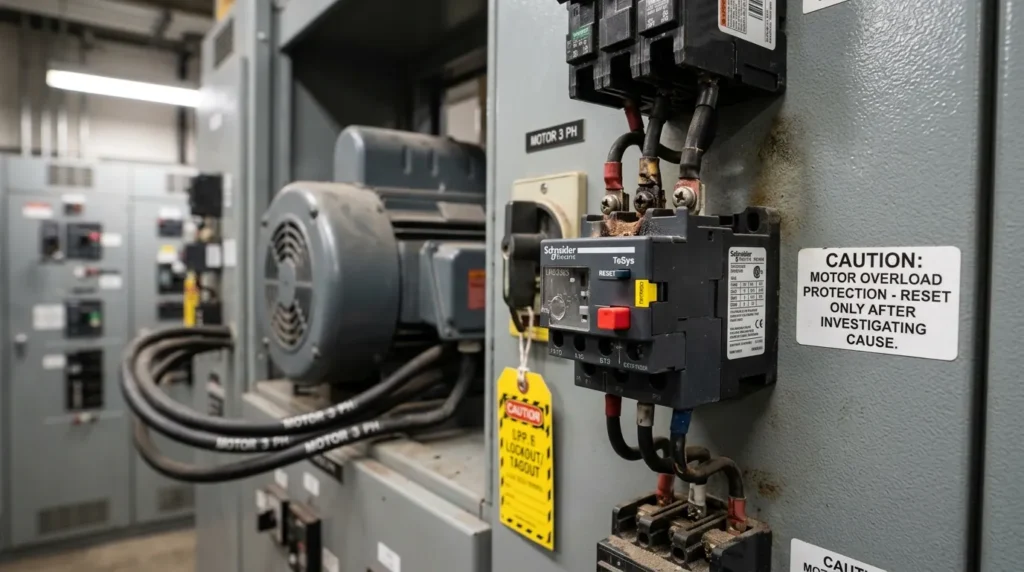
Overload fire protection is a safety mechanism designed to prevent electrical fires caused by excessive current flowing through a circuit. When electrical equipment or wiring carries more current than its rated capacity, it generates excessive heat, which can damage insulation and ignite nearby combustible materials. Protective devices such as circuit breakers, fuses, and thermal overload relays detect the abnormal increase in current and automatically disconnect the power supply before dangerous overheating occurs. This quick response protects electrical wiring, appliances, and equipment from damage while significantly reducing the risk of electrical fires. Overload fire protection is an essential feature in residential, commercial, and industrial electrical systems, ensuring safe and reliable operation.
Overload protection prevents wires from carrying more current than they can safely handle.
Common Devices
- Circuit breakers
- Thermal overload relays
- Fuses
Applications
- Home wiring
- Industrial machines
- Distribution panels
Short Circuit Protection
Short circuits occur when live and neutral wires touch directly, causing massive current flow.
Safety Methods
- Fast-acting fuses
- Magnetic circuit breakers
- Insulated wiring
Importance
Short circuit protection reduces sparking and fire hazards.
Ground Fault Protection
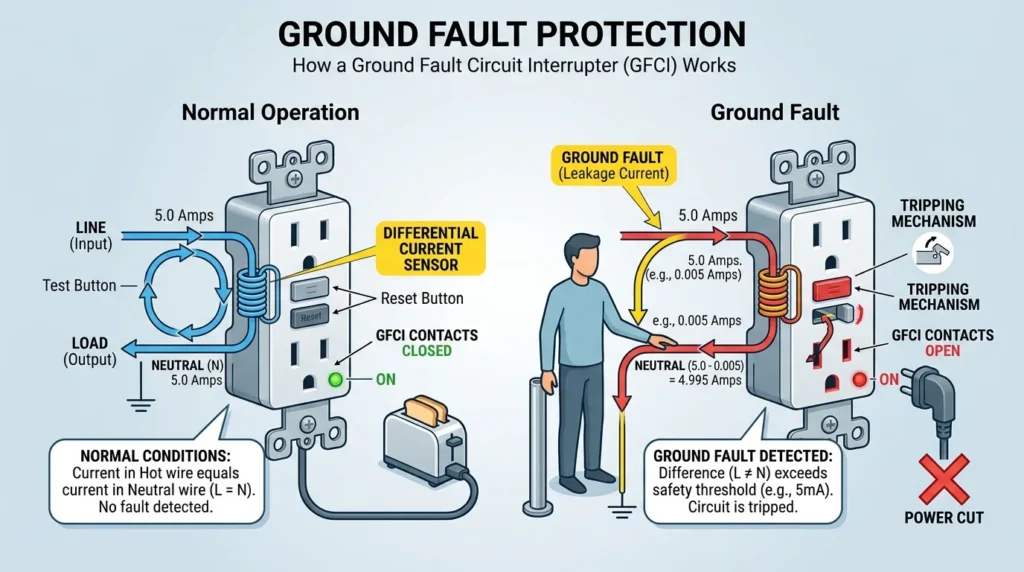
Ground fault protection is an electrical safety system that protects people and equipment from electric shock and fire caused by leakage current. A ground fault occurs when electrical current accidentally flows from a live conductor to the ground through damaged insulation, faulty equipment, or a person. Devices such as Ground Fault Circuit Interrupters (GFCIs) and Residual Current Devices (RCDs) continuously monitor the difference between the outgoing and returning current. If they detect even a small leakage current, they quickly disconnect the power supply within milliseconds. This rapid action helps prevent electric shock, reduces the risk of electrical fires, and protects electrical equipment from damage, making ground fault protection an essential feature in homes, commercial buildings, and industrial facilities.
Ground faults happen when electricity flows unintentionally to earth or metal surfaces.
Protection Devices
- Ground Fault Circuit Interrupters (GFCI)
- Earth leakage breakers
Applications
- Bathrooms
- Kitchens
- Outdoor systems
Arc Fault Protection
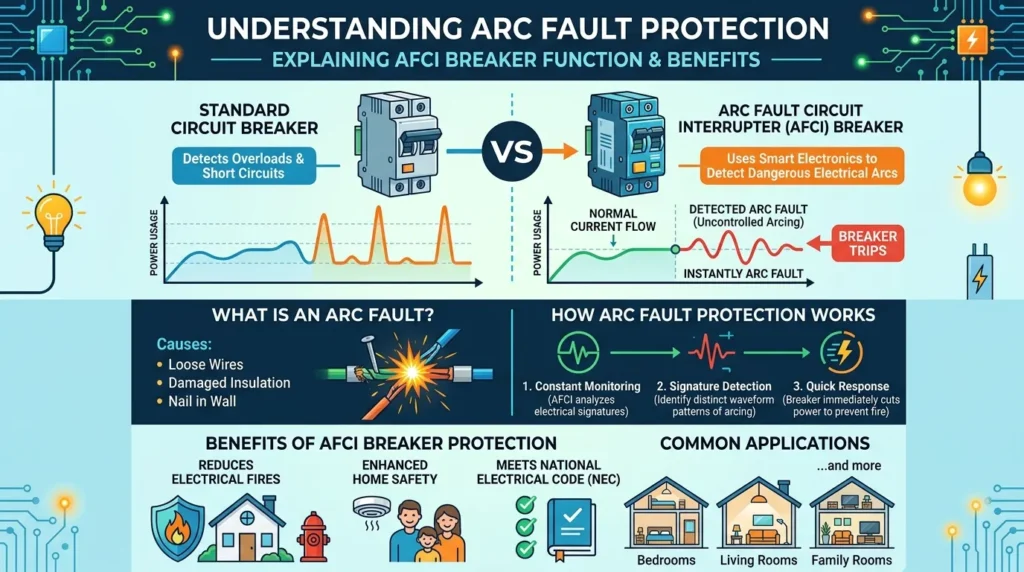
Arc fault protection is an electrical safety system designed to detect and prevent dangerous electrical arcs that can cause fires. An arc fault occurs when electricity jumps across damaged, loose, or broken wires, creating high temperatures and sparks. These electrical arcs can ignite nearby combustible materials, leading to serious fire hazards. Arc Fault Circuit Interrupters (AFCIs) continuously monitor the electrical current and identify the unique waveform produced by hazardous arcing. When an arc fault is detected, the AFCI immediately disconnects the power supply, preventing overheating, fire, and damage to electrical wiring and equipment. Arc fault protection is commonly used in residential, commercial, and industrial electrical systems to improve safety and reduce the risk of electrical fires.
Arc faults occur when damaged wiring creates electrical sparks.
Protection Devices
- Arc Fault Circuit Interrupters (AFCI)
Applications
- Bedrooms
- Residential wiring
- Commercial buildings
Main Components
Circuit Breaker
A circuit breaker automatically disconnects power during overloads or short circuits.
Function
- Protects wiring from overheating
- Prevents electrical fires
Fuse
A fuse contains a thin metal strip that melts when excessive current flows.
Function
- Stops dangerous current flow
- Provides simple fire protection
Smoke Detector
Smoke detectors identify smoke generated by overheating wires or fire.
Function
- Gives early warning
- Improves evacuation safety
Fire Extinguisher
Electrical fires require special extinguishers such as CO2 or dry chemical types.
Function
- Safely controls electrical fires
- Prevents fire spread
Insulated Wiring
Proper insulation prevents accidental contact between wires.
Function
- Reduces short circuits
- Prevents sparks
Grounding System
Grounding safely directs fault current into the earth.
Function
- Reduces electric shock risk
- Improves system safety
Advantages of Electrical Fire Safety
Understanding electrical fire safety advantages and disadvantages helps improve safety planning.
Advantages
- Prevents electrical fires
- Protects human life
- Reduces equipment damage
- Improves workplace safety
- Increases system reliability
- Minimizes repair costs
- Supports legal safety compliance
Real-World Benefits
A properly protected electrical system can stop a minor wiring fault from becoming a major building fire. Industries also avoid expensive downtime and equipment loss through proper fire protection systems.
Disadvantages / Limitations
Electrical Fire Safety Limitations
- Safety systems increase installation cost
- Requires regular maintenance
- Poor-quality devices may fail
- Some hidden wiring faults are difficult to detect
- Human negligence still causes many fires
Practical Challenges
Even advanced safety systems cannot fully prevent fires if users overload circuits, ignore damaged wiring, or bypass protective devices.
Electrical Fire Safety Applications
Home Applications
Electrical fire safety is essential in residential buildings.
Common Uses
- Circuit breaker panels
- Smoke detectors
- Safe wiring systems
- Ground fault protection
Industrial Applications
Industries use advanced fire protection because of heavy electrical loads.
- Motor protection systems
- Industrial control panels
- Emergency shutdown systems
- Transformer protection
Commercial Applications
Offices and shopping centers require reliable fire safety systems.
Uses
- Fire alarm systems
- Backup power safety
- Electrical monitoring systems
Modern Technology Applications
Modern smart systems improve electrical fire safety through:
- Smart sensors
- Wireless monitoring
- AI-based fault detection
- Remote safety alerts
Comparison Section
Understanding the difference between electrical fire protection devices helps users choose the correct system.
| Feature | Fuse | Circuit Breaker | AFCI | GFCI |
| Main Purpose | Overcurrent protection | Overload and short circuit protection | Arc fault protection | Ground fault protection |
| Reusable | No | Yes | Yes | Yes |
| Response Speed | Fast | Fast | Very fast | Very fast |
| Cost | Low | Moderate | Higher | Moderate |
| Best For | Basic protection | General electrical systems | Fire prevention | Shock prevention |
| Common Applications | Old systems | Homes and industries | Modern homes | Wet locations |
Selection Guide
How to Choose the Right Electrical Fire Safety System
Selecting the correct protection system depends on the environment, load type, and safety requirements.
For Homes
Choose:
- Circuit breakers
- Smoke detectors
- GFCI outlets
- Proper grounding
Best Practice
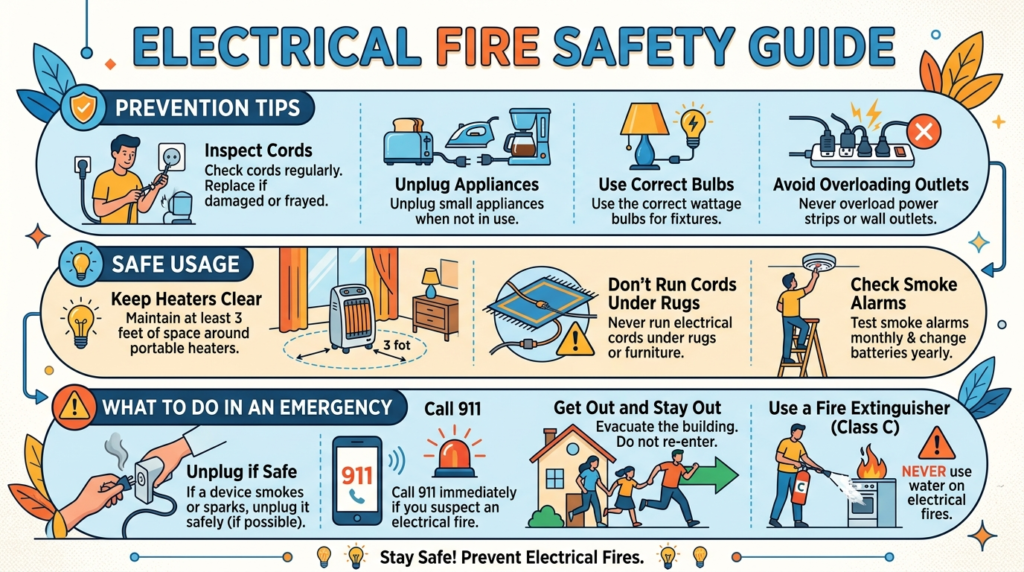
Avoid overloading extension boards and use certified electrical equipment.
For Industries
Choose:
- Heavy-duty breakers
- Thermal protection systems
- Fire alarm networks
- Emergency shutdown controls
Best Practice
Perform regular electrical inspections and preventive maintenance.
For Beginners
Important Safety Tips
- Never overload sockets
- Replace damaged wires immediately
- Use proper fuse ratings
- Avoid cheap electrical accessories
- Learn basic electrical safety rules
- Keep flammable materials away from wiring
Common Problems & Solutions
Why Do Electrical Wires Overheat?
- Excessive current
- Loose terminals
- Undersized wiring
- Reduce electrical load
- Tighten connections
- Replace wires with proper size
Why Does a Circuit Breaker Trip Frequently?
- Overloaded circuit
- Faulty appliance
- Short circuit
- Disconnect unnecessary devices
- Test appliances
- Inspect wiring carefully
Why Is There a Burning Smell From a Socket?
- Overheated wiring
- Loose contacts
- Damaged insulation
- Turn OFF power immediately
- Replace damaged socket
- Inspect surrounding wiring
Can Water Cause Electrical Fires?
Yes. Water can create short circuits and electrical leakage, increasing fire risk.
Which Fire Extinguisher Is Safe for Electrical Fires?
CO2 and dry chemical extinguishers are commonly used for electrical fires because they do not conduct electricity.
Why Are Extension Boards Dangerous?
Many people connect multiple high-power appliances to one extension board, causing overheating.
Use properly rated extension boards and avoid overloading.
Future Trends
Electrical fire safety technology continues improving rapidly.
Smart Fire Detection Systems
Modern systems use sensors to detect heat, smoke, and abnormal electrical activity in real time.
AI-Based Fault Monitoring
Artificial intelligence systems can predict electrical faults before fires occur.
Smart Circuit Breakers
Modern breakers provide remote monitoring and automatic diagnostics through mobile applications.
IoT-Based Safety Systems
Internet-connected electrical devices can send instant fire alerts to users and emergency systems.
Fire-Resistant Materials
New insulation materials improve resistance against heat and electrical sparks.
Renewable Energy Safety
Solar systems and battery storage units require advanced DC fire protection technologies.
Conclusion
This Electrical Fire Safety Guide explained the importance of preventing electrical fires through safe electrical practices, protective devices, and proper maintenance. Understanding the electrical fire safety working principle helps students, technicians, and beginners recognize how electrical faults develop and how protection systems reduce risks.
Electrical fire safety applications are essential in homes, industries, offices, and modern smart systems. Devices such as circuit breakers, fuses, smoke detectors, and grounding systems play a major role in protecting lives and property.
Although electrical fire safety systems have some limitations, proper installation, regular inspections, and responsible electrical usage greatly reduce fire hazards. Beginners should focus on learning basic safety rules and understanding common electrical risks before handling electrical equipment.
As smart technology and renewable energy systems continue growing, electrical fire protection will become even more advanced and important in the future.
.