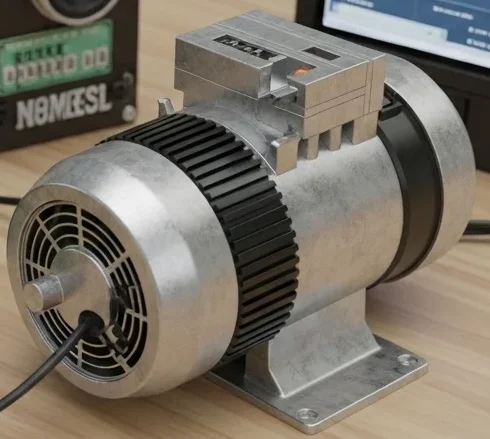

Imagine a small village using a diesel generator during a power outage. Some appliances like lights and fans work perfectly, while others like battery chargers behave differently. This happens because the type of generator—AC or DC—affects how electricity is produced and used.
In electrical engineering, generators are essential machines that convert mechanical energy into electrical energy. However, not all generators are the same. The two main types are AC generators and DC generators, and understanding their differences is very important for selecting the right system.
Learning AC Generator vs DC Generator is crucial for electrical students, engineers, technicians, and beginners. It helps in choosing suitable equipment, understanding system behavior, and improving efficiency in real-world applications.
In this article, you will learn the complete AC generator vs DC generator working principle, types, components, applications, advantages and disadvantages, and practical selection tips. By the end, you will clearly understand the difference between AC generator and DC generator and when to use each type.
2. What is AC Generator vs DC Generator?
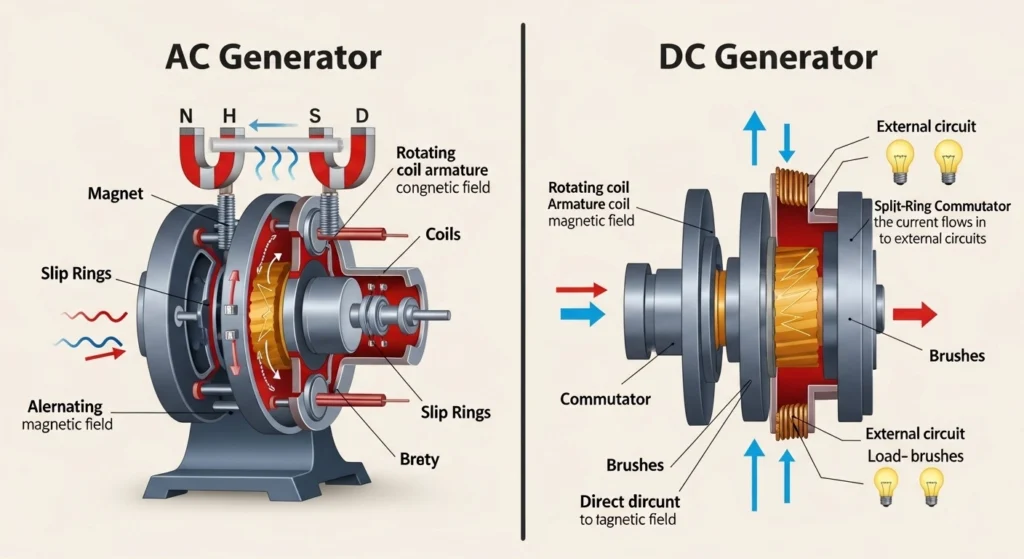
The term AC Generator vs DC Generator refers to the comparison between two types of generators based on the type of electrical output they produce.
AC Generator
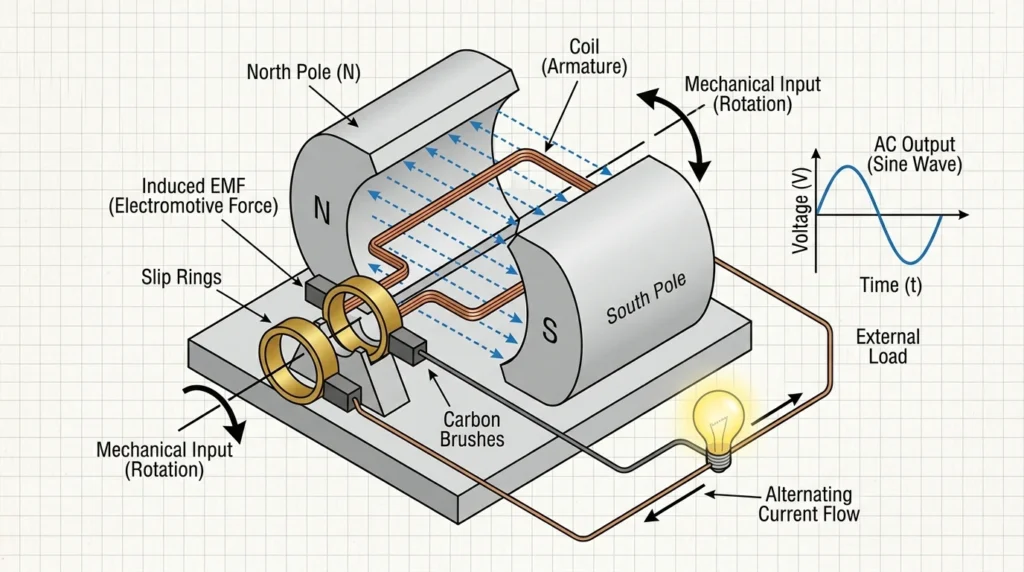
AC Generator is an electrical machine that converts mechanical energy into alternating current (AC) electrical energy through the principle of electromagnetic induction. When the rotor rotates inside a magnetic field, the magnetic flux linked with the stator windings changes continuously, inducing an alternating voltage. The generated voltage reverses its direction periodically, producing AC power. AC generators are widely used in power plants, wind turbines, diesel generators, and hydroelectric stations to supply electricity for residential, commercial, and industrial applications. Their ability to efficiently generate large amounts of electrical power makes them a vital component of modern electrical energy systems.
An AC generator produces alternating current (AC), where the direction of current changes periodically.
DC Generator
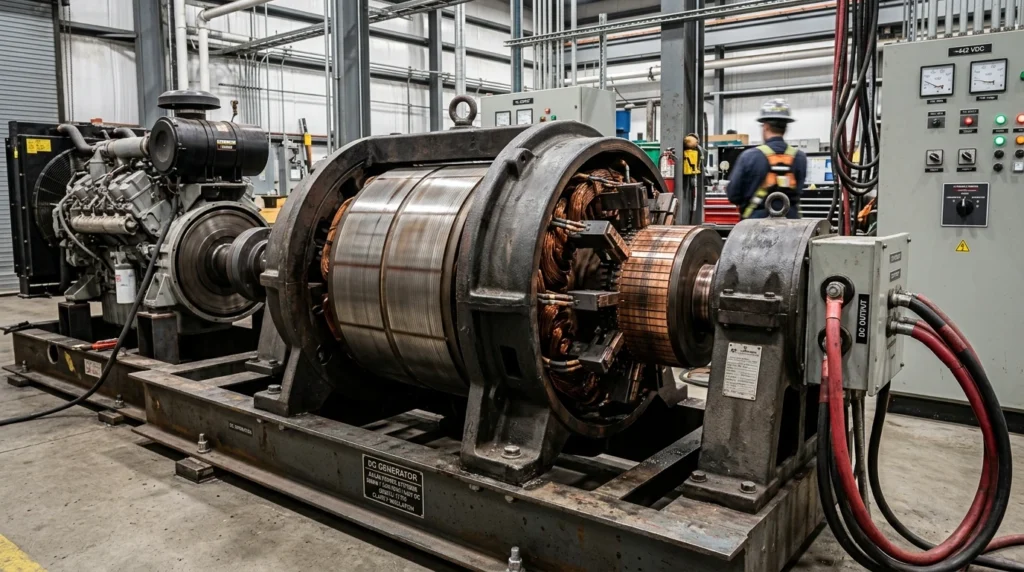
DC Generator is an electrical machine that converts mechanical energy into direct current (DC) electrical energy using the principle of electromagnetic induction. When the armature rotates within a magnetic field, an electromotive force (EMF) is induced in its conductors. A commutator is used to convert the internally generated alternating current into direct current at the output terminals. DC generators were traditionally used for battery charging, electroplating, welding, and DC power supply systems. Although they have largely been replaced by modern power electronic converters and alternators, DC generators are still important for understanding the fundamentals of electrical energy generation and electromagnetic induction.
A DC generator produces direct current (DC), where the current flows in one direction only.
Simple Explanation
- AC generator → changing current
- DC generator → constant current
Practical Example
- Power plants use AC generators
- Battery charging systems may use DC generators
3. Working Principle
The AC generator vs DC generator working principle is based on electromagnetic induction, but their output methods differ.
Step-by-Step Working (Common Concept)
- Mechanical energy rotates the rotor
- Magnetic field interacts with conductors
- Voltage is induced in windings
- Electrical energy is generated
Key Difference
- AC generator uses slip rings
- DC generator uses commutator
EMF Equation
E = N \frac{d\Phi}{dt}
Easy Analogy
Think of water flow:
- AC generator → water flows back and forth
- DC generator → water flows in one direction
4. Types / Classification
AC Generator Types
Synchronous Generator
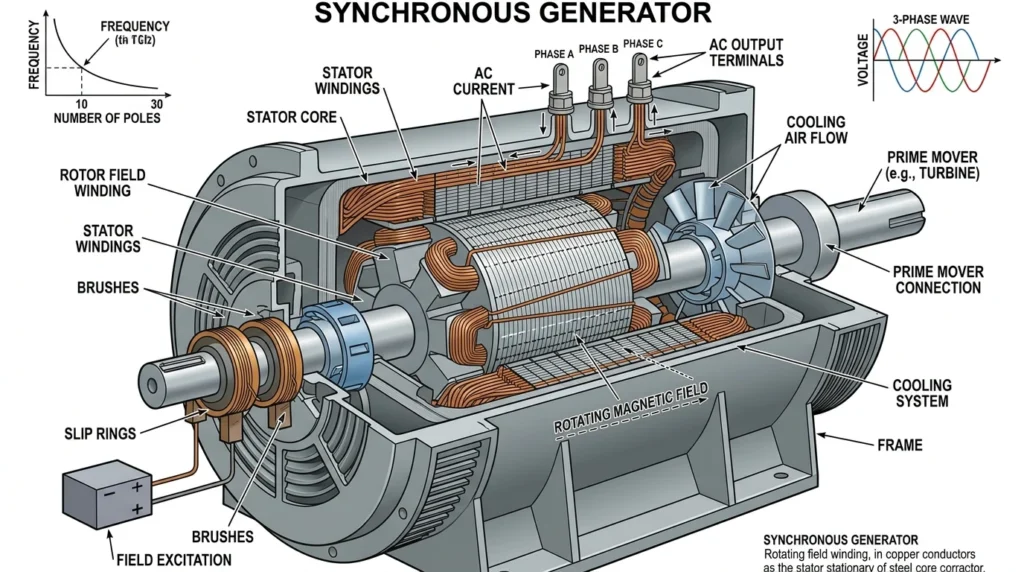
Synchronous Generator is an AC generator that produces electrical power when its rotor rotates at a speed synchronized with the frequency of the generated voltage. It operates on the principle of electromagnetic induction, where a rotating magnetic field created by the rotor cuts the stator windings and induces an alternating voltage. The rotor is usually excited by a DC supply, which creates the necessary magnetic field for power generation. Synchronous generators are widely used in thermal, hydroelectric, nuclear, and wind power plants because they can generate electricity at a constant frequency and voltage. Their high efficiency, reliable operation, and ability to supply large amounts of electrical power make them essential components of modern power generation systems.
- Constant speed
- Used in power plants
Induction Generator
- Used in wind energy systems
DC Generator Types
Series Generator
- Field winding in series
Shunt Generator
- Field winding in parallel
Compound Generator
- Combination of series and shunt
5. Main Components
Components of AC Generator
- Rotor → rotating magnetic field
- Stator → stationary windings
- Slip rings → transfer current
- Shaft → mechanical input
Components of DC Generator
- Armature → generates voltage
- Commutator → converts AC to DC
- Brushes → transfer current
- Field windings → produce magnetic field
6. Advantages
AC Generator Advantages
- High efficiency
- Low maintenance
- Simple design
- Suitable for long-distance transmission
DC Generator Advantages
- Provides stable DC output
- Easy speed control
- Useful for battery charging
- Better for low-voltage applications
7. Disadvantages / Limitations
AC Generator Disadvantages
- Requires conversion for DC use
- Complex control systems
DC Generator Disadvantages
- High maintenance due to brushes
- Lower efficiency
- Limited capacity
8. Applications
AC Generator Applications
Home & Utility
- Power supply systems
- Grid electricity
Industrial
- Power plants
- Heavy machinery
Modern Technology
- Wind turbines
- Hydroelectric plants
DC Generator Applications
Home & Small Systems
- Battery charging
- Small generators
Industrial
- Electroplating
- DC motors
Modern Technology
- Backup systems
- Specialized equipment
9. Comparison Section
Difference Between AC Generator and DC Generator
| Feature | AC Generator | DC Generator |
| Output | Alternating current | Direct current |
| Components | Slip rings | Commutator |
| Efficiency | Higher | Lower |
| Maintenance | Low | High |
| Application | Power plants | Battery systems |
| Cost | Lower | Higher |
10. Selection Guide
Choosing between AC and DC generators depends on application.
Tips for Beginners
- For general power supply → AC generator
- For battery systems → DC generator
Key Factors to Consider
- Type of load
- Power requirement
- Efficiency
- Maintenance needs
- Cost
Practical Advice
- Use AC generators for large systems
- Use DC generators for specialized applications
- Always match generator type with load
11. Common Problems & SolutionsWhy generator output is unstable?
Speed variation.
Maintain constant speed.
Why DC generator sparks?
Worn brushes.
Replace brushes.
Why AC generator overheats?
Overloading.
Reduce load.
Why output voltage is low?
Weak magnetic field.
Check excitation system.
Which generator is better?
Depends on application.
12. Future Trends
Generators are evolving with modern technology.
Key Trends
- Brushless Generators
- Smart Control Systems
- Renewable Energy Integration
- High-Efficiency Designs
- Compact and Lightweight Systems
Future systems will focus on efficiency, automation, and sustainability.
13. Conclusion
Understanding AC Generator vs DC Generator is essential for selecting the right power generation system. Both types operate on electromagnetic induction but differ in output type, design, and applications.
By learning the AC generator vs DC generator working principle, types, and comparison, you can make better decisions in real-world systems. AC generators are widely used due to their efficiency and low maintenance, while DC generators are useful for specific applications requiring direct current.
As technology advances, both types continue to improve in efficiency and performance. Focus on practical applications to build strong expertise in electrical machines.


Pingback: 10 Synonyms for Generate (With Meanings & Examples)