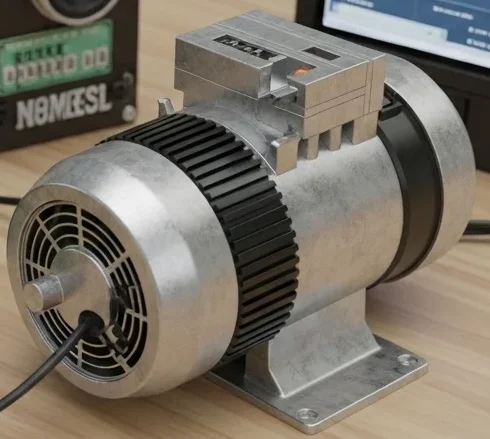

Imagine opening a modern ceiling fan or an electric drone. You notice that it runs smoothly, quietly, and with very little heat. Unlike old motors, there are no brushes inside making contact or sparking. This is possible because of a technology called the Brushless DC Motor (BLDC motor).
The Brushless DC Motor explained concept is very important for anyone working in electrical engineering, automation, robotics, or electronics. These motors are now widely used in electric vehicles, drones, home appliances, and industrial machines due to their high efficiency and long life.
Understanding how a BLDC motor works helps students and engineers design better systems, troubleshoot issues, and improve performance in modern applications.
In this article, you will learn what a brushless DC motor is, how it works, its types, components, advantages and disadvantages, real-world applications, and how it compares with traditional motors. By the end, you will have a clear and practical understanding of this important modern motor technology.
2. What is Brushless DC Motor?
Definition
A Brushless DC Motor (BLDC motor) is an electric motor that operates using direct current (DC) without using mechanical brushes for commutation.
Simple Explanation
In simple terms:
- It is a motor that runs on DC supply
- It does not use brushes like traditional motors
- Instead, it uses electronic control for switching current
Practical Example
You will find BLDC motors in:
- Electric scooters
- Computer cooling fans
- Drones
- Washing machines
They are preferred because they are efficient and require less maintenance.
3. Working Principle
Brushless DC Motor Working Principle
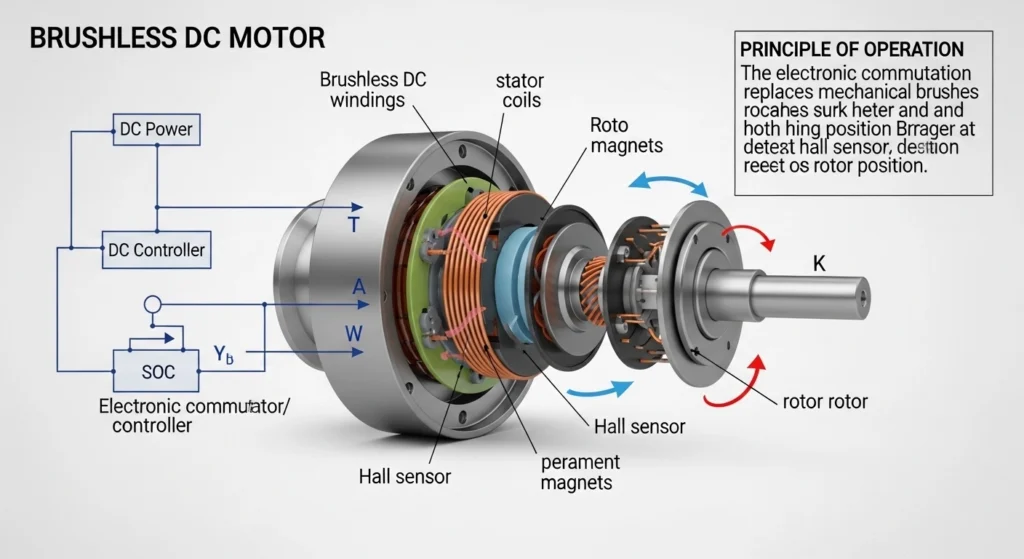
The brushless DC motor working principle is based on electronic commutation and magnetic interaction.
Step-by-Step Explanation
- DC power is supplied to an electronic controller
- The controller sends current to motor windings in sequence
- This creates a rotating magnetic field
- The rotor (with permanent magnets) follows this field
- Continuous switching keeps the rotor spinning
Easy Analogy
Think of a BLDC motor like a rotating dance floor:
- The lights (magnetic field) move in a circle
- The dancer (rotor) follows the lights
- Electronic controller acts like the DJ controlling the lights
Key Points
- No physical contact for switching
- Electronic control replaces brushes
- Rotation is smooth and efficient
4. Types / Classification
Types of Brushless DC Motors
Inner Rotor BLDC Motor
- Rotor is inside the stator
- Common in fans and electric vehicles
- High speed and efficiency
Outer Rotor BLDC Motor
- Rotor is outside the stator
- Used in ceiling fans and drones
- Provides higher torque at low speed
Sensored BLDC Motor
- Uses sensors to detect rotor position
- Provides precise control
- Used in robotics and EVs
Sensorless BLDC Motor
- Does not use physical sensors
- Uses back EMF signals
- Lower cost and simpler design
5. Main Components
Key Components of Brushless DC Motor
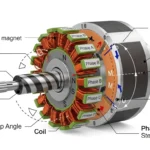
Stator
- Stationary part
- Contains copper windings
- Creates magnetic field
Rotor
- Rotating part
- Contains permanent magnets
- Produces mechanical motion
Electronic Controller
- Controls current switching
- Replaces mechanical brushes
- Ensures proper timing
Hall Sensors (optional)
- Detect rotor position
- Improve control accuracy
Power Supply
- Provides DC energy
- Feeds the controller
6. Advantages
Brushless DC Motor Advantages and Disadvantages (Benefits)
- High efficiency
- Long lifespan
- Low maintenance
- No brush wear and tear
- Quiet operation
- Better speed control
- High torque-to-weight ratio
- Less heat generation
7. Disadvantages / Limitations
Brushless DC Motor Disadvantages
- Higher initial cost
- Requires electronic controller
- Complex design
- Difficult to repair without expertise
- Sensitive to control failures
- Requires precise electronics
8. Applications
Brushless DC Motor Applications
Home Applications
- Ceiling fans
- Air conditioners
- Washing machines
- Vacuum cleaners
Industrial Applications
- Robotics
- CNC machines
- Conveyor systems
- Automation systems
Modern Technology
- Electric vehicles (EVs)
- Drones
- Computer cooling fans
- Aerospace systems
BLDC motors are widely used in modern high-efficiency systems.
9. Comparison Section
Difference Between Brushless DC Motor and Brushed DC Motor
| Feature | BLDC Motor | Brushed DC Motor |
| Brushes | No | Yes |
| Efficiency | High | Lower |
| Maintenance | Low | High |
| Lifespan | Long | Short |
| Noise | Low | Higher |
| Cost | Higher | Lower |
| Control | Electronic | Mechanical |
10. Selection Guide
How to Choose a Brushless DC Motor
Key Factors
- Required speed
- Load torque
- Power rating
- Control system type
- Application environment
Tips for Beginners
- Choose sensored motors for precise control
- Use sensorless motors for simple applications
- Always match controller with motor rating
- Check cooling requirements
- Consider efficiency over cost
11. Common Problems & Solutions
Why is my BLDC motor not starting?
Check power supply and controller connections.
Why does the motor vibrate?
Incorrect timing or faulty controller signals.
Can BLDC motors run without a controller?
No, they require electronic commutation.
Why is BLDC motor expensive?
Due to advanced electronics and permanent magnets.
How to increase motor life?
Use proper load, cooling, and quality controller.
12. Future Trends
The future of BLDC motors is very promising:
- Electric Vehicles Expansion
- Smart Motor Controllers with AI
- Higher Efficiency Designs
- Miniaturization for compact devices
- Integration with IoT systems
BLDC motors will dominate modern electric drive systems due to efficiency and control precision.
13. Conclusion
The Brushless DC Motor explained concept shows how modern motor technology has evolved from traditional brushed systems to advanced electronic control systems. BLDC motors offer high efficiency, long life, and low maintenance, making them ideal for electric vehicles, drones, and industrial automation.
Understanding their working principle, components, and applications helps engineers and students design better and more efficient systems. Although they are more expensive and complex, their performance advantages make them essential in modern technology.
As industries move toward energy efficiency and automation, BLDC motors will continue to play a key role in shaping the future of electrical and mechanical systems.