
Imagine a workshop where multiple machines are running from a single overloaded extension board. Suddenly, sparks appear, followed by smoke and a small fire. This situation is not rare—it is a direct result of poor electrical practices and unsafe conditions. These are known as electrical hazards, and they can lead to serious accidents.
Understanding the causes of electrical hazards is essential for anyone working with electricity. Whether you are a student, technician, or engineer, recognizing these causes helps you prevent injuries, equipment damage, and costly failures.
Electricity is powerful and useful, but it becomes dangerous when not handled properly. Many accidents happen not because of complex failures, but due to simple mistakes like loose wiring, overloading, or lack of maintenance.
In this article, you will learn the causes of electrical hazards, their working principle, types, real-world applications of safety measures, and practical solutions. By the end, you will be able to identify risks and take effective steps to ensure a safe electrical environment.
2. What is Causes of Electrical Hazards?
Definition
The causes of electrical hazards refer to the conditions or actions that can lead to dangerous situations involving electricity, such as shocks, fires, or equipment damage.
Simple Explanation
Electrical hazards occur when:
- Electrical systems are faulty
- Safety measures are ignored
- Equipment is misused
Practical Example
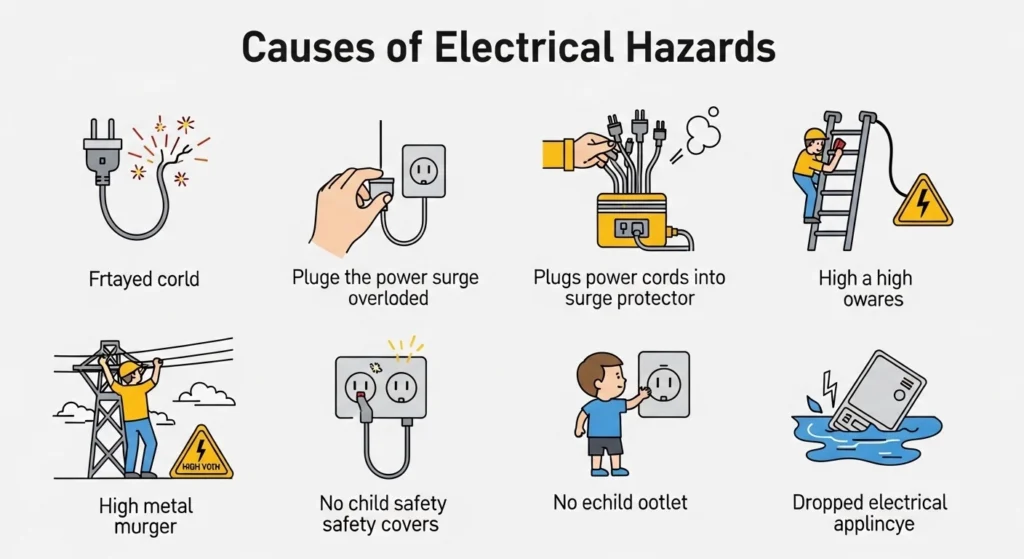
Using damaged wires with exposed conductors can cause electric shock or fire. This is a common electrical hazard caused by poor maintenance.
3. Working Principle
Causes of Electrical Hazards Working Principle
The causes of electrical hazards working principle is based on uncontrolled or unsafe flow of electrical current.
Step-by-Step Explanation
- Electricity flows through conductors under normal conditions
- Faults or damage create unintended paths
- Current flows through unsafe paths (human body or surroundings)
- Heat or sparks may be generated
- This leads to shock, fire, or equipment failure
Easy Analogy
Think of electricity like water in a pipe:
- Proper pipe → safe flow
- Broken pipe → leakage and damage
Electrical hazards occur when the “pipe” (system) is damaged or misused.
Key Points
- Electricity always seeks the easiest path
- Unsafe paths lead to hazards
- Protection systems are required to control flow
4. Types / Classification
Types of Causes of Electrical Hazards
Faulty Wiring
- Poor installation or aging wires
- Loose connections
- Exposed conductors
Effect: Shock and fire risk
Overloading
- Too many devices connected to one circuit
- Excess current flow
Effect: Overheating and fire
Poor Insulation
- Damaged or worn-out insulation
- Exposure of live parts
Effect: Electric shock
Moisture and Water
- Wet conditions reduce resistance
- Increase current flow
Effect: Severe shock risk
Lack of Earthing
- No safe path for fault current
- Current flows through body
Effect: High shock risk
Equipment Failure
- Defective appliances
- Internal faults
Effect: Unexpected hazards
Human Error
- Carelessness or lack of training
- Ignoring safety rules
Effect: Major cause of accidents
Improper Use of Tools
- Using non-insulated tools
- Using wrong equipment
Effect: Shock and injury
5. Main Components
Components Involved in Electrical Hazards
Power Source
- Supplies electrical energy
- Can be dangerous if uncontrolled
Conductors
- Carry current
- Faults here cause hazards
Insulation
- Prevents leakage
- Failure leads to exposure
Protective Devices
- Circuit breakers, fuses
- Reduce hazard risk
Environment
- Wet or dusty conditions
- Increase hazard probability
6. Advantages
Causes of Electrical Hazards Advantages and Disadvantages (Learning Perspective)
Understanding causes of electrical hazards has benefits:
- Helps identify risk factors
- Improves safety awareness
- Reduces accidents
- Supports better system design
- Helps in training and education
- Improves maintenance practices
7. Disadvantages / Limitations
Causes of Electrical Hazards Disadvantages
- Can lead to serious injuries
- Risk of fire and explosion
- Equipment damage
- Financial loss
- System downtime
- May cause fatalities
8. Applications
Causes of Electrical Hazards Applications (Safety Use)
Home Applications
- Safe wiring practices
- Use of circuit breakers
- Proper appliance handling
Industrial Applications
- Safety audits
- Risk assessment
- Maintenance planning
Modern Technology
- Smart monitoring systems
- Fault detection devices
- Automated safety controls
Understanding hazards helps improve safety in all these areas.
9. Comparison Section
Difference Between Electrical Hazards and Electrical Risks
| Feature | Electrical Hazards | Electrical Risks |
| Definition | Source of danger | Chance of harm |
| Nature | Physical condition | Probability |
| Example | Exposed wire | Chance of shock |
| Control | Remove hazard | Reduce risk |
| Focus | Safety condition | Safety management |
10. Selection Guide
How to Prevent Electrical Hazards
Key Safety Measures
- Regular inspection of wiring
- Avoid overloading circuits
- Use proper insulation
- Ensure proper earthing
- Install protective devices
Tips for Beginners
- Never ignore damaged wires
- Avoid using electrical devices in wet areas
- Use certified equipment
- Follow safety instructions
- Learn basic electrical safety
Practical Advice
Prevention starts with awareness and proper habits.
11. Common Problems & SolutionsWhat is the most common cause of electrical hazards?
Faulty wiring and human error.
How does overloading cause hazards?
It increases current, causing overheating and possible fire.
Why is earthing important?
It provides a safe path for fault current, reducing shock risk.
How to reduce electrical hazards at home?
Use proper wiring, avoid overloading, and install safety devices.
What role does maintenance play?
Regular maintenance prevents faults and reduces hazards.
12. Future Trends
Electrical safety is improving with advanced technology.
- Smart Sensors: Detect faults instantly
- AI-Based Monitoring: Predict hazards
- Advanced Insulation Materials
- IoT Safety Systems
- Automatic Shutdown Devices
These innovations will reduce electrical hazards significantly.
13. Conclusion
Understanding the causes of electrical hazards is essential for maintaining a safe electrical environment. Most hazards occur due to simple issues like faulty wiring, overloading, poor insulation, and human error.
By learning the causes of electrical hazards working principle and applying proper safety measures, you can prevent accidents and protect both people and equipment. Awareness, regular maintenance, and correct practices are the key to safety.
As a student or professional, always stay alert and follow safety guidelines. Electrical hazards can be dangerous, but with the right knowledge and precautions, they can be effectively controlled and prevented.