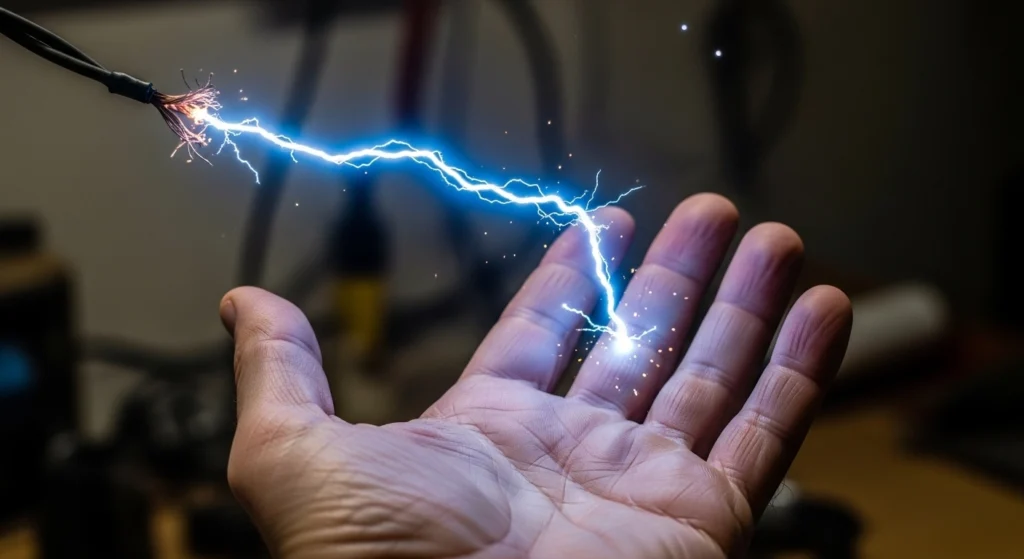

Imagine a technician touching a damaged wire while repairing a switchboard. In a split second, his body stiffens, and he feels a sudden jolt of energy passing through him. This is not just a minor incident—it is an electrical shock, and it can be dangerous or even fatal.
Electricity is essential in our daily lives, powering homes, industries, and modern technology. However, when it is not handled properly, it becomes a serious hazard. Understanding what is electrical shock is critical for students, engineers, technicians, and beginners who work with electrical systems.
In this article, you will learn the electrical shock working principle, its types, causes, effects, and safety measures. We will also cover electrical shock applications (in controlled environments), advantages and disadvantages (in learning and testing contexts), and practical troubleshooting tips. By the end, you will have a clear understanding of how electrical shock occurs and how to prevent it effectively.
2. What is Electrical Shock?
Definition
Electrical shock is a condition that occurs when electric current passes through the human body, causing harmful effects ranging from mild tingling to severe injury or death.
Simple Explanation
- The human body conducts electricity
- When it comes into contact with a live source, current flows through it
- This flow interferes with normal body functions
Practical Example
If you touch a live wire with wet hands, electricity can pass through your body to the ground, causing a shock.
Key Idea
Electrical shock happens when your body becomes part of an electrical circuit.
3. Working Principle
Electrical Shock Working Principle
The electrical shock working principle is based on current flow through the body due to voltage difference.
Step-by-Step Explanation
- A voltage source exists (e.g., live wire)
- The human body touches the source
- The body provides a path to ground
- Current flows through the body
- The flow affects muscles, nerves, and organs
Key Factors Affecting Shock
- Voltage level
- Body resistance (dry or wet skin)
- Current path through body
- Duration of contact
Easy Analogy
Think of electricity like water:
- If there is a pressure difference → water flows
- Similarly, voltage difference causes current to flow through the body
Important Points
- Even small currents can be dangerous
- Higher current increases severity
- Longer exposure increases damage
4. Types / Classification
Types of Electrical Shock
Low Voltage Shock
- Voltage below 1000V
- Common in homes
- Can still be dangerous
High Voltage Shock
- Voltage above 1000V
- Found in industrial systems
- Extremely dangerous and often fatal
Static Shock
- Caused by buildup of static electricity
- Usually harmless
- Example: Touching metal after walking on carpet
Direct Contact Shock
- Occurs when touching a live conductor directly
Indirect Contact Shock
- Occurs when touching a faulty appliance or metal surface
5. Main Components
Components Involved in Electrical Shock
Voltage Source
- Provides electrical energy
- Example: Power supply, battery
Conductive Path
- Allows current to flow
- Human body acts as conductor
Ground/Earth
- Completes the circuit
- Enables current flow
Contact Points
- Entry and exit points of current
- Affect severity of injury
Body Resistance
- Determines how much current flows
- Wet skin = low resistance = higher risk
6. Advantages
Electrical Shock Advantages and Disadvantages (Contextual Learning)
Electrical shock itself is dangerous, but understanding it has some benefits:
- Helps improve safety awareness
- Guides design of protective systems
- Assists in training and education
- Helps engineers develop safer equipment
- Used in controlled medical applications (like defibrillators)
7. Disadvantages / Limitations
Electrical Shock Disadvantages
- Can cause severe injury or death
- Damages internal organs
- Causes burns and nerve damage
- May lead to cardiac arrest
- Can result in long-term health issues
- High risk in wet or unsafe environments
8. Applications
Electrical Shock Applications (Controlled Use)
Medical Applications
- Defibrillators use controlled shock to restore heart rhythm
Industrial Applications
- Testing insulation and safety systems
Training and Safety Awareness
- Demonstrations to educate workers
Important Note
Electrical shock is not used as a benefit in normal conditions—it is mainly studied for prevention and control.
9. Comparison Section
Difference Between Electrical Shock and Electrical Burn
| Feature | Electrical Shock | Electrical Burn |
| Definition | Current passing through body | Tissue damage due to heat |
| Cause | Contact with live source | High current or arc |
| Effect | Nerve and muscle impact | Skin and tissue damage |
| Severity | Can affect heart | Can damage skin deeply |
| Visibility | Sometimes invisible | Visible burns |
10. Selection Guide
How to Prevent Electrical Shock
Key Safety Measures
- Use proper insulation
- Ensure proper earthing
- Install circuit breakers and RCDs
- Avoid wet conditions
- Use protective equipment
Tips for Beginners
- Never touch exposed wires
- Always switch off power before work
- Use insulated tools
- Follow safety rules strictly
- Learn basic electrical safety
Practical Advice
Prevention is always better than dealing with shock consequences.
11. Common Problems & Solutions
What causes electrical shock?
Contact with a live electrical source and a path to ground.
Why is water dangerous with electricity?
Water reduces body resistance, allowing more current to flow.
How to avoid electrical shock?
Use insulation, proper grounding, and safety devices.
What should you do if someone gets shocked?
Turn off power immediately and seek medical help.
Can low voltage cause shock?
Yes, even low voltage can be dangerous under certain conditions.
12. Future Trends
Electrical safety is improving with modern technology.
- Smart Sensors: Detect leakage current instantly
- Advanced Protective Devices: Faster circuit breakers
- Wearable Safety Gear: Alerts workers to danger
- AI-Based Monitoring Systems
- Improved insulation materials
These innovations aim to reduce electrical shock incidents.
13. Conclusion
Understanding what is electrical shock is essential for anyone working with electricity. Electrical shock occurs when current flows through the body, affecting muscles, nerves, and vital organs.
By learning the electrical shock working principle, types, causes, and prevention methods, you can significantly reduce risks. Safety practices like proper insulation, grounding, and use of protective devices are critical.
As an electrical student or professional, always prioritize safety. A strong understanding of electrical shock and its prevention will protect lives and ensure safe working environments. Keep learning and practicing safe electrical habits at all times.