
Imagine a technician repairing a distribution board without turning off the power. Within seconds, a small mistake leads to a severe electric shock. Incidents like this happen more often than people think, and many of them are preventable. This is where the importance of electrical safety becomes clear.
Electricity is a powerful and essential part of modern life. It runs our homes, industries, and technology. But if not handled properly, it can cause serious injuries, fires, and even fatalities. That is why understanding and applying electrical safety is not optional—it is a basic responsibility for anyone working with or around electrical systems.
In this article, you will learn what electrical safety means, how it works, and why it is so important. We will also cover types of safety practices, key components, advantages and disadvantages, real-world applications, and practical tips. By the end, you will have the knowledge needed to work safely and confidently in electrical environments.
2. What is Importance of Electrical Safety?
Definition
The importance of electrical safety refers to the need to follow proper precautions and practices to prevent electrical hazards such as shocks, burns, fires, and equipment damage.
Simple Explanation
Electrical safety means:
- Using electricity in a safe way
- Protecting people from electric shock
- Preventing damage to equipment and property
Practical Example
When you use insulated tools, switch off power before repair, or use proper earthing, you are applying electrical safety practices.
3. Working Principle
Electrical Safety Working Principle
The electrical safety working principle is based on controlling electrical energy and preventing it from causing harm.
Step-by-Step Explanation
- Identify possible electrical hazards
- Use insulation to block current flow
- Provide earthing to direct fault current safely
- Install protective devices like circuit breakers
- Disconnect power during faults
- Follow safe working procedures
Easy Analogy
Think of electricity like water in a pipe:
- If the pipe is strong and controlled → safe flow
- If the pipe leaks or bursts → damage occurs
Electrical safety ensures the “pipe” (system) is secure.
Key Points
- Electricity follows the easiest path
- Safety systems control that path
- Protection devices act quickly during faults
4. Types / Classification
Types of Electrical Safety Measures
Personal Safety
- Focuses on protecting individuals
- Includes protective equipment and safe behavior
Examples:
- Wearing gloves
- Using insulated tools
Equipment Safety
- Protects electrical devices from damage
- Ensures proper functioning
Examples:
- Proper wiring
- Overload protection
Installation Safety
- Ensures safe design and setup of electrical systems
Examples:
- Correct earthing
- Proper cable sizing
4. Operational Safety
- Safe handling during operation and maintenance
Examples:
- Lockout/tagout procedures
- Switching off power before work
Fire Safety
- Prevents electrical fires
Examples:
- Avoiding overload
- Using proper fuses
5. Main Components
Key Components of Electrical Safety
Insulation
- Prevents current leakage
- Covers wires and conductors
Earthing (Grounding)
- Provides safe path for fault current
- Reduces shock risk
Circuit Breakers
- Automatically disconnect power during faults
Fuses
- Melt and break the circuit when current is too high
Residual Current Devices (RCD)
- Detect leakage current
- Protect against electric shock
Protective Equipment (PPE)
- Gloves, helmets, safety shoes
- Protect workers from hazards
6. Advantages
Electrical Safety Advantages and Disadvantages (Focus on Advantages)
- Protects human life from electric shock
- Prevents fire hazards
- Reduces equipment damage
- Improves system reliability
- Ensures smooth operation
- Reduces maintenance costs
- Builds confidence in working environment
7. Disadvantages / Limitations
Electrical Safety Disadvantages
- Requires proper training and awareness
- Initial cost for safety equipment
- Regular maintenance needed
- Negligence can still cause accidents
- Overconfidence may lead to unsafe practices
8. Applications
Electrical Safety Applications
Home Applications
- Safe wiring systems
- Proper use of appliances
- Child safety measures
Industrial Applications
- Machine protection
- Worker safety
- High-voltage system control
Modern Technology
- Data centers
- Renewable energy systems
- Electric vehicles
- Smart homes
Electrical safety is applied everywhere electricity is used.
9. Comparison Section
Difference Between Electrical Safety and Electrical Protection
| Feature | Electrical Safety | Electrical Protection |
| Focus | Human safety | System safety |
| Purpose | Prevent accidents | Prevent damage |
| Examples | PPE, training | Circuit breakers, relays |
| Scope | Broad | Specific |
| Application | All environments | Electrical systems |
10. Selection Guide
How to Apply Electrical Safety Correctly
Key Factors
- Type of work (home, industrial)
- Voltage level
- Environment conditions
- Skill level of workers
Tips for Beginners
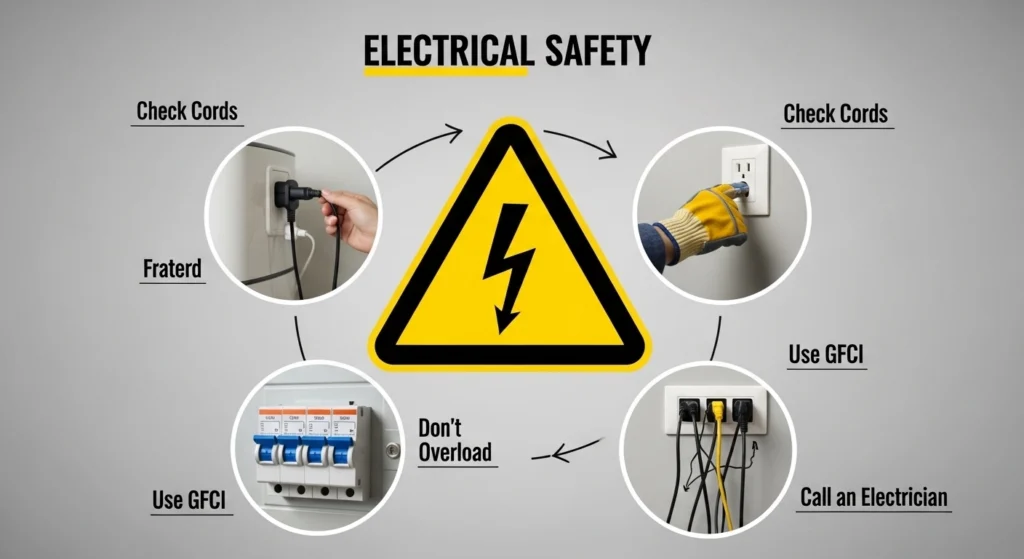
- Always switch off power before working
- Use proper tools and equipment
- Never touch live wires
- Follow safety standards
- Get proper training
Practical Advice
- Start with basic safety rules
- Gradually learn advanced protection systems
- Always double-check before working
11. Common Problems & Solutions
Why do electrical accidents happen?
Due to negligence, lack of training, or faulty equipment.
How to prevent electric shock?
Use insulation, proper earthing, and avoid contact with live parts.
What is the most common safety mistake?
Working on live circuits without switching off power.
How to improve electrical safety?
Regular inspection, training, and using protective devices.
Why is PPE important?
It provides an extra layer of protection against electrical hazards.
12. Future Trends
Electrical safety is improving with new technologies.
- Smart Protection Devices: Automatic fault detection
- IoT-Based Monitoring: Real-time safety alerts
- Advanced Insulation Materials
- AI-Based Risk Detection
- Improved Safety Standards
Future systems will be safer, smarter, and more reliable.
13. Conclusion
The importance of electrical safety cannot be ignored in any electrical system. It protects lives, prevents accidents, and ensures reliable operation of equipment. From simple home wiring to complex industrial systems, safety practices play a critical role.
By understanding electrical safety working principle, applications, and best practices, you can reduce risks and work confidently. Always follow proper procedures, use the right tools, and never compromise on safety.
As a student or professional, developing a strong safety mindset will not only protect you but also those around you. Make safety your priority in every electrical task