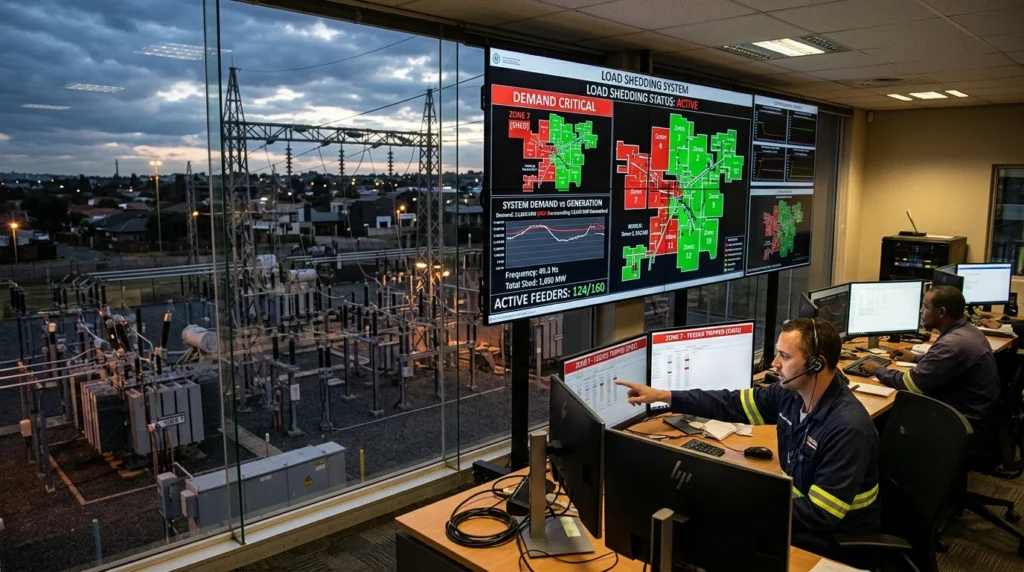

Imagine a hot summer evening when electricity demand suddenly rises because millions of homes, offices, and industries are using air conditioners, fans, and electrical equipment at the same time. The power generation capacity becomes insufficient to meet the demand, and the electrical grid starts experiencing stress. If corrective action is not taken quickly, the entire power network could collapse, causing a widespread blackout. To prevent this situation, utility companies implement a load shedding system that temporarily disconnects selected electrical loads and stabilizes the grid.
This real-world example demonstrates why a load shedding system is an important part of modern power system management. As electricity demand continues to grow, power utilities must maintain a balance between generation and consumption. Load shedding helps protect the electrical network from overloading and ensures that critical services continue operating.
For electrical students, engineers, technicians, and beginners, understanding load shedding systems is essential because they play a key role in power system reliability and stability. Learning how these systems operate provides valuable knowledge about electrical grid management and emergency power control.
In this article, you will learn the load shedding system working principle, types, components, applications, advantages and disadvantages, troubleshooting methods, selection guidelines, and future technological developments.
What is a Load Shedding System?
A load shedding system is a power management method that temporarily disconnects selected electrical loads when the demand for electricity exceeds the available generation capacity.
In simple words, load shedding is a controlled reduction of electrical load to prevent the entire power system from failing.
The main purpose of load shedding is to maintain the stability and reliability of the electrical grid during emergency conditions.
Practical Example
Suppose a power station can generate 100 MW of electricity, but consumer demand suddenly increases to 120 MW. The utility company may disconnect non-critical loads temporarily to reduce demand and restore balance within the system.
Without load shedding, the power system could experience severe instability or a complete blackout.
Load Shedding System Working Principle
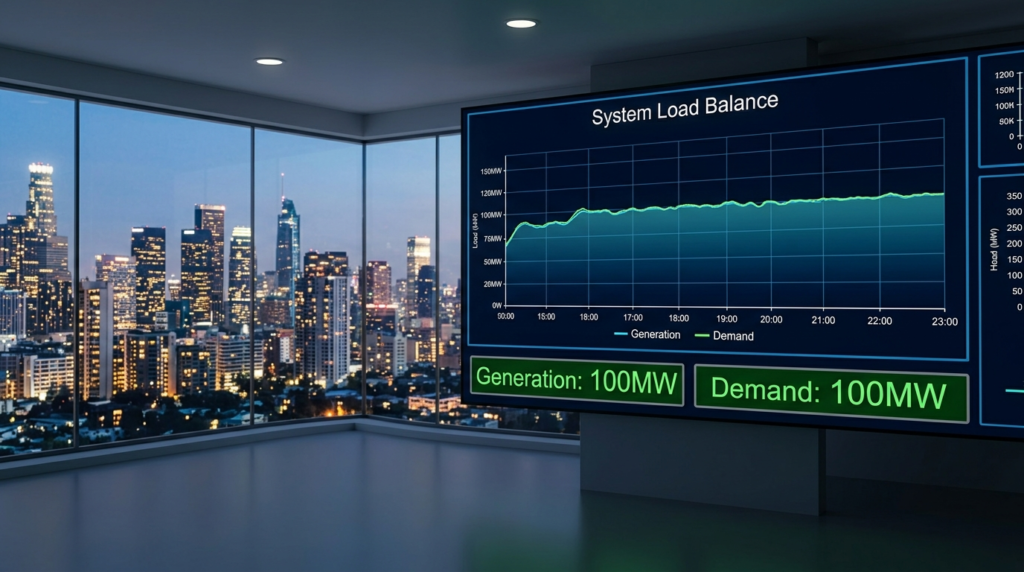
The load shedding system working principle is based on automatically disconnecting selected electrical loads when the power system cannot meet the total electricity demand. The system continuously monitors important parameters such as voltage, frequency, and power demand using sensors, meters, and protective relays. When these parameters fall below their safe operating limits due to overload, generation failure, or system faults, the load shedding controller identifies non-essential loads and disconnects them in a predetermined sequence. By reducing the total electrical demand, the system helps restore normal voltage and frequency, prevents equipment damage, protects generators and transformers from overloading, and maintains the stability of the power grid. Once the system returns to normal operating conditions, the disconnected loads can be reconnected manually or automatically in stages.
The load shedding system working principle is based on continuously monitoring electrical demand and disconnecting selected loads whenever power consumption exceeds available generation.
Simple Analogy
Think of a water tank supplying water to multiple houses.
If water demand becomes greater than the available supply, certain non-essential outlets may be temporarily closed to maintain pressure for critical users.
Similarly, load shedding reduces electrical demand by disconnecting selected loads.
Step-by-Step Load Shedding System Working Principle
Continuous System Monitoring
The system continuously monitors:
- Power demand
- Generation capacity
- System frequency
- Voltage levels
Detection of Power Deficit
When demand exceeds available generation, the system identifies a power shortage.
Load Prioritization
Electrical loads are categorized into:
- Critical loads
- Essential loads
- Non-essential loads
Automatic Decision Making
The control system calculates how much load must be disconnected.
Load Disconnection
Selected loads are disconnected using:
- Circuit breakers
- Contactors
- Automatic controllers
System Stabilization
The reduction in load restores balance between generation and demand.
Load Restoration
When normal conditions return, disconnected loads are reconnected gradually.
Key Features of Load Shedding System Working Principle
- Prevents grid collapse
- Maintains system frequency
- Protects generators
- Supports power system stability
- Enables controlled power management
Types / Classification
Load shedding systems are classified according to their operating methods.
Manual Load Shedding
Performed manually by operators.
Features
- Human intervention required
- Simple implementation
Applications
- Small power systems
- Emergency situations
Automatic Load Shedding
Uses automated control systems.
Features
- Fast response
- High reliability
Applications
- Power utilities
- Industrial facilities
Under Frequency Load Shedding (UFLS)
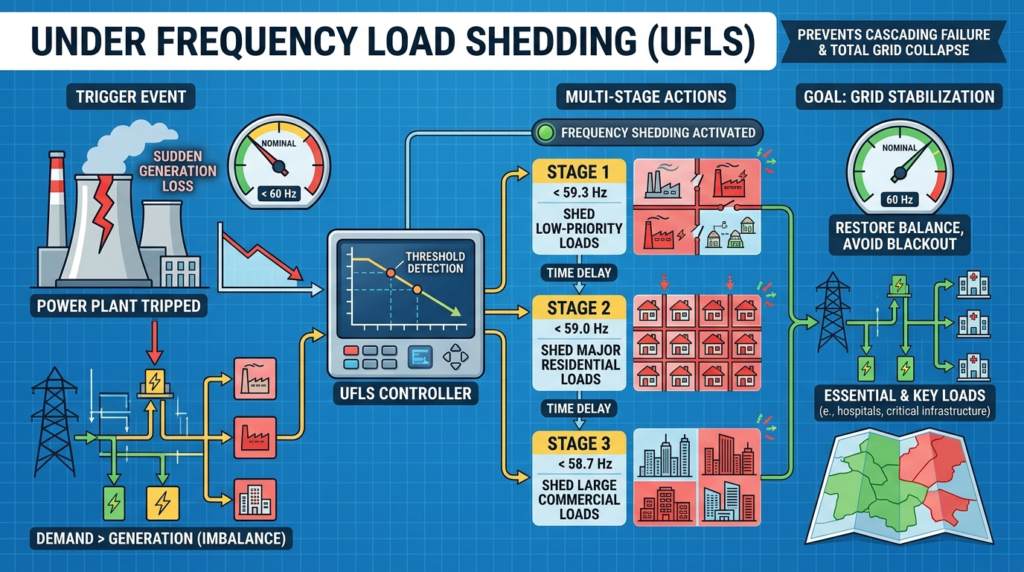
Under Frequency Load Shedding (UFLS) is a protective scheme used in electrical power systems to maintain system stability when the operating frequency drops below a predetermined limit. A decrease in frequency usually occurs when the electrical load becomes greater than the available power generation, causing generators to slow down. UFLS continuously monitors the system frequency through protective relays, and if the frequency falls below the set value for a specified time, it automatically disconnects selected non-essential loads. This reduces the load on the power system, helps restore the frequency to its normal value, and prevents generator tripping, equipment damage, and widespread blackouts. UFLS is widely used in power plants, grid stations, substations, and industrial power systems to improve grid reliability and ensure a stable electricity supply during emergency conditions.
Operates based on frequency reduction.
Features
- Detects generation shortages
Applications
- National power grids
- Utility substations
Under Voltage Load Shedding (UVLS)
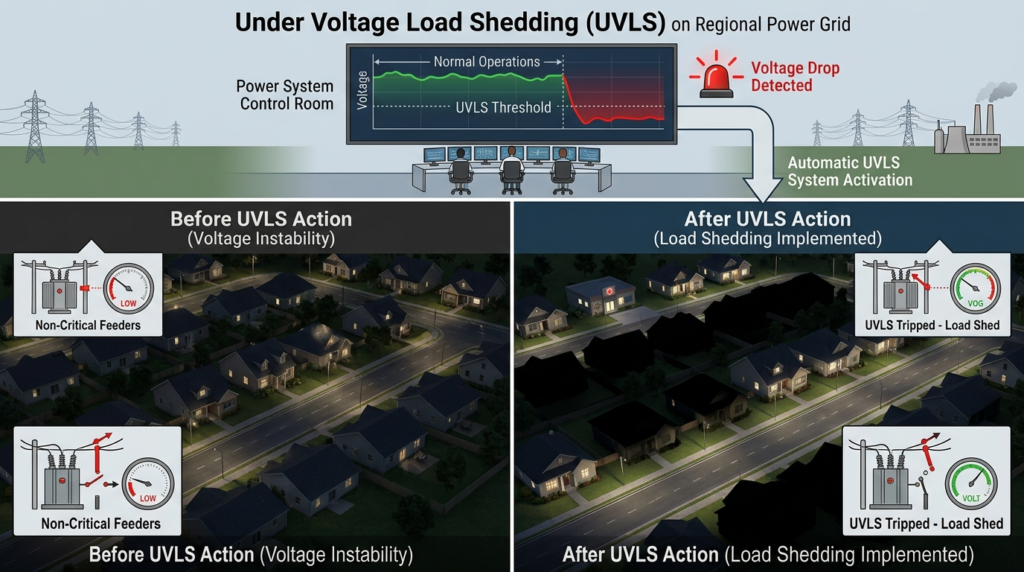
Under Voltage Load Shedding (UVLS) is a protective scheme used in electrical power systems to prevent voltage collapse and maintain system stability when the voltage falls below a safe operating limit. It continuously monitors the system voltage using protective relays, and if the voltage remains low for a specified period, the system automatically disconnects selected non-essential loads. This reduces the overall electrical demand, allowing the remaining system voltage to recover to a normal level. UVLS is commonly implemented in power plants, grid stations, substations, and industrial power systems to protect electrical equipment, improve grid reliability, and prevent widespread power outages or blackouts during emergency conditions.
Operates when voltage falls below safe limits.
Features
- Protects voltage stability
Applications
- Distribution networks
Priority-Based Load Shedding
Disconnects loads according to priority levels.
Features
- Protects critical services
Applications
- Hospitals
- Data centers
- Industries
Smart Load Shedding
Uses digital monitoring and intelligent control.
Features
- Dynamic operation
- Real-time adjustments
Applications
- Smart grids
- Modern power systems
Main Components
Understanding the main components helps explain how a load shedding system functions.
Frequency Relay
Monitors system frequency.
Function
- Detects frequency drops
Voltage Relay
Monitors system voltage.
Function
- Detects voltage abnormalities
Controller
Acts as the decision-making unit.
Function
- Determines load shedding actions
Circuit Breaker
Disconnects selected loads.
Function
- Provides electrical isolation
Current Transformer (CT)
Measures current flow.
Function
- Supplies measurement data
Voltage Transformer (VT)
Measures system voltage.
Function
- Provides voltage signals
Communication System
Transfers operational data.
Function
- Supports coordinated control
Human Machine Interface (HMI)
Provides monitoring and control functions.
Function
- Displays system status
Advantages
Understanding load shedding system advantages and disadvantages helps evaluate its effectiveness.
Advantages of Load Shedding System
- Prevents total system blackout
- Protects generators
- Maintains grid stability
- Improves reliability
- Supports emergency operation
- Protects critical infrastructure
- Reduces equipment stress
- Enables controlled power management
Real-World Benefits
Improved Grid Stability
Maintains balance between generation and demand.
Protection of Critical Services
Ensures hospitals and emergency facilities continue operating.
Reduced Risk of Blackouts
Prevents cascading failures across the network.
Better Resource Management
Optimizes available generation capacity.
Disadvantages / Limitations
Although beneficial, load shedding has certain drawbacks.
Load Shedding System Advantages and Disadvantages
Disadvantages
- Temporary power interruptions
- Customer inconvenience
- Production losses
- Potential economic impact
- Complex implementation for large systems
Practical Limitations
Consumer Dissatisfaction
Frequent outages may affect public confidence.
Industrial Losses
Production processes may be interrupted.
Equipment Restart Issues
Some machines require time to restart safely.
Load Shedding System Applications
Load shedding system applications are found throughout modern electrical networks.
Utility Applications
- National power grids
- Regional transmission systems
Industrial Applications
- Manufacturing plants
- Process industries
- Refineries
Commercial Applications
- Office buildings
- Shopping centers
Healthcare Applications
- Hospitals
- Medical facilities
Data Center Applications
- Server protection
- Critical IT infrastructure
Renewable Energy Systems
- Microgrids
- Hybrid power networks
Load shedding system applications continue growing as power systems become more complex and interconnected.
Comparison Section
Difference Between Load Shedding and Load Management
| Feature | Load Shedding System | Load Management |
| Purpose | Emergency demand reduction | Planned demand optimization |
| Operation | Temporary disconnection | Controlled scheduling |
| Response Speed | Immediate | Gradual |
| Grid Stability | Primary objective | Secondary objective |
| Consumer Impact | Higher | Lower |
| Automation Level | Moderate to high | High |
| Emergency Use | Yes | Limited |
| Power Availability | Reduced temporarily | Optimized usage |
Understanding the difference between load management and load shedding helps engineers choose suitable power control strategies.
Selection Guide
Choosing the right load shedding system depends on several factors.
System Size
Evaluate total connected load.
Critical Load Identification
Determine which loads must remain energized.
Automation Requirements
Choose manual or automatic systems.
Response Time Requirements
Critical facilities require fast operation.
Communication Capability
Consider integration with control systems.
Tips for Beginners
- Prioritize essential loads.
- Follow utility regulations.
- Use reliable protective relays.
- Test the system regularly.
- Maintain accurate load records.
Common Problems & Solutions
Load Not Disconnecting
Causes
- Relay malfunction
- Controller fault
Solution
- Test relay operation
- Verify controller settings
False Load Shedding
Causes
- Incorrect frequency settings
- Sensor errors
Solution
- Recalibrate monitoring devices
Delayed Operation
Causes
- Communication issues
- Software delays
Solution
- Inspect communication systems
Frequent Load Shedding
Causes
- Insufficient generation
- Incorrect settings
Solution
- Review load priorities
- Increase generation capacity
Failure to Restore Load
Causes
- Control logic problems
Solution
- Verify restoration sequence
Future Trends
Load shedding technology is evolving with modern power systems.
Smart Grid Integration
Future systems will interact directly with smart grids.
Artificial Intelligence
AI will improve demand forecasting and decision-making.
Real-Time Monitoring
Advanced sensors will provide faster responses.
IoT-Based Control
Connected devices will support remote management.
Predictive Analytics
Future systems will anticipate overload conditions before they occur.
Renewable Energy Integration
Load shedding will become more adaptive with solar and wind power systems.
The future of load shedding system applications is closely connected with intelligent energy management, digital substations, smart grids, and sustainable power infrastructure.
Conclusion
A load shedding system is an essential tool for maintaining electrical grid stability during periods when power demand exceeds available generation. By intelligently disconnecting selected loads, it prevents widespread blackouts, protects critical equipment, and ensures reliable operation of electrical networks. Modern power systems rely heavily on load shedding strategies to balance supply and demand while maintaining service continuity for critical facilities.
This article explained the load shedding system working principle, types, components, applications, advantages and disadvantages, troubleshooting methods, and future developments in simple and practical language. You also learned the difference between load management and load shedding and how to select an appropriate system based on operational requirements.
For electrical students, engineers, technicians, and beginners, understanding load shedding systems provides valuable insight into power system operation, emergency control methods, and electrical grid reliability. As electrical networks continue evolving, load shedding will remain a critical component of modern power management.