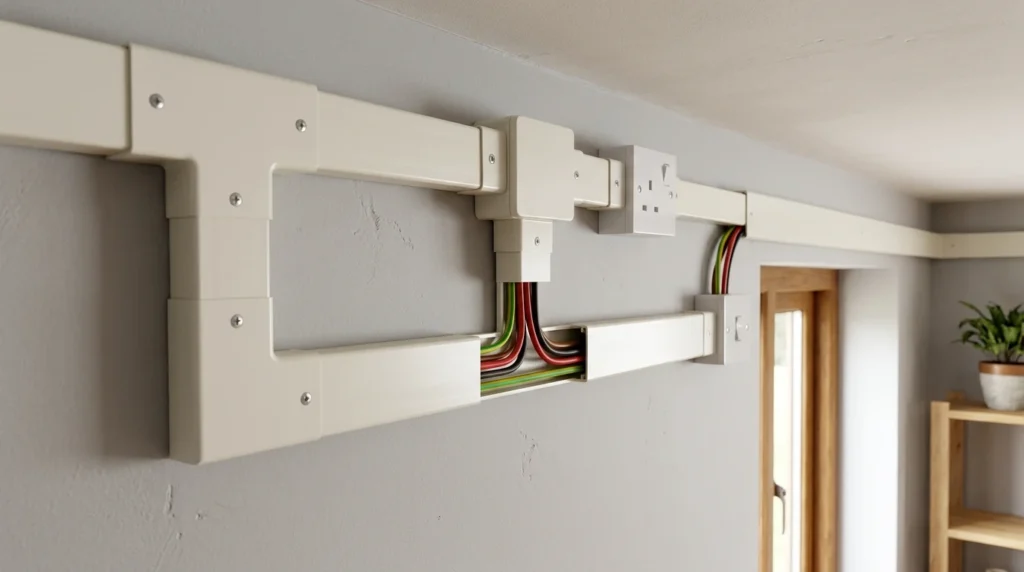

Imagine wiring a small house, office, or workshop where electrical cables need protection while remaining easy to inspect and maintain. Instead of hiding the wires inside walls, electricians install them neatly inside protective channels fixed on walls and ceilings. These channels protect the conductors from damage while keeping the wiring organized and accessible. This wiring method is known as Casing Capping Wiring.
Before modern PVC conduit systems became popular, casing capping wiring was one of the most widely used wiring methods in residential and commercial buildings. Even today, it is still used in certain applications because of its simple installation, low maintenance requirements, and ease of inspection.
For electrical students, engineers, technicians, and beginners, understanding casing capping wiring is important because it helps build knowledge of traditional wiring methods and electrical installation practices. Learning about this system also improves understanding of cable protection, safety requirements, and wiring layouts.
In this article, you will learn what casing capping wiring is, the casing capping wiring working principle, types, components, applications, advantages and disadvantages, troubleshooting methods, selection guidelines, and future industry trends.
What Is Casing and Capping Wiring?
Casing and capping wiring is a type of surface wiring system in which insulated electrical conductors are installed inside a protective channel called a casing and covered with a removable protective capping.
The casing is usually fixed to a wall, ceiling, or other suitable surface. The electrical wires are placed inside the casing, and the capping is fitted over it to protect the conductors from physical damage, dust, and other external conditions.
This wiring method provides a neat and organized way to route electrical cables while keeping them accessible for inspection, maintenance, and modification.
What Is Casing?
The casing is the base or channel in which electrical wires are placed.
It is commonly made from materials such as:
- PVC
- Plastic
- Wood in older installations
Modern installations generally prefer PVC or other suitable insulating materials because they are lightweight, easy to install, and resistant to moisture and corrosion.
What Is Capping?
The capping is the removable cover fitted over the casing.
Its main functions are to:
- Protect electrical conductors
- Keep wires securely inside the casing
- Reduce exposure to dust and accidental contact
- Improve the appearance of the installation
- Allow access to wires when maintenance is required
The capping can normally be removed when an electrician needs to inspect or modify the wiring.
How Casing and Capping Wiring Is Arranged
In a typical installation, the process follows this arrangement:
Wall or Ceiling → Casing → Electrical Wires → Capping
The casing is first fixed securely to the surface. The conductors are then arranged inside the casing, and the capping is installed over the casing to provide protection.
The wires should be properly sized, insulated, and arranged according to the applicable electrical installation requirements.
Practical Example
Consider a small workshop, office, or residential room where electrical wiring needs to be installed on an existing wall without cutting deep channels into the wall.
A PVC casing can be mounted along the wall. Power cables are placed inside the casing, and the capping is fitted over the top.
This creates a protected and organized wiring route while allowing an electrician to access the conductors later if troubleshooting or modification is required.
Working Principle of Casing and Capping Wiring
The working principle of casing and capping wiring is based on routing insulated electrical conductors through a protective casing and covering them with a removable cap.
The electrical current flows through the conductors in the same way as in other wiring systems. The casing and capping do not generate or control electricity; their main purpose is to provide mechanical protection, organization, and a neat wiring route.
Step-by-Step Working Process
1. Surface Preparation
The wall, ceiling, or mounting surface is prepared before installation.
The wiring route is planned according to the location of:
- Switches
- Socket outlets
- Distribution boards
- Lighting points
- Electrical appliances
A suitable route helps reduce unnecessary bends and makes future maintenance easier.
2. Casing Installation
The casing is fixed securely to the selected surface using suitable screws, plugs, or other approved fixing methods.
The casing provides the channel through which the electrical conductors will be routed.
3. Installation of Electrical Conductors
Insulated wires or cables are placed inside the casing.
The conductors should be properly identified and arranged so that the circuit can be easily understood during maintenance.
Depending on the installation, separate conductors may be provided for:
- Phase or line
- Neutral
- Protective earth
The conductor size must be selected according to the circuit load, installation method, voltage, and applicable electrical regulations.
4. Fitting the Capping
After the conductors are correctly positioned, the protective capping is fitted over the casing.
The cap keeps the conductors inside the channel and provides an additional layer of mechanical protection.
5. Connection to Electrical Accessories
The conductors are connected to the appropriate electrical accessories, such as:
- Switches
- Socket outlets
- Light fittings
- Junction boxes
- Distribution boards
All electrical connections should be properly insulated and securely terminated.
6. Testing and Inspection
After installation, the wiring should be inspected and tested using appropriate electrical testing procedures.
Depending on the installation, tests may include:
- Continuity testing
- Insulation resistance testing
- Polarity verification
- Earth continuity testing
- Functional testing
Testing helps confirm that the installation is safe and operating correctly.
Simple Analogy
Casing and capping wiring can be compared to a protected cable pathway.
Imagine electrical wires as vehicles that need a safe route. The casing acts like the pathway that guides them, while the capping acts like a protective barrier over the route.
Similarly, the casing keeps the wires organized, while the capping helps protect them from accidental physical contact and external damage.
Basic Working Flow
The complete arrangement can be represented as:
Electrical Supply → Wiring Conductors → Casing → Capping → Switches/Outlets/Loads
The casing and capping mainly provide protection and organization, while the electrical conductors carry power to the connected loads.
Important Safety Point
Casing and capping wiring should be installed according to local electrical codes and manufacturer requirements. The protective casing should not be treated as a replacement for proper electrical insulation, circuit protection, grounding, or correct conductor sizing.
Only qualified or appropriately trained personnel should work on energized electrical circuits.
Step-by-Step Working Principle of Casing and Capping Wiring
The working principle of casing and capping wiring involves installing insulated electrical conductors inside a protective casing and covering them with a removable cap. The casing provides an organized pathway for the wires, while the capping helps protect the conductors from accidental contact, dust, and mechanical damage.
The installation follows a systematic process, from planning the wiring route to connecting the electrical loads and inspecting the completed installation.
1. Wiring Route Planning
Before installation begins, the electrical wiring route is planned according to the location of switches, socket outlets, lighting points, distribution boards, and other electrical loads.
A properly planned route helps:
- Reduce unnecessary bends
- Keep wiring organized
- Make installation easier
- Simplify future maintenance
- Provide a neat appearance
The route should also comply with applicable electrical installation requirements.
2. Casing Installation
The casing is installed along the planned route on the wall or ceiling.
It is normally secured using suitable screws, plugs, clips, or other appropriate fixing methods. The casing should be firmly attached to the surface so that it does not become loose during normal operation.
The size of the casing should be suitable for the number and size of conductors being installed.
3. Electrical Wire Placement
After the casing has been installed, the insulated electrical conductors are placed inside the channel.
The conductors should be arranged properly without unnecessary bending, crushing, or damage to their insulation.
Depending on the circuit, the wiring may include:
- Line or phase conductor
- Neutral conductor
- Protective earth conductor
The conductor size should be selected according to the circuit load and applicable electrical requirements.
4. Circuit Routing
The electrical conductors are routed through the casing toward their intended connection points.
The wires may be directed toward:
- Light switches
- Socket outlets
- Lighting fixtures
- Junction points
- Distribution boards
- Electrical appliances
Proper routing keeps the circuit organized and makes it easier for an electrician to identify individual conductors during inspection or troubleshooting.
5. Capping Installation
Once the conductors are correctly positioned, the protective capping is fitted over the casing.
The capping covers the open side of the casing and helps keep the wires securely inside the channel.
It also provides protection against:
- Accidental physical contact
- Dust
- Minor mechanical damage
- Unwanted movement of conductors
A properly fitted cap also gives the installation a cleaner and more finished appearance.
6. Electrical Connections
The conductors are then connected to the appropriate electrical accessories and distribution points.
These may include:
- Switches
- Socket outlets
- Light fittings
- Junction boxes
- Distribution boards
- Electrical equipment
Connections should be properly terminated and securely insulated. Loose electrical connections can create resistance, heating, arcing, and potential safety hazards.
7. Power Distribution
After the circuit is correctly connected and energized, electrical current flows through the insulated conductors from the supply toward the connected loads.
The casing and capping do not carry or control the electrical current. Their main purpose is to protect and organize the conductors.
The basic arrangement is:
Electrical Supply → Conductors → Switches/Outlets → Electrical Loads
When a switch or control device completes the appropriate circuit, electrical power can reach the connected load.
8. Inspection and Testing
After installation, the complete wiring system should be inspected and tested before normal operation.
Depending on the installation, testing may include:
- Continuity testing
- Insulation resistance testing
- Polarity verification
- Protective conductor testing
- Functional testing
The casing should also be checked to ensure that it is securely fixed and that the capping is properly fitted.
9. Maintenance and Repair
One of the useful features of casing and capping wiring is its accessibility.
The capping can generally be removed when an electrician needs to:
- Inspect conductors
- Locate a wiring fault
- Replace damaged wiring
- Add or modify a circuit
- Check electrical connections
- Perform maintenance
After the work is completed, the conductors should be correctly arranged and the capping should be securely refitted.
Key Features of the Casing and Capping Wiring Working Principle
The main features of this wiring method include:
- Organized cable routing: Conductors are arranged inside a defined wiring channel.
- Mechanical protection: The casing and capping provide protection against minor physical damage.
- Easy maintenance: The removable capping provides access to the wiring.
- Neat installation: Surface-mounted wiring can be arranged in straight and organized routes.
- Accessible conductors: Wires can be inspected or modified without completely removing the wiring system.
- Simple installation: The system can generally be installed without cutting deep channels into walls.
- Flexible modification: Additional wiring may be easier to install where sufficient casing capacity is available.
- Improved wire management: The casing keeps conductors together and reduces loose wiring on the surface.
Basic Working Flow
Plan Wiring Route → Install Casing → Place Conductors → Route Wires → Fit Capping → Make Electrical Connections → Test Circuit → Energize Loads → Inspect and Maintain
The main principle is simple: the conductors carry electrical power, while the casing and capping provide an organized and protected pathway for those conductors.
Types / Classification
Casing capping wiring systems can be classified according to material and construction.
Wooden Casing and Capping Wiring
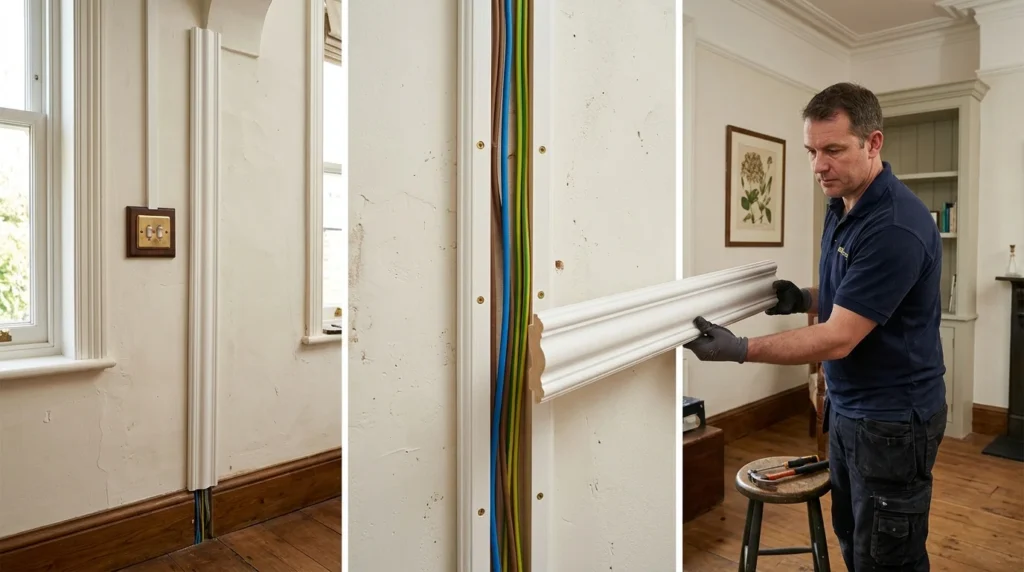
Wooden casing and capping wiring is a traditional type of surface wiring system in which insulated electrical conductors are installed inside a wooden casing and covered with a wooden capping. The casing provides a channel for arranging the electrical wires, while the capping covers the open side and helps keep the conductors protected and organized.
This wiring method was used in older electrical installations before modern PVC conduits, plastic casing systems, and other advanced wiring methods became widely available. The wooden casing was normally fixed to a wall, ceiling, or other suitable surface, and the electrical conductors were placed inside it. A wooden cover was then fitted over the casing.
The system provided a relatively simple way to install electrical wiring on the surface without embedding the wires directly into walls. It also allowed electricians to access the wiring by removing the capping when inspection, repair, or modification was required.
Today, wooden casing and capping wiring is considered largely obsolete for modern electrical installations because wood can be affected by moisture, insects, aging, and fire. Modern PVC and other approved wiring systems generally provide better insulation, durability, moisture resistance, and fire performance when properly selected and installed.
Construction of Wooden Casing and Capping Wiring
A traditional wooden casing and capping system mainly consists of two parts:
- Wooden casing: A rectangular wooden channel used to hold the electrical conductors.
- Wooden capping: A wooden cover fitted over the casing to protect and secure the wires.
The casing is fixed along the planned wiring route, and the insulated conductors are placed inside the channel. The capping is then attached over the casing.
The basic arrangement can be represented as:
Wall or Ceiling → Wooden Casing → Electrical Conductors → Wooden Capping
The conductors carry electrical current, while the casing and capping provide physical protection and organization.
How Wooden Casing and Capping Wiring Works
The electrical operation of this system is similar to other wiring methods. The electrical conductors carry power from the distribution point to switches, socket outlets, lighting fixtures, and other loads.
The casing and capping do not control the flow of electricity. Their purpose is mainly to provide a protected and organized pathway for the conductors.
A typical installation process includes:
- Planning the wiring route.
- Fixing the wooden casing to the surface.
- Placing insulated conductors inside the casing.
- Routing the conductors toward switches and electrical loads.
- Making the required electrical connections.
- Installing the wooden capping.
- Inspecting and testing the completed circuit.
Features of Wooden Casing and Capping Wiring
Traditional wooden casing and capping wiring has several characteristics that made it useful in older installations.
Wooden Construction
Both the casing and the protective cover are made from wood. The wood was shaped into suitable channels and covers for routing electrical conductors.
Surface Installation
The wiring is installed on the surface of walls or ceilings rather than being completely concealed inside the building structure.
Organized Wire Arrangement
The casing provides a defined path for the conductors. This helps keep wires together and prevents them from hanging loosely across the surface.
Accessible Wiring
The capping can be removed to provide access to the conductors. This makes inspection and modification easier compared with some concealed wiring arrangements.
Simple Construction
The system has a relatively simple construction consisting mainly of a casing, conductors, and a protective cover.
Traditional Wiring Method
Wooden casing and capping wiring is mainly associated with older electrical installations and is important from a historical and educational perspective.
Advantages of Wooden Casing and Capping Wiring
Although this wiring method is outdated for most modern installations, it offered several advantages when it was commonly used.
Easy Installation
The wiring could be installed directly on walls and ceilings without creating deep channels in the building structure.
Easy Inspection
Because the wiring was accessible, electricians could inspect the conductors and connections relatively easily.
Easy Modification
Additional wires or circuit changes could sometimes be made by opening the casing and accessing the existing conductors.
Neat Appearance
When properly installed, the casing and capping provided an organized appearance compared with exposed loose wires.
Simple Maintenance
The removable cover allowed access to the conductors for basic inspection and maintenance.
Limitations of Wooden Casing and Capping Wiring
Wooden casing and capping wiring also has significant limitations. These limitations are the main reason modern electrical installations generally use other approved wiring systems.
Poor Moisture Resistance
Wood can absorb moisture and may deteriorate when exposed to damp environments. Therefore, wooden casing is unsuitable for many areas where moisture is present.
Fire Risk
Wood is combustible. This is an important disadvantage because electrical installations must use wiring methods and materials with suitable fire performance for their application.
Effect of Insects
Wood may be damaged by termites and other insects, which can weaken the casing and affect its ability to protect the conductors.
Aging and Deterioration
Over time, wood can crack, warp, dry out, or deteriorate because of environmental conditions.
Limited Durability
Compared with modern PVC and other approved materials, wooden casing may have a shorter service life under unfavorable environmental conditions.
Not Suitable for Modern Requirements
Modern electrical installations often require materials and wiring methods that meet current electrical, fire, mechanical, and environmental standards. Traditional wooden casing may not meet these requirements.
Applications of Wooden Casing and Capping Wiring
Wooden casing and capping wiring is no longer a common choice for new electrical installations. However, it may still be encountered in certain older buildings or used for educational and historical purposes.
Historical Buildings
Old buildings may contain traditional wooden wiring systems installed many decades ago. Such installations may require careful inspection to determine whether the wiring remains safe and compliant with current requirements.
Electrical Training and Demonstrations
Wooden casing and capping wiring can be used in educational demonstrations to explain the development of electrical wiring methods.
Students can learn how surface wiring was arranged before modern PVC casing and conduit systems became common.
Historical Electrical Installations
Museums and heritage sites may preserve examples of traditional electrical wiring to demonstrate the history of electrical technology.
Restoration Projects
In some restoration projects, original wiring methods may be documented or preserved for historical reasons. However, electrical safety requirements must take priority, and any active electrical installation should be assessed by a qualified professional.
Wooden Casing vs Modern PVC Casing
Modern PVC casing and capping systems provide several improvements over traditional wooden systems.
| Feature | Wooden Casing and Capping | Modern PVC Casing |
|---|---|---|
| Material | Wood | PVC or other approved plastic |
| Moisture Resistance | Limited | Generally better |
| Insect Resistance | Can be affected | Generally resistant |
| Durability | Depends on conditions | Generally higher |
| Fire Performance | Wood is combustible | Depends on product rating |
| Maintenance | Accessible | Accessible |
| Modern Use | Very limited | Common |
| Appearance | Traditional | Clean and modern |
| Application | Older/historical systems | Modern installations |
The exact suitability of any wiring system depends on local electrical codes, environmental conditions, product specifications, and installation requirements.
Safety Considerations
If wooden casing and capping wiring is found in an older building, it should not automatically be assumed to be safe simply because the electrical system is still operating.
An inspection should consider:
- Condition of the wooden casing
- Condition of the capping
- Condition of conductor insulation
- Signs of overheating
- Loose electrical connections
- Moisture damage
- Termite or insect damage
- Circuit protection
- Grounding and bonding
- Compliance with current electrical requirements
Damaged or deteriorated wiring should be evaluated by a qualified electrician.
Why Wooden Casing and Capping Wiring Was Replaced
The development of modern electrical materials provided safer and more durable alternatives. PVC casing, PVC conduit, metal conduit, trunking, and other approved wiring systems can provide improved protection and better resistance to environmental conditions when correctly selected and installed.
Modern wiring systems also offer better compatibility with current electrical installation standards and building requirements.
As a result, wooden casing and capping wiring gradually became less common and is now mainly associated with older installations, historical examples, and educational demonstrations.
Key Points to Remember
- Wooden casing and capping wiring is a traditional surface wiring method.
- Electrical conductors are placed inside a wooden casing.
- A wooden capping covers and protects the conductors.
- It provides organized and accessible wire routing.
- It was widely used in older electrical installations.
- Wood can be affected by moisture, insects, aging, and fire.
- Modern PVC casing and conduit systems have largely replaced this method.
- Existing wooden wiring should be inspected for safety and compliance.
- It can still be useful for historical study and electrical education.
Wooden casing and capping wiring is an important traditional wiring method in the history of electrical installations. Its simple construction allowed insulated conductors to be routed along walls and ceilings while keeping the wiring organized and accessible for maintenance.
However, the limitations of wood, particularly its susceptibility to moisture, insects, aging, and fire, have made this wiring method unsuitable for most modern electrical installations. Today, PVC casing and capping, conduit, trunking, and other approved wiring systems are generally preferred because they provide better durability and protection when installed according to applicable standards.
Understanding wooden casing and capping wiring remains useful for electrical students, technicians, and professionals because older buildings may still contain examples of this traditional installation method.
PVC Casing Capping Wiring
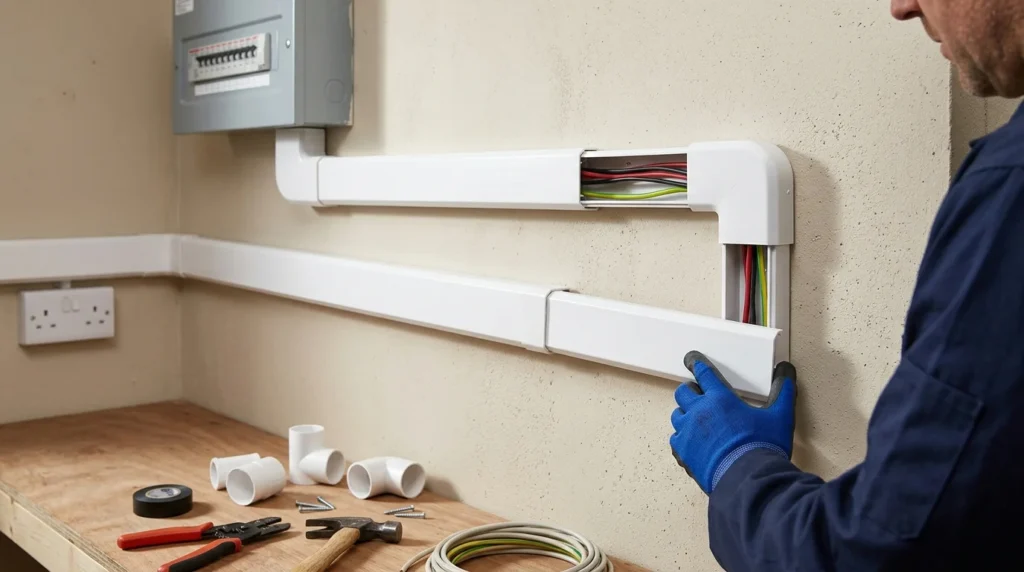
PVC Casing and Capping Wiring is a modern surface wiring system in which insulated electrical conductors are installed inside a PVC (Polyvinyl Chloride) casing and covered with a matching PVC capping. The casing provides a defined route for the wires, while the capping keeps the conductors covered and helps protect them from dust, accidental contact, and minor physical damage.
The PVC casing is normally fixed to a wall, ceiling, or other suitable surface. After the electrical wires are placed inside the casing and properly arranged, the matching capping is fitted over the top. This creates a neat and organized wiring system that can remain accessible for inspection, maintenance, and certain future modifications.
PVC is widely used in electrical accessories because it is lightweight, electrically insulating, and generally resistant to moisture and corrosion. Its performance against heat and fire depends on the specific PVC product, its rating, and the applicable installation requirements.
Compared with traditional wooden casing and capping, PVC systems are generally more durable and less affected by termites, moisture, and normal aging. They are commonly used in suitable residential, commercial, workshop, and other surface-wiring applications where permitted by local electrical regulations.
Main Features of PVC Casing and Capping Wiring
Lightweight Construction
PVC casing and capping are relatively lightweight, making them easy to transport, measure, cut, and install. Their low weight also makes surface mounting simpler than many heavier wiring enclosure systems.
Moisture Resistance
PVC generally has good resistance to moisture compared with untreated wood. However, standard indoor casing should not automatically be considered suitable for wet locations, outdoor exposure, or areas subject to water.
Electrical Insulation
PVC is an electrically insulating material. The casing and capping therefore do not normally conduct electricity like exposed metal components. However, proper insulated conductors, grounding, circuit protection, and other required safety measures are still essential.
Resistance to Corrosion
PVC does not rust like ordinary steel. This makes it useful in applications where corrosion of metallic materials could be a concern, provided the selected product is suitable for the environment.
Easy Installation
PVC casing can normally be cut to the required length and fixed to a surface using suitable fasteners. Matching accessories can be used for corners, joints, and changes in direction.
Removable Capping
The capping can generally be removed when access to the conductors is required. This makes inspection, maintenance, and certain wiring modifications easier.
Neat Appearance
When installed correctly, the casing provides a straight and organized route for surface wiring. The cover hides the conductors and gives the installation a cleaner appearance.
Resistance to Insects
PVC is not a food source for termites, so it does not have the same termite-related problems that can affect untreated wooden casing.
Applications of PVC Casing and Capping Wiring
PVC casing and capping wiring is used in many surface-mounted electrical installations where this wiring method is permitted and suitable.
Homes
It can be used for selected surface wiring in houses, apartments, utility areas, and other residential spaces. It may provide a practical solution when concealed wiring is not required.
Offices
Offices can use surface casing systems to organize wiring for lighting, switches, socket outlets, and other electrical circuits where appropriate.
Commercial Buildings
Shops, small businesses, stores, and other commercial areas may use PVC casing and capping to route surface wiring in an organized manner.
Workshops
Suitable PVC systems can be used in workshops for selected lighting and power circuits when the environmental and mechanical conditions are within the product’s ratings.
Renovation Projects
PVC casing can be useful during renovations where walls are already finished and installing concealed wiring would require significant construction work.
Educational and Training Facilities
Because the wiring remains visible and accessible, casing and capping systems can also be useful for electrical training and demonstration installations.
Single-Channel Casing and Capping
Single-Channel Casing and Capping is a simple type of casing system that provides one main compartment or channel for routing electrical conductors. The wires are placed inside the channel, and a matching capping is fitted over it.
This design is generally suitable for small and straightforward wiring arrangements where only a limited number of conductors need to be routed together.
The actual capacity depends on the dimensions and design of the casing. The channel should not be overcrowded because excessive filling can make wire installation, inspection, and maintenance difficult.
Features of Single-Channel Casing and Capping
Simple Design
The single-channel arrangement has a straightforward construction with one main pathway for the conductors. This makes it relatively easy to understand and install.
Easy Wire Arrangement
A single channel provides a defined space for routing the wires, helping prevent loose surface wiring from becoming disorganized.
Easy Access
Because the capping is removable, the conductors can generally be accessed for inspection or approved modifications without removing the entire casing.
Compact Construction
Single-channel casing can be useful where only a small number of wires are required and a compact surface wiring arrangement is desired.
Low Installation Complexity
The simple structure can make installation easier for basic circuits, provided the casing size and installation method are appropriate.
Applications of Single-Channel Casing and Capping
Small Electrical Circuits
Single-channel casing can be used for simple circuits that require only a limited number of conductors.
Lighting Circuits
It may be suitable for certain surface-mounted lighting circuits where permitted by the electrical installation requirements.
Small Residential Installations
Homes may use small casing sections for selected surface wiring routes, particularly during minor modifications or renovations.
Simple Office Wiring
Small offices may use single-channel casing for straightforward wiring routes involving lighting or other suitable circuits.
Advantages of Single-Channel Casing and Capping
- Simple and easy-to-understand construction
- Relatively easy installation
- Provides an organized wiring route
- Removable cover allows access to conductors
- Suitable for small wiring arrangements
- Can provide a neat surface-mounted appearance
Limitations of Single-Channel Casing and Capping
Single-channel casing is not ideal for every electrical installation. Its limited internal space can become a problem when several circuits or larger conductors need to be routed.
If the casing becomes overcrowded, it may be difficult to install or remove wires, inspect connections, or maintain the required arrangement. Larger installations may require a wider casing, multi-channel system, conduit, trunking, or another approved wiring method.
The casing also provides limited protection against severe mechanical impact compared with stronger protective systems. Therefore, the installation environment must always be considered before selecting this wiring method.
Important Safety Considerations
PVC casing and capping should be selected according to the number and size of conductors, installation environment, temperature, mechanical conditions, and applicable electrical codes.
The casing should not be treated as a replacement for proper wire insulation, grounding, circuit breakers, fuses, or other electrical protection.
Wires should be correctly sized for the expected load, connections should be secure, and circuits should be properly protected against overload and short circuits.
Where the wiring is exposed to significant heat, impact, chemicals, direct sunlight, water, or other harsh conditions, a specifically rated product or a different wiring method may be required.
Key Points to Remember
- PVC casing and capping is a surface-mounted wiring system.
- PVC casing provides a pathway for insulated electrical conductors.
- PVC capping covers and helps protect the installed wires.
- PVC is lightweight and generally resistant to moisture and corrosion.
- PVC provides electrical insulation but does not replace complete electrical safety measures.
- Single-channel casing is mainly suitable for simple wiring arrangements.
- The casing should not be overcrowded.
- Product fire performance depends on the specific PVC material and rating.
- Outdoor, wet, hot, or mechanically exposed locations may require specially rated systems.
- Installation should follow applicable electrical codes and manufacturer instructions.
Multi-Channel Casing and Capping Wiring
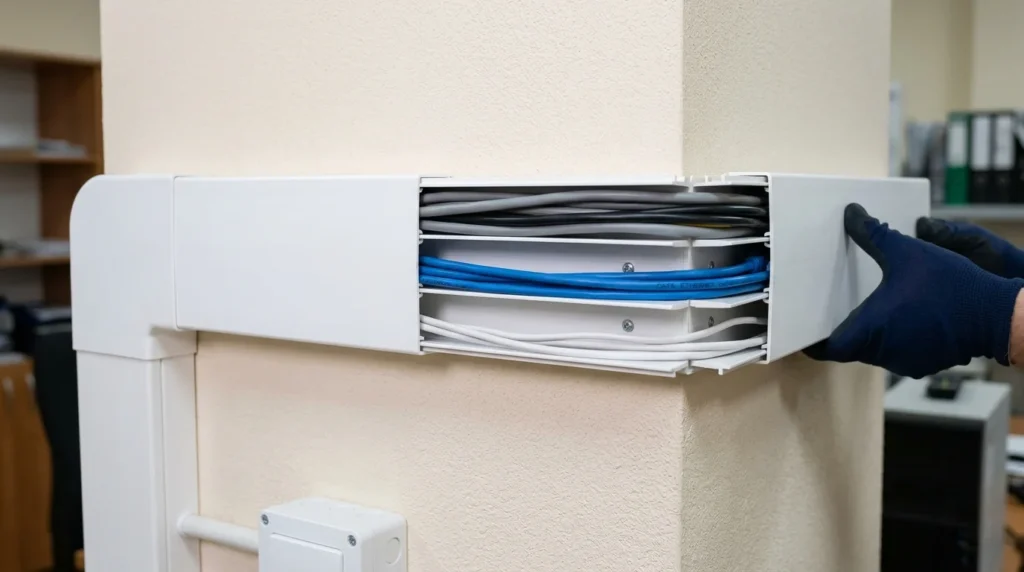
Multi-Channel Casing and Capping Wiring is an advanced surface wiring arrangement that uses a PVC casing divided into two or more separate channels or compartments. These compartments allow different groups of electrical conductors to be routed in an organized manner within the same overall casing system.
For example, separate compartments may be used for power circuits, lighting circuits, control wiring, or communication and data cables when the selected system and applicable electrical requirements allow such an arrangement. Keeping different wiring groups separated can improve organization and may help reduce unwanted electrical interference between compatible systems.
The casing is fixed to a suitable surface, while the matching capping covers the compartments and installed conductors. Depending on the product design, internal dividers may be permanently formed as part of the casing or provided as part of the system.
Multi-channel casing is particularly useful when several wiring routes need to run along the same wall or ceiling. Instead of installing several separate casing sections, multiple circuits can be organized within a larger multi-compartment system.
However, not every type of cable can simply be placed together in the same casing. Power, communication, data, control, and other circuits may require specific separation, shielding, or dedicated pathways according to applicable electrical codes and manufacturer instructions.
Construction of Multi-Channel Casing and Capping
A multi-channel casing generally consists of a wider PVC base containing multiple internal compartments and a matching cover or capping.
The basic arrangement can be represented as:
Wall or Ceiling → Multi-Channel PVC Casing → Separate Wiring Compartments → Electrical Capping
Each compartment provides a defined route for a particular group of conductors.
For example:
- Channel 1: Power conductors
- Channel 2: Lighting or control conductors
- Channel 3: Communication or data cables, where permitted
The exact arrangement depends on the wiring design, cable types, installation environment, and applicable regulations.
Features of Multi-Channel Casing and Capping
Multiple Compartments
The main feature is the presence of two or more internal channels. These compartments help organize different groups of conductors within one casing system.
Better Circuit Organization
Separate channels make it easier to identify and organize wiring. This can be especially useful in installations containing several electrical circuits.
Improved Maintenance
When circuits are organized into separate compartments, electricians can more easily identify the wiring associated with a particular system during inspection or maintenance.
Neat Surface Installation
Multiple wiring routes can be combined into one organized casing system instead of using many separate surface-mounted cables.
Reduced Wiring Interference
Separating suitable power and low-voltage or communication circuits can help reduce electromagnetic interference. The required separation must follow the applicable code and system requirements.
Expandable Arrangement
A larger multi-channel system can provide additional space for future wiring, provided sufficient capacity and compliance requirements are considered during the original installation.
Applications of Multi-Channel Casing and Capping
Large Residential Installations
Large houses and residential buildings may require several groups of electrical circuits. Multi-channel casing can help organize selected surface-mounted wiring routes.
Offices
Offices often contain power, lighting, telephone, networking, and control systems. A suitable multi-compartment system can help keep these wiring groups organized.
Commercial Buildings
Shops, commercial facilities, and other buildings with multiple electrical circuits may use multi-channel casing where permitted.
Workshops
Workshops can contain lighting, power, control, and equipment wiring. Separate compartments can make the surface wiring easier to identify and maintain.
Industrial Installations
Some industrial areas require multiple wiring systems to travel along the same general route. A suitable multi-channel wiring enclosure may be used when it meets the environmental, mechanical, and electrical requirements.
Advantages of Multi-Channel Casing and Capping
- Provides multiple wiring compartments
- Improves circuit organization
- Creates a cleaner surface installation
- Makes wire identification easier
- Can simplify inspection and maintenance
- Allows compatible wiring systems to follow a common route
- Can help manage power and low-voltage wiring separation where permitted
- Useful for installations containing multiple circuits
Limitations of Multi-Channel Casing and Capping
Multi-channel casing is larger than single-channel casing and may require more wall or ceiling space.
It also does not automatically solve all cable separation requirements. Some power and communication systems may require greater separation, shielding, or completely independent pathways.
The casing should not be overloaded. Adequate space must be maintained for proper installation, heat management, inspection, and future maintenance.
In locations exposed to severe impact, high temperatures, water, chemicals, or other harsh conditions, a more suitable or specially rated wiring system may be required.
Surface-Mounted Casing and Capping Wiring
Surface-Mounted Casing and Capping Wiring is a wiring method in which the PVC casing is installed directly on the surface of a wall, ceiling, or other suitable structure rather than being concealed inside the wall.
The electrical conductors are placed inside the casing and covered with a matching capping. This keeps the wires organized and provides access to the wiring without requiring the wall to be opened.
Surface-mounted casing is particularly useful when wiring needs to be installed after construction has already been completed. It can reduce the need for cutting or chasing walls, making it practical for certain renovation, modification, maintenance, and temporary wiring projects.
Features of Surface-Mounted Casing and Capping
Direct Surface Installation
The casing is fixed directly to the visible surface of the wall or ceiling. This makes the wiring route easy to identify.
Easy Access
The removable capping allows electricians to access the conductors for inspection, maintenance, or approved modifications.
Simple Installation
Surface-mounted systems generally require less building work than concealed wiring because the wall does not need to be extensively opened to create a concealed route.
Neat Wire Management
Although the casing remains visible, it keeps the electrical conductors enclosed and arranged along a defined route.
Suitable for Renovation
Surface casing can be useful when adding electrical points to an existing building where concealed wiring would involve substantial construction work.
Easy Inspection
Because the wiring route remains visible and accessible, problems such as damaged casing, loose sections, or other visible defects can be identified more easily.
Applications of Surface-Mounted Casing and Capping
Workshops
Workshops may use surface-mounted casing to route selected lighting, outlet, control, and equipment wiring. The selected system must be suitable for the workshop environment and required mechanical protection.
Temporary Installations
Surface-mounted casing can be useful for certain temporary or changeable installations where wiring needs to be accessible and easy to modify. The wiring method must still meet applicable safety requirements.
Renovation Projects
It is commonly considered where a building already has finished walls and installing concealed wiring would require significant modification.
Existing Buildings
Older buildings may use surface wiring when additional electrical circuits or outlets are required without major structural work.
Small Commercial Spaces
Offices, shops, and other commercial areas may use surface-mounted casing for selected electrical circuits where permitted.
Advantages of Surface-Mounted Casing and Capping
- Easy access to wiring
- Simple installation
- Less wall cutting than concealed wiring
- Convenient for renovations
- Easy inspection and maintenance
- Wiring remains organized
- Suitable for selected temporary installations
- Easier to modify than some concealed systems
Disadvantages of Surface-Mounted Casing and Capping
The main disadvantage is that the casing remains visible. Therefore, it may not provide the same appearance as a properly concealed wiring installation.
Because the casing is mounted on the surface, it can also be exposed to physical impact. In areas where the wiring may be hit, crushed, or exposed to harsh conditions, another wiring method may provide better protection.
Multi-Channel vs Surface-Mounted Casing
These two terms describe different characteristics of a casing system.
Multi-channel describes the internal design of the casing, particularly the presence of multiple compartments.
Surface-mounted describes how and where the casing is installed, meaning it is fixed directly onto a surface.
Therefore, a casing can actually be both multi-channel and surface-mounted at the same time.
| Feature | Multi-Channel Casing | Surface-Mounted Casing |
|---|---|---|
| Main characteristic | Multiple internal compartments | Installed directly on a surface |
| Primary purpose | Organize different wiring groups | Provide accessible surface wiring |
| Installation | Can be surface-mounted or used according to product design | Directly fixed to wall/ceiling |
| Maintenance | Relatively easy | Easy access |
| Best suited for | Multiple wiring groups | Renovation and accessible wiring |
| Visibility | Usually visible when surface-mounted | Visible |
| Main benefit | Better internal organization | Easy installation and access |
Safety Considerations
Before using a multi-channel or surface-mounted casing system, the electrician should consider the type of circuits, conductor sizes, environmental conditions, required mechanical protection, and applicable electrical regulations.
Different electrical systems should only share a casing system when the arrangement is permitted and the required separation is maintained. Communication and data cables may have specific separation requirements from power circuits.
The casing should have sufficient capacity and should not be overcrowded. Conductors must remain properly insulated, and the complete electrical installation must include appropriate circuit protection, grounding or protective conductors, and suitable connections.
For workshops and industrial locations, additional protection may be necessary if the wiring is exposed to impact, heat, chemicals, moisture, or moving equipment.
Key Points to Remember
- Multi-channel casing contains two or more separate compartments.
- It is useful for organizing multiple groups of electrical wiring.
- Different wiring systems should only share a casing when permitted by the applicable requirements.
- Surface-mounted casing is installed directly on a wall or ceiling.
- Surface installation provides easy access for inspection and maintenance.
- Surface casing is particularly useful for renovation and modification projects.
- Multi-channel and surface-mounted are not mutually exclusive; a casing can have multiple channels and also be surface-mounted.
- The casing should not be overcrowded.
- Environmental and mechanical conditions must be considered before selecting the system.
- Proper electrical protection, grounding, conductor sizing, and code compliance remain essential.
Main Components of Casing and Capping Wiring
Understanding the main components of casing and capping wiring helps explain how this surface wiring system is installed, operated, maintained, and modified. Each component has a specific purpose, from supporting the electrical conductors to controlling and distributing electrical power.
The exact components can vary depending on the installation. A simple lighting circuit may require only casing, capping, conductors, switches, and suitable connections, while a larger installation may also include junction boxes, socket outlets, and a distribution board.
Casing
The casing is the base channel in which the insulated electrical conductors are installed. It is normally fixed to a wall, ceiling, or another suitable surface.
The casing provides an organized route for the wires and helps prevent loose conductors from hanging freely along the installation surface.
Function
- Supports and routes electrical conductors
- Keeps wires organized
- Provides a defined wiring pathway
- Helps protect conductors from minor physical damage
- Makes future inspection easier
The casing should be selected with sufficient space for the required conductors. Overfilling should be avoided because it can make installation and maintenance difficult.
Capping
The capping is the removable cover fitted over the casing. It keeps the conductors inside the channel and provides additional physical protection.
A properly fitted capping also improves the appearance of surface-mounted wiring by hiding the electrical conductors.
Function
- Covers electrical conductors
- Helps protect wires from accidental contact
- Reduces exposure to dust and minor physical damage
- Keeps wiring organized
- Allows access for inspection and maintenance
Insulated Conductors
Insulated conductors are the electrical wires that carry current between the supply, switches, outlets, and electrical loads.
The conductor size and insulation type must be selected according to the expected load, voltage, temperature, installation conditions, and applicable electrical requirements.
Function
- Carry electrical current
- Transfer electrical power to loads
- Connect different parts of the electrical circuit
Proper conductor sizing is essential because an undersized conductor can overheat when carrying excessive current.
Junction Box
A junction box provides an enclosure for making or branching electrical connections. It may be used where conductors need to join, split, or change direction.
The type and installation of junction boxes must comply with the applicable electrical requirements.
Function
- Provides an enclosed connection point
- Allows circuit branching
- Protects electrical connections
- Makes certain maintenance tasks easier
Fasteners
Fasteners are used to secure the casing and related accessories to the installation surface. Depending on the surface and product design, these may include screws, wall plugs, clips, brackets, or other approved fixing accessories.
Function
- Secure casing to the wall or ceiling
- Prevent movement
- Maintain proper alignment
- Support the wiring system during normal use
Correct fixing is important because loose casing can create both appearance and safety problems.
Switches
Switches are electrical accessories used to control the flow of current to suitable loads, such as lighting fixtures.
Function
- Control electrical circuits
- Turn suitable loads on and off
- Provide convenient user control
Switches should be correctly rated for the circuit and installed according to electrical requirements.
Socket Outlets
Socket outlets provide a connection point between the electrical supply circuit and compatible portable or fixed equipment.
Function
- Provide electrical power to loads
- Allow connection of suitable appliances and equipment
- Provide convenient access to the electrical supply
Socket outlets must have the correct voltage and current rating for the intended application.
Distribution Board
The distribution board is the central point from which electrical circuits can be distributed and protected in a building.
It may contain circuit breakers, residual-current protection, busbars, and other protective or switching devices depending on the system design.
Function
- Distributes electrical power to individual circuits
- Provides circuit protection
- Allows circuit isolation and control
- Helps organize electrical circuits
The distribution board is an important part of the overall electrical installation, although it is not physically required inside every section of casing and capping.
Advantages of Casing and Capping Wiring
Casing and capping wiring offers several advantages when it is used in an appropriate environment. It is especially useful where surface-mounted wiring is preferred and easy access to conductors is important.
Easy Installation
Casing and capping can generally be installed without opening large sections of a finished wall. The casing is fixed directly to the surface, and the conductors are then routed through it.
This can reduce construction work compared with some concealed wiring methods.
Easy Maintenance
The removable capping provides relatively easy access to the wiring. An electrician can inspect the conductors and make approved modifications without removing the entire casing system.
Simple Inspection
Surface-mounted casing makes the general wiring route visible. Physical damage, loose casing, or missing capping can often be identified during inspection.
Good Wire Organization
The casing provides a dedicated route for electrical conductors, helping prevent loose and disorganized surface wiring.
Easy Fault Identification
Because the wiring is accessible, certain faults can be easier to locate than in completely concealed wiring systems. However, electrical testing is still required to accurately diagnose many electrical faults.
Flexible Modifications
Additional wiring may be easier to install in an accessible casing system than in some concealed installations, provided sufficient space exists and the modification complies with applicable electrical requirements.
Neat Surface Appearance
Although the casing remains visible, it can create a much more organized appearance than exposed cables running directly across a wall.
Cost-Effective for Suitable Installations
For certain simple surface installations, casing and capping can be economical because it may require less wall preparation and construction work.
Real-World Benefits of Casing and Capping Wiring
Easy Troubleshooting
The accessible wiring route can make visual inspection and certain maintenance activities easier. Electricians can inspect the casing, capping, conductors, and accessible connections without extensive wall removal.
Quick Installation
Surface-mounted installation can often be completed with less structural work than concealed wiring. This makes the method useful for certain renovation and modification projects.
Flexible Expansion
If the casing has adequate spare capacity, additional compatible conductors may sometimes be added more easily than with concealed wiring. Any expansion must maintain correct conductor sizing, separation, filling capacity, and circuit protection.
Reduced Maintenance Time
Easy access can reduce the amount of building work required during certain repairs or modifications.
Disadvantages and Limitations of Casing and Capping Wiring
Although casing and capping wiring has several benefits, it also has limitations. These should be considered before selecting the system for an electrical installation.
Less Attractive Than Concealed Wiring
Because the casing is visible on the wall or ceiling, some installations may not achieve the same appearance as concealed wiring.
Limited Mechanical Protection
Casing and capping provides protection and organization, but it may not offer the same level of mechanical protection as a suitable conduit or heavy-duty wiring system.
It may not be appropriate where wiring is exposed to strong impact, crushing, moving equipment, or severe physical conditions.
Environmental Limitations
Standard casing products may not be suitable for wet, outdoor, high-temperature, chemically aggressive, or other harsh environments. The product rating must be checked before installation.
Occupies Wall or Ceiling Space
Because the casing is mounted on the surface, it occupies physical space and may be noticeable in narrow or highly finished areas.
Visible Installation
Some building owners prefer concealed wiring because it hides the complete wiring route. Surface casing cannot provide this level of concealment.
Aging Materials
Older casing systems can become brittle, cracked, loose, or damaged over time. The condition of an existing installation should be assessed rather than assuming that old casing remains safe.
Limitations of Wooden Casing
Traditional wooden casing and capping has additional limitations. Untreated wood can be affected by moisture, termites, insects, aging, and fire. For this reason, modern PVC or other approved wiring systems are generally preferred for new installations where appropriate.
Practical Limitations of Casing and Capping Wiring
Exposure Risk
Surface-mounted wiring is exposed to the surrounding environment. Physical impact, furniture movement, maintenance work, or accidental contact can damage the casing or capping.
Aging Materials
Casing, capping, fasteners, and electrical accessories can deteriorate with age. Cracks, discoloration, loose covers, or damaged sections should be investigated.
Aesthetic Concerns
Concealed wiring usually provides a cleaner architectural appearance because the wiring system is hidden inside walls or ceilings.
Limited Suitability for Harsh Locations
Where wiring is exposed to water, chemicals, extreme heat, heavy impact, or other demanding conditions, a more suitable wiring method may be required.
Applications of Casing and Capping Wiring
Casing and capping wiring can still be useful in selected electrical installations, particularly where accessibility, straightforward installation, and surface mounting are important.
Residential Applications
Common residential applications may include:
- Houses
- Apartments
- Utility areas
- Selected surface-mounted lighting circuits
- Selected socket circuits where permitted
- Renovation and modification work
The exact application depends on the building design and applicable electrical requirements.
Commercial Applications
Commercial applications may include:
- Offices
- Shops
- Retail stores
- Small business premises
- Service areas
- Selected surface-mounted electrical circuits
Educational Applications
Casing and capping systems can be useful in:
- Electrical laboratories
- Technical training centers
- Vocational schools
- Electrical demonstration boards
The visible wiring arrangement allows students to understand basic wiring routes and component connections.
Industrial Applications
Selected industrial applications may include:
- Small workshops
- Maintenance facilities
- Equipment rooms
- Training areas
- Light-duty industrial spaces
However, industrial environments often require stronger mechanical and environmental protection, so the suitability of casing and capping must be evaluated carefully.
Temporary Installations
Surface-mounted casing may be considered for certain temporary installations, including:
- Construction-related facilities
- Exhibition areas
- Temporary offices
- Event facilities
Temporary does not mean exempt from electrical safety requirements. Temporary wiring should still be properly protected, installed, and inspected.
Renovation Projects
Casing and capping can be useful when adding new electrical points to an existing building where concealed wiring would require substantial wall cutting or structural modification.
Difference Between Casing and Capping Wiring and Conduit Wiring
Casing and capping wiring and conduit wiring both provide a route and some protection for electrical conductors, but their construction and level of protection are different.
| Feature | Casing and Capping Wiring | Conduit Wiring |
|---|---|---|
| Basic construction | Casing with removable cover | Tube or conduit containing conductors |
| Installation | Usually surface-mounted | Surface-mounted or concealed |
| Wire access | Generally easy | Depends on conduit design and installation |
| Mechanical protection | Moderate, depending on product | Can provide higher protection depending on conduit type |
| Appearance | Visible when surface-mounted | Can be concealed or visible |
| Modification | Relatively convenient | Can require more planning |
| Wire organization | Good | Good |
| Harsh environments | Limited unless specifically rated | Suitable options available for many demanding environments |
| Typical use | Suitable surface installations | Wide range of residential, commercial, and industrial installations |
The best wiring method depends on the installation environment, required protection, cost, appearance, maintenance requirements, and applicable electrical standards.
Selection Guide for Casing and Capping Wiring
Choosing the correct casing and capping system requires more than selecting a convenient size. The complete installation should be evaluated before work begins.
Installation Environment
Determine whether the wiring will be installed indoors, outdoors, in a damp location, near heat sources, or in an area exposed to mechanical damage.
The casing material and rating must be suitable for the environment.
Load Requirements
Calculate the expected electrical load and select conductors with an appropriate current-carrying capacity.
The protective devices must also be coordinated with the circuit and conductor ratings.
Material Selection
PVC is commonly used for modern casing and capping systems because it is lightweight, electrically insulating, and generally resistant to moisture and corrosion.
However, the specific product rating should always be checked.
Casing Capacity
Select a casing large enough for the required conductors while maintaining appropriate space for installation and maintenance.
Avoid overcrowding the channel.
Future Expansion
If future circuits are likely to be added, sufficient casing capacity may be considered during the initial design.
Budget Considerations
Compare the complete installation cost—not just the casing price—with alternatives such as conduit, trunking, or concealed wiring.
Maintenance Requirements
If frequent inspection or modification is expected, an accessible wiring system may provide practical advantages.
Tips for Beginners
- Use suitable and good-quality casing and capping.
- Select the correct casing size.
- Do not overcrowd the channel.
- Use correctly sized conductors.
- Use appropriate circuit protection.
- Keep wiring properly organized.
- Label circuits where appropriate.
- Inspect the installation regularly.
- Follow applicable electrical safety standards.
- Never work on energized circuits unless the work is specifically permitted and carried out by properly qualified personnel using the required safety procedures.
Common Problems in Casing and Capping Wiring and Their Solutions
Loose Capping
Possible Causes
- Poor installation
- Damaged clips or fittings
- Aging material
- Physical impact
- Incorrect fitting
Solution
Inspect the capping and fixing system. Replace damaged sections or accessories and refit the cover securely.
Wire Overheating
Possible Causes
- Excessive circuit load
- Incorrect conductor size
- Loose electrical connections
- Poor ventilation or installation conditions
- Faulty equipment
Solution
The circuit should be inspected and tested to identify the actual cause. The load, conductor size, protective device, and connections should be checked by a qualified electrician.
Simply installing a larger conductor is not always the correct solution; the complete circuit design and protection must be reviewed.
Cracked Casing
Possible Causes
- Mechanical impact
- Excessive heat
- Aging
- Poor-quality material
Solution
Replace damaged casing sections with suitable components and investigate the reason for the damage.
Loose Connections
Possible Causes
- Vibration
- Incorrect installation
- Poor termination
- Aging or thermal cycling
Solution
Safely isolate the circuit and inspect the connection. The connection should be correctly terminated and tightened according to the accessory or manufacturer’s requirements.
Moisture Entry
Possible Causes
- Damaged casing
- Missing capping
- Unsuitable installation location
- Water exposure
Solution
Identify and eliminate the source of moisture. Replace damaged components and use a wiring system specifically suitable for the environmental conditions when required.
Discolored or Burned Casing
Possible Causes
- Excessive heat
- Overloaded circuit
- Loose connection
- Faulty equipment
Solution
Do not simply replace the casing and restore power. The underlying electrical problem should be identified and corrected before the circuit is returned to normal operation.
Future Trends in Casing and Capping Wiring
Although conduit, trunking, and other modern wiring systems are widely used, casing and capping systems can continue to develop through improvements in materials, design, and cable management.
Advanced PVC Materials
Manufacturers can develop PVC compounds and related materials with improved durability, impact resistance, temperature performance, and fire characteristics.
The actual performance depends on the specific product rating and applicable standards.
Smart Cable Management Systems
Future cable-management products may provide better organization and easier identification of different wiring systems, particularly in buildings containing power, communication, control, and data networks.
Modular Wiring Designs
Modular casing systems can make installation and future modifications more efficient by using standardized sections, fittings, covers, and compartments.
Enhanced Safety Features
Improved product designs may focus on stronger covers, better fixing systems, improved material performance, and clearer separation between different wiring groups.
Sustainable Materials
Manufacturers are increasingly focusing on material efficiency, recycling, and more sustainable manufacturing processes. Future casing products may place greater emphasis on reduced material waste and improved recyclability.
Integrated Data and Power Channels
Modern buildings increasingly require both electrical power and communication infrastructure. Multi-channel casing and trunking systems can provide organized pathways for compatible systems while maintaining the separation required by applicable standards.
Improved Cable Management
Future systems are likely to focus on easier installation, better accessibility, cleaner appearance, and more efficient use of available wall and ceiling space.
Conclusion
Casing and capping wiring is a practical surface wiring method that provides an organized pathway for electrical conductors while keeping them covered and accessible. Its simple construction, relatively easy installation, convenient maintenance, and flexible modification options make it useful for selected residential, commercial, educational, workshop, and renovation applications.
However, it is not the best choice for every environment. Mechanical protection, moisture, heat, fire performance, available space, circuit requirements, and local electrical regulations must be considered before selecting the system.
Modern PVC casing and capping can provide useful advantages over traditional wooden systems, but safe electrical installation still depends on correct conductor sizing, suitable circuit protection, proper connections, grounding, appropriate materials, and compliance with applicable electrical standards.
Conclusion
Casing capping wiring is a traditional yet practical wiring method that provides a safe and organized pathway for electrical conductors. By protecting wires inside a casing and covering them with a removable cap, the system allows easy installation, inspection, maintenance, and future modifications. Although modern conduit wiring has become more common, casing capping wiring remains useful in residential, commercial, educational, and temporary installations.
This article explained the casing capping wiring working principle, types, components, applications, advantages and disadvantages, troubleshooting methods, and future developments in simple and practical language. You also learned the difference between conduit wiring and casing capping wiring and how to select the appropriate system based on installation requirements.
For electrical students, engineers, technicians, and beginners, understanding casing capping wiring provides valuable knowledge of electrical installation techniques and cable management practices. Mastering this wiring method helps build a strong foundation in electrical engineering and practical wiring design.



Pingback: Concealed Wiring vs Open Wiring