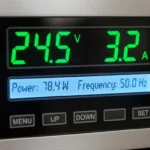
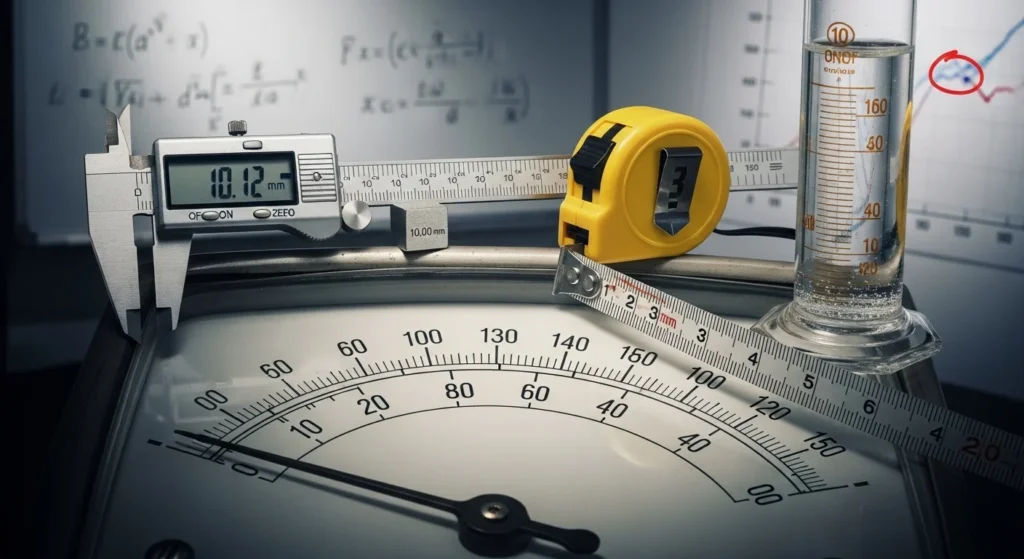

Imagine you are testing the voltage of a power supply in a laboratory. Your digital meter shows 220 V, but another engineer measures the same circuit and gets 217 V. Both instruments are working, but the readings are slightly different. This small difference is known as a measurement error.
In electrical engineering, accurate measurements are extremely important. Engineers rely on measurements to design circuits, maintain machines, and ensure electrical safety. Even a small error in measurement can lead to incorrect analysis, equipment malfunction, or poor system performance.
Measurement errors are unavoidable because no measuring instrument is perfect. Factors like instrument accuracy, environmental conditions, human observation, and electrical noise can all affect measurement results. That is why engineers must understand how measurement errors occur and how they can be minimized.
In this article, you will learn the measurement errors working principle, types of measurement errors, causes, measurement errors applications, advantages and disadvantages of error analysis, and practical solutions used in electrical systems. This guide explains the topic in simple and clear language so that students, technicians, and beginners can easily understand it.
What Are Measurement Errors?
A measurement error is the difference between the true value of a physical quantity and the value obtained from a measuring instrument. Measurement errors can occur when measuring voltage, current, resistance, temperature, power, length, or other quantities.
Simple Definition of Measurement Error
Measurement error is the difference between the true value and the measured value obtained from an instrument.
It shows how much the measured result differs from the expected or accepted value.
Measurement Error Formula
A simple way to express measurement error is:
Measurement Error = True Value − Measured Value
The sign of the error can change depending on the convention being used. For practical measurement work, the absolute error is often expressed as:
Absolute Error = |True Value − Measured Value|
Simple Explanation
No measuring instrument can provide a perfectly exact result in every situation. The accuracy of a measurement can be affected by the instrument itself, environmental conditions, the measurement method, or human observation.
For example, a voltmeter may display a value slightly higher or lower than the actual voltage. This difference is called measurement error.
Understanding measurement errors is important because accurate measurements help engineers, technicians, and students make better decisions and maintain reliable electrical systems.
Practical Example of Measurement Error
Suppose the accepted voltage of a circuit is:
True Value = 230 V
A voltmeter displays:
Measured Value = 228 V
Therefore:
Absolute Error = |230 − 228| = 2 V
The measurement has an absolute error of 2 V.
A smaller measurement error generally indicates that the measured value is closer to the true or accepted value.
Measurement Errors Working Principle
The working principle of measurement errors is based on comparing a measured value with a true, accepted, or reference value. The difference between these values indicates the amount of error in the measurement.
When a measuring instrument is connected to a system, the instrument may slightly affect the quantity being measured. In addition, limitations in the instrument, changes in temperature, electrical interference, incorrect calibration, and human reading errors can affect the final result.
How Measurement Error Occurs
The basic process can be understood in three steps:
- A quantity is measured using an appropriate instrument.
- The measured value is compared with a true or reference value.
- The difference between the values represents the measurement error.
For example, if the reference voltage is 230 V and the instrument measures 228 V, the difference is 2 V.
Main Sources of Measurement Errors
Measurement errors can occur due to several factors, including:
Loading effect when the measuring instrument changes the circuit condition being measured.
Instrument error caused by limitations or defects in the measuring device.
Environmental error caused by temperature, humidity, vibration, or electromagnetic interference.
Calibration error caused by incorrect or outdated instrument calibration.
Human error caused by incorrect reading, parallax, or improper instrument use.
Step-by-Step Explanation
Measurement of Physical Quantity
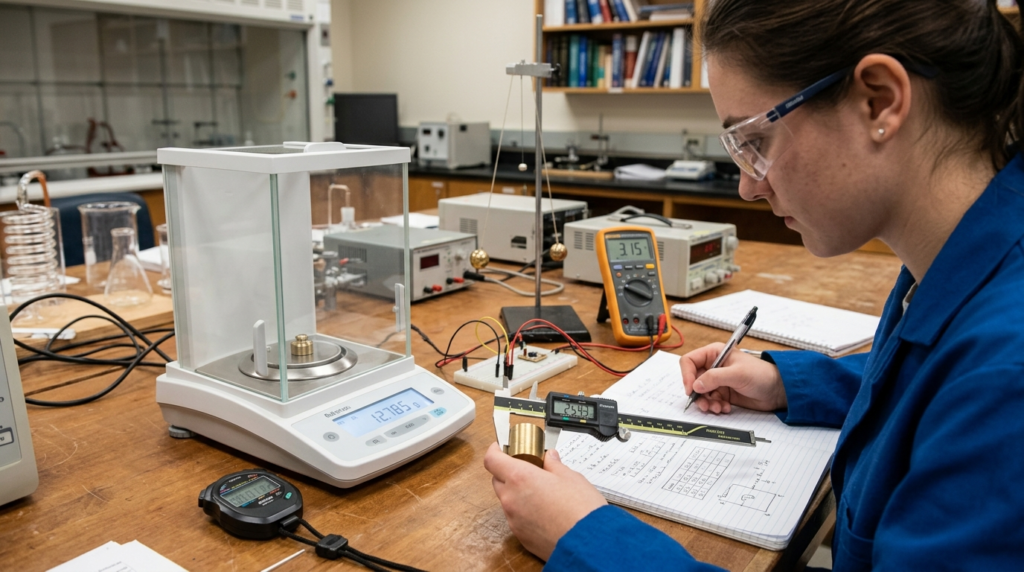
Measurement of physical quantity is the process of determining the exact value or magnitude of a physical parameter using suitable instruments and standard units. Physical quantities include voltage, current, resistance, temperature, pressure, speed, power, frequency, length, and many other measurable properties used in electrical, mechanical, and scientific systems. The measurement process compares an unknown quantity with a known standard value to obtain accurate results. Various instruments such as multimeters, oscilloscopes, thermometers, pressure gauges, and sensors are used for measuring different physical quantities depending on the application. Accurate measurement is very important in electrical engineering, industrial automation, laboratories, communication systems, and manufacturing because it helps maintain safety, quality, efficiency, and proper system operation. Measurement systems often include sensors, signal processing circuits, display units, and calibration standards to improve precision and reliability. Understanding the measurement of physical quantity is important for electrical students, engineers, and technicians because accurate measurement forms the foundation of testing, monitoring, control, and troubleshooting in modern engineering systems.An instrument measures a physical parameter such as voltage, current, resistance, or temperature.
Signal Conversion
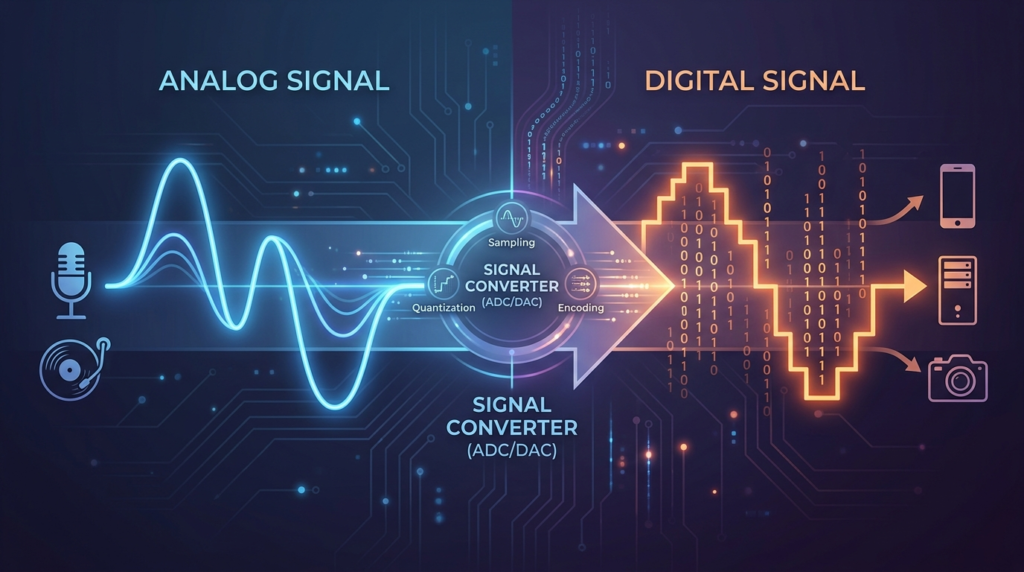
Signal conversion is the process of changing one type of electrical or electronic signal into another form so that it can be processed, transmitted, displayed, or controlled more effectively. In electrical and electronic systems, signals may exist as analog, digital, voltage, current, frequency, or optical signals depending on the application. Signal conversion circuits use components such as converters, sensors, amplifiers, transducers, analog-to-digital converters (ADC), and digital-to-analog converters (DAC) to perform the conversion process accurately. For example, an analog sensor signal can be converted into a digital signal for processing by a microcontroller or computer system. Signal conversion is widely used in communication systems, industrial automation, medical equipment, audio systems, instrumentation, robotics, and power electronics because it improves compatibility, signal processing, monitoring, and control. Proper signal conversion helps reduce errors, improve transmission quality, and ensure reliable system performance. Understanding signal conversion is important for electrical students, engineers, and technicians because it is a fundamental concept in modern electronics, control systems, and digital technology.The instrument converts the physical quantity into an electrical signal that can be displayed.
Signal Sensing
The measuring instrument first detects the physical quantity being measured, such as voltage, current, resistance, temperature, or pressure.
A sensor or input circuit receives the signal and converts it into a form that the instrument can process.
Signal Processing
The instrument’s internal circuits process the incoming signal and prepare it for measurement.
Depending on the instrument, the signal may be amplified, filtered, converted, or scaled before the final measurement value is calculated.
Measurement Calculation
The processed signal is compared with the instrument’s internal reference or measurement scale.
The instrument then determines the value of the measured quantity. In digital instruments, electronic circuits convert the signal into a numerical value that can be displayed.
Display of Measurement
The final measurement is shown to the user through a digital display or analog scale.
For example, a digital voltmeter may display 230 V, while an analog meter may show the value using a pointer and graduated scale.
How Measurement Error Occurs
Measurement error can occur at different stages of the measurement process. Common causes include:
- Instrument limitations – The instrument has a limited accuracy or resolution.
- Environmental conditions – Temperature, humidity, vibration, or electromagnetic interference can affect the reading.
- Calibration issues – An incorrectly calibrated instrument may produce inaccurate results.
- Loading effect – Connecting the instrument can slightly change the circuit being measured.
- Human reading mistakes – Incorrect scale reading or improper instrument use can introduce error.
Therefore, measurement error is not limited to the display stage. It can be introduced during sensing, signal processing, calculation, or reading.
Simple Analogy
Imagine measuring water with a measuring container that has a slightly inaccurate scale. Even if you fill the container carefully, the displayed amount may be slightly different from the actual amount of water.
This difference between the actual value and measured value represents measurement error.
Types of Measurement Errors
Measurement errors are commonly classified into three main types: gross errors, systematic errors, and random errors. Each type has a different cause and affects measurement accuracy in a different way.
Understanding these types helps electrical students, technicians, and engineers identify inaccurate readings and improve the reliability of measurement results.
Gross Errors
Gross errors are mainly caused by human mistakes or incorrect measurement procedures. These errors can produce a large difference between the actual value and the recorded value.
Gross errors are not usually caused by the measuring instrument itself. They may occur when a person reads the wrong scale, records an incorrect value, connects the instrument incorrectly, or uses the wrong measurement range.
Common Causes of Gross Errors
- Reading the instrument incorrectly
- Recording the wrong measurement value
- Connecting the instrument incorrectly
- Selecting the wrong measurement range
- Forgetting to account for the instrument scale
- Making calculation or data-entry mistakes
Example of Gross Error
Suppose the actual meter reading is 105 V, but a technician incorrectly reads or records it as 150 V.
This large difference is a gross measurement error caused by human observation or recording.
How to Reduce Gross Errors
Gross errors can be reduced by:
- Taking measurements carefully
- Checking readings before recording them
- Using the correct measurement range
- Following proper measurement procedures
- Repeating important measurements
- Providing proper training to technicians and operators
Systematic Errors
Systematic errors are consistent or repeatable errors that cause measurements to shift in a particular direction. The measured value may repeatedly be higher or lower than the true value.
These errors can result from the measuring instrument, measurement method, environmental conditions, or calibration problems.
Common Causes of Systematic Errors
- Incorrect instrument calibration
- Instrument zero error
- Temperature changes
- Mechanical friction
- Aging or deterioration of components
- Power supply variations
- Incorrect measurement method
- Loading effect of the measuring instrument
Example of Systematic Error
Suppose a voltmeter consistently reads 2 V higher than the actual voltage.
If the actual voltage is 230 V, the meter may repeatedly show approximately 232 V.
Because the error occurs consistently, it is considered a systematic error.
How to Reduce Systematic Errors
Systematic errors can often be reduced or corrected by:
- Proper instrument calibration
- Checking and adjusting zero settings
- Using accurate reference standards
- Controlling environmental conditions
- Selecting the correct measurement method
- Using properly maintained instruments
Random Errors
Random errors are caused by unpredictable variations that make repeated measurements slightly different from one another.
Unlike systematic errors, random errors do not always occur in the same direction. One reading may be slightly higher, while the next may be slightly lower.
Common Causes of Random Errors
- Electrical noise
- Small environmental changes
- Fluctuating electrical signals
- Vibrations
- Minor changes in operating conditions
- Limited instrument resolution
Example of Random Error
Suppose the actual voltage is approximately 230 V, but repeated measurements give:
- 229.8 V
- 230.2 V
- 230.0 V
- 230.3 V
- 229.9 V
These small variations can occur because of random measurement errors.
How to Reduce Random Errors
Random errors can be reduced by:
- Taking multiple measurements
- Calculating the average value
- Using higher-resolution instruments
- Reducing electrical noise
- Controlling environmental conditions
- Using stable measurement signals
Comparison of Measurement Errors
| Type of Error | Main Cause | Typical Behavior | How to Reduce It |
|---|---|---|---|
| Gross Error | Human mistake | Often large and avoidable | Careful measurement and training |
| Systematic Error | Instrument, method, or environment | Consistent or repeatable | Calibration and correction |
| Random Error | Unpredictable variations | Changes from one reading to another | Repeated measurements and averaging |
In simple terms, gross errors are mainly caused by people, systematic errors usually produce a consistent bias, and random errors cause unpredictable small variations. Identifying the type of measurement error is an important step toward improving measurement accuracy and reliability.
5. Main Components Related to Measurement Main Factors That Influence Measurement Errors
Measurement errors can be influenced by different parts of a measurement system as well as external conditions. The accuracy of the final reading depends on the quality of the instrument, sensor, signal processing, display, and measurement environment.
Measuring Instrument
The measuring instrument is one of the most important factors affecting measurement accuracy. Its accuracy, resolution, sensitivity, and internal design can determine how close the measured value is to the true value.
A properly calibrated and high-quality instrument generally produces smaller measurement errors than a low-quality or poorly maintained instrument.
Sensor or Transducer
A sensor or transducer detects a physical quantity and converts it into a usable signal. For example, sensors can detect temperature, pressure, current, voltage, or other physical quantities.
If the sensor has poor accuracy, drift, low sensitivity, or a faulty connection, the resulting measurement may contain significant errors.
Signal Processing Circuit
The signal processing circuit prepares the sensor or input signal for measurement. It may amplify, filter, convert, or scale the signal before it reaches the display.
Noise, signal distortion, component tolerances, or incorrect circuit operation can introduce additional measurement errors.
Display System
The display system presents the final measurement to the user. Both digital and analog displays have limitations that can affect how accurately a value is read.
Common display-related errors include:
- Limited display resolution
- Rounding of numerical values
- Incorrect scale reading
- Parallax error in analog instruments
- Poor visibility of the display
Environmental Conditions
Environmental conditions can significantly affect measurement accuracy. Changes in the surroundings may influence the instrument, sensor, or electrical signal.
Common environmental factors include:
- Temperature
- Humidity
- Vibration
- Electromagnetic interference
- Electrical noise
- Dust and contamination
For accurate measurements, instruments should be used within their specified operating conditions.
Calibration
Calibration is another important factor in measurement accuracy. A measuring instrument that is not properly calibrated may consistently produce readings that are higher or lower than the true value.
Regular calibration using a suitable reference standard helps identify and reduce systematic measurement errors.
Measurement Method
The method used to take a measurement can also introduce errors. Incorrect connections, unsuitable measurement ranges, poor probe placement, or improper operating procedures can affect the final result.
Therefore, selecting the correct instrument and following the proper measurement procedure are essential for obtaining accurate and reliable measurements.
6. Advantages of Understanding Measurement Errors
Studying measurement errors provides many benefits in electrical engineering.
• Improves measurement accuracy
• Helps engineers design better instruments
• Reduces system failures
• Improves quality control in industries
• Helps identify instrument faults
• Supports reliable electrical system operation
Understanding errors allows engineers to correct or minimize them effectively.
7. Disadvantages / Limitations
Although measurement error analysis is important, it also has some limitations.
• Eliminating errors completely is impossible
• Requires regular instrument calibration
• Advanced instruments may be expensive
• Error analysis can increase system complexity
Despite these limitations, controlling measurement errors is essential in engineering systems.
Applications of Measurement Errors
Understanding measurement errors and error analysis is important wherever accurate measurements are required. Engineers, technicians, researchers, and students study measurement errors to identify inaccurate readings, improve measurement accuracy, and ensure reliable system performance.
Electrical Power Systems
Measurement errors are important in electrical power systems where voltage, current, power, energy, and frequency must be monitored accurately.
Engineers consider measurement errors when using meters, transformers, sensors, and monitoring equipment. Accurate measurements help with power system protection, fault detection, energy management, and equipment monitoring.
Laboratory Measurements
In electrical and scientific laboratories, measurement errors are analyzed to improve the accuracy of experiments and test results.
Students and researchers often take repeated measurements and compare them with reference values. Understanding systematic, random, and gross errors helps them evaluate the reliability of experimental results.
Industrial Automation
Industrial automation systems depend on accurate measurements for controlling machines and production processes.
Sensors measure parameters such as temperature, pressure, speed, current, voltage, and flow. Measurement errors can affect machine control and product quality, so industries use accurate sensors, calibration, and monitoring systems to reduce errors.
Calibration Laboratories
Calibration laboratories use measurement error analysis to check the accuracy of measuring instruments.
Technicians compare an instrument’s readings with a known reference standard. Any difference is identified as an error, allowing the instrument to be adjusted, corrected, or certified according to the required accuracy.
Electronic Circuit Design
Engineers consider measurement errors when designing and testing electronic circuits, sensors, control systems, and measurement devices.
Understanding possible errors helps engineers select suitable instruments, improve circuit design, and ensure that test results accurately represent the actual circuit conditions.
Medical and Instrumentation Systems
Measurement accuracy is also important in medical and instrumentation equipment. Sensors and measuring devices must provide reliable readings because inaccurate measurements can affect monitoring and system decisions.
Proper calibration, sensor selection, and error analysis help improve the reliability of these systems.
Automotive and Transportation Systems
Modern vehicles use sensors to measure parameters such as speed, temperature, pressure, voltage, current, and engine conditions.
Measurement errors can affect electronic control systems, so accurate sensors and reliable measurement methods are important for vehicle performance and monitoring.
Overall, measurement error analysis is used in electrical systems, laboratories, industrial automation, calibration, electronics, medical equipment, and transportation. Identifying and reducing errors helps improve measurement accuracy, safety, reliability, and system performance.
9. Comparison: Accuracy vs Precision vs Measurement Error
Understanding the difference between accuracy and precision helps engineers analyze measurement errors more effectively.
| Parameter | Accuracy | Precision | Measurement Error |
| Definition | Closeness to true value | Repeatability of measurements | Difference between measured and true value |
| Example | Meter shows correct value | Same reading repeated many times | Small difference between real and measured value |
| Importance | Determines correctness | Determines consistency | Indicates measurement quality |
All three concepts are closely related in measurement systems.
10. Selection Guide: How to Reduce Methods to Reduce Measurement Errors
Measurement errors cannot always be completely eliminated, but they can be significantly reduced by using the correct instruments, proper measurement techniques, regular calibration, and suitable operating conditions.
Use High-Accuracy Measuring Instruments
Choose a measuring instrument with an accuracy level suitable for the application. Instruments with better accuracy, resolution, and stability can provide more reliable measurements.
For critical electrical measurements, the instrument should have a suitable accuracy rating and measurement range for the quantity being measured.
Regular Instrument Calibration
Regular calibration helps ensure that a measuring instrument continues to provide accurate and reliable readings.
During calibration, the instrument is compared with a known reference standard. If a significant difference is found, the instrument may require adjustment, repair, or replacement.
The calibration interval should be based on the manufacturer’s recommendations, instrument usage, operating conditions, and required measurement accuracy.
Proper Instrument Handling
Correct handling and connection of measuring instruments can prevent unnecessary errors and damage.
Always select the correct measurement function and range, use suitable test leads, and connect the instrument correctly. Avoid dropping instruments or exposing them to conditions beyond their specified limits.
Control Environmental Conditions
Environmental conditions can affect measurement accuracy, especially in sensitive instruments.
Where practical, control or minimize the effects of:
- Temperature changes
- Humidity
- Vibration
- Electrical noise
- Electromagnetic interference
- Dust and contamination
Proper grounding and shielding can also help reduce electrical interference.
Take Multiple Measurements
Taking several readings can help reduce the effect of random measurement errors.
If the measured quantity is stable, calculating the average of repeated readings can provide a more reliable result than relying on a single measurement.
Use the Correct Measurement Method
The measurement method should match the type of quantity and system being tested.
Incorrect connections, unsuitable test points, wrong measurement ranges, or poor probe placement can introduce additional errors. Following the correct measurement procedure helps improve accuracy and repeatability.
Common Measurement Problems and Solutions
Measurement problems can occur because of instrument limitations, incorrect operation, environmental conditions, or unstable signals. Identifying the cause helps improve the reliability of measurement results.
Why Do Different Instruments Show Different Readings?
Different instruments may have different accuracy ratings, resolution, calibration conditions, and measurement methods. Their readings may therefore vary slightly.
Solution: Use properly calibrated instruments with suitable accuracy and compare important measurements against an appropriate reference standard.
Why Does a Measurement Keep Fluctuating?
A fluctuating reading may be caused by an unstable signal, electrical noise, electromagnetic interference, loose connections, or changes in the measured system.
Solution: Check the connections, stabilize the measured signal, reduce electrical interference, and use appropriate filtering or shielding where necessary.
How Often Should Measuring Instruments Be Calibrated?
There is no single calibration interval that applies to every measuring instrument. The required interval depends on the instrument type, manufacturer recommendations, frequency of use, operating environment, and required accuracy.
Solution: Follow the manufacturer’s guidance and establish a calibration schedule based on the instrument’s actual usage and performance history.
Can Measurement Errors Be Completely Eliminated?
No. In practical measurement systems, some level of uncertainty or error will always remain.
However, errors can be minimized through proper instrument selection, calibration, correct measurement techniques, environmental control, and repeated measurements.
Future Trends in Measurement Technology
Measurement technology is developing rapidly through digital electronics, smart sensors, automation, artificial intelligence, and connected monitoring systems. These technologies are making measurement systems more accurate, faster, and easier to monitor.
Smart Measuring Instruments
Modern smart measuring instruments can perform automatic calculations, store measurement data, communicate with other devices, and provide diagnostic information.
Some advanced instruments can also compensate for certain known measurement effects, helping improve measurement accuracy.
Automated Digital Calibration
Digital and automated calibration systems can compare instruments with reference standards and record calibration results electronically.
Automation reduces manual work and can improve the speed, consistency, and traceability of the calibration process.
Artificial Intelligence in Measurement Systems
AI and machine-learning technologies can analyze large amounts of measurement data to identify unusual patterns, detect abnormal readings, and support predictive maintenance.
This can help engineers identify possible measurement problems before they affect system performance.
Remote Measurement and Monitoring
Modern instruments can communicate measurement data through digital networks. Engineers and technicians can monitor voltage, current, temperature, power, and other parameters remotely.
Remote monitoring is especially useful in industrial plants, electrical power systems, laboratories, and other facilities where continuous measurement is required.
Advanced Sensors
New sensor technologies are becoming smaller, more sensitive, and more capable of operating in demanding environments.
Advanced sensors can improve the collection of real-time data and support smart electrical, industrial, and automation systems.
The future of measurement technology will focus on higher accuracy, automated calibration, intelligent data analysis, remote monitoring, advanced sensors, and more reliable measurement systems.
13. Conclusion
Measurement errors are an unavoidable part of every measurement system. They occur due to instrument limitations, environmental conditions, and human factors. Understanding the measurement errors working principle helps engineers analyze and reduce these inaccuracies.
Electrical engineers, technicians, and students must understand different types of errors such as gross errors, systematic errors, and random errors. By selecting accurate instruments, performing regular calibration, and controlling environmental conditions, measurement errors can be minimized significantly.
Understanding measurement errors applications is essential in laboratories, power systems, industrial automation, and electronic circuit design. Proper error analysis ensures reliable measurements and improves the overall performance of electrical systems.
For beginners in electrical engineering, learning about measurement errors is a fundamental step toward mastering accurate measurement techniques and building dependable electrical systems.