
Imagine a busy city where thousands of homes, hospitals, offices, and factories need electricity every second. When a thunderstorm hits or electricity demand suddenly increases, the power system must continue supplying safe and stable electricity without interruption. One of the key installations that makes this possible is the Indoor Grid Station.
An Indoor Grid Station is widely used in modern power distribution systems because it provides reliable operation while protecting electrical equipment from weather, dust, pollution, and accidental damage. It is commonly installed in cities, industrial plants, commercial buildings, and underground power networks where space is limited and safety is a top priority.
Whether you are an electrical engineering student, a technician, a beginner, or a practicing engineer, understanding an Indoor Grid Station is an important step toward learning modern power systems. In this article, you will learn the Indoor Grid Station working principle, its types, major components, advantages, disadvantages, applications, selection guide, troubleshooting tips, and future developments in simple and easy English.
what is a indoor grid station
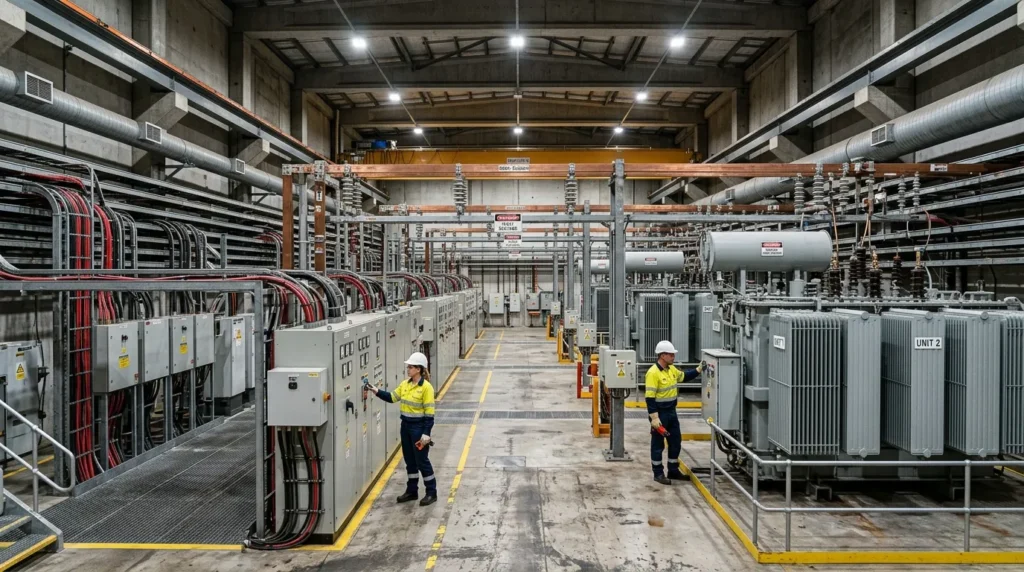
An Indoor Grid Station is an electrical substation where all major electrical equipment is installed inside a building or enclosed structure. It receives electrical power from transmission or distribution lines, controls and protects the electrical system, and safely distributes electricity to different locations.
Unlike outdoor substations, an Indoor Grid Station keeps equipment protected from rain, dust, extreme temperatures, pollution, and unauthorized access.
Simply put, it acts like the control room of a power distribution system, ensuring electricity flows safely and efficiently.
Practical Example
Consider a large shopping mall. The electricity supplied from the utility company enters an Indoor Grid Station installed in the basement or utility building. The station controls voltage, protects against faults, and distributes power to lighting, elevators, air-conditioning systems, shops, and emergency equipment.
Indoor Grid Station Working Principle
The Indoor Grid Station working principle is based on receiving electrical power, controlling it, protecting the system from faults, and supplying electricity safely to consumers.
Think of it like a city’s traffic control system. Just as traffic signals control vehicles and prevent accidents, an Indoor Grid Station controls electricity and prevents electrical faults from damaging the network.
The working process follows these steps:
- High-voltage electricity enters the station.
- Circuit breakers connect the incoming supply.
- Disconnectors isolate equipment during maintenance.
- Current transformers (CTs) and voltage transformers (VTs) measure electrical values.
- Protective relays continuously monitor the system.
- If a fault occurs, the relay sends a signal.
- The circuit breaker immediately disconnects the faulty section.
- The transformer changes voltage to the required level.
- Electricity is distributed through outgoing feeders.
- Operators monitor the complete system using control panels and automation systems.
This process ensures continuous, safe, and reliable electricity supply.
Types & Classification of Indoor Grid Stations
Indoor Grid Stations can be classified in different ways depending on voltage level, installation method, and application. These classifications help in selecting the most suitable solution for long-term electrical requirements.
Air-Insulated Indoor Grid Station (AIS)
Air-Insulated Substations use normal air as the insulating medium between electrical equipment.
Features
- Lower installation cost
- Easy maintenance
- Requires more installation space
- Common in industrial facilities
- Suitable for long-term applications where space is available
Gas-Insulated Indoor Grid Station (GIS)
Gas-Insulated Substations use sulfur hexafluoride (SF₆) gas or modern alternative insulating gases inside sealed metal enclosures.
Features
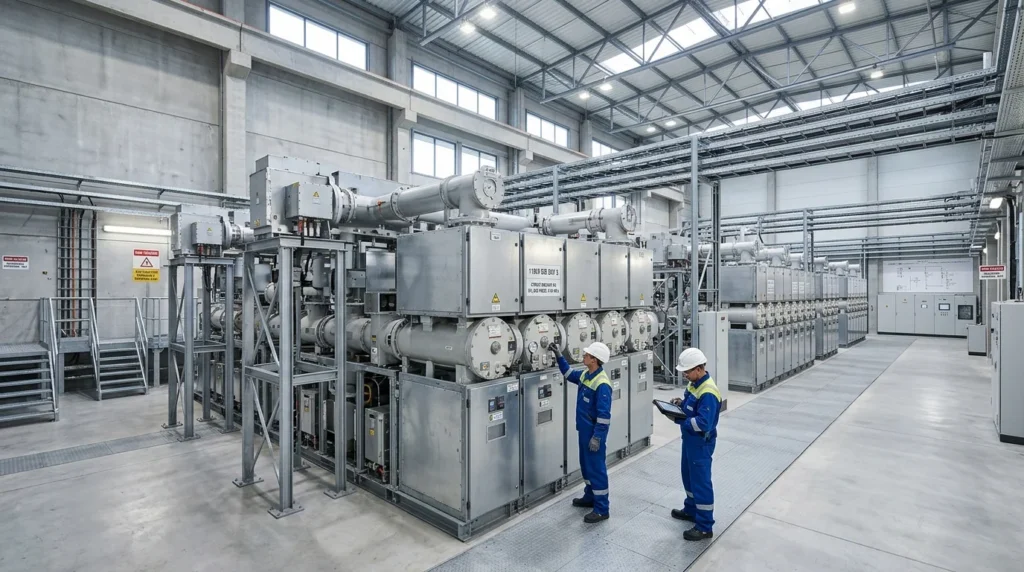
- Compact design
- High reliability
- Excellent safety
- Suitable for cities where land is expensive
- Well suited for long-term urban power infrastructure
Medium Voltage Indoor Grid Station
These stations generally operate between 11 kV and 33 kV.
They are commonly used in:
- Commercial buildings
- Hospitals
- Shopping malls
- Universities
They provide a practical long-term solution for medium-voltage distribution requirements.
High Voltage Indoor Grid Station
These stations handle much higher voltages and are used in large industries and utility power networks. They are designed to support reliable and long-term power transmission and distribution.
Main Components & Long-Term Functions
Every Indoor Grid Station consists of several important components working together to ensure safe, reliable, and long-term electrical operation.
Power Transformer
The transformer increases or decreases voltage according to system requirements.
Function
- Voltage conversion
- Efficient power transfer
- Long-term voltage regulation
Circuit Breaker
A circuit breaker automatically disconnects faulty circuits.
Function
- Fault protection
- Equipment safety
- Reliable long-term operation
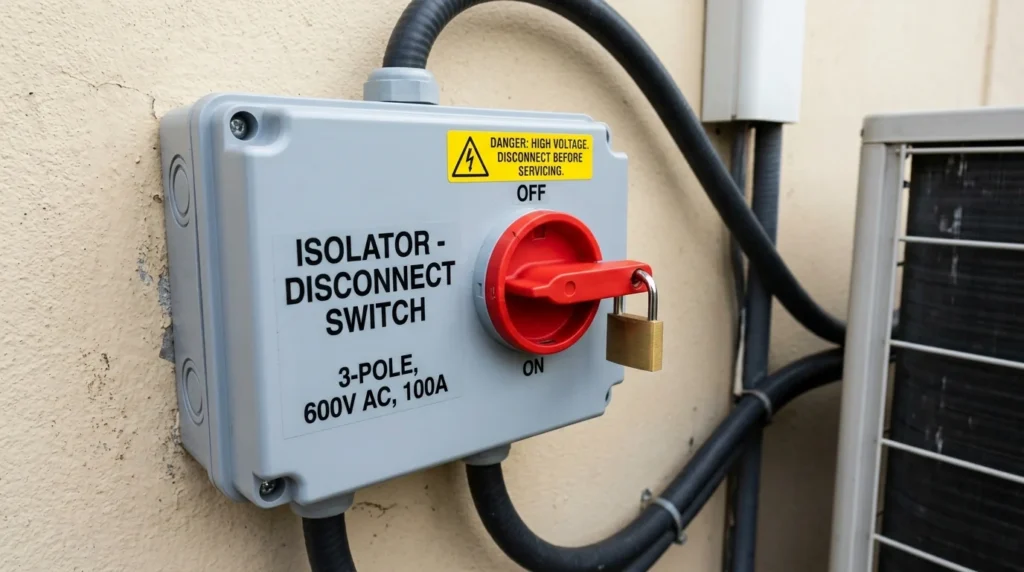
Isolator (Disconnect Switch)
An isolator disconnects equipment after the circuit breaker opens.
Function
- Safe maintenance
- Equipment isolation
- Long-term maintenance support
Busbar
A busbar is a thick conductor that distributes electrical power to different feeders.
Function
- Power distribution
- Easy system expansion
- Long-term load management
Current Transformer (CT)
The CT reduces high current into measurable values.
Function
- Current measurement
- Relay protection
- Reliable monitoring
Voltage Transformer (VT)
The VT converts high voltage into a safe measurable voltage.
Function
- Voltage measurement
- Metering
- Protection system support
Protective Relays
Relays detect abnormal electrical conditions.
Function
- Fault detection
- Automatic protection
- Long-term system reliability
Lightning Arresters
These protect equipment from lightning and switching surges, helping improve long-term equipment reliability.
Control Panel
The control panel allows operators to monitor and operate the station safely while supporting long-term system monitoring.
Earthing System
The earthing system safely carries fault current into the ground and provides essential long-term electrical safety.
Indoor Grid Station Advantages & Long-Term Benefits
The Indoor Grid Station advantages and disadvantages should be understood before selecting one. Below are the major advantages and long-term benefits.
- Better protection from weather
- Improved operator safety
- Less exposure to dust and pollution
- Higher equipment reliability
- Lower maintenance frequency
- Longer equipment life
- Compact installation
- Better security against unauthorized access
- Reduced risk of accidental contact
- Suitable for densely populated urban areas
- Cleaner operating environment
- Easier monitoring using automation systems
Disadvantages & Long-Term Limitations
Although Indoor Grid Stations have many benefits, they also have some limitations.
- Higher initial construction cost
- Building construction is required
- Cooling and ventilation systems increase expenses
- Expansion can be difficult if space is limited
- Maintenance requires skilled personnel
- Indoor fire protection systems are necessary
- Gas-insulated systems are more expensive than air-insulated systems
Despite these limitations, Indoor Grid Stations remain the preferred choice for many modern installations due to their safety, reliability, and long-term operational benefits.
Indoor Grid Station Applications & Long-Term Uses
Modern power systems use Indoor Grid Stations in many different locations.
Residential Applications
- Large apartment buildings
- Residential complexes
- Underground distribution systems
Commercial Applications
- Shopping malls
- Hotels
- Office buildings
- Airports
- Hospitals
Industrial Applications
- Manufacturing plants
- Steel industries
- Cement factories
- Chemical plants
- Oil and gas facilities
Utility Applications
- Urban power distribution
- Metro rail systems
- Railway stations
- Underground substations
Modern Technology Applications
- Data centers
- Smart cities
- Renewable energy integration
- Electric vehicle charging infrastructure
- Smart grid systems
These Indoor Grid Station applications continue expanding as cities become more urbanized and electricity demand grows, making them an important long-term solution for modern power infrastructure.
Comparison & Long-Term Considerations
Difference Between Indoor Grid Station and Outdoor Grid Station
Many beginners ask about the difference between outdoor grid station and indoor grid station. The table below explains the main differences and long-term considerations.
| Feature | Indoor Grid Station | Outdoor Grid Station |
|---|---|---|
| Installation | Inside a building | Open environment |
| Weather Protection | Excellent | Limited |
| Space Requirement | Compact | Larger area required |
| Initial Cost | Higher | Lower |
| Safety | Very high | Moderate |
| Maintenance | Cleaner environment | Weather-dependent |
| Reliability | High | High, but affected by environment |
| Best Use | Urban areas | Rural and large open areas |
Selection Guide & Long-Term Planning
Choosing the right Indoor Grid Station depends on several important factors.
Consider Voltage Level
Select equipment according to the incoming supply voltage and load requirement.
Estimate Future Expansion
Always plan for future electrical demand and long-term capacity requirements.
Evaluate Available Space
Limited space usually favors compact GIS installations.
Consider Environmental Conditions
Dust, humidity, pollution, and temperature influence equipment selection.
Focus on Safety
Ensure compliance with electrical safety standards and proper earthing.
Budget Planning
Balance initial investment with long-term maintenance and operating costs.
Automation Requirements
Modern stations should support remote monitoring and digital protection.
Tips for Beginners
- Learn basic substation components first.
- Understand single-line diagrams.
- Study protection systems.
- Follow electrical safety rules.
- Visit real substations whenever possible for practical learning.
Common Electrical Problems & Long-Term Solutions
Why Does the Circuit Breaker Trip Frequently?
Cause
Electrical fault or overload.
Solution
Inspect connected loads and check the protection relay settings.
Why Is the Transformer Overheating?
Cause
Overloading or poor ventilation.
Solution
Reduce load and improve cooling.
Why Is Voltage Unstable?
Cause
Loose connections or transformer tap issues.
Solution
Inspect electrical connections and adjust tap settings if necessary.
Why Is Relay Protection Operating Unexpectedly?
Cause
Incorrect relay settings or faulty sensors.
Solution
Test CTs, VTs, and relay configuration.
Why Is Equipment Producing Unusual Noise?
Cause
Mechanical vibration or transformer problems.
Solution
Inspect mounting bolts and perform preventive maintenance.
Why Does Insulation Fail?
Cause
Moisture, aging, or contamination.
Solution
Perform insulation resistance testing and replace damaged insulation.
Future Trends
Indoor Grid Stations are evolving rapidly with modern electrical technologies.
Some important future developments include:
- Digital substations
- Smart protection relays
- Internet of Things (IoT)-based monitoring
- Artificial intelligence for predictive maintenance
- Remote operation through SCADA systems
- Eco-friendly insulating gases replacing traditional SF₆
- Condition-based maintenance
- Renewable energy integration
- Advanced cybersecurity for substations
- Smart sensors with real-time diagnostics
These technologies improve reliability, reduce maintenance costs, and increase overall system efficiency.
Conclusion
An Indoor Grid Station is one of the most important parts of a modern electrical power system. It safely receives, controls, protects, and distributes electrical energy while keeping equipment protected from environmental conditions. Understanding the Indoor Grid Station working principle, components, types, applications, and Indoor Grid Station advantages and disadvantages helps students, technicians, and engineers build a strong foundation in power system engineering. As smart grids, automation, renewable energy, and digital substations continue to grow, Indoor Grid Stations will become even more advanced and efficient. By learning both the theory and practical operation of these installations, you will be better prepared to design, operate, maintain, and troubleshoot modern electrical distribution systems with confidence.