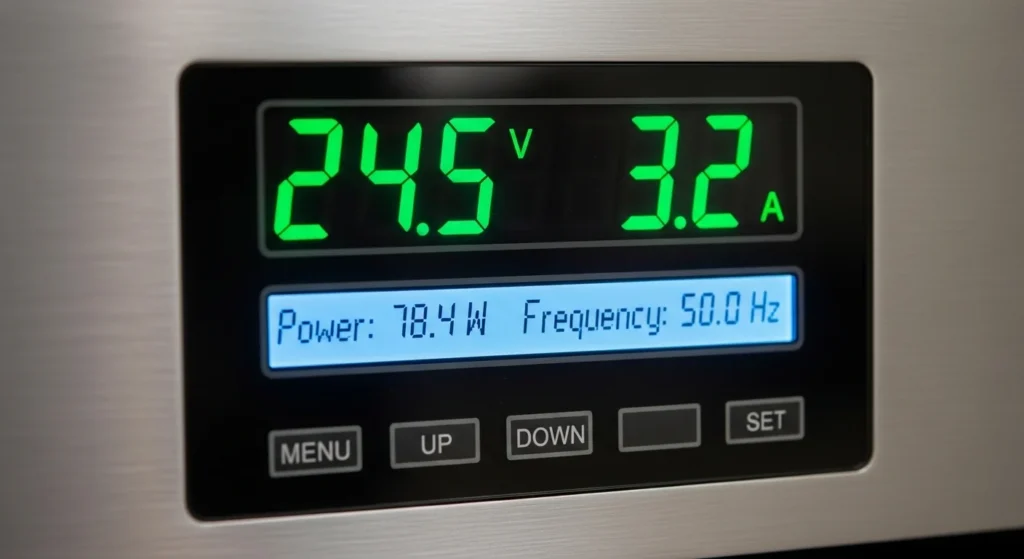

Imagine you are standing in front of an electrical control panel in a factory. The panel has several displays showing voltage, current, and power levels. These values help technicians monitor the electrical system and quickly identify any abnormal condition. Instead of old analog meters with moving needles, modern panels now use clear digital displays that show precise numbers. These instruments are known as Digital Panel Meters.
A Digital Panel Meter plays a critical role in electrical systems because it provides accurate, easy-to-read measurements of electrical parameters. In industries, power plants, laboratories, and even home electrical setups, technicians rely on these meters to monitor voltage, current, frequency, and other important values.
Without reliable measurement instruments, engineers cannot maintain safe and efficient electrical systems. Digital panel meters help reduce human reading errors and provide high precision compared to traditional analog meters.
In this article, you will learn what a digital panel meter is, the digital panel meter working principle, its types, main components, digital panel meter applications, advantages and disadvantages, selection tips, troubleshooting methods, and future trends. This guide is designed to help students, engineers, technicians, and beginners understand digital panel meters clearly and practically.
2. What is a Digital Panel Meter?
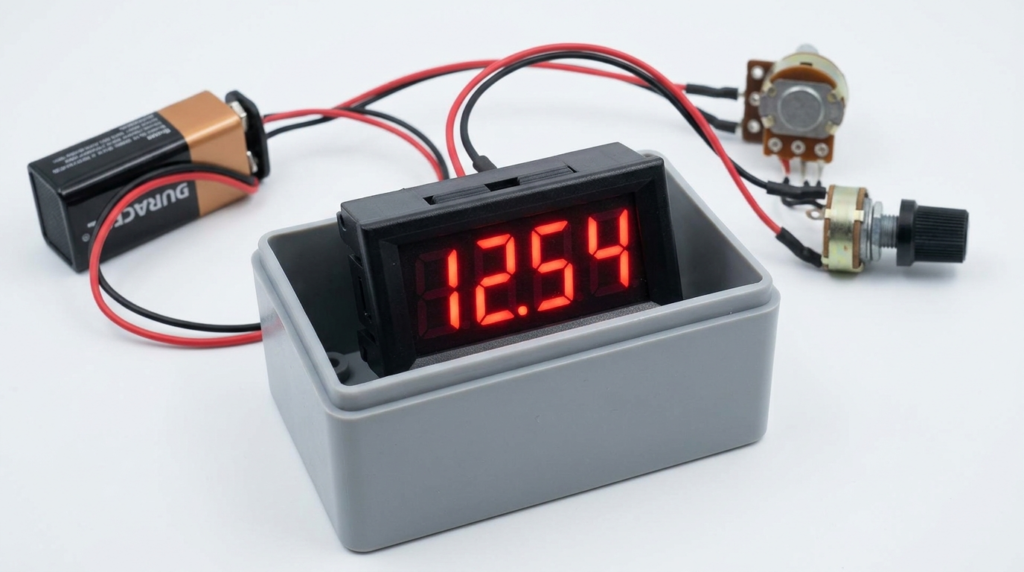
.A Digital Panel Meter (DPM) is an electronic measuring instrument used to display electrical values such as voltage, current, frequency, power, temperature, or resistance in digital numerical form. It is commonly installed on electrical panels, control systems, industrial machines, and power distribution boards for accurate monitoring of electrical parameters. Unlike analog meters that use moving pointers, a digital panel meter uses electronic circuits and digital displays such as LED or LCD screens to provide clear and precise readings. The input electrical signal is converted into digital data using an analog-to-digital converter (ADC), allowing users to measure values with high accuracy and easy readability. Digital panel meters are widely used in industries, laboratories, power plants, automation systems, and commercial buildings because they offer better precision, compact design, low maintenance, and fast response. Some advanced digital panel meters also include alarm systems, communication interfaces, and data logging features for smart monitoring applications. Understanding what a Digital Panel Meter is important for electrical students, engineers, and technicians because it is an essential device for modern electrical measurement, monitoring, and control systems.
These parameters may include:
- Voltage
- Current
- Frequency
- Power
- Temperature
- Resistance
Instead of a moving needle, the meter shows values on a digital display, making the readings easy to understand.
Simple Explanation
A digital panel meter converts an electrical signal into digital numbers and displays the value on a screen.
Practical Example
In a power distribution panel, a digital panel meter may show:
- Voltage: 230 V
- Current: 15 A
- Frequency: 50 Hz
This allows technicians to monitor the system instantly and take action if the values go beyond safe limits.
Digital meters are widely used because they provide accurate, stable, and fast readings.
3. Digital Panel Meter Working Principle
The digital panel meter working principle is based on converting an electrical signal into a digital value that can be displayed on a screen.
The meter processes the input signal using electronic circuits and microprocessors.
Step-by-Step Working
Input Signal Detection
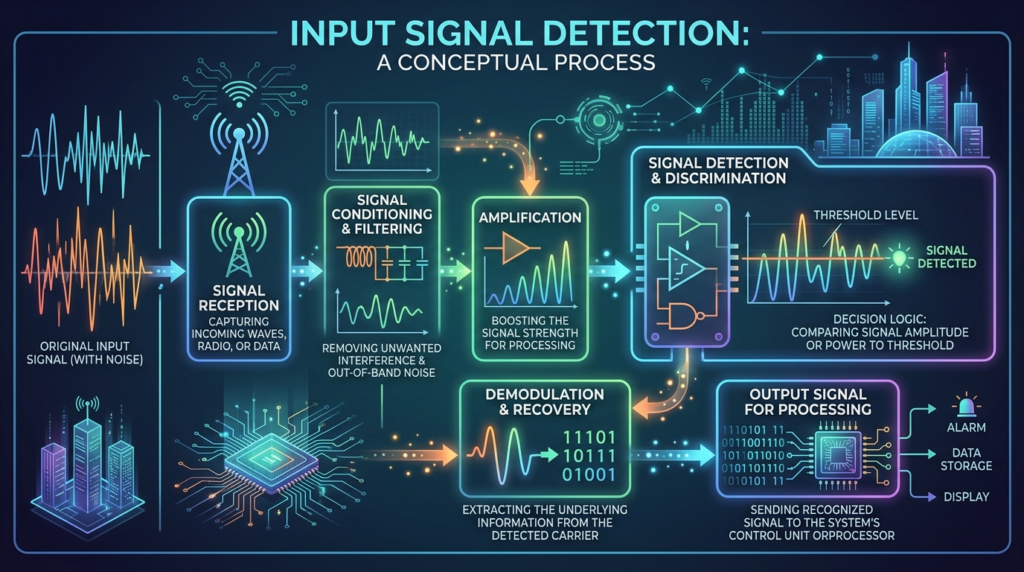
Input signal detection is the process of identifying, sensing, and measuring an incoming electrical or electronic signal in a circuit or system. It is one of the most important stages in electronic communication, automation, control systems, and instrumentation because it allows devices to recognize signals and respond correctly. The detected signal may be analog or digital and can come from sensors, microphones, switches, antennas, or other electronic sources. Input signal detection circuits use components such as sensors, amplifiers, filters, comparators, and microcontrollers to capture weak signals and convert them into usable electrical information. In many systems, the detected signal is amplified and processed further for monitoring, control, or communication purposes. Input signal detection is widely used in wireless communication systems, industrial automation, medical equipment, security systems, robotics, and audio electronics because it improves accuracy, responsiveness, and system performance. Proper signal detection helps reduce noise, avoid false triggering, and ensure reliable operation. Understanding input signal detection is important for electrical students, engineers, and technicians because it is a fundamental concept in modern electronics, signal processing, and control technology.
Signal Conditioning
The input signal may be too large or too small for the internal circuits.
Signal conditioning adjusts the signal to a suitable level.
Analog-to-Digital Conversion
An Analog-to-Digital Converter (ADC) converts the electrical signal into digital data.
Data Processing
A microcontroller processes the digital data and calculates the correct measurement value.
Digital Display
Finally, the processed value appears on the display screen as numbers.
Simple Analogy
Think of the digital panel meter like a translator.
The electrical signal is like a foreign language. The meter converts it into numbers that humans can easily understand.
4. Types of Digital Panel Meters
Digital panel meters are classified based on the parameter they measure.
Digital Voltmeter Panel Meter
This type measures electrical voltage.
It is commonly used in:
- Power distribution panels
- Control systems
- Battery monitoring systems
Digital Ammeter Panel Meter
This meter measures electric current.
It is often used with a current transformer (CT) to measure high currents in industrial systems.
Digital Frequency Meter
This type measures the frequency of an electrical signal.
It is commonly used in power systems to ensure that the frequency remains stable.
Multifunction Digital Panel Meter
A multifunction meter can measure multiple parameters such as:
- Voltage
- Current
- Power
- Frequency
- Power factor
These meters are widely used in modern smart panels.
5. Main Components of a Digital Panel Meter
A digital panel meter contains several important electronic components.
Input Circuit
The input circuit receives the electrical signal from the system and protects internal circuits from overload.
Signal Conditioning Circuit
This circuit adjusts the signal level so that it can be processed correctly.
Analog-to-Digital Converter (ADC)
The ADC converts the analog electrical signal into digital data.
This is one of the most important parts of the meter.
Microcontroller
The microcontroller processes the digital signal and calculates the measurement value.
Digital Display
The display shows the measurement value in numeric form.
Common display types include:
- LED display
- LCD display
Power Supply
The meter requires a small power supply to operate its electronic circuits.
6. Advantages of Digital Panel Meter
Digital panel meters offer many advantages in electrical systems.
• High measurement accuracy
• Easy-to-read digital display
• Faster response compared to analog meters
• Reduced human reading error
• Compact design suitable for control panels
• Ability to measure multiple parameters
• Better reliability and stability
These advantages make digital meters the preferred choice in modern electrical systems.
7. Disadvantages / Limitations
Although digital panel meters are very useful, they also have some limitations.
• More expensive than simple analog meters
• Requires electrical power to operate
• Sensitive to electrical noise in some environments
• Complex internal circuits
• Repair may require specialized technicians
Despite these limitations, digital panel meters remain widely used due to their accuracy and convenience.
8. Digital Panel Meter Applications
Digital panel meter applications are found in many electrical and electronic systems.
Industrial Control Panels
Factories use digital panel meters to monitor voltage, current, and power levels.
Power Distribution Systems
Electric utilities use these meters to monitor electrical parameters in substations and distribution panels.
Laboratory Equipment
Laboratories use digital panel meters for precise measurement in testing and research.
Renewable Energy Systems
Solar power systems use digital panel meters to monitor:
- Solar voltage
- Battery charging current
- Output power
Electrical Maintenance
Technicians use digital panel meters to monitor system performance during maintenance work.
9. Comparison: Digital Panel Meter vs Analog Panel Meter
Understanding the difference between digital panel meter and analog panel meter helps engineers choose the right instrument.
| Feature | Digital Panel Meter | Analog Panel Meter |
| Display | Numeric digital display | Moving needle |
| Accuracy | High accuracy | Moderate accuracy |
| Reading | Easy to read | Sometimes difficult |
| Response Speed | Faster | Slower |
| Maintenance | Low maintenance | May require calibration |
Digital meters are now replacing analog meters in many modern applications.
10. Selection Guide: How to Choose the Right Digital Panel Meter
Choosing the correct digital panel meter is important for reliable measurements.
Measurement Type
First determine what parameter you want to measure:
- Voltage
- Current
- Frequency
- Power
Measurement Range
The meter should support the required measurement range.
For example:
- 0–300 V for voltage
- 0–100 A for current
Accuracy Level
Higher accuracy meters are required for laboratory or critical industrial applications.
Display Type
Choose a display that is easy to read in your environment.
LED displays are bright and suitable for industrial panels.
Installation Size
Panel meters come in different panel cut sizes.
Make sure the meter fits the control panel design.
11. Common Problems & Solutions
Why does the digital panel meter show incorrect readings?
Incorrect readings may occur due to:
- Calibration issues
- Wrong wiring connections
- Electrical interference
Solution: Check wiring and recalibrate the meter.
Why is the display not turning on?
Possible causes include:
- Power supply failure
- Loose connections
- Internal circuit damage
Check the power supply and wiring.
Why is the display fluctuating?
Fluctuating readings may happen because of:
- Electrical noise
- Unstable input signal
Using proper shielding and grounding can solve this issue.
Can digital panel meters measure high currents?
Yes. High currents can be measured using current transformers (CTs) connected to the panel meter.
12. Future Trends in Digital Panel Meter Technology
Digital panel meter technology is evolving with modern electrical systems.
Smart Panel Meters
Modern meters include smart monitoring features and digital communication.
IoT Integration
Some meters can send measurement data to computers or cloud systems using IoT technology.
Wireless Monitoring
Wireless monitoring allows engineers to monitor electrical parameters remotely.
Energy Management Systems
Digital panel meters are now integrated with energy management systems to improve energy efficiency.
These innovations will make electrical monitoring smarter and more efficient.
13. Conclusion
A digital panel meter is an essential instrument in modern electrical systems. It provides accurate and reliable measurement of important parameters such as voltage, current, frequency, and power. Compared to traditional analog meters, digital panel meters offer higher accuracy, faster response, and easy-to-read numerical displays.
Understanding the digital panel meter working principle, digital panel meter applications, and digital panel meter advantages and disadvantages is important for students and professionals working in electrical engineering. These meters help engineers monitor electrical systems, detect faults quickly, and maintain safe operation in industrial and commercial environments.
As technology continues to evolve, digital panel meters are becoming smarter with features like IoT connectivity and advanced monitoring capabilities. For anyone working with electrical control panels, learning about digital panel meters is an important step toward mastering modern electrical measurement systems.