
Imagine an entire city suddenly losing electricity because a major power station fails to distribute electricity safely. Homes go dark, factories stop production, hospitals switch to backup generators, and traffic signals stop working. Behind the scenes, one of the most important facilities responsible for preventing such situations is a 220kV Grid Station. It acts as a central hub where high-voltage electricity is received, controlled, protected, and distributed to different regions.
Understanding a 220kV Grid Station is essential for electrical students, engineers, technicians, and beginners because it forms a vital part of every modern power transmission network. Without grid stations, electricity generated at power plants could not be delivered safely and efficiently to industries, commercial areas, and homes.
In this article, you will learn what a 220kV Grid Station is, its working principle, major components, types, advantages and disadvantages, applications, selection guidelines, troubleshooting tips, and future developments. The explanations are presented in simple and easy English, making even complex electrical concepts easy to understand while maintaining professional engineering accuracy.
What is a 220kV Grid Station?
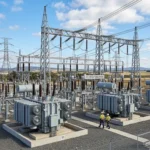
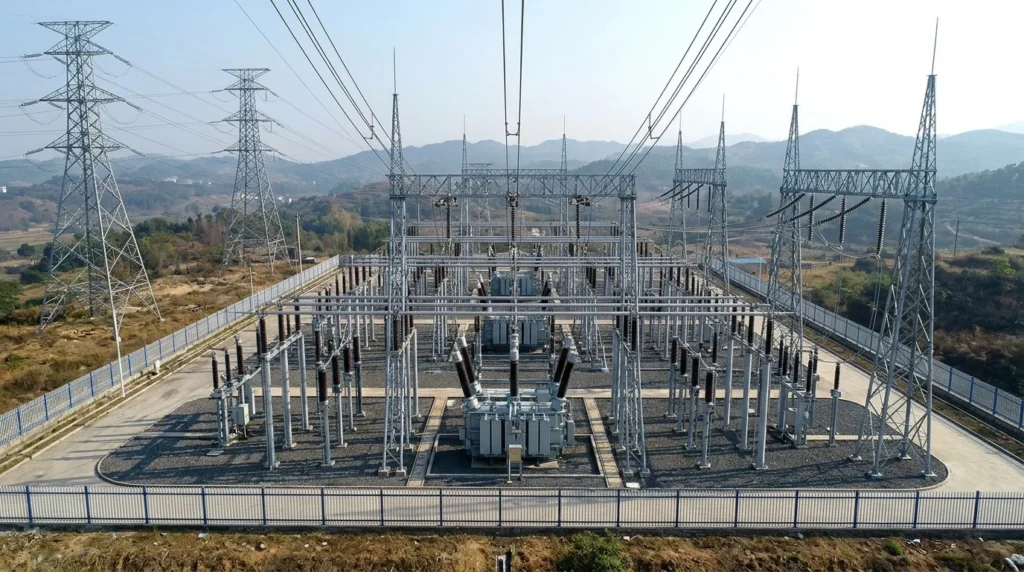
A 220kV Grid Station is a high-voltage electrical substation that receives electrical power at 220 kilovolts (220,000 volts) from transmission lines. It controls, protects, and distributes electrical energy by either transmitting it further or stepping the voltage down to lower levels such as 132kV, 66kV, 33kV, or 11kV for distribution.
In simple words, a 220kV Grid Station works like a major traffic intersection for electricity. Instead of cars moving through roads, electrical power flows through transmission lines. The grid station manages this flow safely and efficiently.
Practical Example
Suppose electricity is generated at a power plant located hundreds of kilometers away. The electricity is transmitted at 220kV to reduce transmission losses. When it reaches a 220kV Grid Station near a city, the station lowers the voltage to suitable levels before supplying electricity to industries, towns, and residential areas.
Working Principle
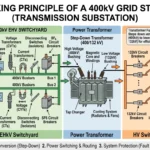
The 220kV Grid Station working principle is based on receiving high-voltage electrical power, controlling its flow, protecting equipment from faults, and distributing electricity through transformers and switching equipment.
The entire process can be understood step by step.
Receiving High-Voltage Power
Electricity generated at power stations travels through high-voltage transmission lines.
The incoming transmission line enters the grid station through the incoming bay.
Isolation and Protection
Before electricity enters the main system, isolators and circuit breakers ensure safe operation.
These devices allow engineers to disconnect faulty equipment without shutting down the complete grid station.
Voltage and Current Measurement
Instrument transformers continuously monitor:
- Voltage
- Current
- Frequency
- System conditions
These measurements help operators monitor the health of the electrical network.
Switching Operation
Circuit breakers control the flow of electrical power.
If a fault occurs, protective relays detect it immediately and command the circuit breaker to disconnect the faulty section within milliseconds.
Voltage Transformation
Power transformers reduce the voltage according to system requirements.
For example:
- 220kV → 132kV
- 220kV → 66kV
- 220kV → 33kV
This allows electricity to move safely into regional distribution systems.
Step 6: Outgoing Power Distribution
After voltage reduction, electricity leaves the grid station through outgoing feeders and reaches substations, industries, and distribution networks.
Easy Analogy
Think of a 220kV Grid Station as a large railway junction.
- High-voltage transmission lines are railway tracks.
- Electricity is the train.
- Circuit breakers are railway signals.
- Transformers change the train to a smaller route.
- Protection systems prevent accidents.
Everything works together to ensure electricity reaches consumers safely.
Types / Classification
Different grid stations are designed for different operating requirements.
Air Insulated Substation (AIS)
AIS uses air as the primary insulation medium between electrical equipment.
Features
- Large installation area
- Lower installation cost
- Easy maintenance
- Widely used in open outdoor locations
Applications
- Rural areas
- Large utility substations
- High-voltage transmission networks
Gas Insulated Substation (GIS)
GIS uses sulfur hexafluoride (SF₆) gas for insulation inside sealed metal enclosures.
Features
- Compact design
- High reliability
- Minimal maintenance
- Suitable for polluted environments
Applications
- Urban cities
- Industrial plants
- Underground substations
- Coastal regions
Indoor Grid Station
Indoor substations place most electrical equipment inside buildings.
Features
- Protected from weather
- Better safety
- Reduced environmental effects
Applications
- Commercial buildings
- Factories
- Critical facilities
Outdoor Grid Station
Outdoor grid stations install equipment in open yards.
Features
- Lower construction cost
- Easy expansion
- Simple maintenance
Applications
- Utility companies
- Transmission systems
- Large power networks
Main Components
A 220kV Grid Station contains several important components that work together.
Power Transformer
Function:
- Steps voltage up or down
- Transfers electrical energy efficiently
- Provides isolation between voltage levels
Circuit Breaker
Function:
- Interrupts fault current
- Protects equipment
- Enables safe switching operations
Isolator
Function:
- Disconnects equipment for maintenance
- Provides visible isolation
- Operates without load current
Busbar
Function:
- Collects electrical power
- Distributes electricity to multiple feeders
- Acts as the main electrical connection point
Current Transformer (CT)
Function:
- Measures high current safely
- Supplies protection relays
- Provides metering signals
Voltage Transformer (PT/CVT)
Function:
- Reduces high voltage for measurement
- Supports monitoring and protection
Lightning Arrester
Function:
- Protects equipment from lightning surges
- Diverts excess voltage safely to ground
Protective Relays
Function:
- Detect abnormal conditions
- Send trip commands to circuit breakers
- Prevent equipment damage
Control Room
Function:
- Monitors the complete grid station
- Houses protection panels
- Supervises switching operations
Earthing System
Function:
- Protects personnel
- Dissipates fault current safely
- Improves electrical safety
Advantages
Understanding the 220kV Grid Station advantages and disadvantages helps engineers appreciate its importance.
Advantages
- Efficient long-distance power transmission
- Reduces transmission losses
- Improves power system reliability
- Provides excellent fault protection
- Supports continuous electricity supply
- Easy voltage transformation
- Enhances system stability
- Enables safe maintenance operations
- Supports expanding power networks
- Improves grid flexibility
Real-World Benefits
- Reliable electricity for cities.
- Stable industrial production.
- Better protection against power failures.
- Reduced operating costs over time.
Disadvantages / Limitations
Despite many benefits, every grid station has certain limitations.
- Very high installation cost
- Requires large land area (AIS type)
- Complex maintenance procedures
- Skilled personnel are essential
- Equipment is expensive
- Faults may affect large service areas
- Regular inspection is necessary
- High safety standards must always be maintained
Applications
The 220kV Grid Station applications extend across almost every sector of modern power systems.
Residential Supply
- Power distribution to cities
- Electricity for housing societies
- Urban power networks
Industrial Applications
- Steel plants
- Cement factories
- Textile industries
- Chemical plants
- Manufacturing industries
Commercial Applications
- Shopping malls
- Airports
- Hospitals
- Universities
- Office complexes
Renewable Energy Integration
- Solar farms
- Wind power plants
- Hydroelectric stations
- Hybrid energy systems
National Power Grid
- Interconnecting transmission networks
- Regional load balancing
- Emergency power transfer
Comparison Section
One frequently asked question is the difference between 220kV Grid Station and 132kV Grid Station.
| Feature | 220kV Grid Station | 132kV Grid Station |
| Operating Voltage | 220kV | 132kV |
| Power Transfer Capacity | Higher | Moderate |
| Transmission Distance | Longer | Medium |
| Equipment Rating | Higher | Lower |
| Installation Cost | Higher | Lower |
| Typical Use | Main transmission network | Regional distribution |
Another useful comparison is:
| Feature | 220kV Grid Station | Distribution Substation |
| Purpose | Transmission control | Local power distribution |
| Voltage Level | Very high | Medium or low |
| Coverage Area | Large regions | Local neighborhoods |
| Equipment Size | Large | Smaller |
Selection Guide
Selecting a suitable 220kV Grid Station depends on system requirements.
Load Demand
Estimate both present and future electrical demand.
Transformer Capacity
Choose transformers capable of handling expected load growth.
Site Selection
Consider:
- Land availability
- Flood protection
- Accessibility
- Environmental conditions
Reliability Requirements
Critical facilities require:
- Redundant transformers
- Multiple feeders
- Backup protection
Protection System
Select modern protective relays with fast fault detection.
Expansion Capability
Always leave room for future transmission lines and transformers.
Tips for Beginners
- Understand single-line diagrams first.
- Learn each component individually.
- Study transformer ratings carefully.
- Practice reading protection schemes.
- Never ignore electrical safety procedures.
Common Problems & Solutions
Why does a circuit breaker trip frequently?
Causes
- Short circuit
- Overload
- Equipment fault
Solution
Inspect the affected feeder and protection system before restoring service.
Why is transformer temperature increasing?
Causes
- Overloading
- Cooling system failure
- Low oil level
Solution
Reduce load and inspect cooling equipment.
Why is busbar voltage unstable?
Causes
- System overload
- Faulty transformer
- Transmission disturbances
Solution
Check incoming supply and transformer condition.
Why do protective relays operate repeatedly?
Causes
- Incorrect relay settings
- Faulty CT or PT
- Actual network fault
Solution
Verify relay coordination and inspect instrument transformers.
Why is lightning protection important?
Lightning surges can damage transformers, circuit breakers, and other expensive equipment.
Properly maintained lightning arresters protect the entire grid station.
Future Trends
Modern electrical grids are becoming smarter every year.
Future 220kV Grid Stations will include:
- Digital substations
- Smart protection relays
- IEC 61850 communication systems
- Remote monitoring
- Artificial intelligence for predictive maintenance
- Internet of Things (IoT) integration
- Advanced condition monitoring
- Renewable energy integration
- Automated fault detection
- Cybersecurity for grid protection
These technologies will improve reliability, reduce maintenance costs, and support cleaner, more efficient electrical power systems.
Conclusion
A 220kV Grid Station is one of the most critical elements of a modern electrical power system. It receives high-voltage electricity, protects the network, controls power flow, and transforms voltage to suitable levels for transmission and distribution. Understanding the 220kV Grid Station working principle, components, classifications, applications, and operational challenges provides a strong foundation for students, engineers, and technicians. As power demand continues to grow and renewable energy becomes more common, grid stations are evolving with digital technologies, automation, and smarter protection systems. Mastering these concepts not only strengthens your technical knowledge but also prepares you to contribute to safer, more reliable, and more efficient electrical power networks in the future.