
Every time you switch on a light, start an air conditioner, or use industrial machinery, electricity has already traveled through a long transmission and distribution network before reaching you. One of the most important parts of this network is the 66kV grid station. Without it, electricity generated at power plants could not be safely distributed to homes, commercial buildings, and industries.
A 66kV grid station acts as a bridge between high-voltage transmission lines and lower-voltage distribution systems. It receives electrical power from transmission networks, controls it, protects it from faults, and delivers it at suitable voltage levels for consumers. This makes it a critical part of every modern power system.
Understanding a 66kV Grid Station Overview is essential for electrical students, engineers, technicians, and beginners because it provides practical knowledge about how electrical power is managed before reaching consumers. In this guide, you will learn what a 66kV grid station is, its working principle, types, major components, advantages, disadvantages, applications, selection criteria, common problems, troubleshooting methods, and future developments in grid station technology.
What is a 66kV Grid Station?
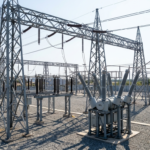
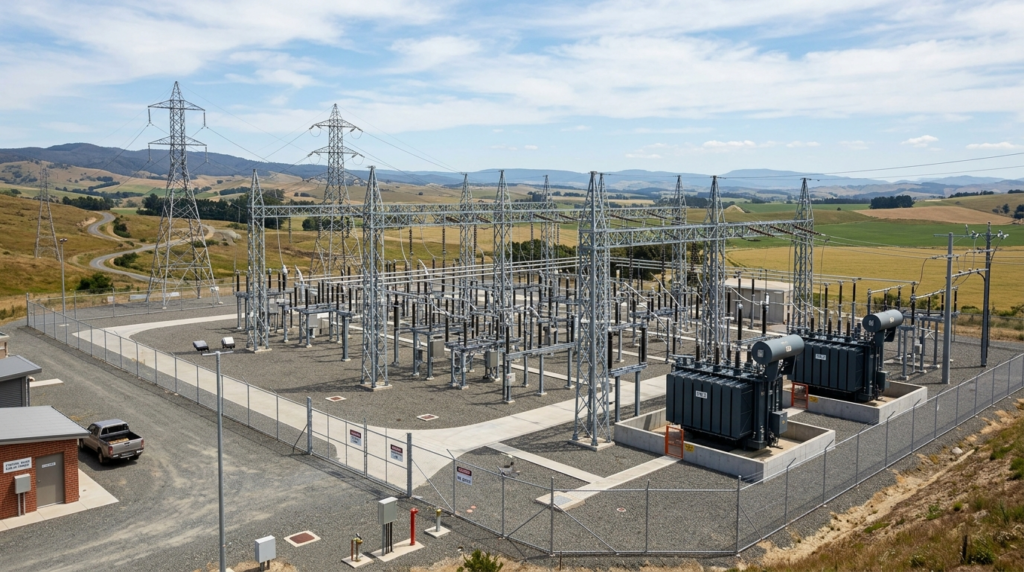
A 66kV grid station is an electrical substation that receives electrical energy at or around 66 kilovolts (kV) from transmission lines and distributes it after controlling, protecting, and often stepping the voltage down to lower levels such as 33kV or 11kV.
In simple words, a grid station is a power distribution center that ensures electricity is delivered safely, efficiently, and continuously.
It performs several important functions:
- Receives electrical power
- Controls power flow
- Protects the power system
- Reduces voltage when required
- Supplies electricity to distribution feeders
Practical Example
Imagine a city’s water supply system.
A large water treatment plant sends water through large pipelines. Before the water reaches homes, it passes through distribution stations where pressure is controlled and water is directed into different neighborhoods.
A 66kV grid station works in a similar way. Instead of water, it manages electricity by controlling voltage and directing power to different distribution areas.
66kV Grid Station Working Principle
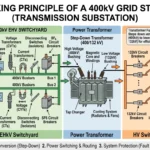
The 66kV grid station working principle is based on receiving high-voltage electrical energy, protecting it, controlling it, reducing its voltage if necessary, and distributing it safely to consumers.
Think of the grid station as a traffic control center where electricity is directed safely to its destination.
Receiving Electrical Power
High-voltage electricity arrives through transmission lines from generating stations or higher-voltage substations.
The incoming voltage is generally 66kV.
Isolation and Switching
Before electricity enters the main equipment, isolators and circuit breakers ensure safe operation.
These devices allow maintenance while protecting workers and equipment.
Voltage Measurement
Current Transformers (CTs) and Voltage Transformers (VTs) continuously monitor electrical parameters.
They provide information for:
- Metering
- Protection
- Monitoring
Voltage Transformation
The incoming power enters the power transformer.
Depending on system requirements, voltage is reduced from:
- 66kV to 33kV
- 66kV to 11kV
This makes electricity suitable for local distribution.
Protection System
Protective relays continuously monitor the system.
If any abnormal condition occurs, such as:
- Short circuit
- Overload
- Earth fault
the relay sends a signal to the circuit breaker.
The breaker disconnects the faulty section immediately.
Distribution
After transformation and protection, electricity flows through outgoing feeders.
These feeders deliver power to:
- Distribution substations
- Industrial areas
- Commercial buildings
- Residential consumers
Easy Analogy
Imagine a railway station.
- Electricity is the train.
- Transmission lines are railway tracks.
- The grid station is the railway junction.
- Transformers are platforms where passengers change trains.
- Circuit breakers act like railway signals that stop unsafe movement.
Everything is organized so electricity reaches its destination safely.
What is the Difference Between 11kV, 33kV, 66kV, and 132kV? (Complete Electrical Guide)
Types of 66kV Grid Stations
Different grid stations are designed according to system requirements.
Air Insulated Substation (AIS)
AIS is the most commonly used type.
Features
- Uses air as insulation
- Large installation area
- Easy maintenance
- Lower installation cost
Applications
- Rural areas
- Open land installations
Gas Insulated Substation (GIS)
GIS uses sulfur hexafluoride (SF₆) gas for insulation.
Features
- Compact design
- High reliability
- Weather resistant
- Less maintenance
Applications
- Urban cities
- Industrial zones
- Space-limited areas
Indoor Grid Station
Most equipment is installed inside buildings.
Advantages
- Better environmental protection
- Longer equipment life
- Improved safety
Outdoor Grid Station
Equipment is installed in open areas.
Advantages
- Lower construction cost
- Easier expansion
- Suitable for large installations
Main Components of a 66kV Grid Station
Understanding the components makes the 66kV Grid Station Overview much easier.
Power Transformer
The transformer changes voltage levels.
Function
- Step-down voltage
- Transfer electrical energy
- Maintain system efficiency
Circuit Breaker
The circuit breaker disconnects faulty circuits.
Function
- Fault interruption
- Equipment protection
- Personnel safety
Isolator
The isolator disconnects equipment during maintenance.
Function
- Visible isolation
- Safe maintenance
Busbar
Busbars connect multiple circuits together.
Function
- Power distribution
- Flexible connections
Current Transformer (CT)
Measures current safely.
Function
- Metering
- Relay protection
Voltage Transformer (VT)
Measures system voltage.
Function
- Voltage sensing
- Protective relay operation
Protective Relays
Relays continuously monitor electrical conditions.
Function
- Detect faults
- Operate circuit breakers
Lightning Arresters
Protect equipment from lightning surges.
Function
- Surge protection
- Equipment safety
Earthing System
Provides a safe path for fault current.
Function
- Personnel protection
- Equipment safety
Control Room
The control room monitors the entire grid station.
Function
- Remote monitoring
- System control
- Alarm management
Advantages of a 66kV Grid Station
The following are important 66kV Grid Station advantages and disadvantages, beginning with the benefits.
Advantages
- Reliable electricity distribution
- Efficient voltage transformation
- Improved power quality
- Better system protection
- Easy fault isolation
- Supports industrial growth
- Reduces transmission losses
- Enhances power system stability
- Enables safe maintenance
- Suitable for expanding electrical networks
Real-World Benefits
- Continuous electricity supply
- Reduced power outages
- Better industrial productivity
- Improved consumer satisfaction
- Enhanced electrical safety
Disadvantages / Limitations
Although highly useful, a 66kV grid station also has some limitations.
Limitations
- High construction cost
- Requires skilled engineers
- Large land requirement for AIS
- Regular maintenance needed
- Equipment replacement can be expensive
- Weather affects outdoor equipment
- Fault diagnosis can be complex
- Protection systems require periodic testing
Understanding these limitations helps engineers design more reliable power systems.
66kV Grid Station Applications
The 66kV Grid Station applications are found in almost every electrical network.
Residential Areas
Grid stations supply electricity to:
- Houses
- Apartments
- Housing societies
Commercial Buildings
Used for:
- Shopping malls
- Hospitals
- Universities
- Office complexes
Industrial Applications
Supply power to:
- Manufacturing plants
- Steel mills
- Textile industries
- Cement factories
- Chemical plants
Renewable Energy
Grid stations integrate power from:
- Solar farms
- Wind farms
- Hydroelectric stations
Modern Smart Grid Applications
Today’s smart grids use advanced grid stations for:
- Digital monitoring
- Remote control
- Load balancing
- Fault analysis
- Energy management
Comparison Section
Many beginners ask about the difference between 66kV grid station and 132kV grid station.
| Feature | 66kV Grid Station | 132kV Grid Station |
| Operating Voltage | 66kV | 132kV |
| Coverage Area | Medium | Large |
| Power Handling | Moderate | Higher |
| Installation Cost | Lower | Higher |
| Transformer Rating | Smaller | Larger |
| Typical Use | Cities and industries | Regional transmission |
| Land Requirement | Moderate | Larger |
| Distribution Level | Primary distribution | Transmission and sub-transmission |
Selection Guide
Choosing the right grid station depends on electrical demand and future expansion.
Consider Load Demand
Estimate:
- Present demand
- Future growth
- Peak load
Select Proper Transformer Rating
Choose transformers based on:
- Maximum load
- Efficiency
- Safety margin
Choose Suitable Insulation
For cities:
- GIS is preferred.
For rural locations:
- AIS is often economical.
Evaluate Protection Requirements
Ensure proper protection against:
- Short circuits
- Lightning
- Overloads
- Earth faults
Plan for Future Expansion
Leave sufficient space for:
- Additional transformers
- New feeders
- Future equipment
Tips for Beginners
- Study the single-line diagram first.
- Understand transformer ratings.
- Learn protection basics.
- Follow electrical safety rules.
- Observe practical grid station layouts whenever possible.
Common Problems & Solutions
Problem: Transformer Overheating
Cause
- Overloading
- Poor cooling
Solution
- Reduce load
- Check cooling system
Problem: Frequent Circuit Breaker Tripping
Cause
- Short circuit
- Faulty relay
- Equipment fault
Solution
- Inspect protection system
- Identify faulty feeder
Problem: Low Voltage
Cause
- Heavy loading
- Transformer tap issue
Solution
- Adjust tap changer
- Balance system load
Problem: Busbar Fault
Cause
- Insulation failure
- Loose connection
Solution
- Isolate faulty section
- Repair damaged equipment
Problem: Lightning Damage
Cause
- Surge protection failure
Solution
- Inspect lightning arresters
- Replace damaged units
Problem: Protection Relay Not Operating
Cause
- Incorrect settings
- Wiring problem
Solution
- Test relay
- Verify settings
- Inspect wiring
Future Trends
Grid stations are becoming smarter and more automated.
Digital Substations
Digital sensors improve monitoring accuracy and reduce wiring complexity.
Smart Grid Integration
Future grid stations will communicate directly with utility control centers for faster decision-making.
Remote Monitoring
Operators can supervise equipment from centralized control rooms using secure communication systems.
Predictive Maintenance
Advanced monitoring systems detect equipment problems before failures occur, reducing downtime and maintenance costs.
Renewable Energy Integration
Future 66kV grid stations will efficiently manage electricity from solar parks, wind farms, battery storage systems, and hybrid renewable plants.
Eco-Friendly Equipment
New insulation technologies and environmentally friendly switchgear are reducing environmental impact while maintaining high reliability.
Conclusion
A 66kV Grid Station Overview provides essential knowledge for understanding how electrical power moves safely from transmission systems to consumers. A 66kV grid station is much more than a voltage transformation point—it is a complete control, protection, and distribution center that ensures reliable electricity for homes, businesses, industries, and modern infrastructure. By understanding the 66kV grid station working principle, major components, types, advantages, limitations, and practical applications, students and professionals gain a strong foundation in power system engineering. As electrical networks continue to evolve toward digital substations, smart grids, and renewable energy integration, the role of 66kV grid stations will become even more significant. Building a solid understanding of these systems is an excellent step toward a successful career in electrical engineering and power distribution.