
Imagine a sudden power outage during the night when lights, fans, internet routers, and security systems stop working instantly. In many homes, batteries provide backup power and keep essential devices running during electrical failures. Batteries are now an important part of modern homes because they store electrical energy and supply power whenever needed. From inverter systems and solar installations to emergency lighting and smart home devices, batteries are used everywhere.
Understanding battery types for home use is very important for electrical students, engineers, technicians, and beginners because different battery technologies offer different performance levels, backup times, maintenance requirements, and costs. Selecting the wrong battery can reduce system efficiency, shorten backup duration, and increase maintenance expenses.
The battery types for home use working principle explains how chemical energy is converted into electrical energy and stored for later use. Modern battery systems are widely used in homes, renewable energy systems, electric vehicles, UPS systems, and smart energy storage applications.
In this article, you will learn everything about battery types for home use, including their working principle, classifications, components, advantages and disadvantages, applications, comparison, troubleshooting methods, selection guide, and future trends in simple and easy English.
What are Battery Types for Home Use?
Battery types for home use refer to different kinds of rechargeable and non-rechargeable batteries used in residential electrical systems for backup power, energy storage, and portable applications.
These batteries store electrical energy chemically and release it when required.
Simple Explanation
A battery stores electricity like a water tank stores water.
When power is needed:
The battery releases stored energy
Electrical devices continue operating
Practical Example
A home inverter battery supplies power to:
Fans
LED lights
Wi-Fi routers
Televisions
during power outages.
Battery Types for Home Use Working Principle
The battery types for home use working principle is based on electrochemical reactions.
Chemical energy inside the battery converts into electrical energy.
Step-by-Step Working Process
Chemical Energy is Stored
The battery contains chemicals called electrolytes and electrodes.
Chemical Reaction Starts
When the circuit is connected, chemical reactions occur inside the battery.
Electrons Begin Flowing
Electrons move through the external circuit.
Electrical Current is Produced
The movement of electrons creates electrical current.
Devices Receive Power
Connected appliances operate using battery power.
Battery Power Formula
P = V \times I
Where:
P = Power
V = Voltage
I = Current
Easy Analogy
Think of a battery like a water storage tank.
Charging fills the tank
Using electricity empties the tank slowly
Types / Classification
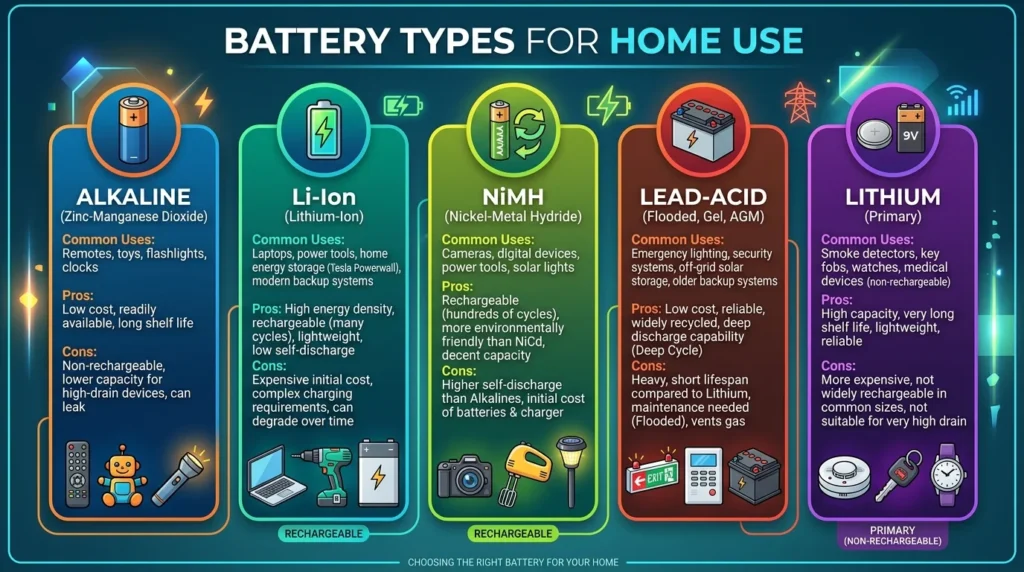
Different battery technologies are available for home use.
Lead-Acid Battery
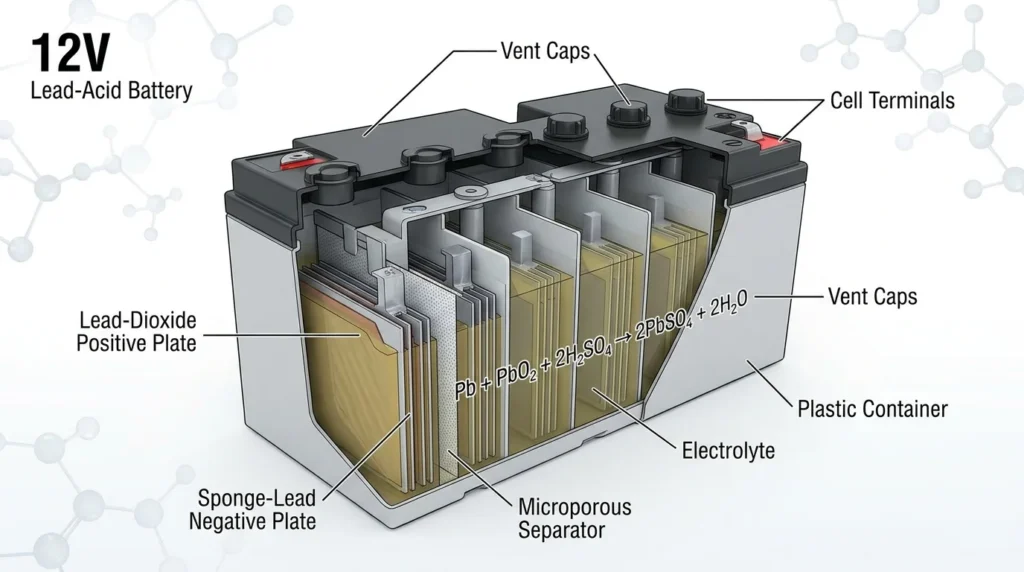
A Lead-Acid Battery is one of the oldest and most widely used rechargeable batteries in the world. It consists of lead plates immersed in a sulfuric acid electrolyte, which stores and supplies electrical energy through a chemical reaction. Lead-acid batteries are known for their reliability, low cost, and ability to deliver high surge currents, making them ideal for starting vehicles and providing backup power. They are commonly used in automobiles, motorcycles, UPS systems, solar power installations, emergency lighting, telecommunications, and industrial equipment. Although they are heavier and have a shorter lifespan than some modern battery technologies, lead-acid batteries remain popular because they are affordable, durable, and highly recyclable. Regular maintenance, proper charging, and timely inspection help improve their performance and extend their service life.
Lead-acid batteries are among the most commonly used home backup batteries.
Features
Low cost
Reliable performance
High availability
Applications
Inverter systems
UPS systems
Tubular Battery
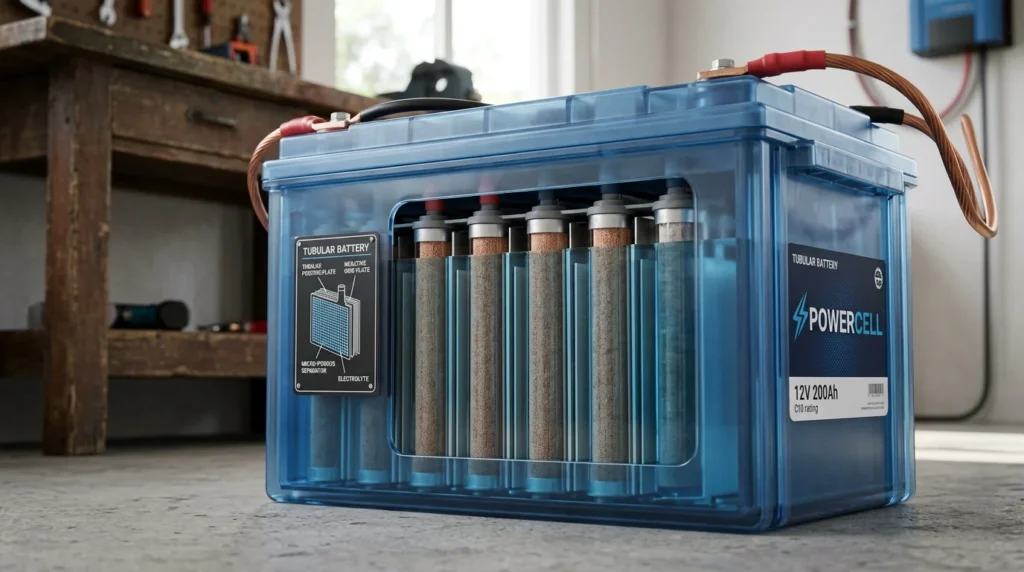
A Tubular Battery is a type of lead-acid battery designed with tubular positive plates that provide higher durability, better efficiency, and a longer service life than conventional flat-plate batteries. It is specially built to withstand frequent charging and discharging cycles, making it an excellent choice for backup power and renewable energy systems. Tubular batteries are widely used in home and office UPS systems, solar power installations, inverters, telecommunications, and industrial applications where a reliable power supply is essential. They offer excellent deep-cycle performance, require less maintenance, and perform well during long power outages. Although tubular batteries are more expensive and heavier than standard lead-acid batteries, their long lifespan, high reliability, and superior performance make them a cost-effective solution for continuous power backup.
Tubular batteries are advanced lead-acid batteries designed for longer backup and durability.
Features
Long lifespan
Better deep discharge performance
Applications
Home inverters
Solar systems
Lithium-Ion Battery
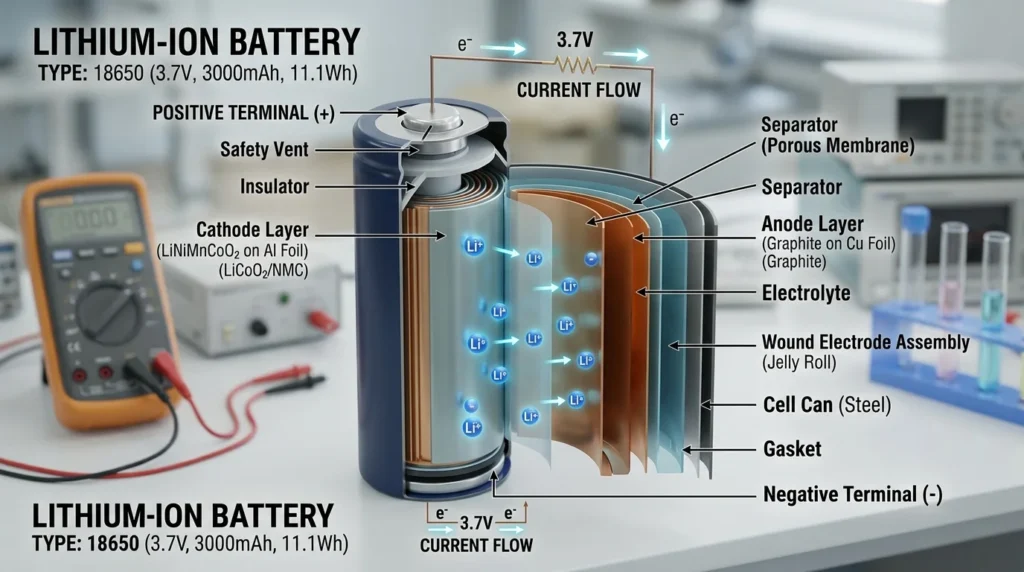
A Lithium-Ion Battery is a modern rechargeable battery that stores and supplies electrical energy using lithium ions moving between its positive and negative electrodes during charging and discharging. It is widely known for its high energy density, lightweight design, fast charging capability, and long service life. Lithium-ion batteries are commonly used in smartphones, laptops, electric vehicles, solar energy storage systems, power tools, medical devices, and portable electronic equipment. Compared to traditional lead-acid batteries, they provide higher efficiency, require little maintenance, and can withstand many more charge and discharge cycles. Although lithium-ion batteries have a higher initial cost, their excellent performance, longer lifespan, and energy efficiency make them one of the most popular battery technologies for modern electrical and electronic applications.
Lithium-ion batteries are modern high-efficiency batteries with fast charging capability.
Features
Lightweight
Low maintenance
High efficiency
Applications
Solar energy storage
Smart homes
Gel Battery
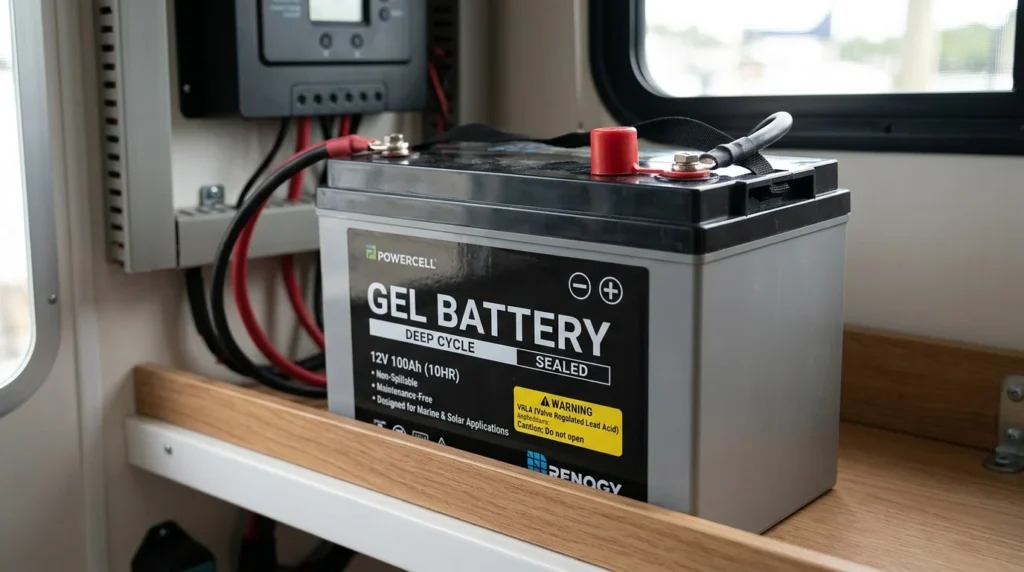
A Gel Battery is a type of sealed lead-acid battery that uses a gel-like electrolyte instead of liquid sulfuric acid. The gel is created by mixing silica with the electrolyte, making the battery spill-proof, maintenance-free, and highly reliable. Gel batteries are designed to provide deep-cycle performance, allowing them to be charged and discharged repeatedly without significant damage. They are widely used in solar power systems, UPS units, emergency lighting, wheelchairs, marine equipment, recreational vehicles (RVs), and telecommunications. Compared to conventional flooded lead-acid batteries, gel batteries offer better resistance to vibration, lower self-discharge, and a longer service life. Although they are more expensive and require a compatible charger to prevent overcharging, their safety, durability, and dependable performance make them an excellent choice for backup and renewable energy applications.
Gel batteries use gel-type electrolyte instead of liquid acid.
Features
Maintenance-free
Leak-resistant
Applications
Medical systems
Backup systems
AGM Battery
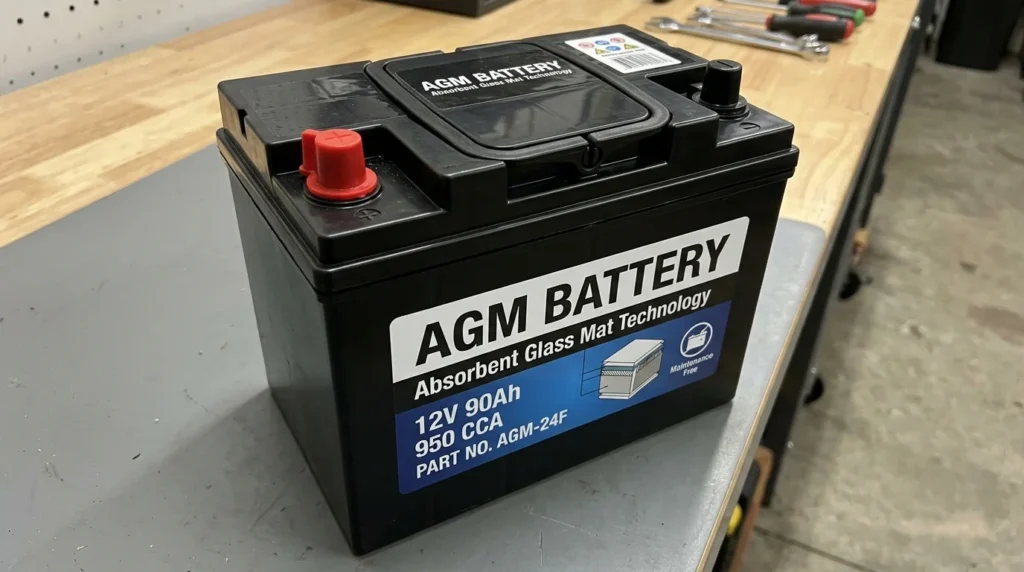
An AGM (Absorbent Glass Mat) Battery is a type of sealed lead-acid battery that uses a special fiberglass mat to absorb and hold the electrolyte between the battery plates. This design makes the battery spill-proof, maintenance-free, and highly resistant to vibration and shock. AGM batteries are known for their fast charging capability, low internal resistance, high power output, and longer service life compared to conventional flooded lead-acid batteries. They are widely used in automobiles with start-stop systems, motorcycles, UPS units, solar power systems, emergency backup systems, marine applications, and recreational vehicles (RVs). Although AGM batteries are more expensive than standard lead-acid batteries, they offer better reliability, improved performance, and require minimal maintenance, making them an excellent choice for modern electrical and power backup applications.
Absorbent Glass Mat (AGM) batteries use fiberglass separators for better efficiency.
Features
Spill-proof
Fast charging
Applications
UPS systems
Emergency systems
Main Components
Several important parts are used inside batteries.
Positive Electrode
Produces positive charge during chemical reactions.
Negative Electrode
Provides electrons for current flow.
Electrolyte
Chemical medium that allows ion movement.
Separator
Prevents direct contact between electrodes.
Battery Container
Protects internal components.
Battery Terminals
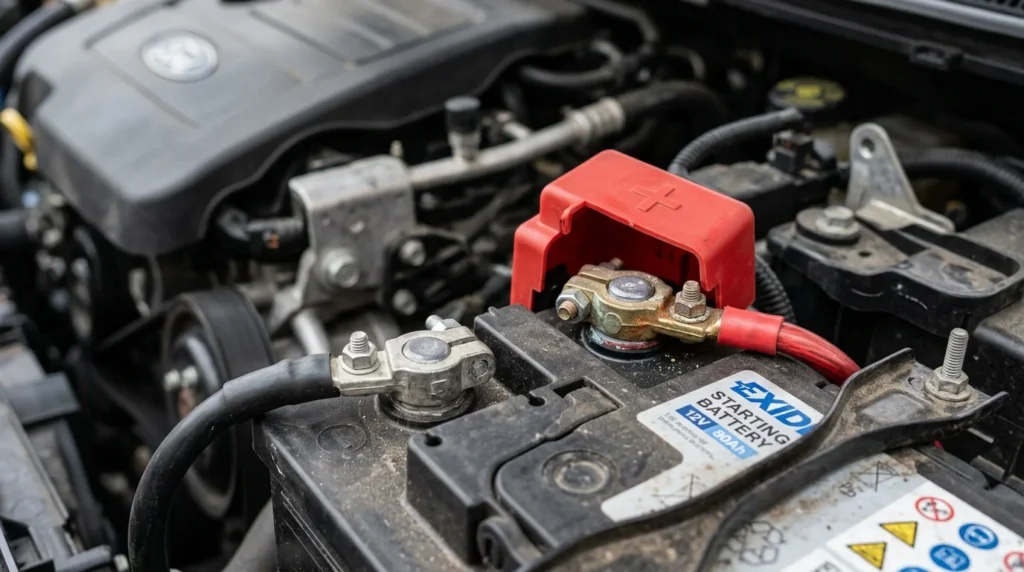
Battery terminals are the metal connectors attached to the positive (+) and negative (−) ends of a battery. They provide a secure electrical connection between the battery and the electrical system, allowing current to flow safely and efficiently. Battery terminals are commonly made from lead, copper, or brass because these materials offer excellent electrical conductivity and durability. They are widely used in cars, motorcycles, solar power systems, UPS units, inverters, industrial machinery, and electric vehicles. Clean and tightly connected battery terminals help reduce voltage loss, improve battery performance, and ensure reliable operation of electrical equipment. However, loose or corroded terminals can cause starting problems, poor electrical performance, and even damage to the battery or connected devices. Regular inspection and cleaning of battery terminals are essential for maintaining a safe, efficient, and long-lasting electrical system.
Connect the battery to external circuits.
Ventilation System
Releases gases safely during charging.
Advantages
Understanding battery types for home use advantages and disadvantages helps users select the correct system.
Advantages of Battery Types for Home Use
Provides backup power
Supports solar systems
Reduces power interruption problems
Portable energy storage
Improves energy reliability
Useful during emergencies
Supports smart homes
Available in multiple capacities
Enables renewable energy storage
Improves power management
Disadvantages / Limitations
Although highly useful, batteries also have limitations.
Disadvantages of Battery Types for Home Use
Limited lifespan
Charging time required
Battery replacement cost
Performance decreases with age
Some batteries require maintenance
Overcharging may cause damage
Temperature affects performance
Battery Types for Home Use Applications
Battery systems are widely used in modern electrical systems.
Home Applications
Inverter backup systems
Emergency lighting
Wi-Fi backup
Security systems
Industrial Applications
Control systems
Emergency power systems
Automation systems
Renewable Energy Applications
Solar energy storage
Wind energy systems
Commercial Applications
Offices
Banks
Data centers
Modern Technology Applications
Smart homes
Electric vehicles
IoT systems
Comparison Section
Difference Between Lead-Acid and Lithium-Ion Batteries
| Feature | Lead-Acid Battery | Lithium-Ion Battery |
| Initial Cost | Lower | Higher |
| Lifespan | Shorter | Longer |
| Maintenance | Higher | Lower |
| Charging Speed | Slower | Faster |
| Weight | Heavy | Lightweight |
| Efficiency | Moderate | High |
| Backup Performance | Good | Excellent |
| Applications | Inverters, UPS | Solar, smart homes |
Selection Guide
Choosing the correct battery improves system efficiency and reliability.
Choose Lead-Acid Batteries When
Budget is limited
Simple backup systems are required
Choose Tubular Batteries When
Long backup duration is needed
Frequent power outages occur
Choose Lithium-Ion Batteries When
High efficiency is required
Space is limited
Check Battery Capacity
Battery capacity determines backup duration.
Consider Maintenance Requirements
Some batteries require regular water filling and inspection.
Tips for Beginners
Calculate Load Properly
Determine appliance power consumption before selecting the battery.
Avoid Deep Discharge
Deep discharge reduces battery lifespan.
Use Proper Charging Systems
Incorrect charging damages batteries.
Install in Ventilated Areas
Good ventilation improves battery safety.
Follow Safety Rules
Avoid short circuits and loose connections.
Common Problems & Solutions
Why Is Backup Time Low?
causes:
Weak battery
Overloading
Aging battery
Solution
Replace battery
Reduce load
Why Is the Battery Overheating?
causes:
Overcharging
Poor ventilation
Solution
Check charger
Improve airflow
Why Is Charging Slow?
causes:
Faulty charger
Sulfated battery
Solution
Test charging system
Replace damaged battery
Why Does Battery Voltage Drop Quickly?
causes:
Internal damage
Excessive load
Solution
Inspect battery condition
Reduce power consumption
Why Is Battery Swelling Occurring?
causes:
Overcharging
High temperature
Solution
Disconnect charger
Replace battery safely
Future Trends
Battery technology is improving rapidly.
Smart Battery Management Systems
Modern batteries now include:
Temperature monitoring
Charge balancing
Safety protection
Lithium Battery Growth
Lithium-ion batteries are becoming more affordable and efficient.
Solid-State Batteries
Future batteries may offer:
Higher safety
Faster charging
Longer lifespan
Renewable Energy Storage Expansion
Battery systems are increasingly used with:
Solar systems
Wind energy systems
AI-Based Energy Management
Artificial intelligence improves battery monitoring and efficiency.
Fast Charging Technology
Modern systems reduce charging time significantly.
Conclusion
Battery systems are an essential part of modern homes, renewable energy systems, and backup power applications. Different battery types for home use provide various levels of efficiency, backup duration, maintenance requirements, and performance.
The battery types for home use working principle is based on converting chemical energy into electrical energy for powering electrical devices during normal and emergency conditions. Understanding battery types for home use applications, advantages and disadvantages, charging systems, and maintenance practices helps electrical students, engineers, technicians, and beginners build strong practical and technical knowledge.
As battery technology continues advancing, lithium-ion systems, smart battery management, renewable energy storage, and AI-based monitoring will make home battery systems safer, smarter, and more efficient for future energy needs.