
Imagine a factory where machines suddenly stop working during peak production hours. After inspection, technicians discover that a simple loose electrical connection caused overheating, which led to system failure. This situation is common in homes, industries, and commercial buildings where electrical maintenance is ignored or done irregularly.
Electrical systems work continuously, and like any mechanical or electronic system, they require regular inspection and maintenance. Without proper maintenance, even a small fault can turn into equipment damage, fire hazards, or costly downtime. This is why an Electrical Maintenance Checklist is extremely important for engineers, technicians, students, and beginners.
In this guide, you will learn everything about electrical maintenance in a structured and practical way. We will cover the electrical maintenance checklist working principle, types of maintenance, key components, advantages, disadvantages, applications, comparison with other maintenance systems, selection tips, troubleshooting methods, and future trends. The goal is to give you real-world knowledge that you can apply safely and effectively.
What is Electrical Maintenance Checklist
An Electrical Maintenance Checklist is a structured list of inspection, testing, and servicing tasks used to ensure that electrical systems are safe, reliable, and working efficiently.
Simple Definition
It is a step-by-step guide that helps technicians check electrical systems regularly to prevent faults, breakdowns, and hazards.
Practical Example
A maintenance checklist in a building may include:
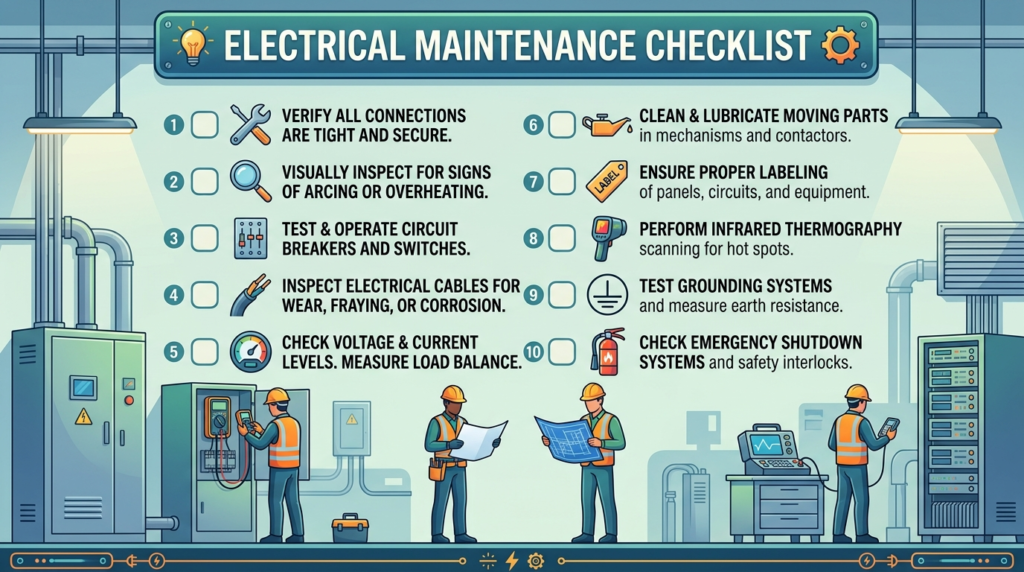
- Checking circuit breakers
- Inspecting wiring connections
- Testing voltage levels
- Cleaning electrical panels
- Checking grounding systems
This ensures the entire electrical system runs safely without unexpected failures.
Electrical Maintenance Checklist Working Principle
The electrical maintenance checklist working principle is based on systematic inspection, fault detection, correction, and preventive action.
Step-by-Step Working Principle
Inspection
Technicians visually inspect electrical systems for damage or wear.
Testing
Electrical parameters like voltage, current, and resistance are measured using tools.
Fault Identification
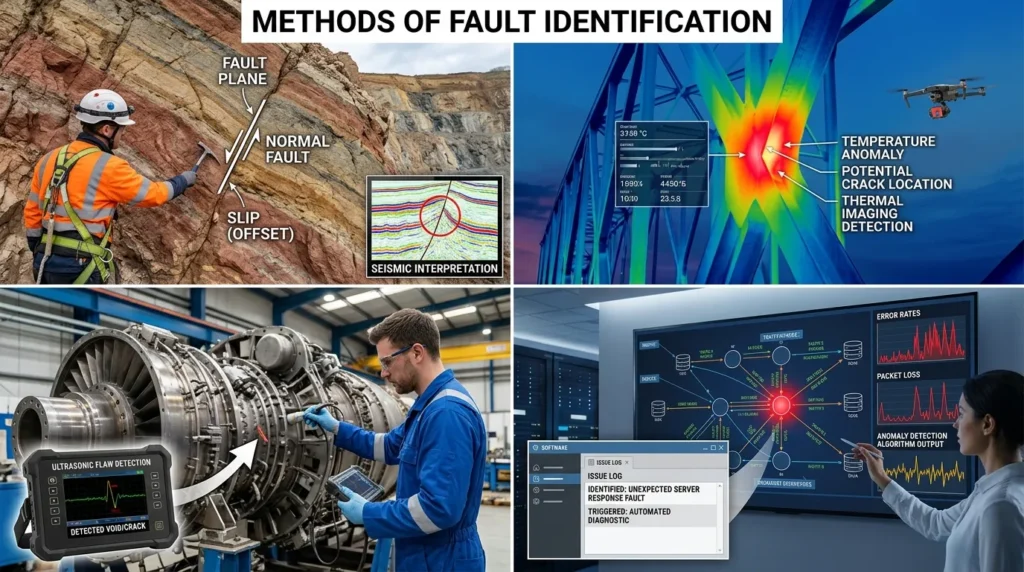
Fault identification is the process of detecting, locating, and determining the cause of an electrical fault in a power system or electrical installation. It involves inspecting the circuit and using testing instruments such as multi meters, insulation resistance testers, clamp meters, and circuit analysers to identify problems such as short circuits, overloads, open circuits, ground faults, loose connections, or damaged components. Accurate fault identification helps technicians repair the problem quickly, minimize equipment damage, reduce system downtime, and improve electrical safety. By identifying faults at an early stage, electrical systems can operate more efficiently and reliably while preventing costly failures and potential fire hazards.
Any abnormal behavior such as overheating, loose wiring, or voltage fluctuation is identified.
Correction
Faulty components are repaired or replaced immediately.
Preventive Action
Steps are taken to avoid future failures, such as tightening connections or replacing aging parts.
Easy Analogy
Think of electrical maintenance like a medical checkup. Doctors check your health regularly to detect problems early. Similarly, electrical maintenance checks systems to prevent major breakdowns.
Types / Classification
Preventive Maintenance Checklist
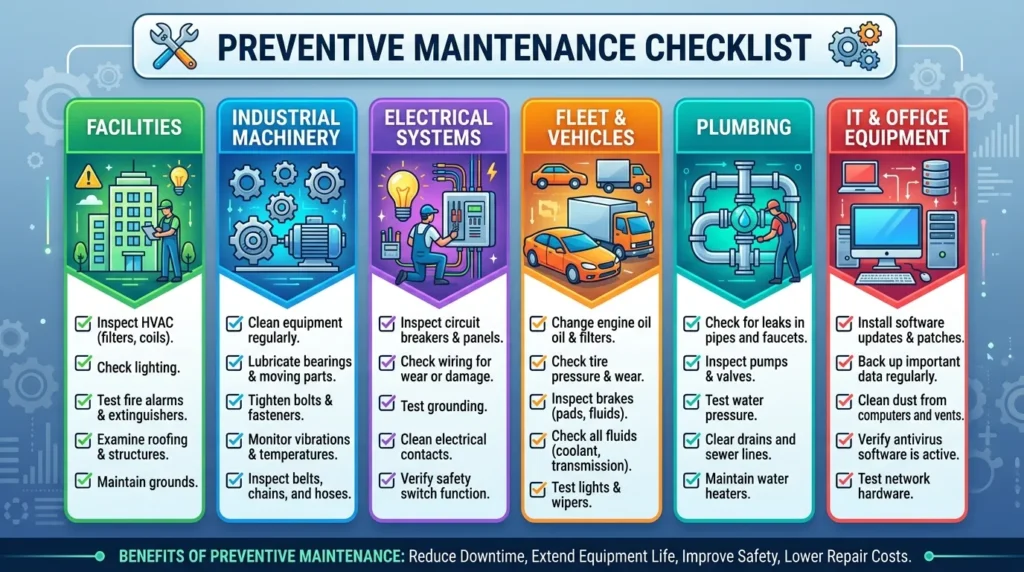
A preventive maintenance checklist is a systematic list of inspection and maintenance tasks used to keep electrical systems and equipment in safe, reliable, and efficient working condition. It helps technicians identify potential problems before they become major failures, reducing downtime, repair costs, and safety risks. A typical checklist includes inspecting wiring and cable insulation, tightening electrical connections, cleaning panels and equipment, testing circuit breakers, fuses, relays, and protective devices, checking grounding systems, measuring voltage and current, inspecting for overheating or unusual noises, and verifying the proper operation of motors, transformers, and control panels. Performing preventive maintenance regularly extends equipment life, improves system performance, and helps prevent unexpected electrical faults and fire hazards.
Preventive maintenance is done regularly to avoid faults before they occur.
Features
- Scheduled inspections
- Routine testing
- Cleaning and tightening components
Applications
- Homes
- Offices
- Small industries
Corrective Maintenance Checklist
Corrective maintenance is performed after a fault occurs.
Features
- Repairs damaged components
- Restores system operation
- Focuses on fixing existing problems
Applications
- Emergency repairs
- Equipment failure situations
Predictive Maintenance Checklist
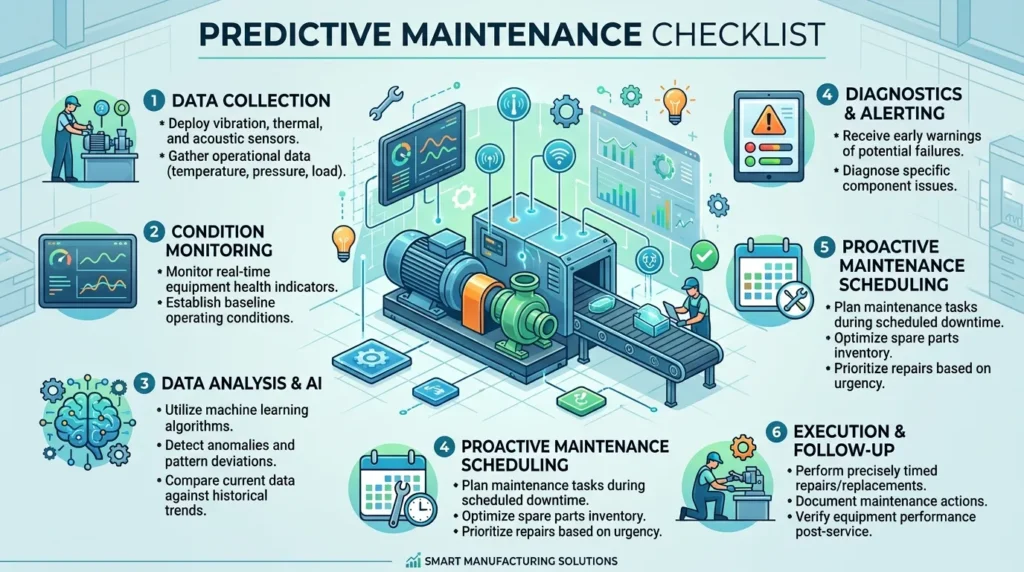
A predictive maintenance checklist is a structured list of condition-monitoring tasks used to assess the health of electrical equipment and predict potential failures before they occur. Unlike preventive maintenance, which is performed at fixed intervals, predictive maintenance relies on real-time data and equipment condition to determine when maintenance is needed. A typical checklist includes thermal imaging to detect overheating, vibration analysis for motors and rotating equipment, insulation resistance testing, power quality analysis, oil testing for transformers, ultrasonic inspection for electrical arcing, and monitoring voltage, current, and temperature trends. By identifying early signs of wear or deterioration, predictive maintenance helps reduce unexpected breakdowns, lower maintenance costs, improve equipment reliability, and extend the service life of electrical systems.
Predictive maintenance uses data and monitoring tools to predict failures before they happen.
Features
- Sensor-based monitoring
- Condition analysis
- Early fault detection
Applications
- Industrial plants
- Power systems
- Smart grids
Routine Maintenance Checklist
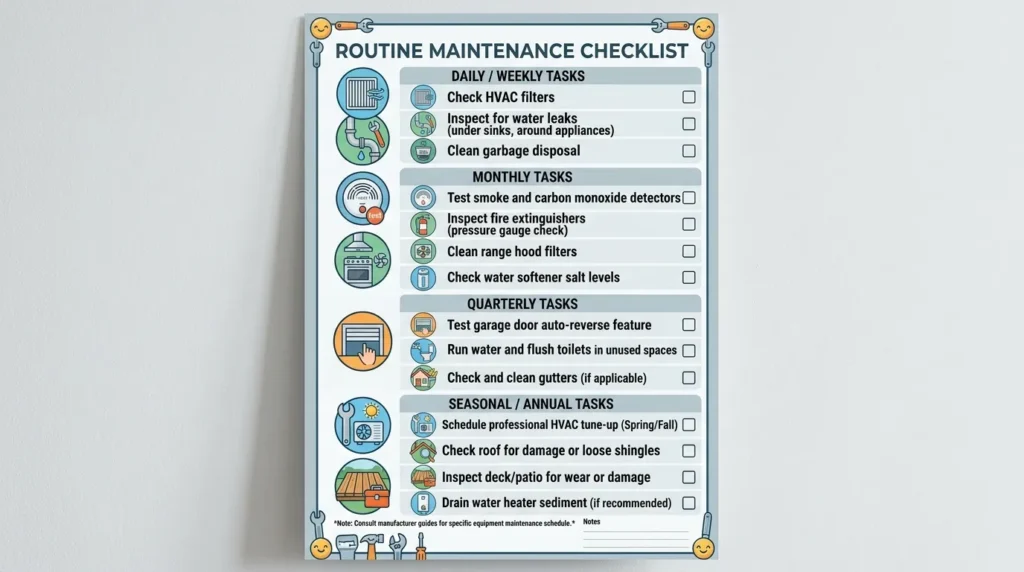
A routine maintenance checklist is a list of regular inspection and maintenance tasks performed to keep electrical systems and equipment operating safely and efficiently. These tasks are carried out daily, weekly, or monthly to identify minor issues before they develop into major faults. A typical routine maintenance checklist includes checking electrical panels for cleanliness, inspecting wiring and cable insulation for damage, tightening loose electrical connections, testing circuit breakers and protective devices, verifying proper grounding, monitoring voltage and current levels, listening for unusual noises, checking for overheating, and ensuring that motors, transformers, and control equipment are functioning correctly. Performing routine maintenance consistently improves system reliability, reduces unexpected downtime, extends equipment lifespan, and enhances workplace safety.
Routine maintenance involves daily or weekly inspections.
Features
- Basic safety checks
- Visual inspection
- Quick testing
Main Components of Electrical Maintenance Checklist
Circuit Breakers
Protect electrical systems from overload and short circuits.
Function
- Automatically disconnect faulty circuits
- Prevent equipment damage
Wiring System
Conducts electrical power throughout the system.
Function
- Transfers electricity safely
- Requires insulation and inspection
Electrical Panels
Control distribution of electrical power.
Function
- Houses breakers and control devices
- Central point for maintenance checks
Grounding System
Provides safety by directing fault current to earth.
Function
- Prevents electric shock
- Stabilizes voltage levels
Testing Instruments
Used to measure electrical parameters.
- Multimeter
- Clamp meter
- Insulation tester
Protective Devices
Devices that prevent electrical hazards.
Function
- Protect equipment from surges
- Improve system safety
Advantages of Electrical Maintenance Checklist
Electrical Maintenance Checklist Advantages
- Prevents electrical failures
- Reduces downtime
- Improves safety of workers and equipment
- Extends equipment lifespan
- Saves repair and replacement costs
- Improves system efficiency
- Ensures legal safety compliance
Real-World Benefits
In industries, a proper checklist prevents sudden machine breakdowns. In homes, it reduces fire risks caused by faulty wiring or overloaded circuits.
Disadvantages / Limitations
Electrical Maintenance Checklist Limitations
- Requires skilled technicians
- Time-consuming for large systems
- Needs regular scheduling
- May increase operational cost
- Cannot predict all sudden faults
Practical Challenges
Even with a checklist, unexpected electrical failures can still occur due to environmental factors or equipment aging.
Electrical Maintenance Checklist Applications
Home Applications
Maintenance checklists ensure safe residential electrical systems.
Uses
- Checking sockets and switches
- Inspecting home wiring
- Testing circuit breakers
- Ensuring safe grounding
Industrial Applications
Industries rely heavily on maintenance checklists for continuous operations.
Uses
- Motor inspection
- Control panel maintenance
- Transformer checks
- Machine wiring inspection
Commercial Applications
Commercial buildings require stable power systems.
Uses
- Office electrical maintenance
- Elevator system checks
- Lighting system inspection
- Backup generator testing
Modern Technology Applications
Modern systems use advanced monitoring combined with maintenance checklists.
Uses
- Smart grids
- IoT-based electrical monitoring
- Renewable energy systems
- Automated factories
Comparison Section
Preventive vs Corrective Maintenance
Understanding the difference between maintenance approaches is important for system reliability.
| Feature | Preventive Maintenance | Corrective Maintenance |
| Purpose | Prevent faults | Fix faults |
| Timing | Before failure | After failure |
| Cost | Lower long-term cost | Higher repair cost |
| Downtime | Minimal | Higher |
| Efficiency | High system reliability | Reactive approach |
| Best For | Continuous systems | Emergency repairs |
Selection Guide
How to Use an Electrical Maintenance Checklist
Choosing the right checklist depends on system type and usage environment.
For Homes
Use simple preventive maintenance checklists.
Tips
- Inspect wiring every 6–12 months
- Check sockets for overheating
- Test circuit breakers regularly
For Industries
Use advanced predictive and preventive checklists.
Tips
- Monitor electrical load continuously
- Schedule monthly inspections
- Use testing instruments regularly
- Maintain proper documentation
For Beginners
Important Tips
- Always turn off power before inspection
- Use proper safety gear
- Learn basic electrical symbols
- Start with simple systems
- Follow step-by-step checklists carefully
Common Problems & Solutions
Why Do Electrical Systems Fail Suddenly?
- Lack of maintenance
- Loose connections
- Overloaded circuits
- Regular inspections
- Tighten wiring
- Balance electrical load
Why Does Equipment Overheat?
- Poor ventilation
- Excess current flow
- Improve cooling
- Check load capacity
- Replace faulty parts
Why Do Circuit Breakers Trip Frequently?
Cause
- Short circuit
- Overload condition
- Faulty appliance
Solution
- Inspect wiring
- Reduce load
- Test appliances individually
Why Is Maintenance Checklist Important?
It helps prevent unexpected failures, improves safety, and increases system reliability.
How Often Should Maintenance Be Done?
- Homes: Every 6–12 months
- Industries: Monthly or weekly
- Critical systems: Continuous monitoring
Future Trends
Smart Maintenance Systems
Modern systems use sensors and automation for real-time maintenance tracking.
AI-Based Predictive Maintenance
Artificial intelligence predicts failures before they occur using data analysis.
IoT Monitoring Systems
Internet-connected devices allow remote monitoring of electrical systems.
Digital Maintenance Checklists
Paper-based checklists are being replaced by mobile and cloud-based systems.
Renewable Energy Maintenance
Solar and wind systems require specialized maintenance checklists for efficiency and safety.
Conclusion
An Electrical Maintenance Checklist is an essential tool for ensuring safe, reliable, and efficient electrical systems. It helps technicians and engineers identify faults early, reduce downtime, and prevent costly failures.
Understanding the electrical maintenance checklist working principle allows beginners and professionals to perform systematic inspections and corrective actions with confidence. Whether used in homes, industries, or modern smart systems, maintenance checklists play a key role in improving safety and performance.
Although maintenance systems require time, planning, and skill, their benefits in terms of safety and reliability are extremely valuable. With the rise of smart technology and predictive systems, electrical maintenance is becoming more advanced and efficient.
For anyone working with electricity, learning and following a proper maintenance checklist is not just recommended—it is essential for long-term safety and performance.