

Imagine you are wiring a control panel in an industrial plant. You have dozens of wires coming from sensors, motors, and power sources. If these wires are not properly organized and connected, the system becomes unsafe and difficult to maintain. This is where a terminal tower becomes extremely important.
A terminal tower helps organize electrical connections in a neat, safe, and efficient way. It ensures that wires are properly connected, labeled, and easy to troubleshoot. For electrical engineers, technicians, and beginners, understanding terminal tower systems is essential for safe and professional wiring.
In this article, you will learn the complete concept of terminal tower, including its definition, working principle, types, components, applications, advantages and disadvantages, and practical selection tips. The goal is to give you a clear, real-world understanding just like a senior engineer guiding a junior on site.
2.What is Terminal Tower?
A terminal tower is an electrical component used to connect multiple wires safely in a structured and organized way. It is commonly used in control panels, distribution boards, and industrial systems.
In simple words, a terminal tower acts like a “connection hub” where different electrical wires are joined without direct twisting or unsafe methods.
Practical Example
In a motor control panel:
- Incoming power wires connect to one side of the terminal tower
- Outgoing wires to the motor connect to the other side
This keeps wiring clean, safe, and easy to manage.
3.Terminal Tower Working Principle
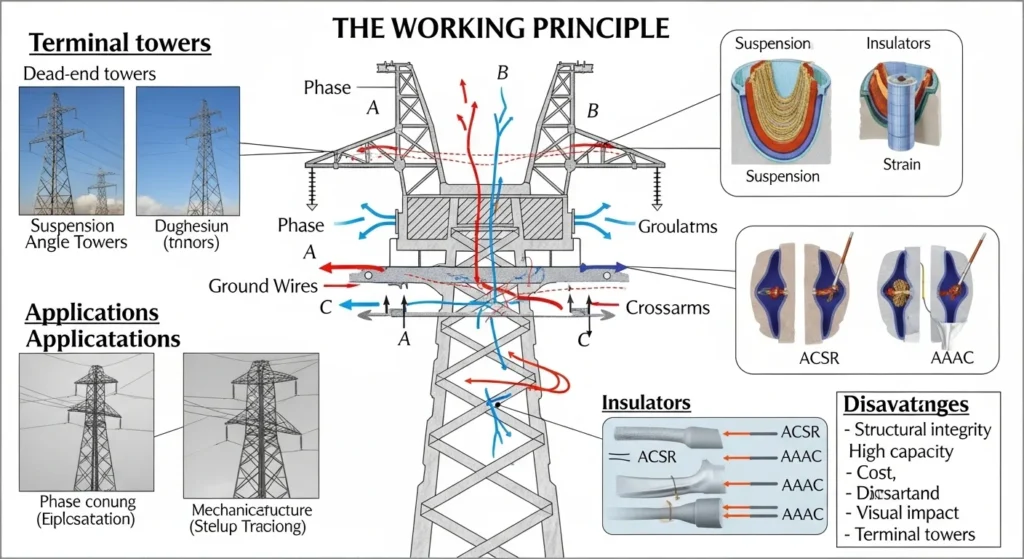
The terminal tower working principle is based on providing a secure mechanical and electrical connection between wires using conductive terminals.
Step-by-Step Working
- Electrical wires are inserted into terminal slots
- Screws or clamps tighten the wire ends
- Metal conductors inside the terminal allow current flow
- Insulation prevents short circuits
Simple Analogy
Think of a terminal tower like a junction box where multiple roads meet. Each road (wire) has its own lane (terminal), preventing confusion and accidents.
Key Points
- Provides firm contact between conductors
- Ensures low resistance connection
- Allows easy disconnection and maintenance
- Improves safety and organization
4.Types / Classification of Terminal Tower
Different applications require different types of terminal towers.
Screw Type Terminal Tower
This is the most common type. Wires are connected using screws.
Features:
- Strong connection
- Easy to install
- Suitable for industrial use
Spring Clamp Terminal Tower
Instead of screws, it uses spring pressure.
Features:
- Faster installation
- Vibration-resistant
- Ideal for modern automation systems
Barrier Type Terminal Tower
Includes barriers between terminals to prevent short circuits.
Features:
- High safety
- Used in high-voltage systems
PCB Terminal Tower
Mounted directly on printed circuit boards.
Features:
- Compact design
- Used in electronic devices
Modular Terminal Tower
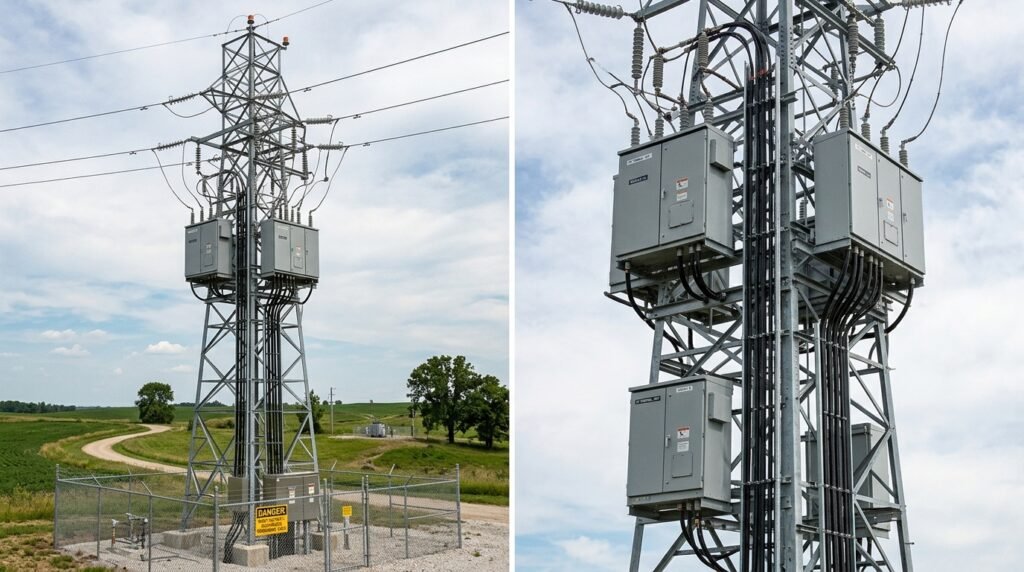
A modular terminal tower is an electrical connection component used in control panels and electronic systems to provide flexible and organized wiring connections on a PCB or mounting rail. It is called “modular” because it is designed in separate sections or blocks that can be easily added, removed, or replaced according to circuit requirements. In simple words, it allows engineers and technicians to build customized terminal arrangements for different electrical applications. These terminal towers are commonly used in industrial automation, machine control systems, power distribution panels, and electronic equipment. They are made of high-quality insulating material with metal conducting parts to ensure safe and reliable current flow. The main advantage of a modular terminal tower is its flexibility, easy installation, and neat wiring management, which reduces errors and simplifies maintenance. Understanding modular terminal towers is important for electrical students and technicians because they are widely used in modern industrial and control system designs.Can be expanded by adding more units.
Features:
- Flexible design
- Easy customization
5.Main Components of Terminal Tower
Understanding components helps in proper selection and maintenance.
Conductive Strip
- Made of copper or brass
- Allows current flow between wires
Insulation Body
- Made of plastic or ceramic
- Prevents electric shock and short circuit
Screws or Clamps
- Used to hold wires tightly
- Ensure firm electrical contact
Mounting Base
- Fixes the terminal tower on panels or rails
- Provides mechanical support
Marking Tags
- Used for identification
- Helps in troubleshooting
6.Advantages of Terminal Tower
The terminal tower advantages and disadvantages must be understood clearly. Let’s start with advantages.
- Improves wiring organization
- Enhances safety
- Easy maintenance and troubleshooting
- Reduces chances of loose connections
- Saves time during installation
- Supports modular expansion
- Suitable for various voltage levels
7.Disadvantages / Limitations
Despite many benefits, there are some limitations.
- Initial cost may be higher than direct wiring
- Requires proper installation skills
- Screw types may loosen due to vibration
- Takes panel space
- Not suitable for extremely high current without proper rating
8.Terminal Tower Applications
The terminal tower applications are wide and important in electrical systems.
Home Applications
- Distribution boards
- Wiring junctions
Industrial Applications
- Control panels
- Motor starter systems
- PLC panels
Commercial Applications
- Elevator systems
- HVAC control panels
Modern Technology Uses
- Automation systems
- Robotics
- Renewable energy systems (solar panels)
9.Comparison Section
Difference Between Terminal Tower and Terminal Block
| Feature | Terminal Tower | Terminal Block |
|---|---|---|
| Structure | Vertical / multi-layer | Linear / modular |
| Application | Complex wiring systems | General wiring |
| Expansion | Moderate | Highly expandable |
| Installation | Slightly complex | Easier |
| Use Case | Industrial panels | Control panels & wiring |
10.Selection Guide
Choosing the right terminal tower is very important.
Key Factors to Consider
- Voltage rating
- Current capacity
- Type of connection (screw or spring)
- Environmental conditions (temperature, moisture)
- Space available in panel
Tips for Beginners
- Always choose slightly higher current rating
- Use branded and certified products
- Ensure proper labeling
- Avoid overcrowding terminals
11.Common Problems & Solutions
Loose Connection
Problem: Heating or sparking
Solution: Tighten screws properly
Overheating
Problem: High current flow
Solution: Use correct rating terminal
Corrosion
Problem: Moist environment
Solution: Use protective coating or sealed terminals
Wrong Wiring
Problem: Misconnection
Solution: Use marking tags and diagrams
Vibration Issues
Problem: Screws become loose
Solution: Use spring clamp type terminals
12.Future Trends
Terminal tower technology is evolving with modern electrical systems.
Smart Terminals
- Integrated sensors
- Real-time monitoring
Tool-Free Installation
- Faster and safer connections
Compact Designs
- Space-saving solutions
Integration with Automation
- Used in IoT-based systems
- Smart industrial panels
13.Conclusion
Terminal tower is a fundamental component in electrical systems that ensures safe, organized, and reliable wiring. From simple home applications to complex industrial panels, its role is critical in maintaining efficiency and safety.
Understanding the terminal tower working principle, types, applications, and advantages and disadvantages helps engineers and technicians make better decisions during installation and maintenance.
As technology advances, terminal towers are becoming smarter and more efficient. For beginners, learning this concept builds a strong foundation in electrical engineering. Always focus on safety, proper selection, and correct installation practices to achieve the best results.



Pingback: Types of Insulators in Transmission Lines Explained