
Imagine waking up on a cold winter morning and enjoying a hot shower before starting your day. This comfort is possible because of a water heater working quietly in the background. Water heaters are now an essential part of modern homes, hotels, hospitals, industries, and commercial buildings. They provide hot water for bathing, cleaning, cooking, and industrial processes.
Understanding the water heater electrical guide is important for electrical students, engineers, technicians, and beginners because water heaters consume significant electrical power and require safe installation and operation. Incorrect wiring, poor grounding, overloaded circuits, or faulty components can lead to electric shock, overheating, fire hazards, or equipment failure.
Learning the water heater electrical guide working principle helps users understand how electrical energy converts into heat energy safely and efficiently. It also improves troubleshooting and maintenance skills.
In this article, you will learn everything about water heater electrical systems, including their working principle, types, components, advantages and disadvantages, applications, comparison, installation tips, troubleshooting methods, and future trends in water heating technology using simple and easy English.
What is a Water Heater Electrical System?
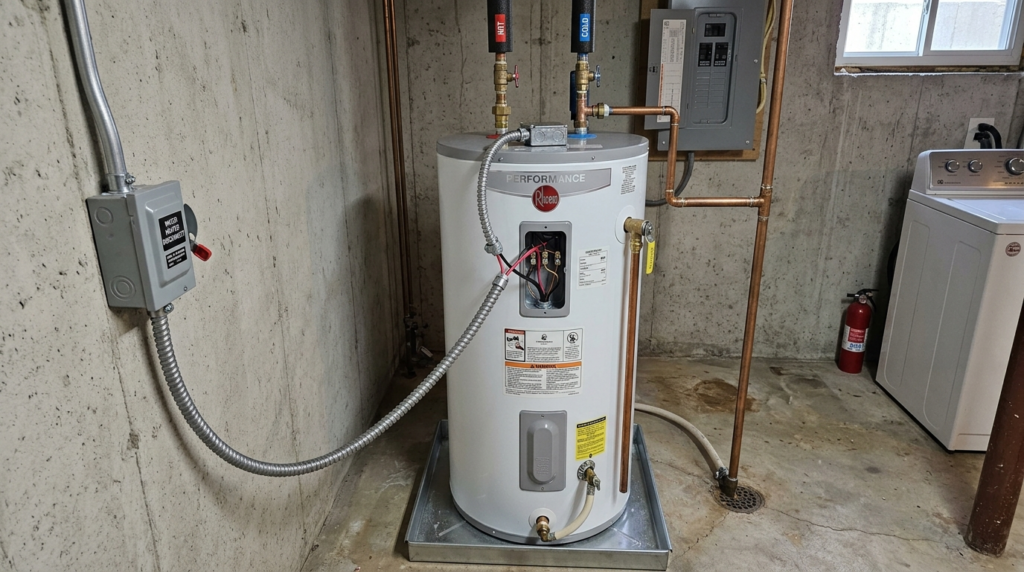
A water heater electrical system is an arrangement of electrical components used to heat water using electrical energy. It includes heating elements, thermostats, wiring, switches, protection devices, and control systems.
In simple words, a water heater uses electricity to increase water temperature for domestic or industrial use.
Simple Explanation
When electrical current passes through a heating element, heat is produced. This heat transfers to the water stored inside the tank or flowing through pipes.
The system controls temperature automatically using thermostats and safety devices.
Practical Example
In a home electric geyser:
Electricity flows through the heating element
The element heats the water
A thermostat controls temperature
Hot water becomes available for daily use
Water Heater Electrical Guide Working Principle
The water heater electrical guide working principle is based on converting electrical energy into heat energy.
Step-by-Step Working Process
Power Supply Enters the System
Electricity comes from the main electrical panel through phase and neutral wires.
Thermostat Detects Water Temperature
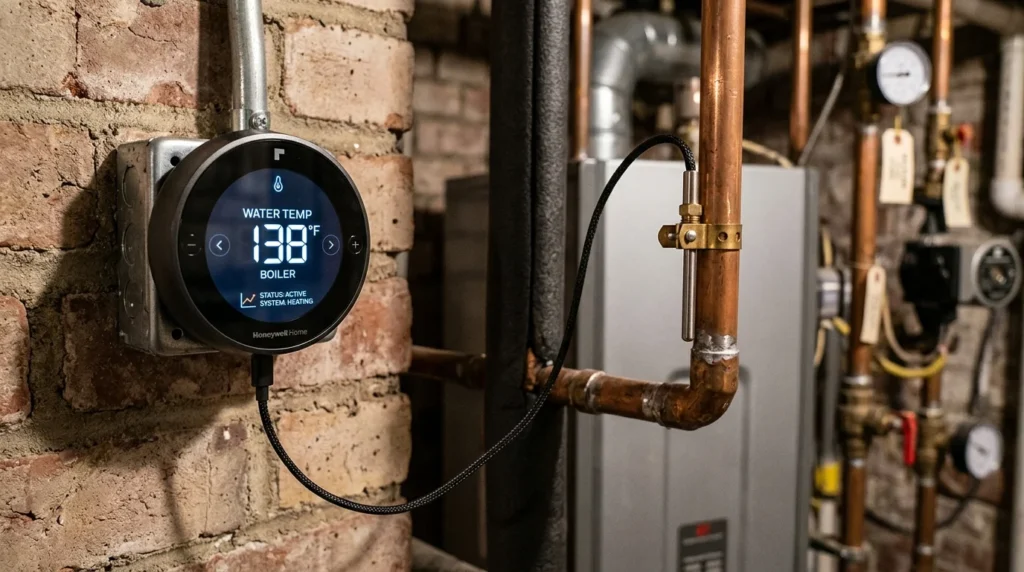
A thermostat detects water temperature by continuously sensing the heat level of the water inside a water heater, electric geyser, boiler, or solar water heating system. It uses a built-in temperature sensor or bimetallic strip to compare the actual water temperature with the user-selected temperature setting. When the water temperature drops below the preset value, the thermostat automatically closes the electrical circuit and switches on the heating element to heat the water. As soon as the water reaches the desired temperature, the thermostat opens the circuit and turns the heating element off, preventing overheating and reducing unnecessary power consumption. This automatic temperature control ensures a steady supply of hot water, improves energy efficiency, enhances user safety, and extends the lifespan of the heating system. Thermostats are widely used in residential, commercial, and industrial water heating applications for reliable and efficient temperature regulation.
The thermostat checks whether the water temperature is below the desired level.
Heating Element Activates
If water is cold, the thermostat allows current to flow through the heating element.
Heat Is Produced
The heating element converts electrical energy into thermal energy.
Water Temperature Increases
Water temperature increases when the heating element transfers electrical or thermal energy to the water inside a water heater, geyser, boiler, or solar water heating system. As the heater operates, the water absorbs this heat energy, causing its temperature to rise gradually until it reaches the preset value. During this process, the thermostat continuously monitors the water temperature to ensure safe and efficient heating. Once the desired temperature is achieved, the thermostat automatically switches off the heating element to prevent overheating and reduce unnecessary energy consumption. The heated water is then stored in the tank and remains available for household or industrial use. This controlled heating process provides a reliable supply of hot water while improving energy efficiency, enhancing safety, and extending the lifespan of the heating system.
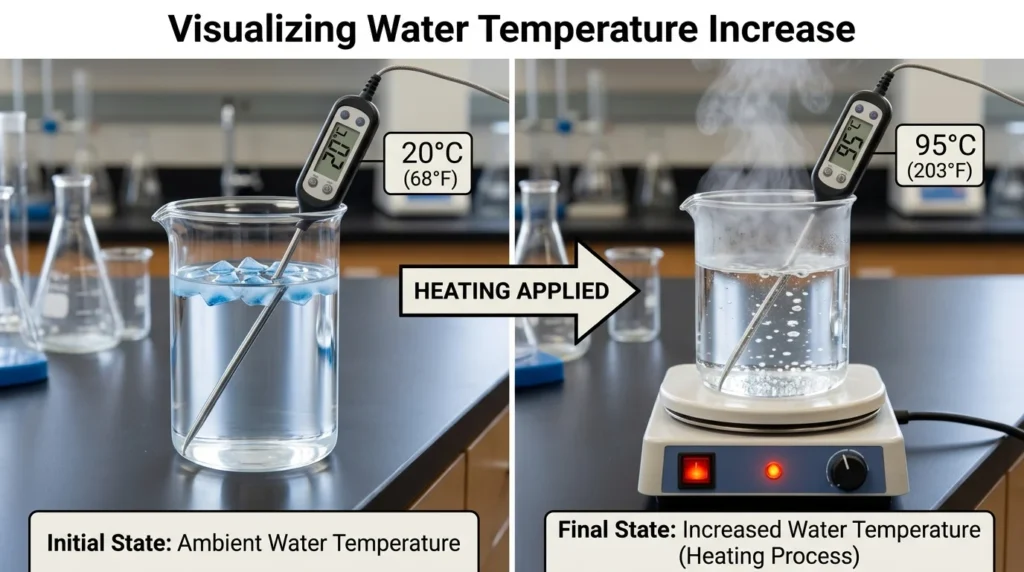
Heat transfers from the element to the surrounding water.
Thermostat Stops Heating
When the required temperature is reached, the thermostat disconnects the power supply.
Easy Analogy
Think of the heating element like an electric stove inside a water tank.
Electricity heats the element
The element heats the water
The thermostat works like an automatic temperature controller
Types / Classification
Different types of water heaters are available depending on heating method, installation type, and application.
Storage Water Heater
This type stores heated water inside a tank.
Features
Continuous hot water availability
Common household use
Easy installation
Applications
Homes
Hotels
Apartments
Instant Water Heater
Also called a tankless water heater.
Features
Heats water instantly
Compact design
Energy efficient for small usage
Applications
Kitchens
Bathrooms
Small offices
Electric Geyser
A common electric water heating system used in homes.
Features
Thermostat-controlled
Insulated tank
Safe operation
Solar Water Heater with Electrical Backup
Uses solar energy with electrical heating support.
Features
Energy saving
Environmentally friendly
Backup heating system
Applications
Residential buildings
Commercial facilities
Industrial Water Heater
Designed for large-scale heating applications.
Features
High-capacity heating
Heavy-duty operation
Advanced safety systems
Applications
Factories
Hospitals
Manufacturing plants
Main Components
Understanding water heater components helps in installation and troubleshooting.
Heating Element
The main component responsible for heating water.
Function
Converts electrical energy into heat.
Thermostat
Controls water temperature automatically.
Function
Turns heating ON and OFF according to temperature settings.
Tank
Stores heated water safely.
Insulation Layer
Reduces heat loss and improves efficiency.
Pressure Relief Valve
Releases excess pressure for safety.
Wiring System
Supplies electrical current to the heater components.
Circuit Breaker
Protects the system from overload and short circuits.
Indicator Light
Shows heater operation status.
Advantages
Understanding water heater electrical guide advantages and disadvantages helps users select suitable systems.
Advantages of Water Heater Electrical Systems
Provides instant hot water
Easy operation
Suitable for homes and industries
Automatic temperature control
Cleaner compared to fuel-based heating
Compact installation options
Improved user comfort
Low maintenance in modern systems
Safe operation with protection devices
Supports smart automation systems
Disadvantages / Limitations
Although electric water heaters are useful, they also have some disadvantages.
Disadvantages of Water Heater Electrical Systems
High electricity consumption
Power outage affects operation
Heating takes time in large tanks
Improper installation may cause electric shock
Heating elements may fail over time
Mineral deposits reduce efficiency
Larger systems require higher power ratings
Water Heater Electrical Guide Applications
Water heater electrical guide applications are found in residential, commercial, and industrial sectors.
Home Applications
Bathrooms
Kitchens
Laundry systems
Commercial Applications
Hotels
Restaurants
Shopping malls
Industrial Applications
Chemical processing
Food industries
Cleaning systems
Modern Technology Applications
Smart homes
Solar hybrid systems
Energy management systems
Comparison Section
Difference Between Storage and Instant Water Heater
| Feature | Storage Water Heater | Instant Water Heater |
| Water Storage | Yes | No |
| Heating Speed | Moderate | Fast |
| Size | Larger | Compact |
| Energy Consumption | Higher standby loss | Lower standby loss |
| Installation | Requires more space | Space saving |
| Hot Water Supply | Continuous stored water | Instant limited flow |
| Applications | Family use | Small usage areas |
Selection Guide
Choosing the right water heater depends on usage, energy requirements, and installation conditions.
Choose Storage Water Heater When
Large family usage is expected
Continuous hot water is required
Multiple outlets are used
Choose Instant Water Heater When
Space is limited
Small water demand exists
Faster heating is preferred
Choose Solar Water Heater When
Energy savings are important
Long-term cost reduction is needed
Renewable energy is preferred
Tips for Beginners
Check Power Rating
Ensure wiring and breaker capacity match heater load.
Use Proper Grounding
Grounding improves electrical safety.
Install Safety Devices
Always use circuit breakers and leakage protection.
Inspect Water Quality
Hard water may damage heating elements.
Follow Manufacturer Guidelines
Correct installation improves lifespan and performance.
Common Problems & Solutions
Why Is the Water Heater Not Heating?
causes:
Faulty heating element
Tripped breaker
Thermostat failure
Solution
Test heating element
Reset breaker
Replace thermostat if needed
Why Does the Water Heater Trip the Breaker?
reasons:
Short circuit
Ground fault
Overloaded circuit
Solution
Inspect wiring
Check insulation
Use correct breaker rating
Why Is Water Too Hot?
Thermostat settings may be too high.
Solution
Reduce thermostat temperature
Replace faulty thermostat
Why Is There Low Hot Water Pressure?
causes:
Sediment buildup
Pipe blockage
Solution
Clean tank
Flush pipes regularly
Why Is the Heater Making Noise?
Mineral deposits may collect around the heating element.
Solution
Clean heating element
Flush the tank
Future Trends
Water heating technology is improving with modern energy-efficient systems.
Smart Water Heaters
Modern systems support:
Mobile app control
Temperature scheduling
Energy monitoring
Energy-Efficient Heating Elements
Advanced elements improve heating speed and reduce power consumption.
Solar Hybrid Systems
Future systems combine electrical and solar heating for better efficiency.
IoT-Based Monitoring
Internet-connected water heaters allow remote diagnostics and maintenance alerts.
Eco-Friendly Water Heating
Modern industries focus on reducing electricity consumption and carbon emissions.
Conclusion
Understanding the water heater electrical guide is essential for electrical students, engineers, technicians, and beginners working with heating systems and electrical installations. Water heaters use electrical energy to provide hot water safely and efficiently for homes, industries, and commercial facilities.
The water heater electrical guide working principle explains how components such as heating elements, thermostats, wiring systems, and protection devices work together to heat water automatically and safely. Different water heater types are designed for different applications, energy needs, and installation conditions.
As modern electrical technology continues to advance, smart water heaters, energy-efficient systems, and solar hybrid technologies are becoming increasingly popular. Learning proper installation methods, safety practices, and troubleshooting techniques helps build strong practical knowledge and improves electrical system reliability.