
A microgrid is a small, self-contained electricity network that can run on its own or connected to the main grid. A hospital, a university campus, a military base, or a remote village can all be microgrids: they generate some of their own power, store it, and keep the lights on even when the wider grid goes dark.
Microgrids are one of the fastest-growing ideas in power systems, because they combine the reliability of local generation with the flexibility of renewables. This guide explains what a microgrid is, how it works, what it is made of, and how it differs from a smart grid.
What Is a Microgrid?
A microgrid is a local energy system with its own generation, storage, and loads, plus a controller that manages them as one unit. It connects to the main grid at a single point, the point of common coupling, and it can disconnect from that grid and keep running on its own. That ability, called islanding, is what makes a microgrid different from an ordinary local network.
The U.S. Department of Energy defines a microgrid as a group of interconnected loads and distributed energy resources within clearly defined electrical boundaries that acts as a single controllable entity. In plain language: a small grid that can think for itself.
How a Microgrid Works
In normal operation the microgrid stays connected to the main grid, buying power when it is cheap and selling surplus solar or wind back when it can. Its controller watches the balance of generation and load second by second, charging batteries when there is surplus and discharging them when demand peaks.
When the main grid fails, the microgrid opens the switch at the point of common coupling and islands itself. Its local generators and batteries take over, and the controller sheds non-essential loads to keep critical ones running. When the main grid returns, the microgrid synchronizes and reconnects, all without a noticeable interruption for the loads inside.

Components of a Microgrid
| Component | Role |
|---|---|
| Distributed generation | Solar panels, wind turbines, or small generators that produce power locally |
| Energy storage | Batteries that smooth output and carry the load through outages |
| Loads | The homes, buildings, or equipment the microgrid serves |
| Controller | Software and hardware that balance generation, storage, and load |
| Switchgear | The switch at the point of common coupling that islands the microgrid |
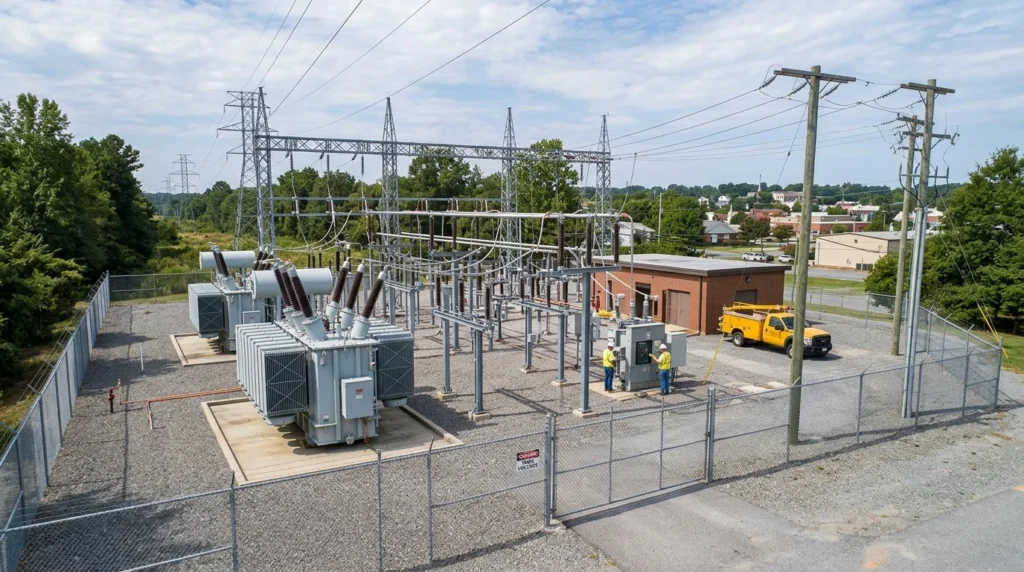
| Protection | Relays and breakers that keep faults inside the microgrid from spreading |
Islanding: Running Without the Main Grid
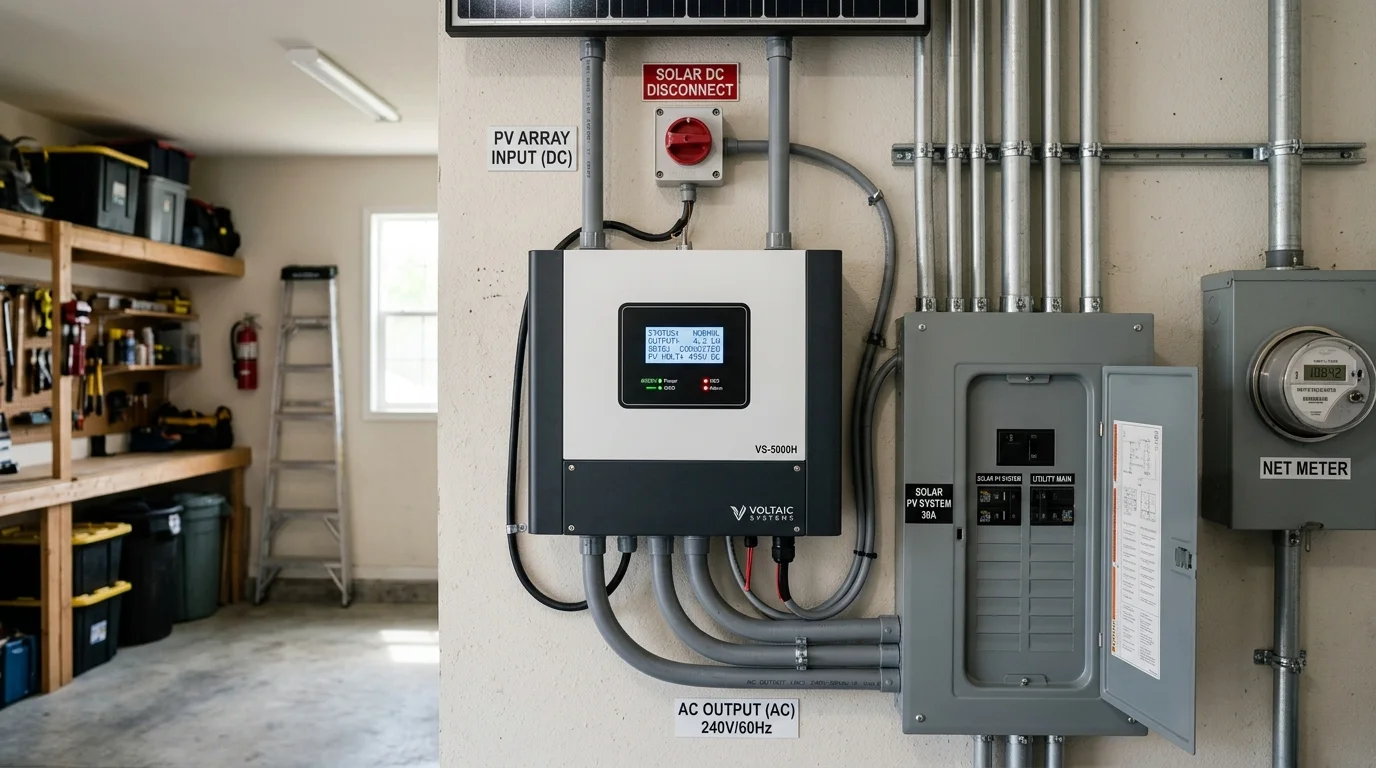
Islanding is the microgrid’s defining trick. Most grid-connected solar systems must shut down during an outage, to protect line workers. A microgrid is different: it is designed to disconnect safely and keep running. The switch at the point of common coupling opens, the controller takes over frequency and voltage, and the local sources carry the load.
The transition has to be fast and clean. Batteries and inverters provide the instant response, while slower generators such as diesel or gas units start up and take over the steady load. A solar system for home paired with a battery is a miniature version of the same idea.
Microgrid vs Smart Grid
The two ideas are related but different. A smart grid is the whole electricity network made intelligent with sensors and communication; a microgrid is a small, self-contained part of a network that can run on its own. A smart grid can contain many microgrids, and a microgrid usually uses smart grid technology, sensors, meters, and automation, to manage itself.
The key difference is independence: a smart grid still depends on the main network, while a microgrid can disconnect and survive alone. One is a smarter big grid; the other is a small grid of its own.
Benefits of Microgrids
Microgrids offer four main benefits:
- Resilience: critical loads stay powered during grid outages
- Cost savings: local generation and storage cut peak demand charges
- Renewables: solar and wind are used locally instead of being exported
- Energy independence: communities and facilities control their own power
The resilience benefit is the one that drives most projects. Hospitals, data centers, and military bases cannot afford a blackout, and a microgrid is the most direct way to guarantee power. For a look at how the wider network delivers power to a microgrid’s connection point, see our guide to the power distribution system.
Frequently Asked Questions
What is the difference between a microgrid and a mini-grid?
The terms overlap, but a mini-grid usually means a small off-grid network in a remote area that never connects to a main grid, while a microgrid is designed to connect to the main grid and disconnect when needed. A microgrid can island; a mini-grid simply has no main grid to connect to.
How much does a microgrid cost?
Costs vary widely with size and components. A small commercial microgrid can cost a few hundred thousand dollars, while a campus or military microgrid runs into tens of millions. The payback comes from lower energy bills, avoided outage losses, and sometimes grid service payments.
Can a microgrid run entirely on renewables?
Yes, with enough solar or wind plus storage, a microgrid can run on renewables alone. The challenge is the dark, calm periods: the storage must be large enough, or a dispatchable generator such as a gas unit must be available as backup. Most microgrids today combine renewables with storage and a small generator.
What is distributed generation?
Distributed generation is power produced close to where it is used, rooftop solar, small wind turbines, or combined heat and power units, instead of in a distant central plant. Our guide to distributed generation explains how these small sources connect to the grid.
Who uses microgrids?
Hospitals, universities, military bases, data centers, industrial parks, and remote communities are the main users. Any site where an outage is costly or dangerous, or where the main grid is weak or absent, is a candidate.
Conclusion
A microgrid is a small grid that can stand on its own: local generation, storage, and smart control, able to disconnect from the main grid and keep running. It brings resilience to hospitals and campuses, a home for renewables, and a way for communities to control their own power. As batteries get cheaper and control software gets smarter, microgrids will move from special projects to everyday infrastructure.
For research, definitions, and case studies, the U.S. National Renewable Energy Laboratory’s microgrid research page is the best place to start.