
Imagine building a new house or renovating an old one. You carefully choose paint, furniture, and lighting—but what about the wiring behind the walls? Electrical wiring is the backbone of any building, and choosing the right type is critical for safety, performance, and long-term reliability.
Many electrical failures, short circuits, and even fires happen because of poor wiring selection or installation. That’s why understanding the types of electrical wiring is not just important—it is essential for anyone working with electrical systems.
For students, engineers, technicians, and beginners, this topic forms a strong foundation in practical electrical work. It helps you make better decisions when designing circuits, installing systems, or troubleshooting faults.
In this article, you will learn about different wiring types, the types of electrical wiring working principle, their advantages and disadvantages, applications, and how to select the right wiring method. By the end, you will have a clear and confident understanding of electrical wiring systems.
2. What is Types of Electrical Wiring?
Types of electrical wiring refer to different methods used to connect electrical devices and distribute power safely within a building or system.
Simple Explanation
Electrical wiring is a network of wires, cables, and components that carry electricity from the power source to electrical devices like lights, fans, and appliances.
Practical Example
In a house:
- Wires carry electricity from the main supply
- Switches control the flow
- Appliances use the electrical energy
Different wiring types are used depending on safety, cost, and environment.
In simple terms, types of electrical wiring describe how electrical connections are installed and organized.
3. Working Principle
The types of electrical wiring working principle is based on safely delivering electricity from the source to the load.
Step-by-Step Process
- Step 1: Power generation
Electricity is supplied from the grid - Step 2: Distribution
Power enters the building through a main panel - Step 3: Wiring network
Wires carry current to different rooms - Step 4: Control
Switches and circuits control the flow - Step 5: Utilization
Devices use the electrical energy
Easy Analogy
Think of wiring like a road network:
- Power source = Main highway
- Wires = Roads
- Devices = Houses
- Switches = Traffic signals
Electricity travels through wires just like vehicles move through roads.
4. Types / Classification
There are several types of electrical wiring, each suited for specific applications.
Cleat Wiring
- Uses insulated wires supported on porcelain cleats
- Installed on walls or ceilings
Features:
- Temporary wiring
- Low cost
- Easy installation
Batten Wiring (CTS/TRS Wiring)
- Uses cables fixed on wooden battens
- Secured with clips
Features:
- Neat appearance
- Common in residential buildings
- Moderate cost
Casing and Capping Wiring
- Wires placed inside wooden casing
- Covered with a cap
Features:
- Good protection
- Easy maintenance
- Less common today
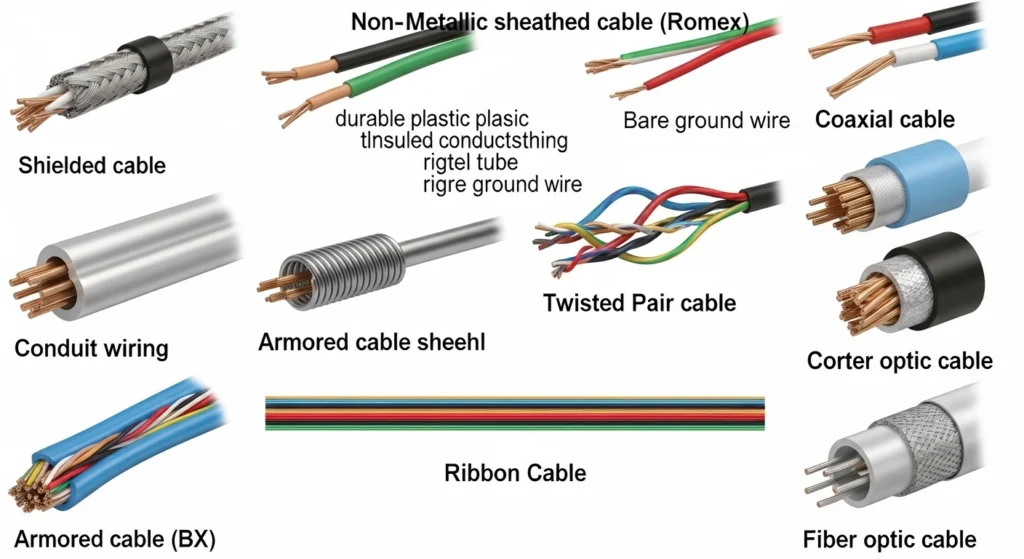
Conduit Wiring
- Wires run inside metal or PVC pipes
- Can be surface-mounted or concealed
Features:
- High safety
- Durable
- Used in modern buildings
Lead Sheathed Wiring
- Wires covered with lead alloy sheath
- Protects from moisture
Features:
- Suitable for damp areas
- Expensive
- Requires proper earthing
Flexible Wiring
- Uses flexible cables
- Used for portable devices
Features:
- Easy to handle
- Used in appliances
5. Main Components
Understanding components helps in selecting the right wiring system.
Conductors (Wires)
- Carry electrical current
- Usually made of copper or aluminum
Insulation
- Covers wires to prevent leakage
- Protects from electric shock
Switches
- Control current flow
- Turn devices ON/OFF
Distribution Board
- Divides power into circuits
- Contains protective devices
Protective Devices
- Circuit breakers
- Fuses
- Prevent overload and short circuits
Conduits and Accessories
- Protect wires physically
- Improve safety and durability
6. Advantages
Types of Electrical Wiring Advantages and Disadvantages (Advantages)
- Ensures safe power distribution
- Reduces risk of electrical accidents
- Supports efficient energy use
- Flexible options for different environments
- Improves system reliability
- Allows easy maintenance (depending on type)
7. Disadvantages / Limitations
Types of Electrical Wiring Advantages and Disadvantages (Limitations)
- Some types are expensive (conduit wiring)
- Installation can be time-consuming
- Requires skilled labor
- Older methods are less safe
- Environmental factors can affect durability
8. Applications
Types of Electrical Wiring Applications
Home Applications
- Lighting systems
- Power outlets
- Appliance connections
Industrial Applications
- Machinery wiring
- Control panels
- Heavy equipment
Commercial and Modern Uses
- Offices and malls
- Smart homes
- Data centers
- Renewable energy systems
9. Comparison Section
Difference Between Conduit Wiring and Batten Wiring
| Feature | Conduit Wiring | Batten Wiring |
| Safety | High | Moderate |
| Appearance | Hidden (concealed) | Visible |
| Cost | Higher | Lower |
| Durability | Long-lasting | متوسط |
| Maintenance | Difficult | Easy |
| Usage | Modern buildings | Small installations |
10. Selection Guide
Choosing the right wiring type depends on several factors.
Consider These Factors
- Budget
- Safety requirements
- Building type
- Environmental conditions
- Maintenance needs
Tips for Beginners
- Use conduit wiring for long-term safety
- Avoid outdated methods like cleat wiring for permanent use
- Always follow electrical standards
- Consult professionals for large installations
11. Common Problems & Solutions
Why does wiring overheat?
Overloading or poor insulation. Use proper wire size and avoid excess load.
What is the difference between open and concealed wiring?
Open wiring is visible, while concealed wiring is hidden inside walls.
Why is conduit wiring preferred?
It provides better protection and safety.
How to identify faulty wiring?
Look for sparks, burning smell, or frequent tripping.
Can I install wiring myself?
Small tasks may be possible, but professional installation is recommended for safety.
12. Future Trends
Electrical wiring is evolving with modern technology.
- Smart wiring systems
- Fire-resistant cables
- Eco-friendly materials
- Integration with smart homes
- Wireless power technologies (emerging)
The future focuses on safety, efficiency, and automation.
13. Conclusion
Understanding the types of electrical wiring is essential for safe and efficient electrical systems. Each wiring type has its own strengths, weaknesses, and applications.
From simple batten wiring to advanced conduit systems, the right choice depends on your needs, budget, and environment. The types of electrical wiring working principle ensures that electricity is delivered safely to every device.
Knowing the types of electrical wiring advantages and disadvantages helps you make better decisions in real-world projects. As technology advances, wiring systems are becoming safer and more efficient.
Keep learning and observing practical installations—this knowledge will help you grow as a skilled electrical professional.