
Imagine moving into a newly built house where switches don’t work properly, lights flicker, and sockets overheat. In most cases, the problem is not the appliances—it is poor wiring installation. This is why learning how to install electrical wiring correctly is critical.
Electrical wiring is the backbone of any building. A well-installed system ensures safety, efficiency, and long-term reliability. On the other hand, improper installation can lead to short circuits, fire hazards, and equipment damage.
For electrical students, engineers, technicians, and beginners, understanding wiring installation is a fundamental skill. It combines theoretical knowledge with practical execution.
In this article, you will learn the how to install electrical wiring working principle, step-by-step installation process, types of wiring methods, tools, safety tips, and troubleshooting techniques. By the end, you will have a clear understanding of how to install wiring systems safely and professionally.
2. What is How to Install Electrical Wiring?
How to install electrical wiring refers to the process of setting up electrical cables, connections, and components to safely distribute electricity in a building.
Simple Explanation
It involves placing wires, connecting devices, and ensuring proper flow of electricity from the source to loads like lights and appliances.
Practical Example
In a house wiring system:
- Power enters through the main supply
- Wires are routed to different rooms
- Switches control the flow
- Devices use the electricity
In simple terms, how to install electrical wiring means creating a safe path for electricity to travel.
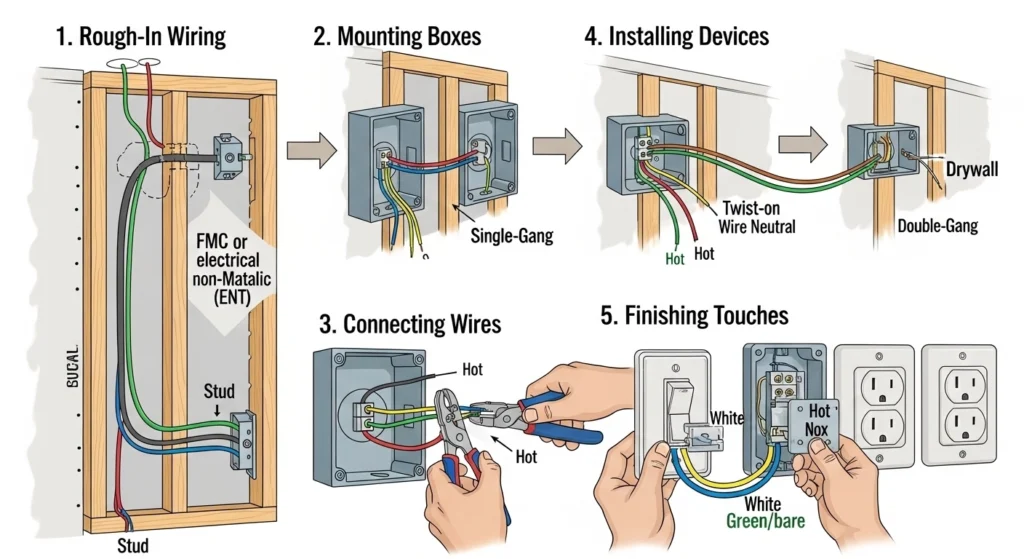
3. Working Principle
The how to install electrical wiring working principle is based on safe transmission of electrical energy from source to load.
Step-by-Step Process
- Step 1: Power source connection
Connect supply to distribution board - Step 2: Circuit planning
Design paths for wires - Step 3: Wiring installation
Lay wires through conduits or surfaces - Step 4: Connections
Attach switches, sockets, and loads - Step 5: Testing
Check continuity and safety
Easy Analogy
Think of wiring like a water supply system:
- Source = Water tank
- Wires = Pipes
- Switches = Valves
- Devices = Taps
Electricity flows just like water through a planned system.
4. Types / Classification
Different wiring methods are used depending on the installation.
Concealed Wiring
- Wires installed inside walls
- Uses conduits
Use: Modern homes
Open Wiring
- Wires visible on walls
- Fixed using clips or battens
Use: Temporary setups
Conduit Wiring
- Wires inside PVC or metal pipes
- Provides high protection
Batten Wiring
- Wires fixed on wooden battens
- Easy to install
Underground Wiring
- Used for outdoor and industrial systems
- Protected from environment
5. Main Components
Electrical Wires
- Carry current
- Copper or aluminum
Conduits
- Protect wires
- Improve safety
Switches
- Control electricity flow
Sockets
- Provide power outlets
Distribution Board
- Divides circuits
- Houses protective devices
Circuit Breakers
- Protect against overload and short circuits
Junction Boxes
- Used for wire connections
6. Advantages
How to Install Electrical Wiring Advantages and Disadvantages (Advantages)
- Ensures safe power distribution
- Reduces electrical hazards
- Improves system efficiency
- Supports long-term reliability
- Enables easy troubleshooting
- Allows proper load management
7. Disadvantages / Limitations
How to Install Electrical Wiring Advantages and Disadvantages (Limitations)
- Requires technical knowledge
- Installation can be time-consuming
- Mistakes can be dangerous
- Cost may be high for quality materials
- Needs regular inspection and maintenance
8. Applications
How to Install Electrical Wiring Applications
Home Applications
- Lighting systems
- Power outlets
- Appliance connections
Industrial Applications
- Machine wiring
- Control panels
- Power distribution systems
Modern Technology
- Smart homes
- Renewable energy systems
- Electric vehicle charging
- Automation systems
9. Comparison Section
Difference Between Concealed and Open Wiring Installation
| Feature | Concealed Wiring Installation | Open Wiring Installation |
| Appearance | Hidden | Visible |
| Safety | High | Moderate |
| Installation | Complex | Simple |
| Cost | Higher | Lower |
| Maintenance | Difficult | Easy |
10. Selection Guide
Choosing the right wiring installation method is important.
Consider These Factors
- Type of building
- Budget
- Safety requirements
- Environmental conditions
- Future maintenance needs
Tips for Beginners
- Always follow electrical standards
- Use proper tools and materials
- Double-check connections
- Avoid overloading circuits
- Test before final use
11. Common Problems & Solutions
Why do wires overheat?
Overloading or poor connections. Use correct wire size and proper installation.
Why do circuit breakers trip?
Due to short circuit or overload.
What is the difference between series and parallel wiring?
Series has one path; parallel has multiple paths.
How to check wiring safety?
Use testing tools like multimeters and insulation testers.
Why is proper earthing important?
It protects against electric shock and equipment damage.
12. Future Trends
Electrical wiring installation is evolving rapidly.
- Smart wiring systems
- Wireless power technologies
- Fire-resistant cables
- IoT-based monitoring systems
- Energy-efficient designs
These advancements improve safety and efficiency.
13. Conclusion
Learning how to install electrical wiring is essential for anyone working in electrical fields. It ensures safe and efficient power distribution in homes, industries, and modern systems.
From planning circuits to final testing, every step plays a critical role. Understanding the how to install electrical wiring working principle helps you avoid mistakes and improve reliability.
While there are challenges, proper knowledge and practice make installation easier and safer. The how to install electrical wiring applications show how widely this skill is used.
Focus on safety, follow standards, and keep learning. With time and experience, you will master the art of electrical wiring installation.