
When you shop for solar panels, the first choice you face is between monocrystalline and polycrystalline panels. They look similar at a glance, both are made from silicon, and both turn sunlight into electricity, but they are made differently, perform differently, and cost different amounts. Monocrystalline panels are cut from a single silicon crystal and are known for high efficiency and a sleek black look. Polycrystalline panels are made from many silicon fragments melted together, and they are cheaper but slightly less efficient. This guide compares the two in detail, so you can decide which panel fits your roof, your budget, and your energy goals.
The difference starts in the factory. A monocrystalline cell is sliced from a single cylindrical crystal of pure silicon, which gives it a uniform structure and lets electrons flow freely. A polycrystalline cell is made by melting silicon fragments and pouring them into a mold, where they cool into many small crystals with boundaries between them. Those boundaries scatter electrons and reduce efficiency, but the process uses less energy and less silicon, which is why polycrystalline panels cost less. Both types are mature, reliable technologies with decades of field history, and the right choice depends on your situation rather than on one being simply better.
What Are Monocrystalline Solar Panels?
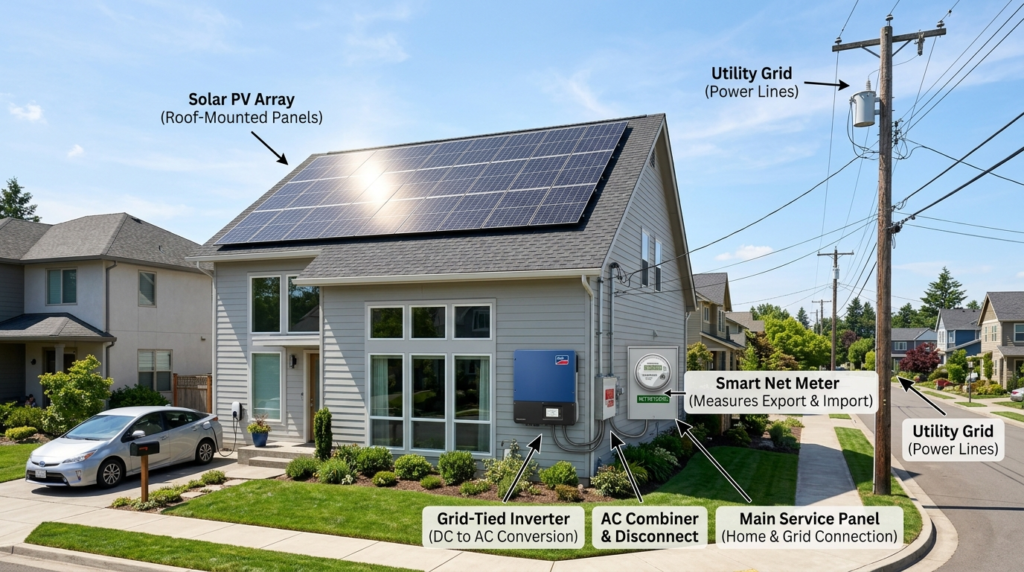
Monocrystalline solar panels are made from single-crystal silicon cells, which are cut from a cylindrical ingot into thin wafers. The cells are usually a uniform dark black or dark blue, with rounded corners where the wafer was cut from the cylinder, and the panel has a sleek, consistent appearance. Because the silicon is a single crystal, electrons move through it with little resistance, which gives monocrystalline panels the highest efficiency of any silicon panel, typically 20 to 24 percent. They also perform slightly better in low light and in high temperatures, and they need less roof space for the same power output. For the wider picture of a home solar installation, see our guide to the solar system for home, which explains how the panels, inverter, and battery work together.
What Are Polycrystalline Solar Panels?
Polycrystalline solar panels are made from silicon fragments that are melted together and cooled into a block, which is then sliced into wafers. The cells have a distinctive speckled blue appearance, with visible crystal grains and a less uniform look. Because the silicon has many crystal boundaries, electrons encounter more resistance, and polycrystalline panels are slightly less efficient, typically 15 to 17 percent. The manufacturing process is simpler and uses less energy, so polycrystalline panels are cheaper per watt. They are a good choice when roof space is plentiful and the budget matters more than squeezing the most power from each square meter.
Monocrystalline vs Polycrystalline: Key Differences
The two panel types differ in efficiency, cost, appearance, and how they handle heat. Monocrystalline panels are more efficient, so they need less space for the same power, and they look better on most roofs. Polycrystalline panels cost less per watt, but they need more space and lose a little more output as the temperature rises. Both types last about the same time, with warranties of 25 years or more, and both degrade slowly over their lives. The table below summarizes the main differences.
| Feature | Monocrystalline | Polycrystalline |
|---|---|---|
| Efficiency | 20 to 24 percent | 15 to 17 percent |
| Cost per watt | Higher | Lower |
| Appearance | Uniform black, rounded cells | Speckled blue, square cells |
| Temperature coefficient | About -0.35 percent per C | About -0.40 percent per C |
| Lifespan | 25 to 30 years | 25 to 30 years |
| Space needed | Less for the same power | More for the same power |
Efficiency and Power Output
Efficiency is the share of sunlight a panel turns into electricity, and it matters most when roof space is limited. A monocrystalline panel rated at 400 watts produces that power from about 1.8 square meters, while a polycrystalline panel needs about 2.2 square meters for the same output. On a small roof, that difference can decide whether the system meets the household’s needs. Efficiency also matters in hot climates, because all panels lose output as they heat up, and monocrystalline panels lose slightly less. In practice, the difference in annual energy production between the two types is modest, usually 5 to 10 percent, and the choice often comes down to space and cost rather than efficiency alone.
Cost and Value
Polycrystalline panels are cheaper to buy, typically 10 to 20 percent less per watt than monocrystalline panels. That saving can matter on a large installation, but it is only part of the total system cost. The inverter, the mounting, the wiring, and the labor cost the same regardless of panel type, so the panel saving is a smaller share of the total than it first appears. Monocrystalline panels also produce more power from the same roof, which can mean fewer panels, less mounting hardware, and lower labor. When the roof is large and the budget is tight, polycrystalline panels offer the best value. When the roof is small or the goal is maximum output, monocrystalline panels are worth the premium. Our guide to the solar inverter system explains the other major component cost in a solar installation.
Which One Should You Choose?
Choose monocrystalline panels if your roof space is limited, if you want the highest output, if you prefer a sleek black look, or if you live in a hot climate where the better temperature coefficient matters. Choose polycrystalline panels if you have plenty of roof space, if the budget is the main constraint, or if the system is large enough that the lower cost per watt adds up. Either way, buy from a reputable manufacturer, check the warranty, and have the system installed by a qualified installer. The panel type matters less than the quality of the panels and the installation, and a well-installed system of either type will serve for decades. For the installation itself, see our inverter installation guide.
- Limited roof space: choose monocrystalline for maximum power per square meter.
- Tight budget and large roof: choose polycrystalline for the lowest cost per watt.
- Hot climate: monocrystalline loses slightly less output as temperature rises.
- Appearance: monocrystalline looks sleek and uniform; polycrystalline is speckled blue.
- Either type: buy a reputable brand and use a qualified installer.
Frequently Asked Questions
Which is better, monocrystalline or polycrystalline?
Monocrystalline panels are more efficient and need less space, while polycrystalline panels are cheaper per watt. Neither is better in every situation; the right choice depends on roof space, budget, and climate.
Do monocrystalline panels last longer?
Both types last about the same time, typically 25 to 30 years, and both come with 25-year performance warranties. The panel type does not determine lifespan; manufacturing quality and installation matter more.
Are polycrystalline panels still made?
Yes, but they are becoming less common as monocrystalline prices have fallen. Most manufacturers now focus on monocrystalline, and polycrystalline panels are mainly sold for budget and large-scale projects.
Can you mix monocrystalline and polycrystalline panels?
It is possible but not recommended, because the panels have different voltages and currents, and the string will be limited by the weakest panel. Mixing types complicates the design and reduces the system’s output.
Which panel is better in hot weather?
Monocrystalline panels are slightly better in heat, because they have a lower temperature coefficient, typically about -0.35 percent per degree Celsius, compared with about -0.40 percent for polycrystalline panels.
Conclusion
Monocrystalline and polycrystalline solar panels both turn sunlight into electricity reliably for decades. Monocrystalline panels win on efficiency, space, and appearance, while polycrystalline panels win on cost. For most homes, the decision comes down to roof space and budget: a small roof favors monocrystalline, a large roof and a tight budget favor polycrystalline. Whichever type you choose, buy quality panels, size the system to your needs, and have it installed properly, and the sun will pay you back for years.
To understand how solar cells work at the physics level, see the US Department of Energy’s introduction to solar photovoltaic cell basics.