
A solar charge controller is the small device that stands between your solar panels and your batteries, and it does a job that no solar system can do without. Solar panels produce power that varies with the sun, and batteries need power delivered at exactly the right voltage and current. Connect them directly and the battery will overcharge on a sunny day, drain back through the panels at night, and fail far sooner than it should. The charge controller manages that flow, protecting the battery, getting the most power from the panels, and keeping the whole system running safely. This guide explains what a solar charge controller is, how the two main types work, and how to choose and size one.
There are two main types of charge controller: PWM, or pulse width modulation, and MPPT, or maximum power point tracking. A PWM controller connects the panels directly to the battery and switches the connection on and off to control the charge. An MPPT controller is smarter: it finds the voltage at which the panels produce the most power and converts that power down to the battery voltage, which can harvest 20 to 30 percent more energy. MPPT costs more, but for most systems it pays for itself. The sections below explain both types, compare them, and show how to size a controller for your system.
What Is a Solar Charge Controller?
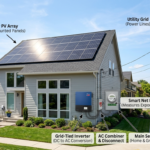
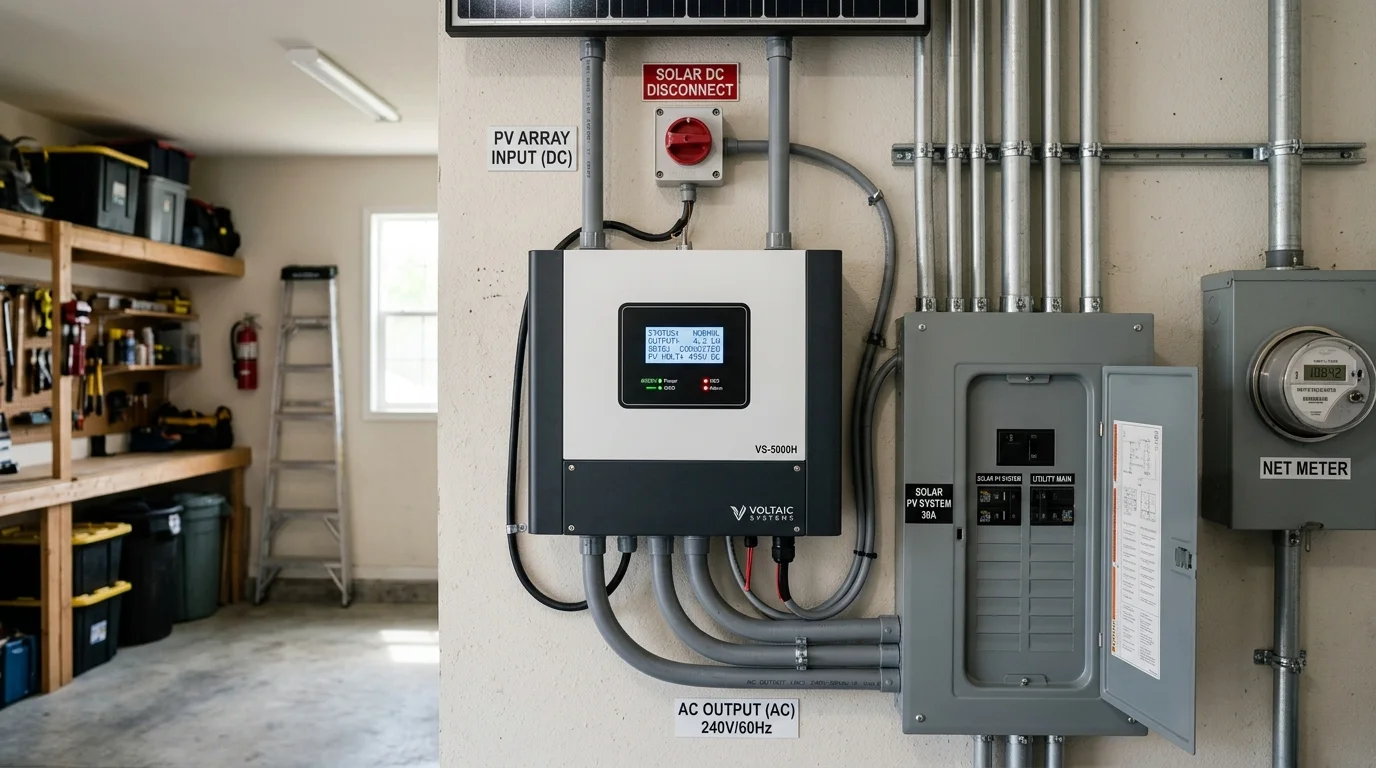
A solar charge controller regulates the power flowing from solar panels into a battery bank. It prevents overcharging by reducing or stopping the charge when the battery is full, and it prevents reverse current from flowing from the battery back into the panels at night. It also protects the battery from deep discharge by disconnecting the load when the battery voltage falls too low, and many controllers include a display that shows the charging state, the battery voltage, and the power being produced. Without a controller, a solar system would be unsafe and short-lived. For the wider picture of a home solar installation, see our guide to the solar system for home, which explains how the panels, controller, battery, and inverter work together.
Why You Need One
A solar panel’s output voltage is higher than a battery’s charging voltage, and it changes with temperature and sunlight. On a cold, bright morning, a 12-volt panel can produce more than 20 volts, which would overcharge and damage a 12-volt battery if connected directly. Overcharging boils off the electrolyte in a lead-acid battery, damages the plates, and shortens its life, while in a lithium battery it can trigger the protection circuit or, in the worst case, a fire. At night, the panel becomes a load and the battery would discharge back through it without a blocking diode or a controller. A charge controller prevents all of this, and it also manages the charging stages: bulk, absorption, and float, which keep the battery healthy over years of use.
PWM Charge Controllers
A PWM, or pulse width modulation, charge controller is the simpler and cheaper type. It connects the solar panel directly to the battery and controls the charge by switching the connection on and off rapidly, varying the duty cycle to hold the battery at the right voltage. When the battery is low, the switch stays on most of the time, and as the battery fills, the switch pulses less often. The drawback is that the panel is forced to operate at the battery’s voltage, which is below the panel’s maximum power point, so some of the panel’s power is wasted. PWM controllers are a good choice for small systems where the panel voltage matches the battery voltage and the budget is tight.
MPPT Charge Controllers
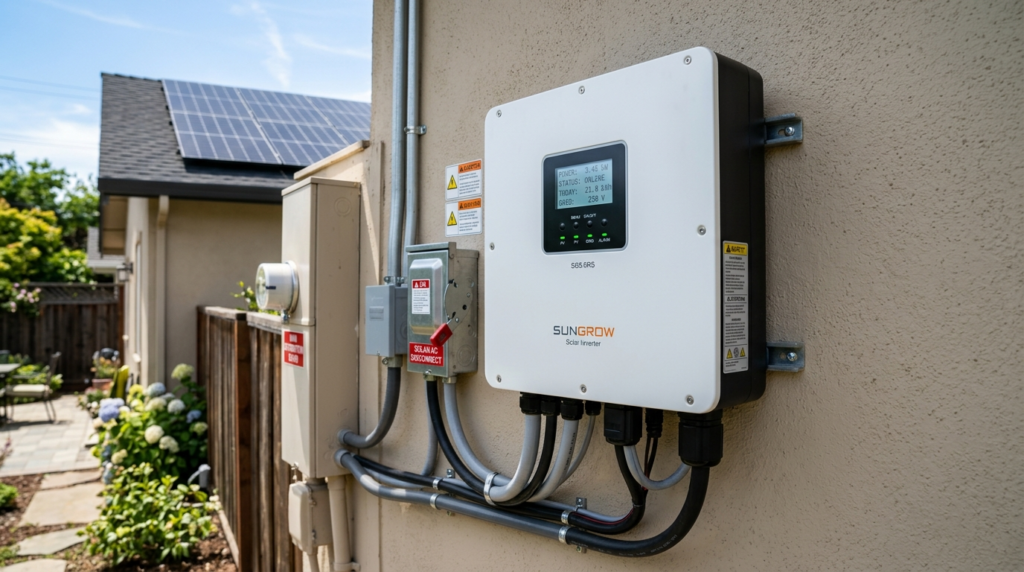
An MPPT, or maximum power point tracking, charge controller is a DC to DC converter that finds the panel’s maximum power point and converts the power to the battery’s voltage. It continuously adjusts its input to track the voltage and current at which the panels produce the most power, then steps that power down to the charging voltage, increasing the current in the process. The result is 20 to 30 percent more energy harvested than a PWM controller, especially in cold weather and when the panel voltage is much higher than the battery voltage. MPPT controllers also allow the panels to be wired in series at higher voltage, which reduces cable losses. They cost more, but for any system larger than a few hundred watts, the extra energy they harvest is worth the price. Our guide to the solar inverter system explains how the controller’s DC output is turned into AC power for the home.
MPPT vs PWM
The choice between MPPT and PWM comes down to system size, budget, and panel voltage. PWM is cheaper and simpler, and it works well in small systems where the panel and battery voltages match. MPPT is more efficient, handles higher panel voltages, and performs better in cold weather, and it is the standard choice for larger systems. The table below compares the two.
| Feature | PWM | MPPT |
|---|---|---|
| Efficiency | 70 to 80 percent | 93 to 98 percent |
| Cost | Low | Higher |
| Panel voltage | Must match battery voltage | Can be much higher than battery |
| Best for | Small systems, tight budgets | Larger systems, cold climates |
| Energy gain | Baseline | 20 to 30 percent more |
How to Size a Solar Charge Controller
Sizing a charge controller means choosing one whose current rating is high enough for the panels. The basic formula is simple: divide the total panel wattage by the battery voltage to get the charging current, then multiply by 1.25 for a safety margin. For example, 600 watts of panels on a 12-volt battery gives 50 amps, and with the safety margin the controller should be rated at least 62.5 amps, so a 60-amp or 80-amp controller is the right choice. The controller’s voltage rating must also match the system, and its maximum input voltage must be above the open-circuit voltage of the panel array, especially in cold weather when panel voltage rises. For help choosing the battery itself, see our guide to battery types for home use.
Installation and Settings
Installing a charge controller is straightforward, but the order matters. Connect the battery first, so the controller can detect the system voltage and set itself up, then connect the solar panels, and finally the load. The controller must be set for the battery type, usually lead-acid, AGM, gel, or lithium, because each type needs a different charging voltage. Many controllers also offer an equalization setting for lead-acid batteries, which periodically overcharges the battery slightly to balance the cells, and a load output that can power lights or a small appliance directly. Keep the controller in a cool, dry place with good airflow, use cables thick enough for the current, and protect the wiring with fuses or breakers on both the panel and battery sides.
Frequently Asked Questions
What does a solar charge controller do?
A solar charge controller regulates the power from solar panels into a battery. It prevents overcharging, stops reverse current at night, protects against deep discharge, and manages the charging stages to keep the battery healthy.
What is the difference between MPPT and PWM?
A PWM controller connects the panels directly to the battery and switches the connection to control the charge. An MPPT controller tracks the panels’ maximum power point and converts the power to the battery voltage, harvesting 20 to 30 percent more energy.
Do I need a charge controller for a small solar panel?
Yes, if the panel charges a battery. Even a small panel can overcharge a battery over time. The only exception is a very small trickle charger that cannot overcharge the battery it is paired with.
How do I size a solar charge controller?
Divide the total panel wattage by the battery voltage to get the charging current, then multiply by 1.25. The controller’s current rating must be above that value, and its maximum input voltage must be above the panel array’s open-circuit voltage.
Can I use a 24-volt panel with a 12-volt battery?
Yes, but only with an MPPT controller, which can step the higher panel voltage down to the battery voltage. A PWM controller requires the panel voltage to match the battery voltage.
Conclusion
A solar charge controller is a small device with a big job. It protects the battery from overcharging and deep discharge, stops reverse current, and, in the case of MPPT, harvests up to 30 percent more energy from the panels. For small systems on a tight budget, a PWM controller is enough, but for most home systems an MPPT controller is the better investment. Size the controller to the panels with a 25 percent safety margin, set it for the right battery type, and it will keep the solar system running safely and efficiently for years.
For the US Department of Energy’s guidance on charge controllers for stand-alone solar systems, see their page on charge controllers for stand-alone systems.