
Sensors are the sense organs of the modern world. They are in your phone, your car, your home, and your workplace, quietly measuring temperature, light, motion, pressure, and dozens of other quantities and turning them into signals that machines can understand. Without sensors, there would be no automatic lights, no thermostats, no airbags, no smartphones that rotate their screens, and no factories that run themselves. This guide explains the main types of sensors, how each one works, and where it is used, so that you can recognize the sensor behind almost any automated device you meet.
A sensor is a device that detects a physical quantity and converts it into an electrical signal. That signal may be a voltage, a current, a resistance change, or a digital code, and it is read by a controller, a display, or a computer. Sensors differ in what they measure, how they measure it, and how accurate they are, and choosing the right one is a core skill in electronics and automation. The sections below cover the most common types, from the temperature sensors in your thermostat to the proximity sensors on a factory line.
What Is a Sensor?
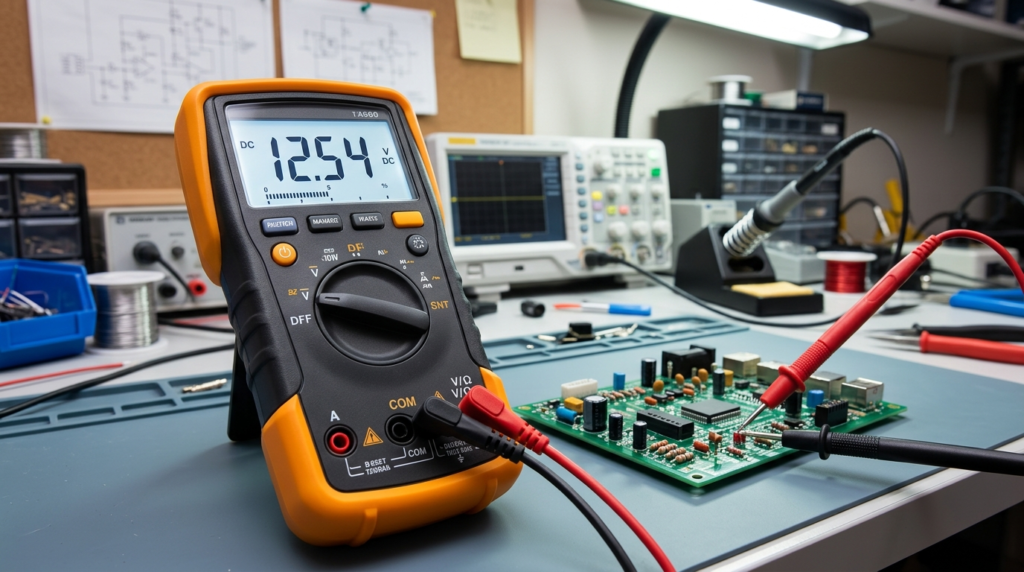
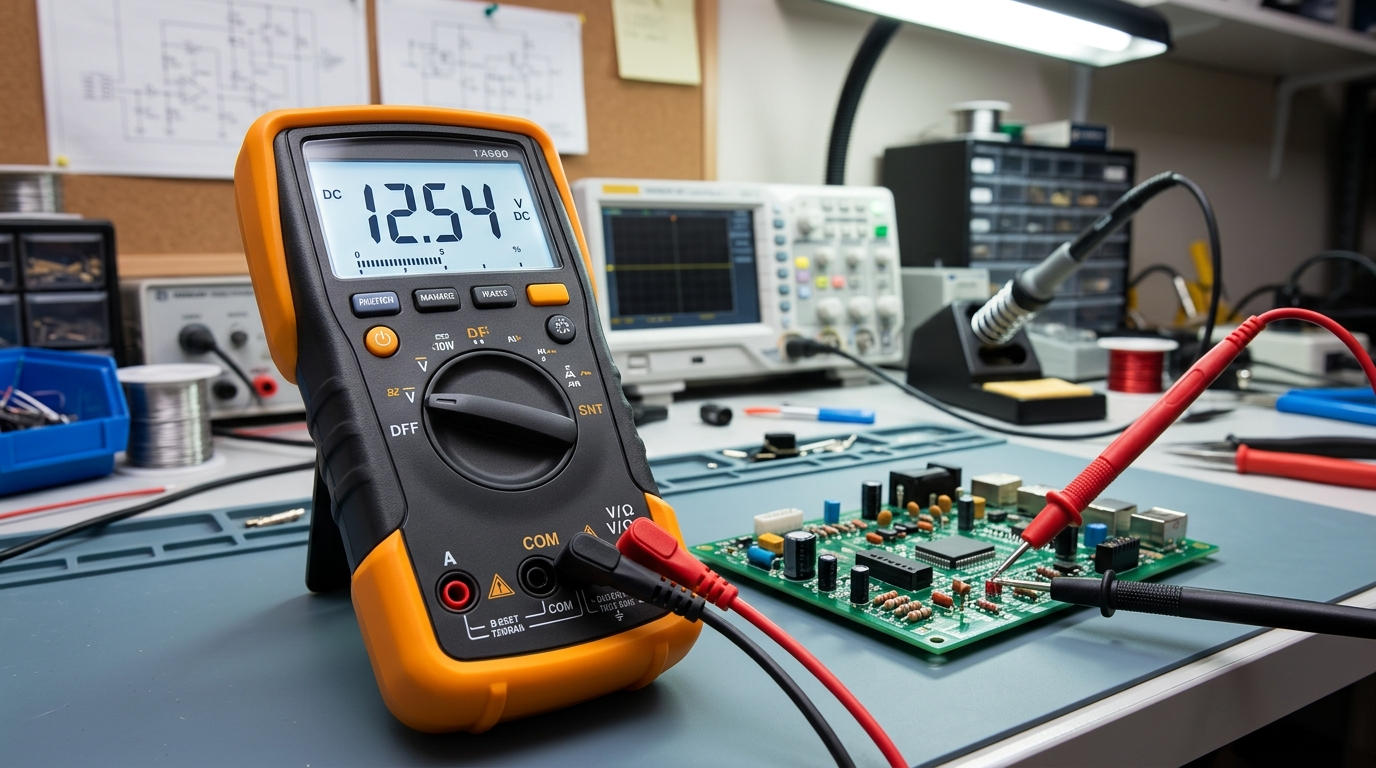
A sensor converts a physical input into a measurable electrical output. A thermistor changes its resistance with temperature, a photodiode changes its current with light, and a piezoelectric element generates a voltage when it is squeezed. The output is usually small, so it is amplified and conditioned before a microcontroller or a display uses it. Sensors are often confused with transducers, but the two are not the same: a sensor detects and measures, while a transducer converts one form of energy into another, and a sensor is one kind of transducer. The key properties of any sensor are its range, its sensitivity, its accuracy, and its response time, and these determine whether it is fit for a given job. To measure a sensor’s output, engineers often reach for a digital multimeter, which can read the voltage or resistance a sensor produces.
Temperature Sensors
Temperature is the most commonly measured quantity in the world, and temperature sensors come in several forms. A thermocouple joins two different metals and produces a small voltage that depends on the temperature difference between its ends; it is rugged, cheap, and works at very high temperatures. A resistance temperature detector, or RTD, uses a platinum element whose resistance rises predictably with temperature, and it is the most accurate choice for industrial measurement. A thermistor is a resistor whose resistance changes sharply with temperature, which makes it ideal for cheap, sensitive sensing in appliances and electronics. Infrared sensors measure temperature without touching the object, by reading the heat it radiates, and they are used in thermometers, thermal cameras, and climate control.
Proximity and Position Sensors
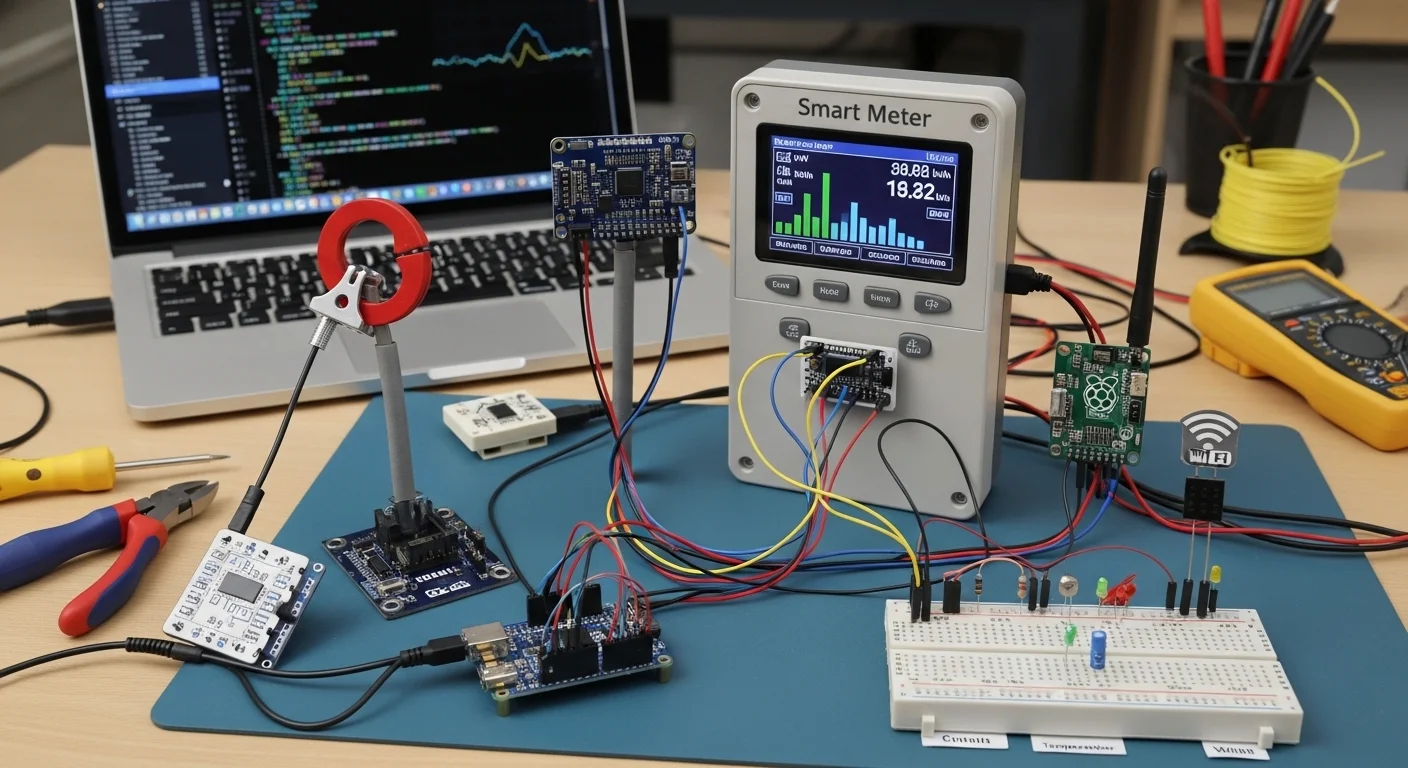
Proximity sensors detect the presence of an object without touching it, and they are the workhorses of factory automation. An inductive proximity sensor detects metal objects by the eddy currents they induce in a coil, and it is used to count parts and detect the position of machine components. A capacitive sensor detects both metal and non-metal objects by changes in capacitance, and it is used for level detection in tanks and for touch buttons. An ultrasonic sensor sends out sound waves and measures the echo to find the distance to an object, which is how parking sensors and level gauges work. A photoelectric sensor uses a beam of light and detects when an object breaks it, and it is used on conveyor lines and automatic doors. Together, these sensors let machines see their surroundings and react without human help. Smart energy meters use similar sensing principles to measure current and voltage in a home.
Pressure and Force Sensors
Pressure sensors measure the force that a fluid or gas exerts on a surface, and they are used in everything from car tires to industrial boilers. Most pressure sensors use a strain gauge bonded to a flexible diaphragm: pressure bends the diaphragm, the strain gauge changes its resistance, and the change is converted into a pressure reading. Force sensors, often called load cells, work the same way and are used in weighing scales, robotic arms, and structural monitoring. Barometric pressure sensors measure air pressure and are used in weather stations and in smartphones to estimate altitude. These sensors must be calibrated regularly, because a small drift in the reading can mean a large error in the process they control.
Motion, Light, and Other Sensors
Motion sensors detect movement and are used in security systems, automatic lighting, and gaming controllers. Passive infrared sensors detect the heat of a moving body, accelerometers measure acceleration and tilt, and gyroscopes measure rotation, and together they let a phone know how it is being held. Light sensors, such as photodiodes and light-dependent resistors, measure brightness and are used in automatic street lights, camera exposure control, and screen brightness adjustment. Humidity sensors measure the moisture in the air and are used in weather stations and heating systems, while gas sensors detect specific gases for safety alarms and air quality monitors. Each of these sensors turns a different piece of the physical world into data that a machine can act on. When engineers need to see a sensor’s signal in detail, they use an oscilloscope, which shows the signal as a waveform over time.
| Sensor Type | What It Measures | Typical Uses |
|---|---|---|
| Temperature sensor | Temperature | Thermostats, HVAC, industrial ovens |
| Proximity sensor | Presence or distance | Factory automation, parking sensors |
| Pressure sensor | Pressure or force | Boilers, tires, weighing scales |
| Motion sensor | Movement or tilt | Security systems, smartphones, gaming |
| Light sensor | Brightness | Street lights, cameras, screen dimming |
| Humidity sensor | Moisture in air | Weather stations, climate control |
Analog vs Digital Sensors
Sensors are also classified by the kind of signal they produce. An analog sensor gives a continuous output, such as a voltage that rises smoothly with temperature, and it must be read by an analog-to-digital converter before a microcontroller can use it. A digital sensor gives a discrete output, such as a series of pulses or a digital code, and it can connect directly to a digital input. Analog sensors are simpler and often cheaper, while digital sensors are easier to interface and less affected by electrical noise. Many modern sensors are digital and include their own signal processing, calibration, and communication, which makes them easy to use in Internet of Things devices.
How to Choose the Right Sensor
Choosing a sensor means matching its properties to the job. The range must cover the values you need to measure, with some margin at each end. The accuracy must be good enough for the decision the sensor will drive, and the resolution must be fine enough to see the changes that matter. The response time must be fast enough to catch the events you care about, and the sensor must survive the environment it will work in, including temperature, moisture, vibration, and chemicals. Finally, the output must be compatible with the controller or display that will read it, and the cost must fit the budget. A sensor that is perfect in the laboratory can fail in the field if any of these factors is ignored.
- Range: the sensor must cover the full span of values it will measure.
- Accuracy and resolution: good enough to see the changes that matter.
- Response time: fast enough to catch the events you need to detect.
- Environment: able to survive temperature, moisture, vibration, and chemicals.
- Output and cost: compatible with the controller and within budget.
Frequently Asked Questions
What are the main types of sensors?
The main types are temperature, proximity, pressure, motion, light, humidity, and gas sensors. Each measures a different physical quantity, and each has several subtypes, such as thermocouples, RTDs, and thermistors for temperature.
What is the difference between a sensor and a transducer?
A sensor detects and measures a physical quantity and produces an electrical signal. A transducer converts one form of energy into another, and a sensor is one kind of transducer. Not all transducers are sensors, because some convert energy without measuring anything.
What is an example of a sensor in everyday life?
A thermostat uses a temperature sensor to control heating and cooling. A smartphone uses a light sensor to adjust screen brightness, an accelerometer to detect orientation, and a proximity sensor to turn the screen off during calls.
How do proximity sensors work?
Inductive proximity sensors detect metal by eddy currents, capacitive sensors detect objects by changes in capacitance, ultrasonic sensors measure the echo of sound waves, and photoelectric sensors detect when an object breaks a beam of light.
Are sensors analog or digital?
Both exist. Analog sensors produce a continuous voltage or current that must be converted to digital form, while digital sensors produce pulses or digital codes that a microcontroller can read directly.
Conclusion
Sensors are the link between the physical world and the electronic systems that control it. Temperature, proximity, pressure, motion, light, and humidity sensors each measure a different quantity, and together they let machines perceive their surroundings and respond without human intervention. Choosing the right sensor means matching its range, accuracy, response time, and environment to the job, and understanding the main types is the first step toward designing or troubleshooting any automated system. As the Internet of Things grows, sensors will only become more common, and the ability to choose and use them will remain a core skill in electronics.
For a detailed introduction to sensor types and how they interface with circuits, see the Electronics Tutorials guide to input and output devices.